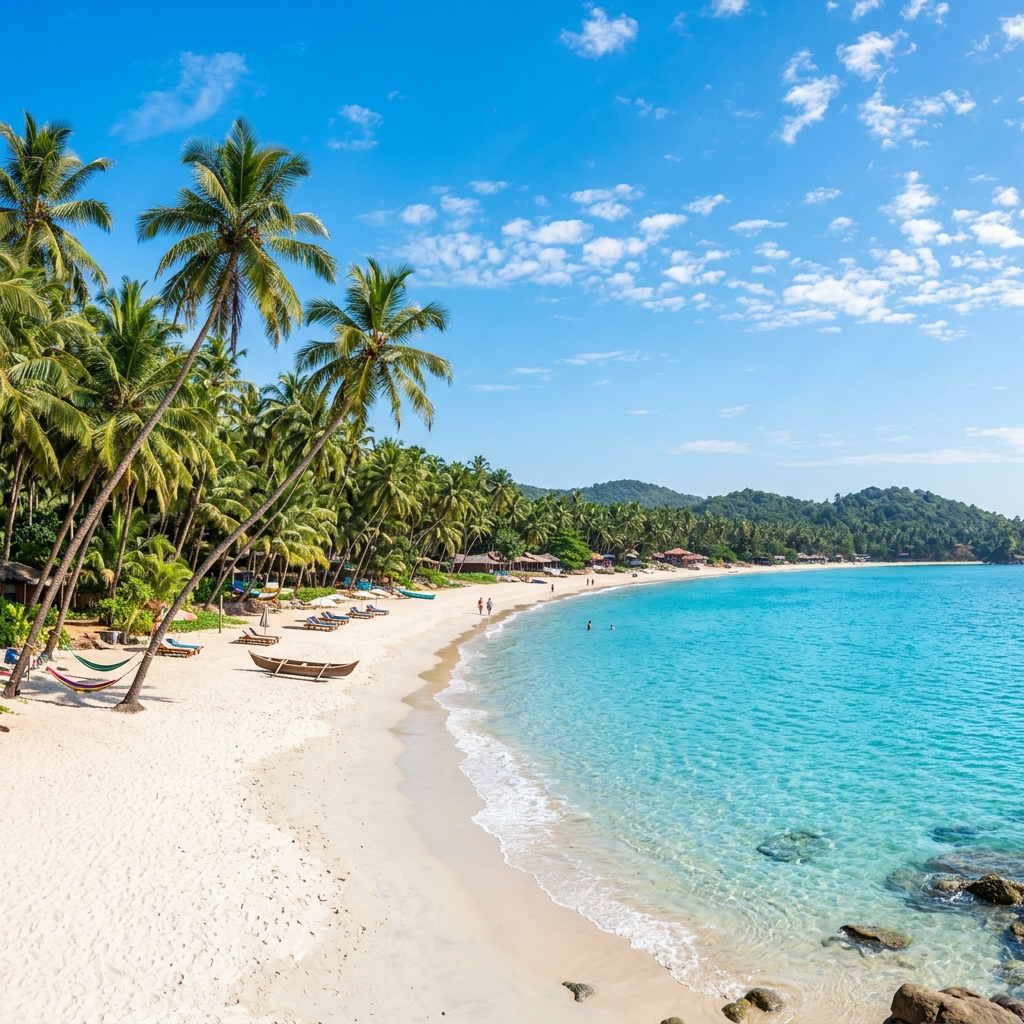
Goa Travel Guide 2026 – Tourism, Beaches, Itinerary, Budget & Hidden Gems
Goa is not just a state in India; it is a feeling. For decades, Goa tourism has been the crown jewel of the Indian travel industry, attracting backpackers, luxury seekers, and international party lovers. Whether you are looking for the perfect Goa travel guide to plan your first trip or you are a veteran searching for hidden gems, this guide covers everything. From the bustling streets of North Goa India to the serene shores of the South, consider this your ultimate bible for Goa trip planning in 2026.
About Goa
Goa, India's smallest state by area and one of its most beloved, is a tapestry of sun, sand, sea, and spirituality. Located on the western coast of the Konkan region, it is bounded by Maharashtra to the north and Karnataka to the east and south, with the Arabian Sea forming its western coastline. Understanding the essence of Goa tourism requires diving deep into its culture, history, and geography.
What is Goa famous for?
Goa is globally famous for its pristine beaches, but that is merely the surface. The state offers a unique blend of Indian and Portuguese cultures, resulting in architecture, cuisine, and lifestyles found nowhere else on the subcontinent.
The Party Vibe vs. The Peaceful Vibe:
Unlike other tourist destinations in India, Goa offers a duality. North Goa is synonymous with high-decibel nightlife, trance parties, and bustling beach shacks. In contrast, South Goa offers quiet, palm-fringed solitude, perfect for meditation and reading a book by the shore. This balance allows Goa tourism to cater to every type of traveler, from the college student on a budget to the honeymooning couple seeking romance.
History of Goa
To truly appreciate Goa, one must look at its history. The Portuguese colonized Goa in 1510 and held it for over 450 years until 1961, when the Indian government annexed it. This long period of colonial rule left an indelible mark. You will see it in the grand Catholic churches of Old Goa, the Iberian-style mansions with oyster-shell windows, and the local love for wine and bread ( poie ).
Unlike the rest of India, which was a British colony, Goa’s Portuguese heritage gives it a distinct European flair. The famous Goan susegad — a attitude of laid-back contentment and letting life come to you — is a direct legacy of this slow, Mediterranean-influenced lifestyle. This history is a major pillar of Goa travel guide narratives, as it explains the architecture and festivals you will witness.
Geography & Regions (North Goa vs South Goa Intro)
Geographically, Goa is split by the Mandovi and Zuari rivers, which create several estuarine islands. However, for tourists, the split is purely functional: North Goa and South Goa.
North Goa: Stretching from Fort Aguada up to the Maharashtra border. Characterized by red laterite cliffs, crowded shores, and the most vibrant nightlife in Asia. Key hubs include Baga, Calangute, Anjuna, and Vagator.
South Goa: Stretching from Bogmalo down to Palolem. Characterized by soft, silver sand, swaying palms, and luxury resorts. It is quieter, cleaner, and more expensive.
In this Goa travel guide, we will explore both regions in detail so you can decide which fits your vibe. Goa is small enough that you can visit both, but understanding the geography saves precious vacation time.
North Goa vs South Goa (The Ultimate Comparison)
The most common debate among travelers planning a Goa trip is choosing between North and South. This section of the Goa travel guide provides a definitive answer based on hard data and local experience.
North Goa: The Heart of the Party
North Goa is where the energy is. The coastline here is rugged, the waves are stronger, and the sand is dotted with millions of tourists from December to February.
Baga & Calangute: Known as the "Queen of Beaches." These are the most commercialized areas. You will find McDonalds, British-style pubs, and endless water sports vendors. It is crowded, loud, and chaotic—which many people love.
Candolim & Sinquerim: Slightly more refined than Baga, Candolim offers a long stretch of beach with upscale restaurants and fewer street hawkers.
Anjuna & Vagator: The historic hippie capital. Anjuna is famous for its Wednesday Flea Market and trance parties. Vagator offers dramatic red cliffs overlooking the sea, home to the famous Hilltop and Soro – The Village Pub.
Budget: North Goa is cheaper for accommodation (hostels starting at ₹300) but expensive for taxis. Food is cheap if you eat at local tapris (street shacks).
South Goa: The Soul of Peace
South Goa is the Goa of postcards. The beaches here are massive crescents of white sand, backed by dense coconut groves. There is a distinct lack of high-rise buildings due to strict coastal regulation zones (CRZ).
Palolem: The most famous southern beach, shaped like a crescent moon. It is calm, with kayaking opportunities and silent discos at night (low volume to respect the tranquility).
Colva & Benaulim: These are the longest beaches in Goa. Colva has a local, bustling vibe with a famous church, while Benaulim is sleepy and spread out, perfect for long walks.
Agonda: A turtle nesting site and a true escape. There are no loud bars here, just shacks serving fresh fish and huts to sleep in.
Budget: South Goa is more expensive. It is dominated by 5-star resorts (Taj, Leela, Alila) and boutique homestays.
Which one should you choose?
Here is the comparison table that will help you decide for your Goa trip:
| Feature | North Goa | South Goa |
|---|---|---|
| Vibe | High energy, Party, Loud | Relaxed, Romantic, Quiet |
| Best For | Friends Groups, Bachelors, Budget Backpackers | Couples, Families, Honeymooners |
| Water Sports | Very Common (Jet Ski, Parasailing) | Limited (Kayaking, Snorkeling) |
| Nightlife | Clubs open until 5 AM | Shacks close by 11 PM |
| Accommodation | Hostels & Budget Hotels | Luxury Resorts & Villas |
| Scams | High (Taxi mafia, fake guides) | Low |
| Cleanliness | Moderate (Crowded) | Excellent |
Final Verdict: If you are under 30 or traveling with a group of friends, start in North Goa. If you are a couple over 30 or traveling with children, fly directly to South Goa. For the perfect Goa itinerary, split your time 60/40 in favor of South if you want relaxation, or 80/20 North if you want stories to tell.
Perfect Goa Itinerary (2, 3, & 5 Days)
Planning a Goa trip without an itinerary often leads to "beach hopping fatigue." You don't need to see 20 beaches; you need to experience the vibe. Here are three optimized Goa travel guide itineraries based on your time.
2 Days Goa Plan (Weekend Rush)
Best for: Office goers flying in Friday night, leaving Sunday.
Day 1 (North Goa Blast):
Morning: Rent a scooty immediately. Head to Baga Beach for breakfast at Britto’s. Try the Kingfish curry.
Afternoon: Calangute for water sports (Parasailing + Jet Ski). Grab a beer at Titos Shack.
Evening: Visit Fort Aguada for sunset views over the ocean.
Night: Dinner at Curlies (Shack) or dance at Cafe Mambo.
Day 2 (Cultural & Chill):
Morning: Visit the Basilica of Bom Jesus (Old Goa) – a UNESCO site.
Afternoon: Panjim for Latin Quarter walk (Fontainhas). Take photos of Portuguese villas.
Evening: Casino Cruise on the Mandovi River (if budget allows) or simply shopping at Panjim Market before flying out.
3 Days Goa Plan (The Balanced Trip)
Best for: Standard vacation.
Day 1 (North Goa Highlights):
Morning: Dolphin spotting at Candolim.
Afternoon: Anjuna Flea Market (Wednesdays only) or shopping at Mackie’s.
Evening: Sunset at Vagator (Little Vagator beach). Dinner at Thalassa (Greek taverna) – a must for sunset views.
Day 2 (South Goa Exploration):
Morning: Drive to Palolem (1.5 hours). Take a kayak in the backwaters.
Afternoon: Lunch at Art Resort (Palolem). Relax on the beach.
Evening: Visit Cabo de Rama Fort for dramatic cliff views.
Night: Silent Noise Party at Palolem (headphones only).
Day 3 (Spice & Departure):
Morning: Visit Sahakari Spice Farm (near Ponda). Get an Ayurvedic massage.
Afternoon: Dudhsagar Waterfalls (only if monsoon or early winter). Otherwise, relax at Colva Beach.
Evening: Depart.
5 Days Goa Plan (The Deep Dive)
Best for: Remote workers or luxury travelers.
Day 1: Arrive in North Goa. Settle in Candolim. Chill. Try a Shakshuka breakfast.
Day 2: Chapora Fort (Dil Chahta Hai fort) + Vagator beaches. Evening at Soro (Siolim) – farm-to-table dining.
Day 3: Drive to Arambol (Northmost beach). Experience the drum circle at sunset. Stay overnight in Arambol for the bohemian vibe.
Day 4: Transition to South Goa. Check into a resort in Benaulim. Relax. Spa day.
Day 5: Butterfly Beach trek (via boat from Palolem) + Netravali (Bubbling Lake). Departure.
Goa Trip Cost (Budget Breakdown for 2026)
One of the most searched queries in Goa tourism is "cost." Let's be brutally honest. Goa is no longer the "cheapest" destination in India, but it remains affordable if you know the tricks. This Goa travel guide gives you REAL prices for 2026.
Budget Trip (₹5,000 – ₹10,000 for 3 days)
Strict budget, hostel life, local food.
Accommodation: Hostels in Anjuna or Arambol (₹400 – ₹800/night).
Food: Local thali (₹120), street momos, tapri omelettes. Avoid restaurants with "continental" menus.
Transport: Rent a bicycle (₹100/day) or old scooty (₹250/day). Do not take taxis.
Activities: Free beaches, fort visits, flea market browsing. One entry-level water sport (₹500).
Total per day: ~₹2,000.
Mid Range (₹10,000 – ₹25,000 for 3 days)
Couples or friends sharing rooms. The sweet spot.
Accommodation: 3-star hotels in Calangute or Benaulim (₹2,000 – ₹4,000/night).
Food: Beach shacks (Britto’s, Souza Lobo) – meal for two ₹1,500. One nice dinner at a rooftop restaurant.
Transport: Rent a new Activa scooty (₹400/day). Fuel: ₹500 total.
Activities: Water sports combo (₹1,500), Dolphin tour (₹300), one club entry with cover (₹1,000).
Total per day: ~₹5,000 – ₹7,000.
Luxury Trip (₹25,000 – ₹1L+ for 3 days)
Resorts, private transfers, fine dining.
Accommodation: Taj Fort Aguada, W Goa, Alila Diwa (₹15,000 – ₹40,000/night).
Food: Fine dining at Thalassa, Black Sheep Bistro. Meal for two ₹5,000+.
Transport: Private cab for the duration (₹3,000/day) or self-drive luxury car.
Activities: Private yacht cruise (₹15,000+), Scuba diving (₹6,000), Casino entry (₹5,000 + play).
Total per day: ~₹15,000+.
Cost Breakdown Table (Per Person, 3 Nights)
| Expense | Budget | Mid-Range | Luxury |
|---|---|---|---|
| Hotel | ₹1,500 | ₹9,000 | ₹60,000+ |
| Food | ₹1,800 | ₹6,000 | ₹15,000+ |
| Transport | ₹750 | ₹1,500 | ₹9,000 |
| Activities | ₹500 | ₹3,000 | ₹20,000+ |
| Total | ₹4,550 | ₹19,500 | ₹1,04,000+ |
Pro Tip: The biggest hidden cost in Goa tourism is transport. A 10-minute taxi ride can cost ₹500. Always rent a scooty if you are physically able. It is the only way to stick to a budget.
Where to Stay in Goa (Best Areas & Hotels)
Choosing the right base is critical for your Goa trip. Here is your Goa travel guide to accommodation zones.
Best Areas for Different Travelers
Baga & Calangute: For first-timers who want to be "in the action." Pros: Everything is walkable. Cons: Traffic is a nightmare (November to February).
Candolim: For families. Quieter than Baga but still close to nightlife. Best for mid-range hotels.
Arpora & Assagao: For the hipster/Instagram crowd. These are inland villages with beautiful Portuguese villas converted into boutique stays. Close to Baga but very quiet.
Palolem: For the South Goa experience. Lots of bamboo huts on the beach. Perfect for digital nomads.
Budget Hotels (Under ₹2,000/night)
The Hosteller Goa (Arpora) – Best social vibe.
Zostel (Anjuna & Palolem) – Clean and safe for solo travelers.
Palm Trees Beach Huts (Palolem) – Basic but on the sand.
Luxury Resorts (₹10,000+/night)
W Goa (Vagator) – The ultimate party resort. Nightclub on property.
Taj Fort Aguada (Candolim) – Heritage property with a private beach.
Alila Diwa (Majorda) – South Goa luxury with massive infinity pools.
Ahilya by the Sea (Nerul) – A boutique heritage mansion.
Things to Do in Goa (Activities List)
Goa tourism is not just about lying down. Here is the definitive checklist for your Goa trip.
Beaches (The Core)
Visit at least one crowded beach (Baga) and one empty beach (Kakolem). The contrast is the magic of Goa.
Water Sports
Jet Skiing & Parasailing: Available at Calangute, Baga, and Candolim. Cost: ₹500–₹1000.
Scuba Diving: Best at Grande Island (from North Goa) or Netrani (if you travel far). Visibility is best between October and May.
Kayaking: Do this in the backwaters of Palolem or Nerul. It is serene and cheap (₹300/hour).
Nightlife (Crucial for Goa)
Clubs: Tito’s (Baga) for commercial Bollywood; Hammerzz (Baga) for hip-hop; SinQ (Candolim) for upscale.
Beach Parties: Curlies (Anjuna) is the legendary spot. Soro (Siolim) is the current favorite for the cool crowd.
Silent Parties: Palolem beach – everyone gets headphones and dances to three different DJ channels. No noise complaints.
Cruises
Sunset Cruise: Panjim to Fort Aguada. Includes dinner and live music. ₹1,500/person.
Luxury Yacht: For private groups. Starts at ₹25,000 for 2 hours.
Adventure Activities
Dudhsagar Falls Trek: Only allowed with forest department guides (June to February). The waterfall is 4-tiered and massive.
ATV Rides: Available near the beaches. ₹1,000 for 15 minutes.
Best Beaches in Goa (Popular & Hidden)
This Goa travel guide categorizes beaches by experience, not just name.
Popular Beaches (Must see, but crowded)
Baga Beach: The epicenter. Shacks, jet skis, and paramotors. Go here for lunch and people-watching.
Calangute Beach: Next to Baga, but wider. Better for walking. Avoid swimming during high tide; the currents are strong.
Anjuna Beach: Rocky shores with the famous Anjuna Flea Market (Every Wednesday). The shacks serve excellent Israeli food (try the Hummus).
Hidden Beaches (The Advantage of this Guide)
Kakolem Beach (Tiger Beach): A hidden cove in South Goa. You have to climb down a steep cliff (300 steps). There are no shacks. Just you and the sea. High ranking potential keyword.
Butterfly Beach: Near Palolem. Only accessible by boat or a 45-minute trek through a wildlife sanctuary. Named because the shape looks like a butterfly. Silvery sand.
Cola Beach: Famous for a lagoon that meets the sea. There is one luxury tent resort here, but the beach is open to the public. Very few tourists.
Galjibagh Beach: A turtle nesting site. You are not allowed to walk here after 6 PM during nesting season, but during the day it is pristine and empty.
Common Scams in Goa (2026 Edition)
To ensure your Goa trip is safe, you must read this section. Goa tourism has a dark side: the taxi mafia and street touts.
Taxi Scams
The Problem: App-based cabs (Uber/Ola) are not allowed to pick up from beaches or airports due to local union pressure.
The Scam: A taxi from the airport to Baga (35km) should cost ₹800–₹1000. They will demand ₹2,500 – ₹3,000.
The Fix: Pre-book a taxi online via GoaMiles (local app) or rent a self-drive car (Revv, Zoomcar). Or, better yet, rent a scooty.
Fake "Coral" Sellers
On the beach, children will try to sell you "coral jewelry." Coral mining is illegal in India. It is usually plastic or bone. Politely say "Naka" (No in Konkani).
Overpriced Water Sports
The Scam: An agent on the beach charges you ₹2,000 for parasailing. When you get to the boat, they take you to a far spot and demand an extra ₹1,000 to "release the rope."
The Fix: Buy packages only from the official "Goa Water Sports" kiosks with printed rates. Never pay cash to a random tout.
Rental Damage Scams
The Scam: You return a scooty. The owner points to a scratch you didn't make and demands ₹5,000.
The Fix: Take a video walkaround of the bike before you rent it. Send the video to the owner on WhatsApp for timestamp proof. Rent only from shops with a physical office, not just a guy on the road.
Hidden Places in Goa (Offbeat Spots)
If you want to go beyond the Goa travel guide clichés, these spots will make you feel like a local explorer.
Secret Beaches (Already mentioned, but worth repeating)
Betul Beach: Near the South border. It has a lighthouse and a fishing village feel. You can see massive olive ridley turtles here.
Offbeat Spots
Netravali Bubbling Lake: A natural phenomenon where air bubbles rise from the bottom of a freshwater lake because of subterranean springs. Located deep in the jungle near the Karnataka border.
Sao Jacinto Island: Off the coast of Canacona. You need a local fisherman's boat to reach it. It is a completely uninhabited island with ruins of a Portuguese fort.
Chorla Ghats: Not a beach. This is the Western Ghats mountain range bordering Goa and Karnataka. Go here for white water rafting (monsoon) or to see fireflies at night (April-May).
Arvalem Caves (Pandava Caves): Ancient rock-cut caves in Bicholim. Next to it is a beautiful waterfall. Very few tourists go here because it is inland.
Best Time to Visit Goa
Timing is everything in Goa tourism.
Winter (Peak Season: November – February)
Weather: Pleasant (20°C – 30°C). No humidity.
Vibe: Full party mode. Every shack is open. International tourists everywhere.
Crowd: Maximum. Prices double (or triple).
Verdict: Go only if you want the "postcard" experience and have money to burn.
Monsoon (Off Season: June – September)
Weather: Raining heavily. High humidity.
Vibe: Very green. Waterfalls are roaring. The sea is rough (no swimming).
Crowd: Very low. Shacks are closed. Prices drop by 70%.
Verdict: Best for cheap stays, long drives, and Ayurveda treatments. Not for beach parties.
Summer (Shoulder Season: March – May)
Weather: Hot and humid (30°C – 38°C).
Vibe: Drying out. Some shacks close by May end.
Crowd: Moderate. Lots of domestic tourists.
Verdict: Cheap but sweaty. Good only if you plan to stay in an AC room and do water sports in the morning.
Best Window: 15 November to 15 December (Just before the Christmas rush, good weather) or 15 January to 15 February (Peak parties, but crowds thin slightly after New Year).
Goa Nightlife Guide
Goa tourism is synonymous with nightlife. The sun sets by 6:30 PM, but the party starts at 10 PM.
Best Clubs in Goa (2026)
Tito’s, Baga: The old guard. Plays commercial Bollywood and EDM. Massive, loud, and full of bachelorette parties.
Cafe Mambo, Baga: Right next to Tito’s. Known for its "street" atmosphere and live screens.
Soro – The Village Pub, Siolim: The current #1. It is a farmhouse converted into a pub. Amazing cocktails, local Goan fusion food, and techno music. Dress well (no shorts).
LPK Waterfront (Love Passion Karma), Nerul: Built on a riverfront. Looks like a Roman fort. Very instagrammable.
Hammerzz, Baga: For Hip-Hop and R&B lovers.
Party Areas
Anjuna/Vagator: The "rave" area. Curlies, Shiva Valley, and Hilltop (Vagator). Expect psychedelic trance and a very international crowd.
Palolem: For "Silent Noise." Everyone wears headphones. It is weird but wonderful.
Note: Nightlife in Goa stops during "Shutdown" (Election days or religious holidays) and during "Dry Days" (Republic Day, Independence Day, Holi). Check the calendar before you plan your Goa trip.
Food in Goa (A Culinary Journey)
No Goa travel guide is complete without food. Goan cuisine is a mix of Portuguese cooking techniques with local Indian spices.
Famous Dishes You Must Try
Goan Fish Curry: Coconut milk based, tangy with kodi (kokum). Eat with boiled rice.
Prawn Balchão: A fiery pickle-like curry. Very red, very spicy. Eat with pao (bread).
Vindaloo: Originally a Portuguese dish (Vinha d' Alhos – wine and garlic). In Goa, it is made with pork and vinegar. Very sharp flavor.
Chicken Cafreal: A green, coriander-based grilled chicken. Brought by the African Portuguese colonists. Absolute must-try.
Bebinca: A 7-to-16 layered Goan dessert. Made of egg yolks, coconut milk, and sugar. Buy it at a bakery, not a restaurant.
Best Places to Eat
Street:
Viva Panjim (Panjim) – Traditional Goan home food.
Ashok’s (Panjim) – Famous for Ros Omelette (curry with egg).
Beach Shacks:
Britto’s (Baga) – Tourist hub, but the Kingfish is good.
Art Resort (Palolem) – Organic, vegetarian-friendly, high quality.
Fine Dining:
Black Sheep Bistro (Panjim) – Modern Goan cuisine.
Thalassa (Vagator) – Greek food, but the sunset makes it worth it.
How to Reach Goa
Connectivity is strong for Goa tourism.
By Flight (Best Option)
Airport: Goa International Airport (GOX) – formerly Dabolim (GOI) is being phased out; New Mopa Airport (GOX) in North Goa is now operational.
Tip: If staying in North Goa (Baga/Anjuna), fly to Mopa (GOX) – it's 35km away. If staying in South Goa (Palolem/Benaulim), fly to Dabolim (GOI) .
By Train
Major Stations: Madgaon (South Goa) and Thivim (North Goa).
Pro Tip: The Konkan Railway route is scenic. Get a window seat on the left side (if coming from Mumbai) for ocean views near Ratnagiri.
Note: Stations are crowded in December. Book tickets 4 months in advance.
By Road (Road Trip)
From Mumbai: 590 km via NH66. A 10-12 hour drive.
From Bangalore: 570 km via NH48. A 9-11 hour drive.
Buses: Volvo AC buses run overnight from Mumbai, Pune, and Bangalore. Cost: ₹1,500 – ₹2,500.
FAQs (Frequently Asked Questions)
This section is optimized for Google Featured Snippets.
Q1: Is Goa safe for solo female travelers?
Yes, Goa is generally very safe compared to other Indian states. However, stick to well-lit areas (Baga, Candolim, Palolem) after 10 PM. Avoid isolated beaches at night (Anjuna rocky side). Use only pre-paid or app taxis after dark.
Q2: What is the best time to visit Goa?
The best time to visit Goa is November to February for pleasant weather and parties. For budget travelers, June to September (Monsoon) is best for greenery and cheap hotels.
Q3: What is the budget needed for a Goa trip?
A budget trip costs ₹5,000 – ₹10,000 for 3 days (hostel + local food + scooty). A luxury trip costs ₹25,000+ per day.
Q4: Is 2 days enough for Goa?
2 days is enough for a quick "party circuit" (North Goa only) or a "relaxation circuit" (South Goa only). For a balanced trip, you need 4-5 days.
Q5: Is North Goa or South Goa better?
North Goa is better for nightlife and budget travel. South Goa is better for peace, luxury, and family trips.
Q6: Do we need a passport for Goa?
No. As Goa is a state of India, Indian citizens do not need a passport. International tourists need a valid Indian visa (e-Visa available for 150+ countries).
Q7: Is alcohol cheap in Goa?
Yes. Alcohol is significantly cheaper than in other Indian states due to lower taxes. A Kingfisher beer costs ₹40-₹60 in a shop. A cocktail in a shack costs ₹300-₹500.
Q8: Is it safe to swim in Goa beaches?
Most beaches have strong currents and no lifeguards at night. Swim only at patrolled beaches (Calangute, Baga, Palolem) between sunrise and sunset. Never swim during monsoon.
Q9: How to rent a scooty in Goa?
You need a valid driving license (original, not photo). Costs ₹300-₹500/day. Always take a video of the bike for damage proof. Wear a helmet – police fines are strict.
Q10: Are casinos in Goa safe?
Yes, offshore casinos (on the Mandovi River) are legal and regulated. Deltin Royale is the most famous. Entry fee is ~₹3,500 which includes food and drinks.
Q11: Can we visit Goa during monsoon?
Yes, but swimming is banned. It is ideal for ayurveda, trekking to waterfalls, and long drives. Many shacks are closed.
Q12: What is the local language of Goa?
Konkani is the official language. Marathi and Hindi are widely understood. English is spoken in all tourist areas.
Q13: Are there dress codes for clubs in Goa?
Yes, for upscale clubs (Soro, LPK, SinQ): No shorts, no floaters, no sleeveless for men. For beach shacks (Curlies, Britto's): Anything goes.
Q14: What are the famous festivals in Goa?
Carnival (February) – 3 days of parades. Shigmo (March) – Hindu spring festival. Sunburn Festival (December) – Asia's largest EDM festival.
Q15: Is Goa expensive for foreigners?
Goa is very cheap compared to European beach destinations (Spain/Thailand). A foreigner can live on $30/day (mid-range) or $100/day (luxury).