Explore sections of this guide
Located in the heart of Ponda, Goa’s bustling "Temple Town," the Safa Masjid stands as a serene testament to the state’s rich and multifaceted Islamic heritage. While Goa is globally renowned for its sun-kissed beaches and majestic Portuguese-era churches, the Safa Masjid—also known as the Safa Shahouri Masjid—reminds travelers of a significant era when the Bijapur Sultanate influenced the coastal landscape. Built in 1560, it is one of the oldest surviving mosques in Goa, having weathered centuries of colonial transitions, religious shifts, and the tropical elements of the Konkan coast.
The word "Safa" translates to "pure" or "clean" in Arabic, and the mosque lives up to its name with its minimalist elegance and tranquil surroundings. Unlike the opulent, marble-clad mosques found in Northern India, the Safa Masjid is characterized by its Indo-Islamic architecture, utilizing local materials like laterite stone and terracotta tiles. It is nestled amidst lush greenery, offering a stark yet beautiful contrast to the red earth of Ponda. For the modern traveler, a visit to this site is not just a religious pilgrimage but a journey back to the 16th century, providing a rare glimpse into the pre-colonial history of Goa. It serves as a symbol of resilience, standing tall as a protected monument under the Archaeological Survey of India (ASI), and continues to be a functional place of worship for the local Muslim community.

The history of Safa Masjid is deeply intertwined with the geopolitical struggles of the 16th century. It was commissioned in 1560 by Ibrahim Adil Shah I, the Sultan of Bijapur. During this period, the Adil Shahi dynasty held significant territory in the Konkan region, and Ponda served as a vital administrative and military hub. The mosque was part of a larger complex that reportedly included extensive gardens, fountains, and multiple smaller structures, most of which were unfortunately destroyed during the Portuguese Inquisition and subsequent colonial expansions.
The survival of Safa Masjid is nothing short of miraculous. When the Portuguese conquered Goa in 1510, they began a systematic campaign to dismantle non-Christian religious structures in the "Old Conquests" (Velhas Conquistas). However, Ponda remained under the control of the Bijapur Sultanate and later the Marathas for a longer duration, which allowed the mosque to remain intact while many others were razed. It wasn't until the 18th century that the Portuguese fully annexed Ponda into their territory as part of the "New Conquests" (Novas Conquistas). By this time, the colonial policy regarding religious tolerance had shifted slightly, allowing the mosque to persist as a historical and spiritual landmark.
Religiously, the mosque signifies the presence of the Deccani Islamic tradition in Goa. It served as a spiritual anchor for the soldiers, traders, and administrators of the Adil Shahi court. Today, it stands as a poignant reminder of Goa’s pluralistic past, where different faiths have coexisted for centuries. The mosque is not just a relic; it is a living monument where the call to prayer (Adhan) still echoes, bridging the gap between the medieval Sultanate and contemporary Goan society.
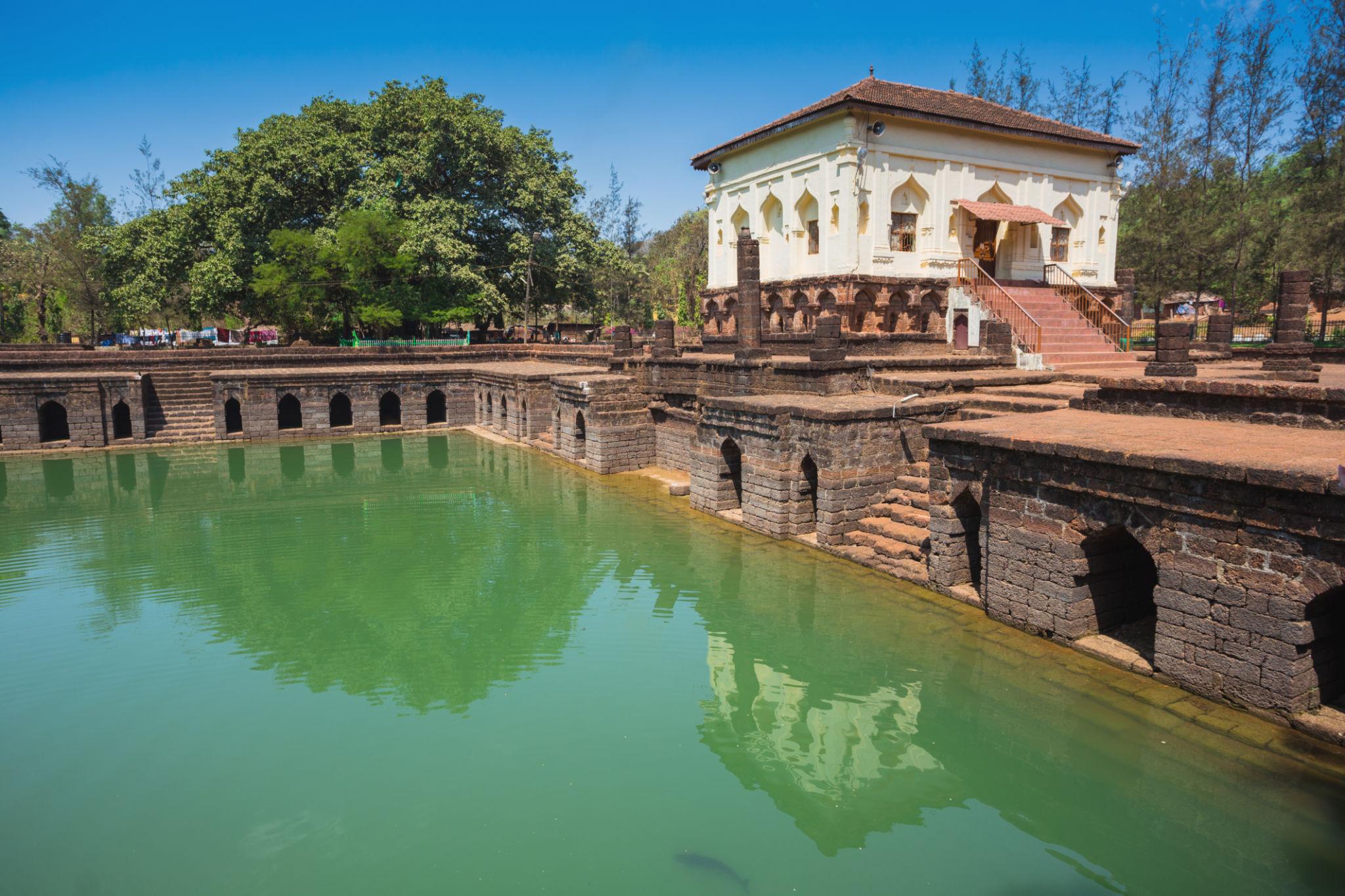
The architecture of Safa Masjid is a fascinating study in regional adaptation. Eschewing the grand domes and towering minarets typical of Mughal architecture, the Safa Masjid embraces a vernacular Goan-Islamic style. The primary building material is the local red laterite stone, which is porous and durable, perfectly suited for the heavy monsoons of the region. The mosque is built on a high plinth, which elevates the prayer hall and gives the structure a sense of prominence despite its modest size.
The most striking feature of the mosque is its pitched roof, covered with traditional red Mangalore tiles. This design is highly functional, ensuring that rainwater sheds quickly during the torrential Goan rains. The exterior walls are characterized by pointed arches and small, recessed windows that allow for natural ventilation, keeping the interior cool even during the peak of summer. The absence of a dome is replaced by a simple, elegant rectangular structure that reflects the humility and purity associated with the mosque's name.
Adjacent to the mosque is the magnificent masonry tank, which is perhaps the most impressive architectural element of the site. This massive rectangular water body features 44 arched niches (hamams) lining its perimeter. These niches were used for ritual ablutions (Wudu) before prayer. The tank is fed by natural springs, and even today, it retains water throughout the year. The reflection of the mosque’s white-washed walls and the surrounding coconut palms in the still water of the tank creates a picturesque scene that is a favorite among photographers and architecture enthusiasts. The entire complex is surrounded by a low laterite wall, creating a defined sacred space that feels disconnected from the noise of the modern world.
As a mosque, the Safa Masjid does not house a "deity" in the conventional sense used in Hindu temples. Instead, the focus of worship is the formless Almighty (Allah). The spiritual core of the mosque is the Mihrab, a semicircular niche in the wall that indicates the Qibla (the direction of the Kaaba in Mecca), towards which Muslims pray. The interior of the prayer hall is intentionally simple, devoid of idols or elaborate imagery, to ensure that the devotee’s focus remains entirely on the spiritual connection with the Divine.
The spiritual importance of Safa Masjid extends beyond its role as a house of prayer. It is a site of peace and contemplation. The presence of the large water tank adds a layer of spiritual symbolism, representing purity and the sustenance of life. In Islamic tradition, water is a sign of God’s mercy, and the act of washing before prayer is both a physical and spiritual cleansing. For the local community, the mosque is a symbol of their enduring faith and their historical roots in the Goan soil. It is a place where the community gathers to seek guidance, celebrate milestones, and find solace. For visitors of other faiths, the mosque offers a space for quiet reflection, encouraging a sense of universal peace and respect for historical continuity.
The Safa Masjid truly comes alive during the major Islamic festivals, drawing devotees from across Ponda and neighboring villages. The two most significant celebrations are Eid-ul-Fitr and Eid-ul-Adha. During Eid-ul-Fitr, which marks the end of the holy month of Ramadan, the mosque is beautifully decorated. The atmosphere is one of immense joy and gratitude. Hundreds of men gather on the mosque’s platform and the surrounding grounds to offer the special Eid prayers. Following the prayers, people embrace, exchange "Eid Mubarak" greetings, and distribute sweets and gifts.
Eid-ul-Adha, the Festival of Sacrifice, is also observed with great solemnity and devotion. Beyond these major festivals, the mosque observes Milad-un-Nabi, the birth anniversary of Prophet Muhammad. During these times, the local community often organizes charitable activities, distributing food and clothes to the needy, embodying the spirit of "Safa" or purity in action. The festivals at Safa Masjid are also a display of Goan communal harmony; it is not uncommon to see neighbors of different faiths visiting the mosque complex to greet their Muslim friends, reinforcing the "Ganga-Jamuni Tehzeeb" (syncretic culture) that is a hallmark of Indian society.
The best time to visit Safa Masjid is during the winter months, from October to March. During this period, the weather in Goa is pleasantly cool and dry, making it ideal for exploring outdoor historical sites. The humidity is low, and the clear blue skies provide a perfect backdrop for the mosque’s architecture and the surrounding greenery. Visiting during the early morning hours (around 8:00 AM to 10:00 AM) or late afternoon (around 4:00 PM to 5:30 PM) is highly recommended, as the soft sunlight enhances the textures of the laterite stone and the reflections in the water tank.
Alternatively, the monsoon season (June to September) offers a completely different experience. While the rains can be heavy, the mosque complex turns into a lush, emerald paradise. The moss-covered laterite walls and the overflowing water tank create a moody, romantic atmosphere that is perfect for those who enjoy offbeat travel. However, be prepared for sudden downpours and carry sturdy umbrellas. The summer months (April and May) can be quite hot and humid, so if you visit during this time, it is best to go very early in the morning to avoid the midday heat.
To ensure a respectful and hassle-free visit, travelers should keep the following logistical details in mind:
Safa Masjid is located in the Shahouri area of Ponda, which is roughly 28 kilometers from the state capital, Panaji, and 17 kilometers from Margao. Ponda is well-connected by road, making it easily accessible from various parts of Goa.
A visit to Safa Masjid is about more than just seeing a building; it’s about experiencing the atmosphere. Here are some things you can do:
Ponda is the cultural heart of Goa, and there are several significant attractions within a few kilometers of Safa Masjid:
To maintain the sanctity of the site and ensure a pleasant experience for everyone, please follow these guidelines:
After exploring the mosque, you can indulge in some local Goan flavors in Ponda. The town offers a mix of traditional Hindu Goan cuisine and local Muslim eateries:
While many tourists visit Ponda as a day trip from the coastal belt, staying overnight allows you to explore the temples and spice farms at a more relaxed pace:
To make the most of your visit to Safa Masjid, keep these travel tips in mind:
The Safa Masjid is more than just a historical monument; it is a bridge between Goa's past and present. In a state that is often pigeonholed as a mere party destination, this 16th-century mosque offers a profound sense of depth and diversity. Its simple laterite walls and the tranquil waters of its ancient tank tell a story of survival, faith, and the harmonious blending of cultures. Whether you are an architecture lover, a history enthusiast, or a spiritual seeker, the Safa Masjid provides a quiet sanctuary away from the tourist crowds. It invites you to pause, reflect, and appreciate the layers of heritage that make Goa truly unique. As the sun sets over the palm-fringed horizon of Ponda, the reflection of this "pure" mosque in the still waters serves as a reminder that beauty often lies in simplicity and resilience. Don't miss the chance to include this hidden gem in your Goan itinerary—it is a soul-stirring experience that will stay with you long after you’ve left the coastal shores.