Overview of Lairai Devi Temple
Nestled in the serene and verdant village of Sirigao within the Bicholim taluka of North Goa, the Lairai Devi Temple stands as a monumental pillar of Goan spiritual heritage. Unlike the bustling beach shacks and neon-lit streets of the coastal belt, Sirigao offers a glimpse into the "Old Goa"—a land of red earth, swaying palms, and deep-rooted traditions. The Lairai Devi Temple is not merely a structure of stone and mortar; it is the beating heart of a unique religious subculture that bridges the gap between ancient tribal customs and contemporary Hindu practices.
Dedicated to Goddess Lairai, an avatar of Shakti, this temple is world-renowned for its annual Zatra (festival), which features one of the most intense displays of faith: fire-walking. The temple serves as the primary sanctuary for the Dhonds, a special group of devotees who undergo rigorous penance to serve the Goddess. For a traveler or a spiritual seeker, the Lairai Devi Temple represents the raw, unfiltered essence of Goan folklore. The atmosphere here is one of profound peace, occasionally punctuated by the rhythmic chanting of devotees and the scent of fresh jasmine flowers, which are synonymous with the deity.
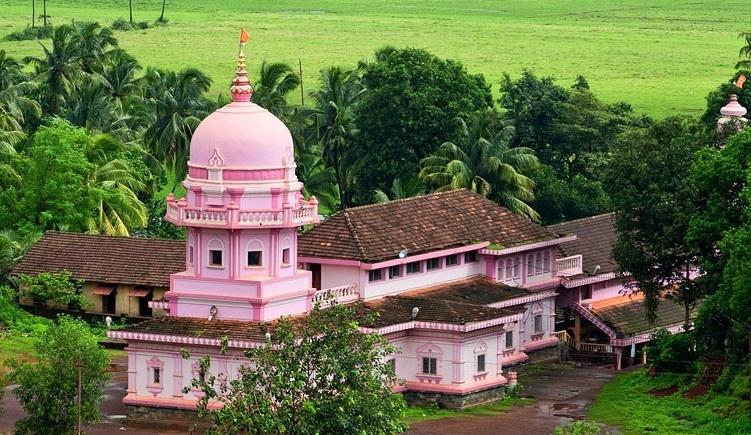
The temple's location in the hinterlands provides a refreshing contrast to the typical tourist trail. It is surrounded by lush greenery and traditional Goan ancestral homes, making the journey to the temple as spiritually enriching as the destination itself. Whether you are an architecture enthusiast, a history buff, or a pilgrim, the Lairai Devi Temple offers a deep dive into the complex socio-religious fabric of the Konkan region.
History & Religious Significance
The history of Lairai Devi is inextricably linked to the fascinating legend of the Seven Sisters and one brother. According to Goan folklore, seven sisters—Lairai, Kelbai, Mahamaya, Mirabai (Our Lady of Miracles), Morjai, Shitala, and Ajadipa—along with their brother Khetarpal, migrated from the northern parts of India to various parts of Goa. Each sister settled in a different village, becoming the presiding deity (Gramdevi) of that locality. Lairai chose Sirigao as her abode, and her presence is believed to protect the village from calamities and bring prosperity to the agrarian community.
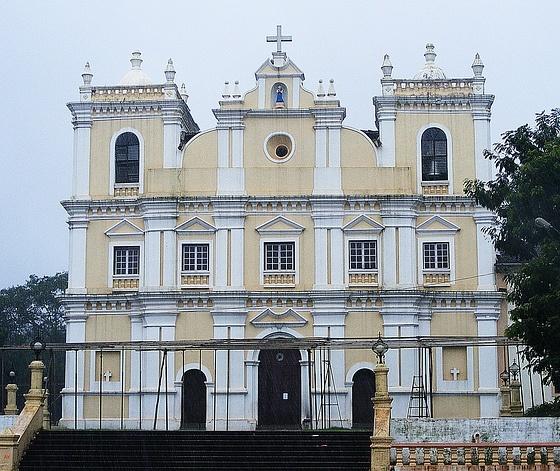
One of the most intriguing aspects of this history is the religious syncretism involving Goddess Lairai and her sister Mirabai. While Lairai remained a Hindu deity, Mirabai is venerated as Our Lady of Miracles at the Milagres Church in Mapusa. Every year, a symbolic exchange of oil and flowers takes place between the temple and the church, signifying the unbreakable bond between the two sisters and, by extension, the communal harmony between the Hindu and Christian communities in Goa. This historical narrative is a testament to the inclusive nature of Goan spirituality.
The temple has undergone several renovations over the centuries. Originally a modest shrine, it has evolved into a grand complex while maintaining its sanctity. The religious significance of the site is further heightened by its association with the Dhond community. These devotees, hailing from various castes and backgrounds, unite under the banner of Lairai Devi, emphasizing a social equality that was revolutionary for its time. The temple is considered the "Maher" or mother's home for thousands of these devotees who return every year to fulfill their vows.
Architecture of Lairai Devi Temple
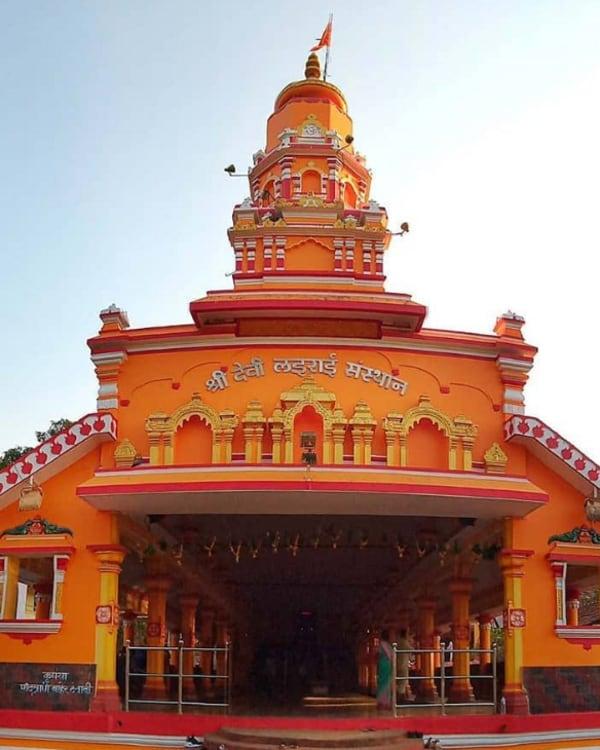
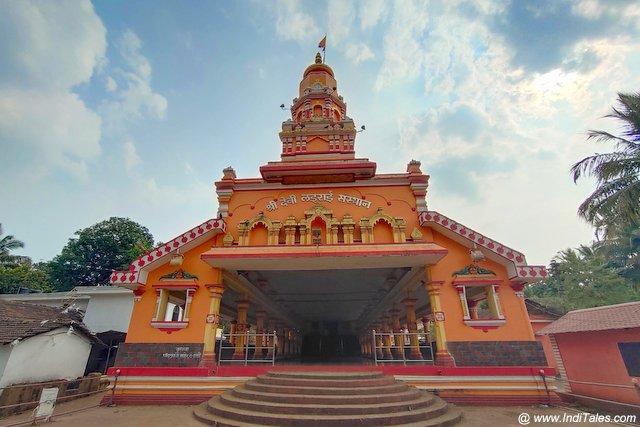
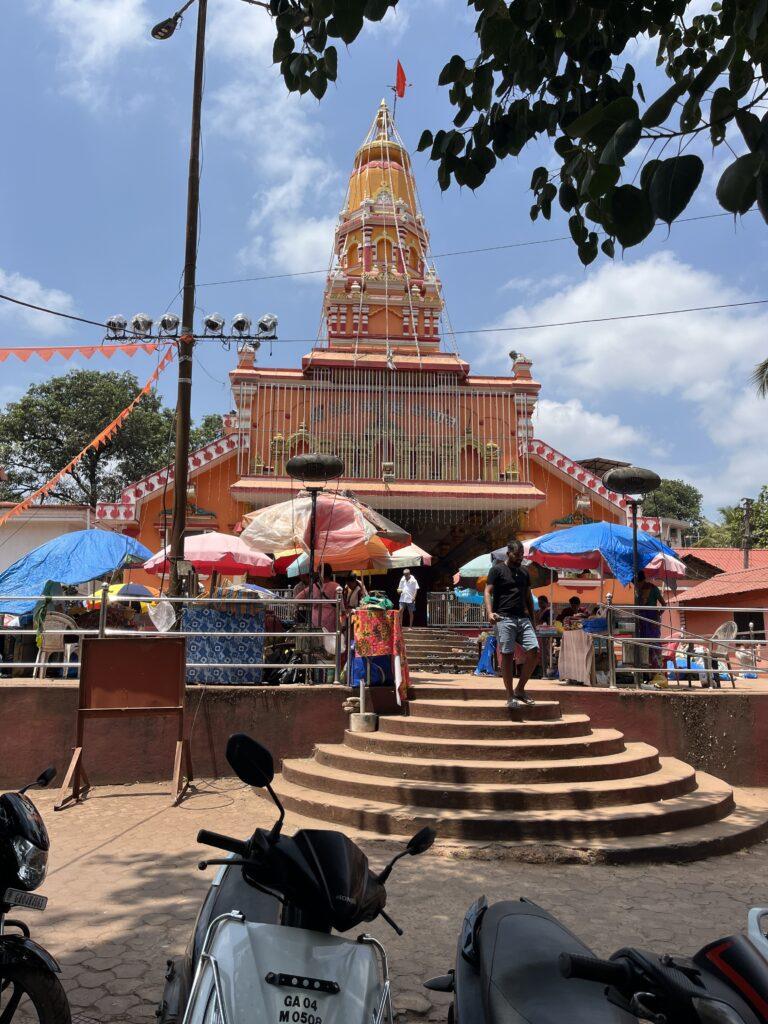
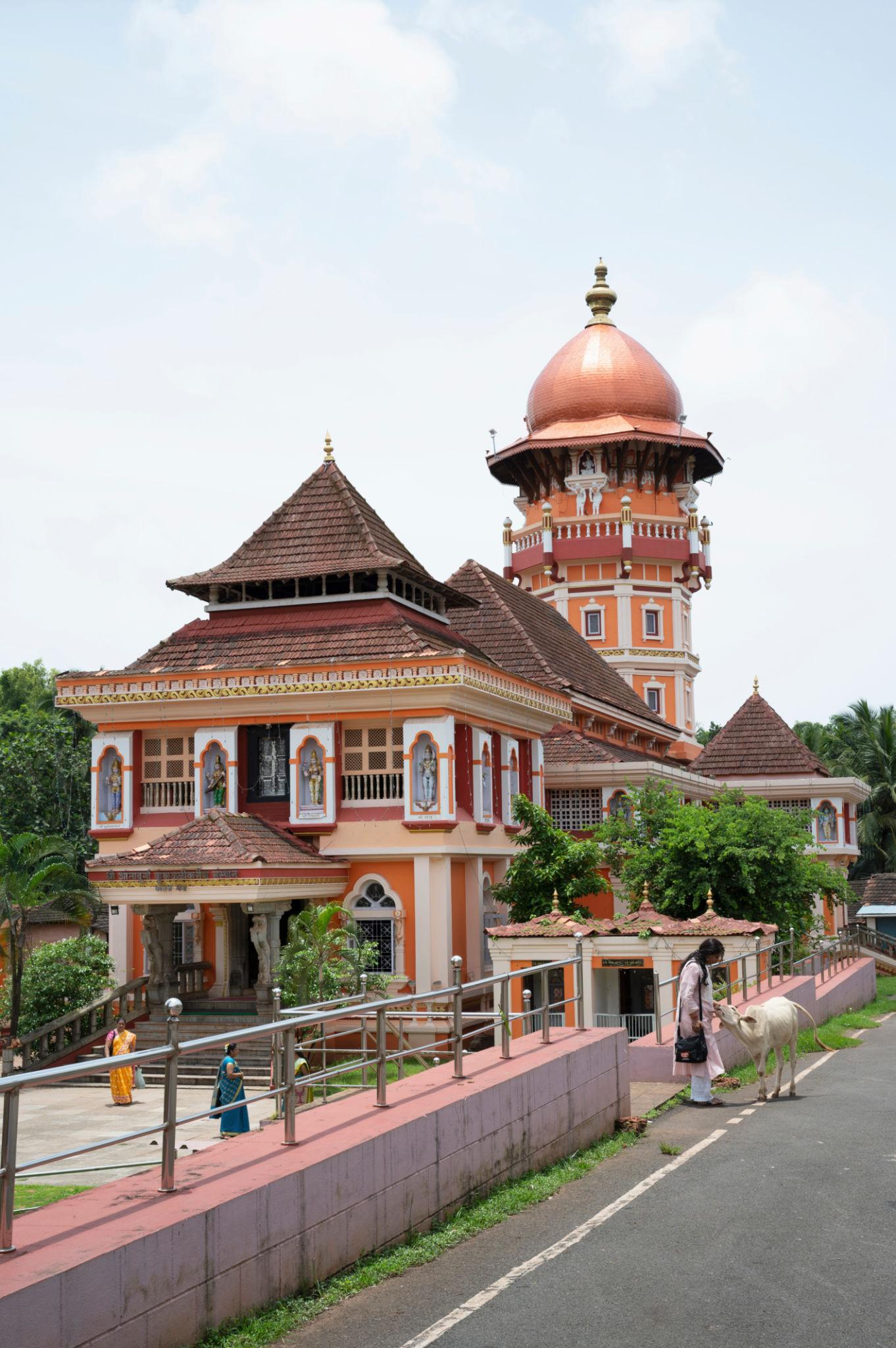
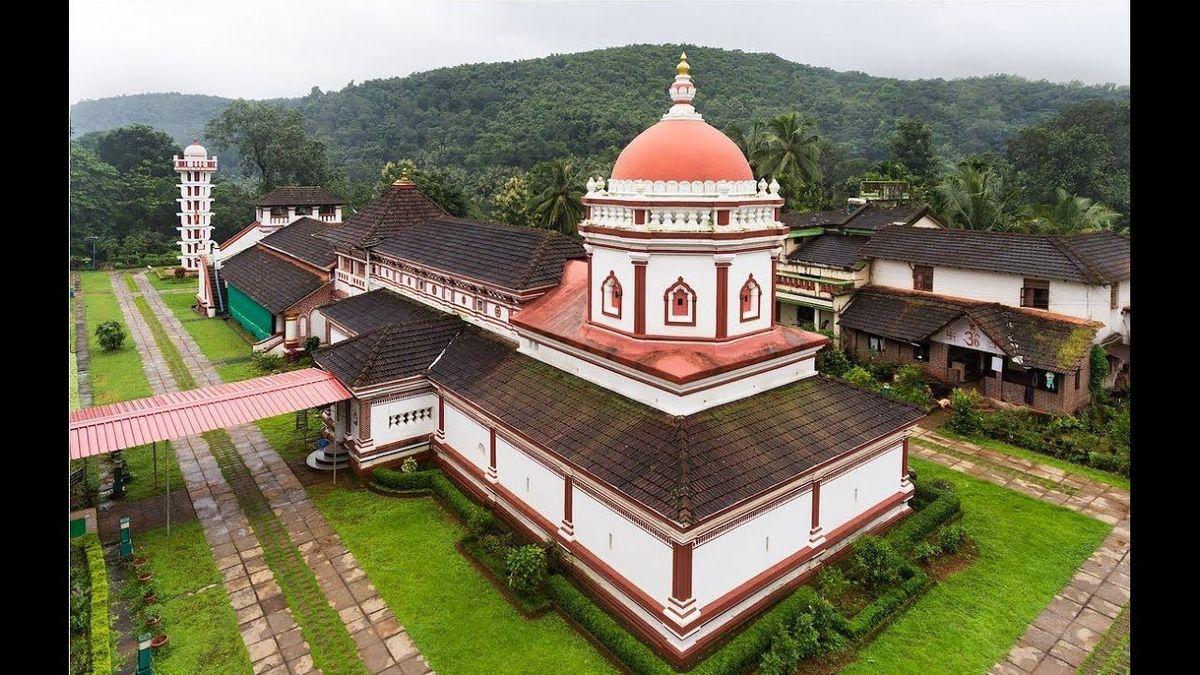
The architecture of the Lairai Devi Temple is a quintessential example of the Goan Temple Style, which evolved during the post-Portuguese era. While it lacks the intricate carvings of Dravidian temples or the massive marble structures of the North, its beauty lies in its elegant simplicity and functional design. The temple is painted in a pristine white, a common feature in Goan religious architecture, which reflects the tropical sun and creates a sense of purity.
Key architectural features include:
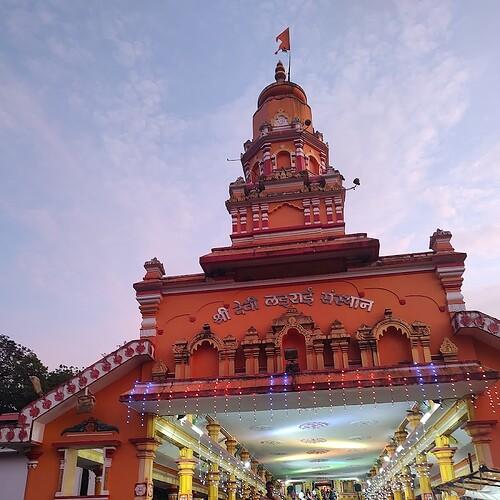
- The Shikhara: The temple features a prominent dome-shaped Shikhara (tower) that is visible from a distance. The design is influenced by the Indo-Saracenic style, a hallmark of many 17th and 18th-century Goan temples.
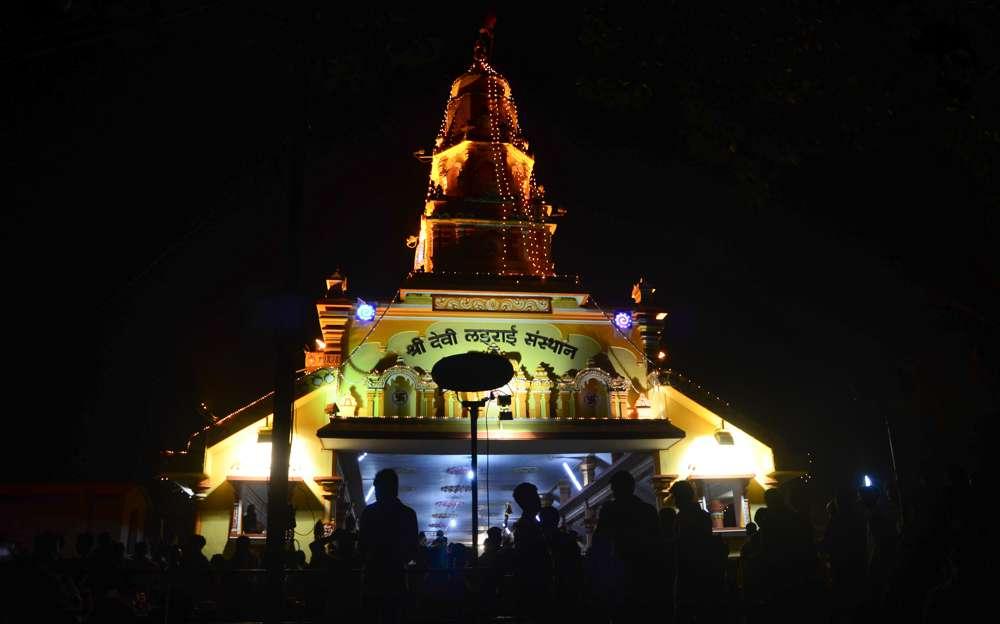
- The Deepastambha: Standing tall in the temple courtyard is the Deepastambha (lamp tower). During festivals, this tower is lit with hundreds of oil lamps, creating a celestial glow that illuminates the entire complex.
- The Mandapa: The main hall or Mandapa is spacious, designed to accommodate the large influx of pilgrims. It features sturdy pillars and a high ceiling that ensures natural ventilation, keeping the interior cool even during the humid summer months.
- The Tali (Sacred Tank): Adjacent to the temple is a large sacred water tank. This tank is central to the ritualistic life of the temple, where devotees perform ceremonial ablutions before entering the sanctum sanctorum.
- The Prakara: The temple is enclosed within a large courtyard, providing ample space for the "Pradakshina" (circumambulation) and the massive gatherings during the Zatra.
The use of local laterite stone in the foundation and the traditional tiled roofing adds a vernacular charm to the structure. The white-washed walls are often decorated with simple floral motifs, reflecting the local obsession with Mogara (Jasmine) flowers, which are the Goddess's favorite.
Main Deity / Spiritual Importance
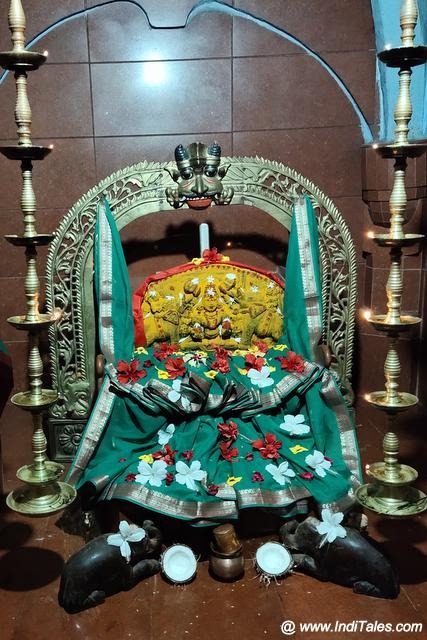
The presiding deity, Goddess Lairai, is a manifestation of the Divine Mother. In the sanctum sanctorum, she is represented not by a traditional anthropomorphic idol, but by a Kalash (sacred pitcher) topped with a coconut and draped in a rich silk saree, adorned with traditional Goan gold jewelry. This form of representation is common in the Konkan region and symbolizes the elemental power of water and earth.
Spiritually, Lairai Devi is considered a "Jagrut" deity—one who is living and responsive to the prayers of her devotees. She is often associated with fire and purity. The spiritual core of the temple revolves around the concept of Vows (Navas). Devotees believe that if one prays to Lairai Devi with a pure heart and promises to become a Dhond for a certain number of years, their deepest desires and health issues will be resolved.
The Goddess is particularly revered for her role as a protector of the "Morgi" (the jasmine flower). It is said that the fragrance of jasmine in Sirigao is the breath of the Goddess herself. For the local community, she is the ultimate matriarch, providing guidance, solace, and the strength to endure the hardships of life. The spiritual energy of the temple is most palpable during the early morning hours when the "Abhishek" (ritual bathing of the deity) is performed, accompanied by the chanting of Vedic hymns.
Festivals & Celebrations
The Lairai Zatra is undoubtedly the most significant event in the temple's calendar and one of the most spectacular festivals in all of India. Held usually in late April or early May (on the Shukla Paksha Panchami of the Hindu month of Vaishakha), the festival attracts hundreds of thousands of pilgrims.
The highlights of the festival include:
- The Dhond Tradition: Thousands of men and women become "Dhonds" for the duration of the festival. They wear traditional dhotis, carry a colorful "Bentik" (cane), and observe a strict vegetarian diet and celibacy for weeks leading up to the event.
- Fire Walking (Hom-Kunda): As night falls, a massive bonfire of tamarind wood is lit in the temple courtyard. Once the wood turns into glowing red embers, the Dhonds, in a state of spiritual trance, walk barefoot across the fire pit. It is believed that if their faith is pure, the fire will not burn them.
- The Ritualistic Dance: The Dhonds perform a rhythmic dance, circling the temple and the fire pit, chanting "Lairai-Ga-Lairai" to the beat of traditional drums and cymbals.
- The Jasmine Offerings: The entire village is flooded with jasmine flowers. Devotees offer massive garlands to the Goddess, and the air is thick with the intoxicating scent of the blooms.
- The Fair: Like any Goan Zatra, a massive fair is set up around the temple, selling everything from traditional Goan sweets like Khaje to handcrafted household items and toys.
This festival is a raw display of human endurance and divine connection. Watching thousands of devotees move in unison, driven by an invisible force of faith, is an experience that stays with visitors forever.
Best Time to Visit
The best time to visit the Lairai Devi Temple depends on what you wish to experience:
- For the Zatra Experience (April/May): If you want to witness the fire-walking and the peak of Goan religious fervor, you must visit during the Zatra. However, be prepared for massive crowds, high temperatures, and humidity. It is an intense but rewarding experience.
- For Peace and Reflection (October to March): The winter months are ideal for a quiet visit. The weather is pleasant, the skies are clear, and you can explore the temple and the surrounding village of Sirigao at a leisurely pace.
- The Monsoon Charm (June to September): Goa turns into a lush green paradise during the monsoons. The temple, surrounded by rain-washed foliage and the overflowing sacred tank, looks ethereal. It is a great time for photography, provided you can navigate the occasional heavy downpours.
Regardless of the season, visiting the temple during the early morning hours (6:00 AM to 8:00 AM) or during the evening Aarti (around 7:00 PM) provides the most spiritual atmosphere.
Timings, Entry Fee & Dress Code
To ensure a respectful and smooth visit, keep the following details in mind:
- Timings: The temple is generally open from 6:00 AM to 1:00 PM and from 4:00 PM to 8:30 PM. During festival days, the temple remains open throughout the night.
- Entry Fee: There is no entry fee to visit the Lairai Devi Temple. Donations are voluntary and can be made at the temple office.
- Dress Code: As a place of worship, a modest dress code is strictly enforced.
- Men: Should wear trousers or dhotis and shirts. Avoid wearing shorts or sleeveless vests inside the inner sanctum.
- Women: Should wear sarees, salwar kameez, or long skirts. Shoulders and knees should be covered. Carrying a scarf or dupatta is recommended.
- Footwear: Footwear must be removed before entering the temple complex. There is a designated area to keep your shoes.
How to Reach Lairai Devi Temple
The Lairai Devi Temple is located in Sirigao, which is well-connected by road to major towns in Goa.
- From Panaji: The capital city is approximately 30 km away. You can take a taxi or a local bus heading towards Bicholim. The drive takes about 45 to 60 minutes via the NH748 and the state highway.
- From Mapusa: Mapusa is the closest major town, located about 15 km from the temple. Regular buses and motorcycle taxis (pilots) are available from the Mapusa bus stand.
- From Dabolim Airport: The airport is about 50 km away. A pre-paid taxi from the airport is the most convenient option, taking roughly 1.5 hours.
- From Manohar International Airport (Mopa): The new airport is relatively close, about 25 km away, making it a convenient entry point for travelers.
- By Railway: The nearest railway station is Thivim, which is about 10 km from Sirigao. From Thivim, you can easily hire an auto-rickshaw or a taxi to reach the temple.
For those driving themselves, the route through the Goan countryside is scenic, passing through mining belts and traditional villages. GPS is reliable in this area, but asking locals for "Sirigao Lairai Temple" will always get you there.
Things to Do
A visit to the Lairai Devi Temple can be a multi-faceted experience. Here are some things you can do:
- Offer Prayers: Participate in the morning or evening Aarti. You can offer flowers (specifically Jasmine) and oil for the lamps.
- Observe the Architecture: Take a walk around the temple complex to admire the unique Goan-style dome and the towering Deepastambha.
- Visit the Sacred Tank: Spend some time by the "Tali." The reflection of the temple in the water makes for a beautiful and meditative sight.
- Explore Sirigao Village: Walk through the village lanes to see traditional Goan houses with their unique porches and oyster-shell windows.
- Interact with Locals: If you visit during the non-festival season, talk to the local priests or residents to learn more about the legends of the Seven Sisters.
- Photography: Capture the stunning exterior of the temple and the surrounding landscape. (Note: Photography inside the sanctum is prohibited).
- Meditation: The quiet corners of the temple courtyard are perfect for a few minutes of silent meditation or contemplation.
Nearby Attractions
Bicholim taluka is home to several other historical and natural wonders. You can combine your visit to the Lairai Devi Temple with these nearby attractions:
- Arvalem Caves (Pandava Caves): Located about 8 km away, these ancient rock-cut caves date back to the 6th century. They are believed to have been used by the Pandavas during their exile.
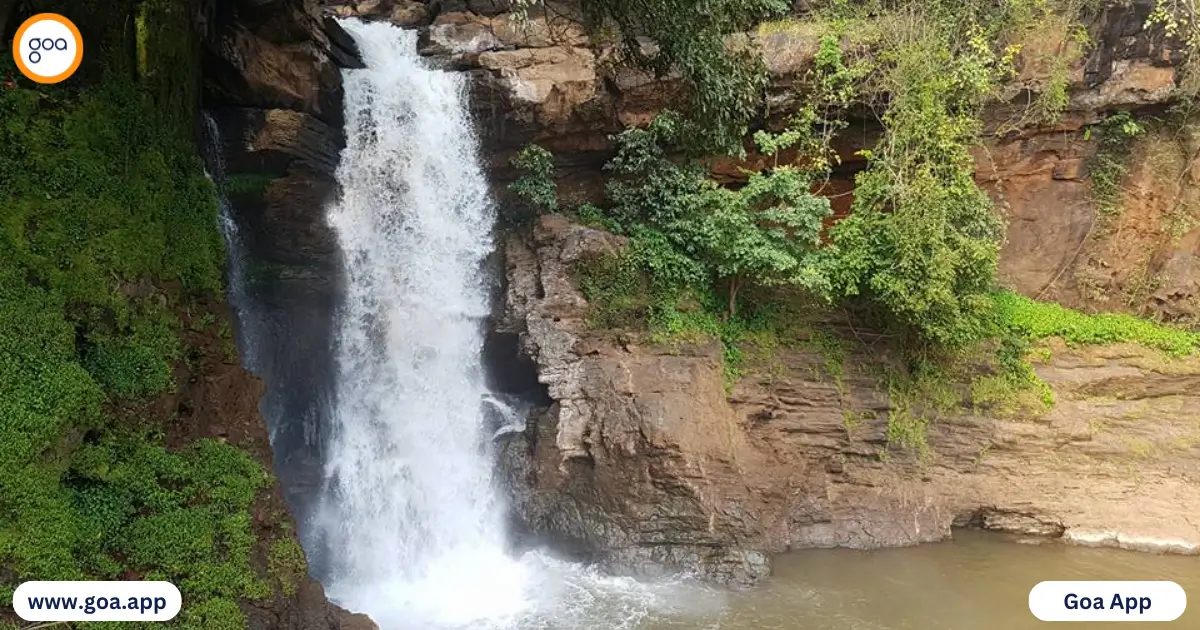
- Arvalem Waterfall: Situated right next to the caves, this 50-meter-high waterfall is a sight to behold, especially during the monsoon season.
- Mayem Lake: A popular picnic spot located about 10 km from the temple. You can enjoy pedal boating or simply relax by the serene lakeside.
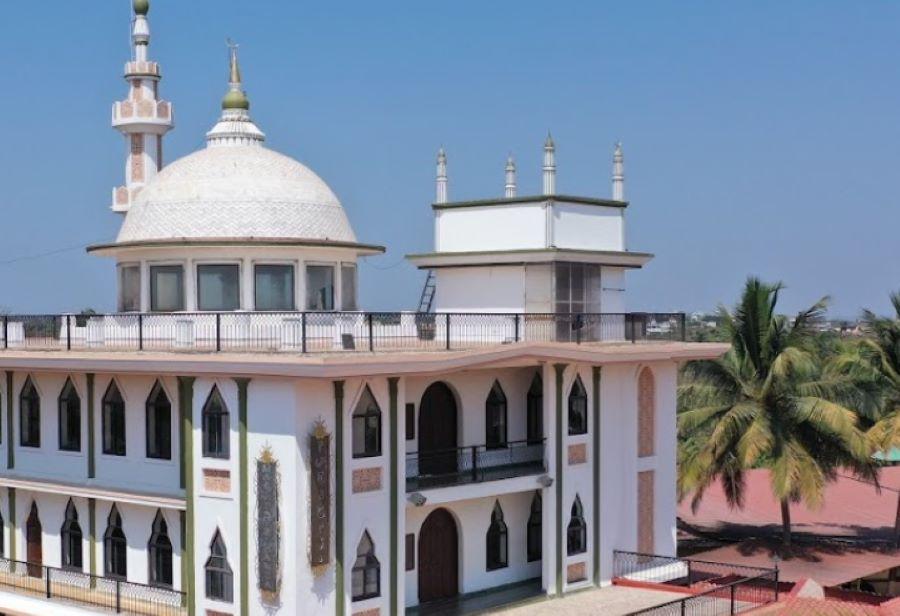
- Namazgah: A historic mosque built by Prince Akbar (son of Emperor Aurangzeb) to commemorate his victory, located on a hillock in Bicholim with panoramic views.
- Saptakoteshwar Temple: Located in Narve, this is one of the most ancient temples in Goa, rebuilt by Shivaji Maharaj. It is about 12 km from Sirigao.
- Bicholim Market: Visit the local market to buy authentic Goan spices, pottery, and traditional snacks.
Photography & Visitor Guidelines
To maintain the sanctity of the temple and ensure a pleasant experience for everyone, visitors are requested to follow these guidelines:
- Sanctum Sanctorum: Photography and videography are strictly prohibited inside the main sanctum where the deity is housed. Please respect this rule to avoid offending local sentiments.
- Exterior Photography: You are free to take photos of the temple exterior, the tank, and the courtyard. However, avoid taking photos of devotees during their private moments of prayer.
- Silence: Maintain a level of silence inside the temple. Avoid loud conversations or using mobile phones.
- Cleanliness: Do not litter. Use the bins provided in the complex. The temple is considered a sacred space, and maintaining its cleanliness is a collective responsibility.
- Respect Rituals: If a ritual is in progress, stand aside and observe quietly. Do not interrupt the priests or the devotees.
- Special Guidelines for Zatra: During the festival, the crowds can be overwhelming. Follow the directions of the police and temple volunteers. Be mindful of your belongings.
Where to Eat Nearby
While Sirigao is a small village with limited dining options, the nearby town of Bicholim offers several choices:
- Local Eateries: You will find many small "Khanavals" (traditional eateries) serving authentic Goan Hindu cuisine. Try the Vegetarian Thali, which usually includes rice, dal, a vegetable bhaji, and a piece of fried breadfruit or yam.
- Shantadurga Restaurant: A popular spot in Bicholim for South Indian breakfast items and basic North Indian meals.
- Street Food: Near the temple, especially during festivals, you can find stalls selling Mirchi Bajji (chili fritters), Batata Vada, and Ros Omelette (though primarily a non-veg snack, veg options are available).
- Sweet Shops: Don't forget to try Goan Khaje (ginger-infused jaggery sticks) and Ladu, which are often sold near temple entrances.
- Beverages: Fresh coconut water is readily available and is the best way to stay hydrated in the Goan heat.
Accommodation Nearby
Since Sirigao is not a primary tourist hub, there are no luxury resorts in the immediate vicinity. However, you have several comfortable options:
- Bicholim Town: There are several budget-friendly lodges and guesthouses in the main town of Bicholim, which is just a 10-15 minute drive away.
- Homestays: Some families in Sirigao and neighboring villages offer homestay facilities, providing a wonderful opportunity to experience local Goan hospitality and home-cooked food.
- Mapusa: If you prefer more standard hotel accommodations, Mapusa (15 km away) has a wide range of hotels, from budget to mid-range.
- Eco-Resorts: There are a few eco-resorts and farmstays located in the hinterlands of North Goa (near Sanquelim or Valpoi) that offer a peaceful retreat close to nature.
- Panaji: For those who don't mind a 45-minute drive, staying in the capital city provides the most variety in terms of luxury and boutique hotels.
Travel Tips
To make the most of your visit to Lairai Devi Temple, consider these practical tips:
- Carry Water: The weather in the Goan hinterlands can be quite hot and dry. Always carry a bottle of water with you.
- Sun Protection: Wear sunscreen, a hat, and sunglasses, especially if you plan to explore the temple complex during the afternoon.
- Local Transport: While buses are available, renting a scooter or a car gives you the flexibility to explore nearby attractions like Arvalem Falls at your own pace.
- Language: Konkani is the local language. Most people also understand Marathi, Hindi, and basic English. Learning a few Konkani words like "Dev Borem Korun" (Thank you/May God do good) will endear you to the locals.
- Cash: While digital payments are catching on, it is always wise to carry enough cash for small purchases, donations, and local transport.
- Respect the Dhonds: If you visit during the Zatra, remember that the Dhonds are in a state of deep penance. Do not obstruct their path or disturb their rituals.
- Plan Ahead: If you intend to stay overnight during the Zatra, book your accommodation well in advance as the entire region gets packed.
Conclusion
The Lairai Devi Temple is far more than a religious site; it is a cultural landmark that encapsulates the soul of rural Goa. It is a place where ancient myths breathe, where faith transcends the boundaries of the physical world, and where the community comes together in a magnificent display of devotion. From the architectural elegance of its white dome to the adrenaline-fueled fire-walking rituals of the Zatra, every element of this temple tells a story of resilience and spiritual depth.
A journey to Sirigao to pay your respects to Goddess Lairai is a journey into the heart of the Konkan. It offers a chance to witness a side of Goa that remains untouched by the commercialism of modern tourism—a side that is sacred, silent, and profoundly moving. Whether you are seeking the thrill of the festival or the quietude of the temple courtyard, a visit to Lairai Devi Temple is an essential experience for anyone looking to truly understand the spiritual landscape of Goa. Leave the beaches behind for a day, head into the red-earthed hills of Bicholim, and let the fragrance of jasmine and the spirit of Lairai Devi guide you to a deeper understanding of the divine.