Overview of Shree Navadurga Temple
Nestled in the heart of the verdant Ponda taluka, specifically in the tranquil village of Marcaim (also known as Madkai), the Shree Navadurga Temple stands as a beacon of Goan spiritual heritage. This temple is one of the most revered shrines in the state, dedicated to a powerful manifestation of Goddess Durga. Unlike the bustling beaches of North Goa, the atmosphere here is one of profound silence, broken only by the rhythmic chanting of priests and the chirping of tropical birds. For any traveler seeking to understand the "other side" of Goa—the one steeped in ancient traditions, complex history, and deep-seated faith—a visit to this temple is indispensable.
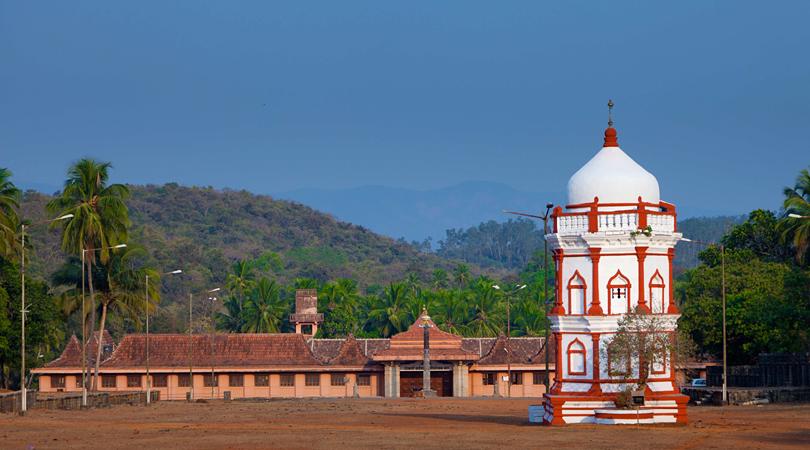
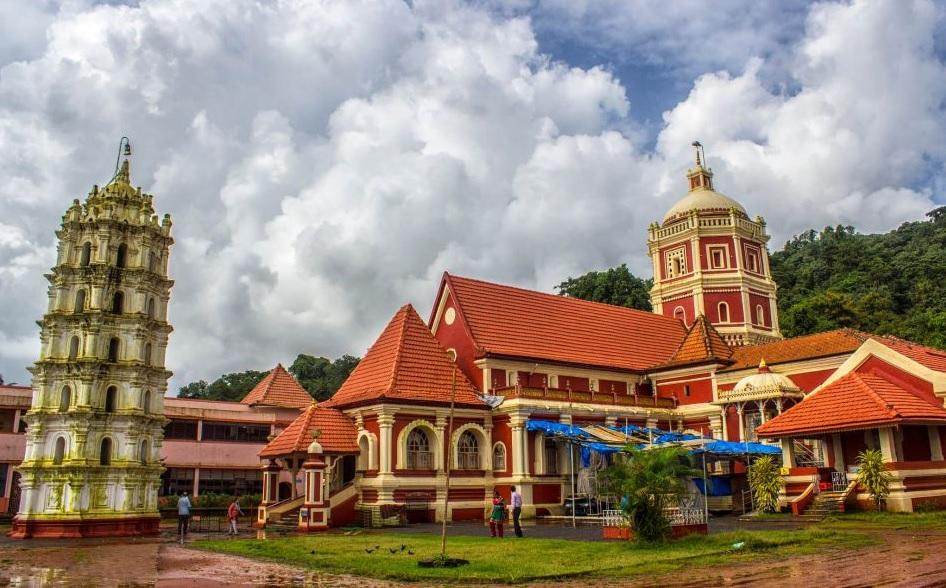
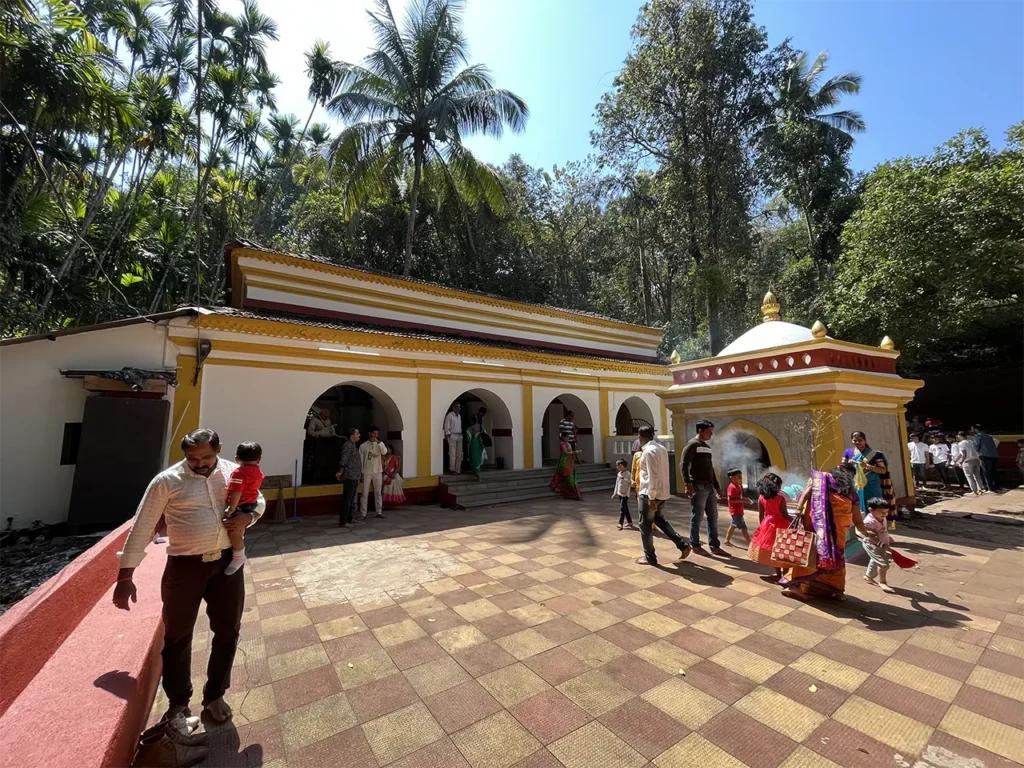
The Shree Navadurga Temple is not just a religious site; it is a cultural cornerstone for the Gaud Saraswat Brahmin community and the local villagers of Marcaim. The temple complex is characterized by its expansive courtyard, a magnificent water tank (tali), and the iconic Goan lamp tower known as the Deepastambha. As you step through the entrance, you are transported into a world where time seems to slow down. The architectural elegance, combined with the lush green backdrop of the Ponda countryside, creates a meditative environment that appeals to pilgrims and history enthusiasts alike. This guide explores the intricate layers of this sacred site, providing you with everything you need to know for a meaningful visit.
History & Religious Significance
The history of the Shree Navadurga Temple is a poignant narrative of resilience and survival. The original temple was not located in Marcaim but in the village of Gancim (near Ilhas). During the 16th century, when the Portuguese Inquisition was at its peak in Goa, many Hindu temples were targeted for destruction. To protect their beloved deity from desecration, the devotees of Goddess Navadurga performed a daring feat. Under the cover of darkness, they moved the sacred idol across the Zuari River to the safer territories of the Sunda Kings, eventually settling in the village of Marcaim, which was then outside Portuguese control.
This migration is a common theme among several major Goan temples, but the story of Navadurga is particularly significant due to the age of the idol. Historical records and oral traditions suggest that the deity has been worshipped for over 500 years at its current location. The temple has undergone several renovations over the centuries, with major structural changes occurring in the 17th and 18th centuries. The religious significance of the temple is tied to the concept of Navadurga, which represents the nine forms of Goddess Durga. However, the primary deity here is worshipped in a unique form that combines grace with fierce power, symbolizing the protection of the righteous and the destruction of evil.
The temple also holds a special place in the hearts of the local "Mahajans" (traditional caretakers and devotees). It serves as a communal hub where social disputes were traditionally settled and where the community gathers for major life events. The spiritual energy of the temple is said to be "Jagrut" (awake), meaning the Goddess is believed to actively listen to and fulfill the sincere prayers of her devotees.
Architecture of Shree Navadurga Temple
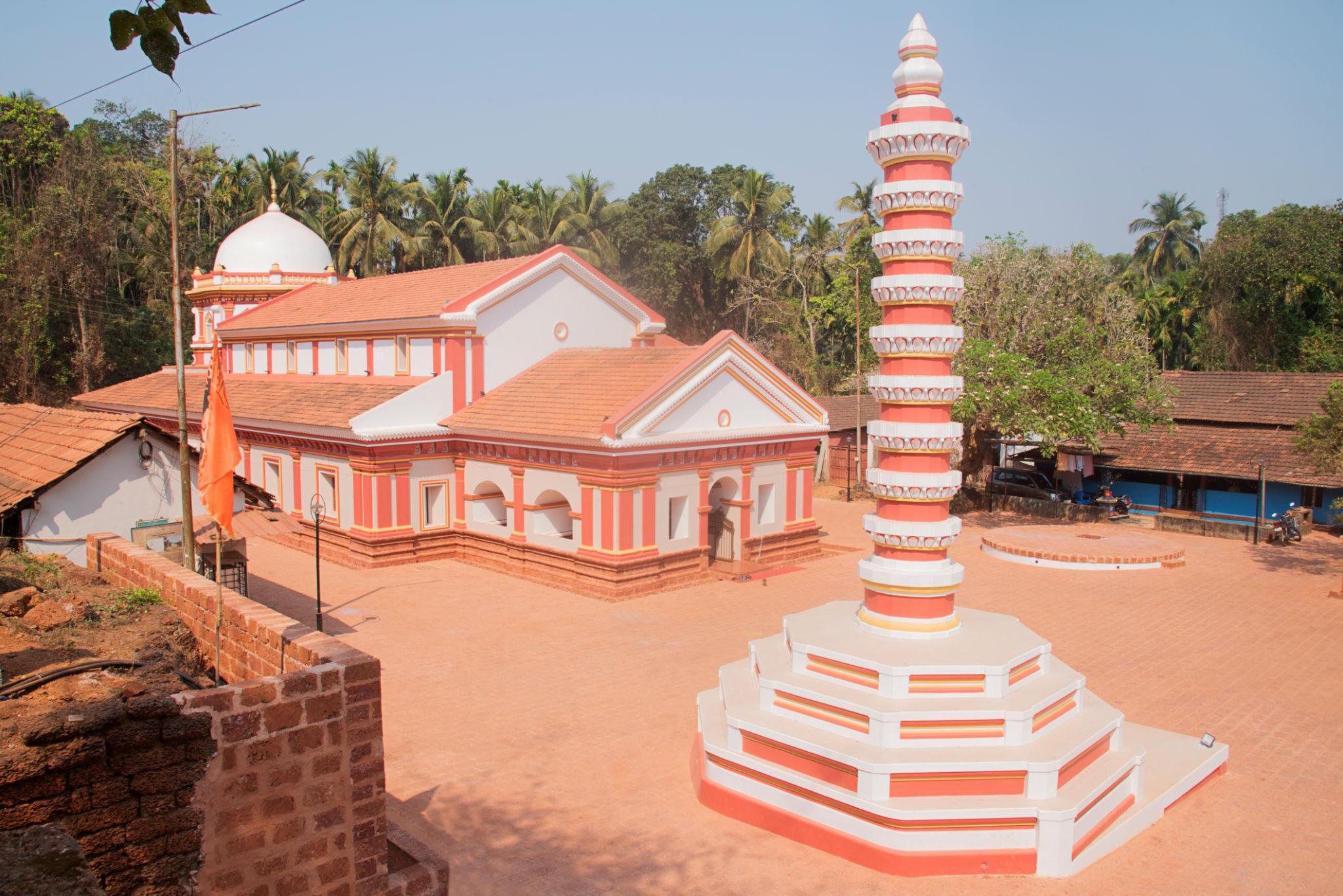
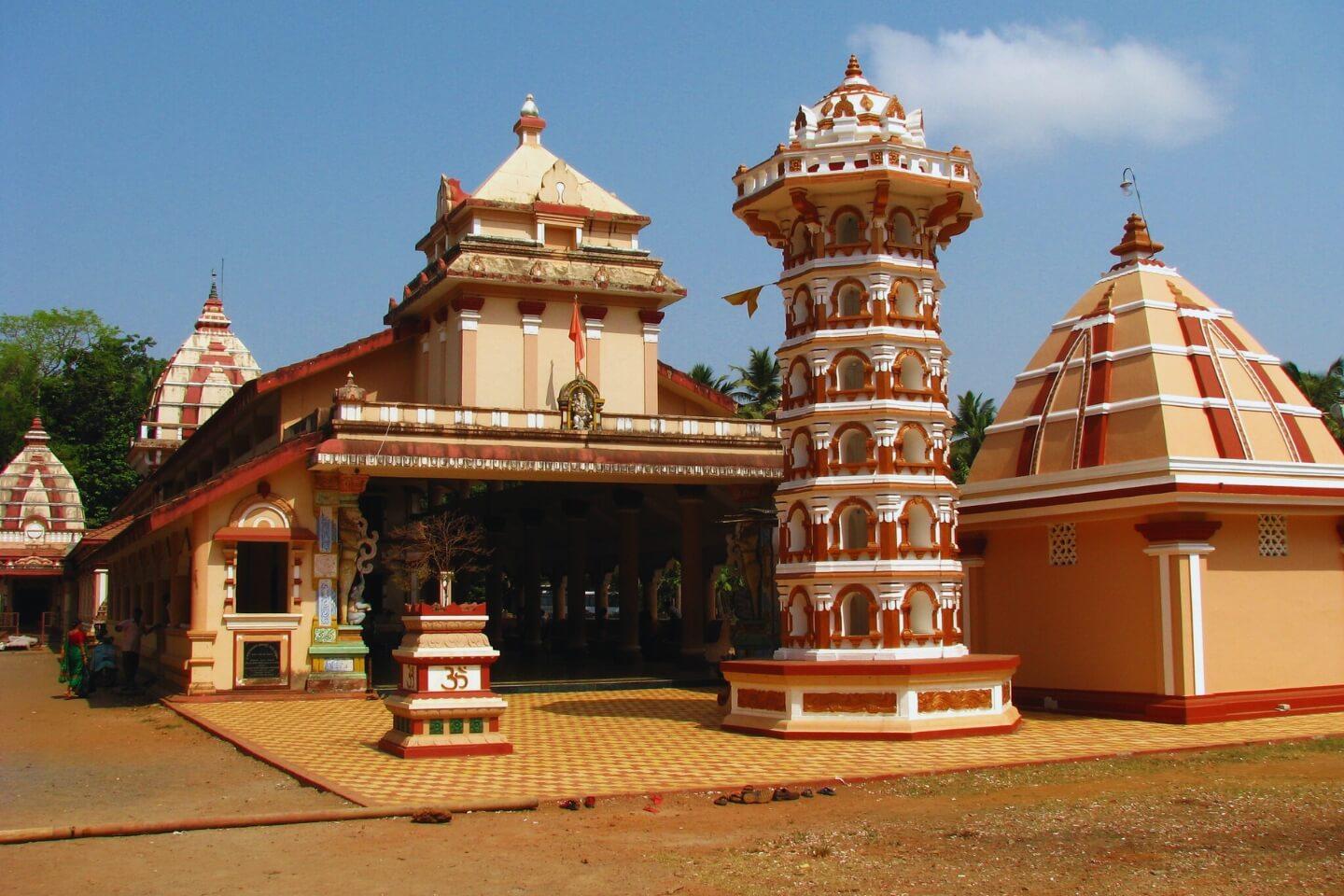
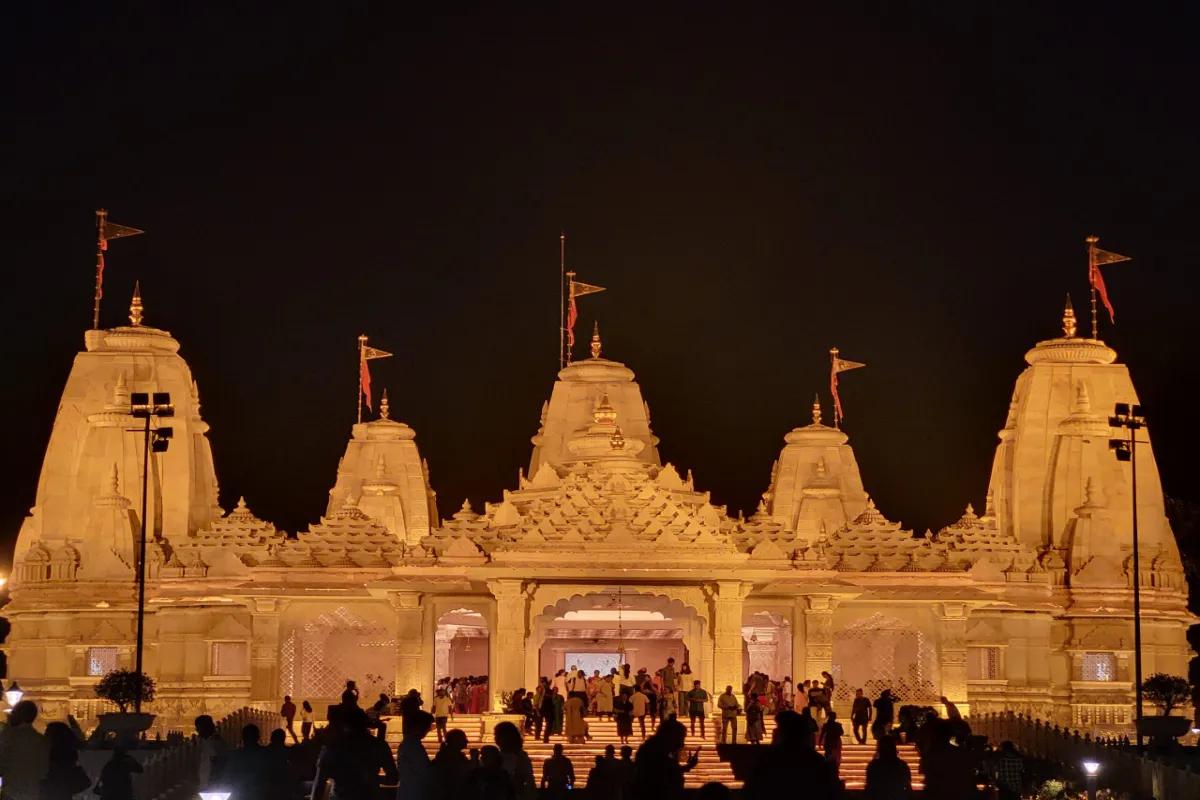
The architecture of Shree Navadurga Temple is a quintessential example of the Goan Temple Style, which is a fascinating blend of indigenous Hindu designs and subtle colonial influences. Unlike the Nagara or Dravidian styles found in other parts of India, Goan temples developed a distinct aesthetic due to the historical context of the region. The most striking feature you will notice upon arrival is the Deepastambha. This multi-storied white octagonal tower is used to hold hundreds of oil lamps during festivals. When lit, it transforms the entire courtyard into a glowing spectacle of light and shadow.
The main temple structure consists of several distinct sections:
- The Mahadwar: The grand entrance gate that leads into the temple courtyard. It is often decorated with intricate carvings of floral motifs and guardian figures.
- The Sabhamandapa: The assembly hall where devotees gather. This hall features heavy wooden pillars, often made of seasoned teak or jackfruit wood, intricately carved with scenes from the Puranas and the Ramayana. The ceiling is often painted with vibrant colors, reflecting the traditional Goan love for art.
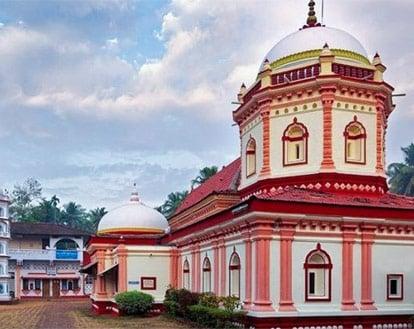
- The Garbhagriha (Sanctum Sanctorum): This is the innermost chamber where the deity resides. The entrance to the Garbhagriha is often plated in silver or gold, featuring exquisite filigree work. The dome (Shikhara) above the sanctum is typically Goan, resembling a hybrid between a traditional temple spire and a Portuguese-style dome, often topped with a golden Kalash.
- The Temple Tank (Tali): Located within or just outside the main complex, the stone-lined tank is used for ritualistic baths and adds to the aesthetic serenity of the site.
The use of laterite stone—a reddish volcanic rock found abundantly in Goa—provides the structural foundation, while the exterior is finished with white lime plaster. This contrast between the white walls and the red tiled roofs is a hallmark of Goan religious architecture. The flooring is typically made of cool marble or polished basalt, providing relief from the tropical heat.
Main Deity / Spiritual Importance
The presiding deity of the temple is Goddess Navadurga, a form of Mahishasuramardini (the slayer of the buffalo demon Mahishasura). The idol is carved from high-quality black basalt stone and stands approximately four feet tall. She is depicted in a standing posture, radiating a sense of calm authority. One of the most fascinating and unique features of this specific idol is her tilted head. According to local legend, when the idol was being installed, the sculptor was worried about its perfection. The Goddess, pleased with his devotion, is said to have physically tilted her head to look at him, and the stone idol remained in that position forever.
Spiritually, the Goddess is viewed as a mother figure who is both nurturing and protective. She is seen as the supreme energy (Shakti) that governs the universe. Devotees believe that visiting the temple and looking into the eyes of the Goddess can bring immense mental peace and clarity. The deity is adorned daily with different sarees, gold ornaments, and fresh flowers, especially hibiscus and marigolds, which are considered sacred to her. The daily rituals (Pujas) are performed with great precision, following ancient Vedic traditions that have been passed down through generations of the temple's priestly families.
Festivals & Celebrations
The Shree Navadurga Temple is a hub of cultural activity, especially during the festive season. The celebrations here are grand, reflecting the vibrant spirit of Goan Hindus. If you wish to witness the temple in its full glory, planning your visit around these festivals is highly recommended.
- The Zatra (Annual Feast): This is the most significant event at the temple, usually held in the month of November (Aghana month of the Hindu calendar). The Zatra lasts for several days and attracts thousands of devotees from across the country. The highlight is the Ratha Yatra (Chariot Procession), where the deity is placed in a massive, intricately carved wooden chariot and pulled around the temple complex by devotees. The atmosphere is electric, filled with the sounds of traditional drums (Dhol), cymbals, and trumpets.
- Navratri: As a temple dedicated to Navadurga, the nine nights of Navratri are celebrated with immense fervor. Each night, the Goddess is dressed in a different color, representing her various forms. Special prayers, Kirtans (devotional songs), and cultural programs like Dashavatara (traditional folk plays) are organized.
- Vasant Panchami: This festival marks the arrival of spring. The temple is decorated with fresh green leaves and flowers, and special rituals are performed to seek the blessings of the Goddess for a bountiful harvest.
- Shigmo: The Goan version of Holi is also celebrated here, featuring traditional folk dances like the Ghode Modni and Fugdi in the temple courtyard.
Best Time to Visit
To fully appreciate the beauty and spiritual essence of Shree Navadurga Temple, timing is key. The best time to visit is between November and February. During these winter months, the weather in Goa is pleasant, with cool breezes and mild sunshine, making it comfortable to explore the outdoor temple complex and the surrounding village. This period also coincides with the major Zatra festival, offering a unique cultural experience.
The monsoon season (June to September) offers a different kind of charm. The Ponda region becomes incredibly lush and green, and the temple tank fills up, creating a picturesque setting. However, heavy rains might make travel a bit difficult. Summer (March to May) can be quite hot and humid, but if you visit early in the morning or late in the evening, you can still have a peaceful experience. For spiritual seekers, visiting on a Friday is considered particularly auspicious, as it is the day dedicated to the Goddess.
Timings, Entry Fee & Dress Code
Understanding the logistics is essential for a smooth visit to the Shree Navadurga Temple. Like most traditional Goan temples, certain rules must be followed to maintain the sanctity of the space.
- Temple Timings: The temple is generally open from 7:00 AM to 12:30 PM and then from 4:00 PM to 9:00 PM. The temple remains closed during the afternoon hours for the deity's rest. It is advisable to reach by 8:00 AM to witness the morning rituals or by 6:30 PM for the evening Aarti.
- Entry Fee: There is no entry fee to visit the temple. It is open to people of all faiths, provided they respect the customs and traditions.
- Dress Code: A strict dress code is enforced. Both men and women are expected to dress modestly. Women should wear sarees, salwar kameez, or long skirts. Men should wear trousers and shirts or traditional dhotis. Short skirts, sleeveless tops, and shorts are strictly prohibited. It is customary to remove your footwear before entering the temple premises.
How to Reach Shree Navadurga Temple
The Shree Navadurga Temple is located in Marcaim, which is about 15 kilometers from Ponda city and approximately 28 kilometers from the capital city, Panaji. Reaching the temple is relatively easy as it is well-connected by road.
- By Road: You can hire a taxi or a self-drive car from any major tourist hub like Panaji, Calangute, or Margao. The drive to Marcaim is scenic, passing through winding roads lined with coconut groves and traditional Goan houses. If you are using public transport, you can take a bus to Ponda and then hire an auto-rickshaw or a local bus to Marcaim.
- By Rail: The nearest major railway stations are Karmali (Old Goa) and Madgaon. From these stations, you can hire a taxi to reach the temple. Karmali is closer, at a distance of about 18 kilometers.
- By Air: The Dabolim Airport is approximately 35 kilometers away, while the Mopa (Manohar International Airport) is about 60 kilometers away. Pre-paid taxis are available at both airports.
Things to Do
A visit to the Shree Navadurga Temple offers more than just a religious experience. Here are some things you can do to make your visit memorable:
- Participate in the Aarti: The evening Aarti is a sensory delight. The sound of bells, the fragrance of incense, and the sight of the oil lamps create a powerful spiritual vibration.
- Explore the Village of Marcaim: After your temple visit, take a leisurely walk through the village. You will see traditional Goan architecture, small local bakeries (paderias), and friendly locals who are often happy to share stories about the temple.
- Meditation: The quiet corners of the temple courtyard are perfect for meditation. The peaceful environment helps in centering your thoughts and finding inner calm.
- Observe Local Traditions: Watch how the locals interact with the deity. You might see people performing "Prasad" (seeking divine guidance through a specific ritual involving flowers) or offering "Oti" (a traditional offering of a saree, coconut, and rice).
- Study the Architecture: Spend time looking at the intricate carvings on the wooden pillars and the unique design of the Deepastambha. It is a masterclass in Goan craftsmanship.
Nearby Attractions
Ponda is often called the "Temple Heartland of Goa," so there are several other fascinating sites you can visit near the Shree Navadurga Temple:
- Shree Manguesh Temple: Located in Priol, this is perhaps the most famous temple in Goa, dedicated to Lord Shiva. It is known for its stunning architecture and massive Deepastambha.
- Shree Shantadurga Temple: Situated in Kavlem, this temple is dedicated to the Goddess of Peace. The fusion of Indo-Portuguese architecture here is truly unique.
- Sahakari Spice Farm: A short drive away, this farm offers guided tours where you can learn about various spices, enjoy a traditional Goan lunch, and even see elephants.
- Nageshi Temple: One of the few temples in Goa that survived the Portuguese Inquisition in its original location, famous for its ancient stone inscriptions and beautiful temple tank.
- Safira Masjid: A historic 16th-century mosque that showcases the diverse religious history of the Ponda region.
Photography & Visitor Guidelines
To ensure a respectful visit, please keep the following guidelines in mind:
- Photography: Photography is usually strictly prohibited inside the Garbhagriha (sanctum sanctorum). You may take photos of the exterior architecture, the Deepastambha, and the courtyard, but it is always polite to ask the temple authorities for permission first.
- Silence: Maintain a quiet demeanor. The temple is a place of worship and meditation for many; loud conversations and mobile phone usage should be avoided.
- Cleanliness: Do not litter. The temple premises are kept very clean, and visitors are expected to help maintain this.
- Offerings: If you wish to make an offering, you can buy flowers and coconuts from the small stalls outside the temple. Do not touch the idol or enter the inner sanctum unless accompanied by a priest for a specific ritual.
- Respect Customs: If you see a ritual in progress, observe from a distance and do not interrupt.
Where to Eat Nearby
While Marcaim is a quiet village, the nearby town of Ponda offers several excellent dining options. You won't find many "tourist cafes" here, but you will find authentic Goan flavors.
- Local Thali Places: Look for small eateries in Ponda that serve a "Hindu Goan Thali." This typically includes rice, fish curry (for non-vegetarians), various vegetable preparations (bhaji), kismoor (dried prawn salad), and sol kadi (a refreshing kokum and coconut milk drink).
- Tanshikar Spice Farm: If you are looking for an organic, farm-to-table experience, this farm serves delicious traditional vegetarian meals.
- Farmagudi Residency: Run by the Goa Tourism Development Corporation (GTDC), this place offers a reliable menu of Goan and North Indian dishes.
- Street Food: In the evenings, you can find local vendors in Ponda selling Ros Omelette (an omelette served with spicy gravy) and Batata Vada.
Accommodation Nearby
If you wish to stay close to the temple to experience the early morning rituals, there are several options in and around Ponda:
- GTDC Farmagudi Residency: A well-maintained property offering comfortable rooms at affordable prices. It is centrally located for exploring all the temples in Ponda.
- Boutique Farmstays: There are several eco-resorts and spice farmstays in the Ponda area that offer a rustic yet comfortable experience, perfect for those who love nature.
- Budget Hotels: Ponda town has several budget-friendly hotels and guest houses that cater to pilgrims and business travelers.
- Homestays: For a more personal experience, look for homestays in the nearby villages. This will give you a chance to experience local Goan hospitality and home-cooked food.
Travel Tips
- Carry Water: The tropical weather can be dehydrating. Always carry a bottle of water, but remember to dispose of it responsibly.
- Learn Basic Konkani: While most people speak English and Hindi, a few words in Konkani like "Devu boro koru" (Thank you/May God do good to you) will go a long way in building a rapport with the locals.
- Hire a Local Guide: If you are interested in the deep history and legends of the temple, hiring a local guide can be very rewarding. They can point out architectural details you might otherwise miss.
- Plan for Traffic: If you are traveling from North Goa (Calangute/Baga), the journey can take 1.5 to 2 hours depending on traffic, especially near the Panaji bridge. Plan your departure accordingly.
- Respect Local Sensitivity: Remember that this is a living place of worship, not just a tourist attraction. Be mindful of your actions and surroundings.
Conclusion
The Shree Navadurga Temple in Marcaim is a testament to the enduring spirit of Goan culture. It is a place where history, art, and faith converge to create an atmosphere of profound serenity. Whether you are a devout pilgrim seeking the blessings of the Goddess, an architecture enthusiast marveling at the unique Goan style, or a traveler looking to escape the crowded beaches, this temple offers a soul-stirring experience. The legend of the tilted head, the glow of the Deepastambha, and the lush greenery of the Ponda countryside all combine to make a visit to Shree Navadurga Temple a highlight of any Goan itinerary. As you leave the temple gates, you carry with you not just memories of a beautiful site, but a sense of peace that lingers long after your journey ends.