Overview of Shri Kamakshi Temple Shiroda
Nestled amidst the emerald-green valleys and undulating hills of the Ponda taluka in Goa, the Shri Kamakshi Temple in Shiroda stands as a profound symbol of faith, resilience, and architectural elegance. Unlike the sun-drenched beaches and pulsating nightlife that many associate with Goa, the hinterlands of Ponda offer a different kind of intoxication—one that is spiritual, serene, and deeply rooted in the soil of the Konkan coast. The Shri Kamakshi Temple is not merely a place of worship; it is a cultural cornerstone for thousands of devotees, particularly the Gaud Saraswat Brahmin (GSB) community, who revere the deity as their Kuladevata or ancestral family goddess.
The village of Shiroda itself provides a picturesque backdrop for this sacred site. Surrounded by thick groves of coconut palms, betel nut trees, and cashew plantations, the temple complex exudes an aura of ancient peace. As you approach the temple, the first thing that strikes you is the harmonious blend of nature and man-made devotion. The air is often thick with the scent of incense and the distant sound of temple bells, creating a meditative environment that instantly disconnects the visitor from the chaotic pace of modern life. For the traveler seeking the "True Goa"—the Goa of legends, traditions, and deep-seated spirituality—the Shri Kamakshi Temple is an essential pilgrimage.
This temple is dedicated to Goddess Kamakshi, an incarnation of the Universal Mother, Shakti. The name "Kamakshi" translates to "one whose eyes are full of desire" or "one who has beautiful eyes," signifying the goddess's ability to grant the desires of her devotees through her compassionate gaze. The Shiroda temple is one of the most important Shakti shrines in the state, drawing visitors from across India who come to seek the blessings of the Mother Goddess. Whether you are a spiritual seeker, a history enthusiast, or an admirer of traditional Goan architecture, the Shri Kamakshi Temple offers a multi-layered experience that resonates long after you have left its hallowed precincts.
History & Religious Significance
The history of the Shri Kamakshi Temple is a poignant saga of displacement, survival, and the indomitable spirit of the Goan people. The original seat of the deity was not in Shiroda, but in the village of Raia in the Salcete taluka. During the 16th century, Goa was under Portuguese colonial rule. This period saw the intensification of the Goa Inquisition, during which the colonial administration and religious orders sought to systematically dismantle Hindu temples and convert the local population to Christianity. In 1564, as the threat of temple destruction loomed over Raia, the devoted followers of Goddess Kamakshi took a courageous step to save their beloved deity.
Under the cover of night, the idol of Shri Kamakshi was clandestinely removed from its original shrine in Raia. Devotees transported the idol across the Zuari River to the territory of the Sonda Rajas, who were local Hindu rulers outside the immediate control of the Portuguese at that time. This region, which we now know as Shiroda in Ponda, became a sanctuary for several displaced deities from the coastal regions of Salcete and Bardez. The current temple at Shiroda was established in the late 16th century, though it has undergone several renovations and expansions over the subsequent centuries to reach its current magnificent form.
The religious significance of Shri Kamakshi is deeply linked to the Kamakhya Temple in Assam. It is believed that the deity was originally brought to Goa from Guwahati (Kamakhya) by a devotee named Agnimukha. Legend suggests that the Goddess Kamakshi in Shiroda is the same divine energy that resides in the famous Shakti Peetha in Assam. For the local community, the temple is more than a historical relic; it is the living heart of their social and spiritual identity. The goddess is seen as a protector, a provider, and the ultimate matriarch of the families who worship her. The historical journey of the idol from Raia to Shiroda is still commemorated in local folklore and songs, serving as a reminder of the trials faced by the community to preserve their religious heritage.
Architecture of Shri Kamakshi Temple Shiroda
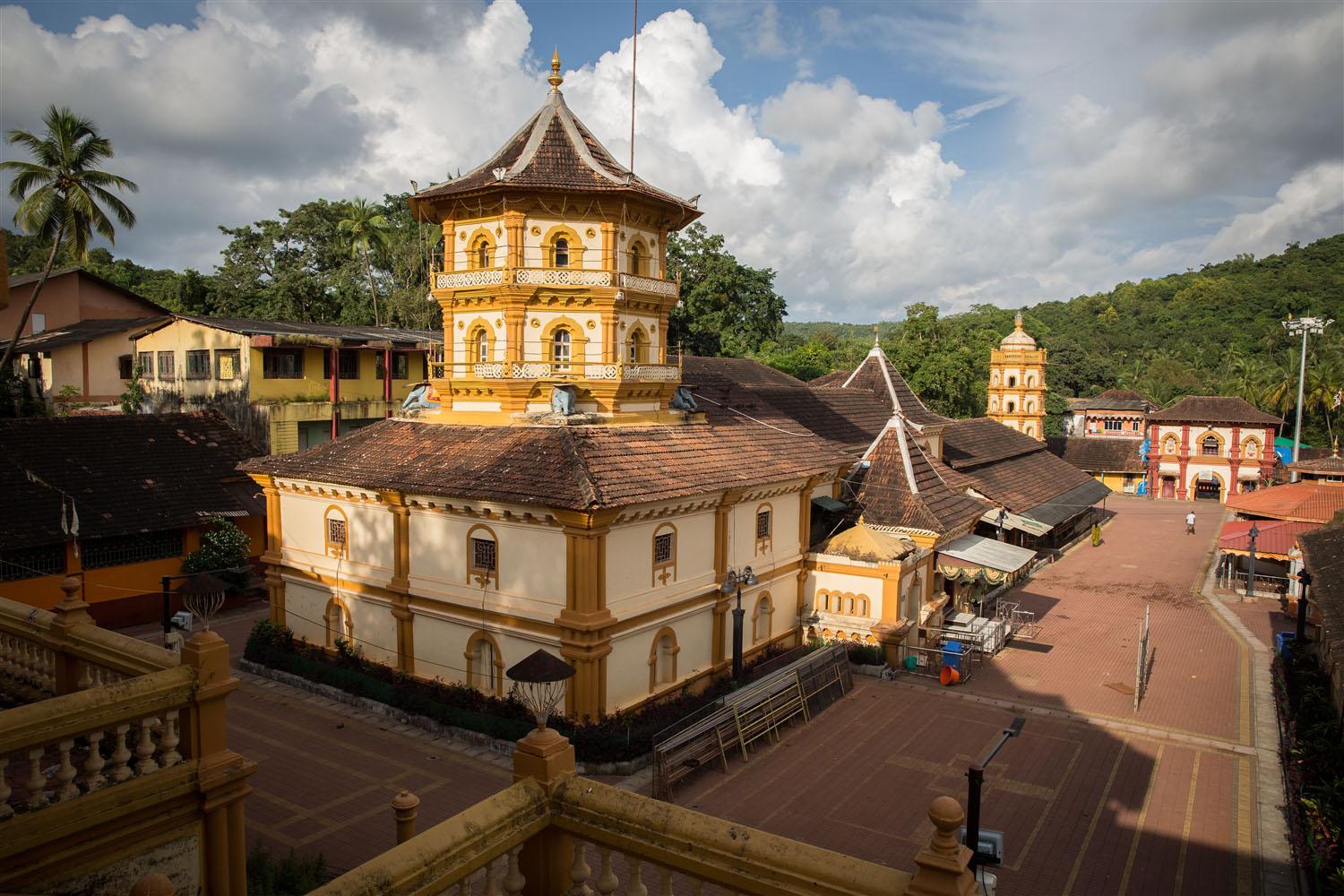
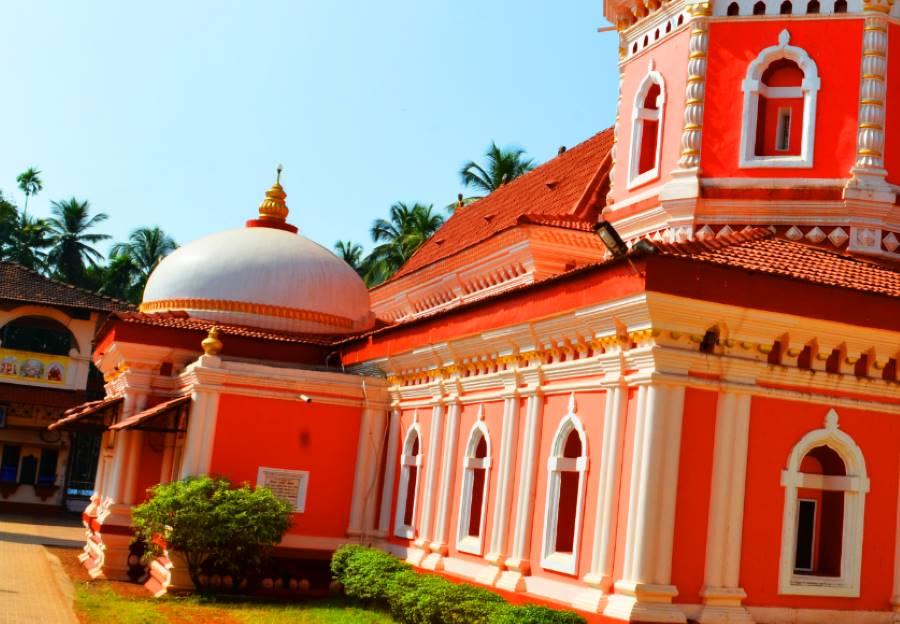
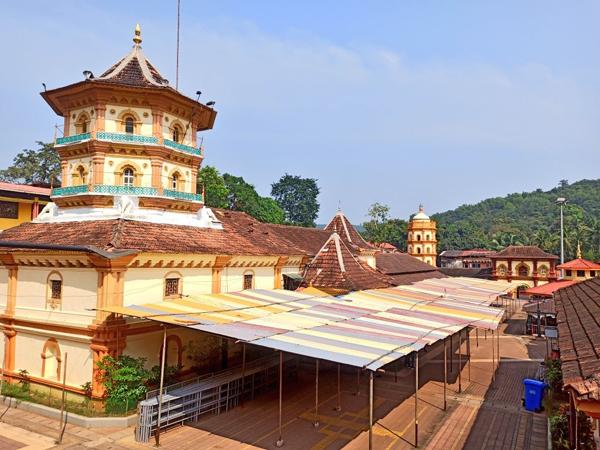
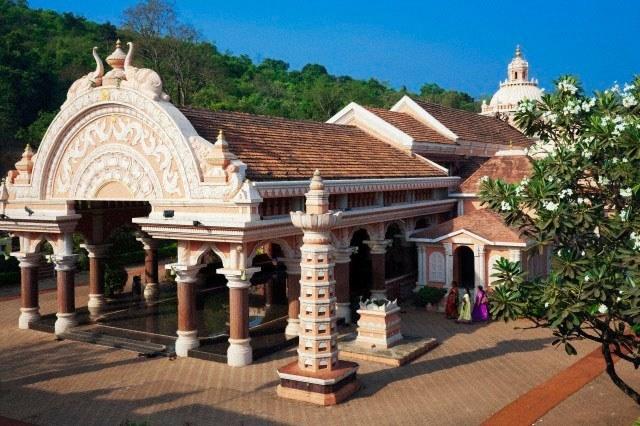
The architecture of the Shri Kamakshi Temple is a masterful example of the Goan Temple Style, which is a unique fusion of various cultural influences. Unlike the Nagara or Dravidian styles found in other parts of India, Goan temples evolved their own distinct aesthetic, blending traditional Hindu temple elements with Mughal-inspired domes and Portuguese-style decorative motifs. This eclectic mix resulted in a style that is both regal and functional, designed to withstand the heavy monsoon rains of the Konkan region.
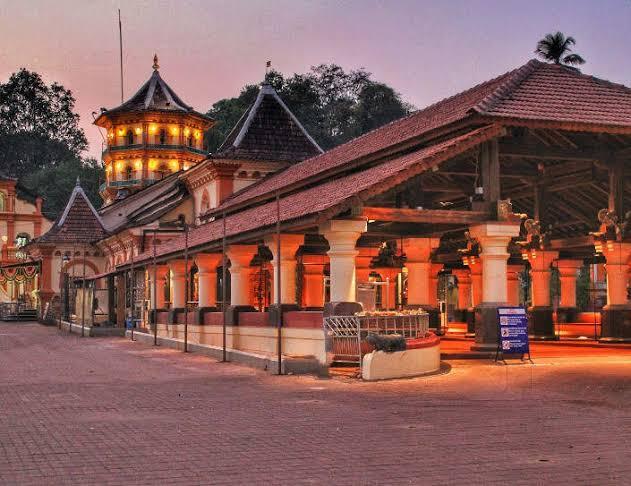
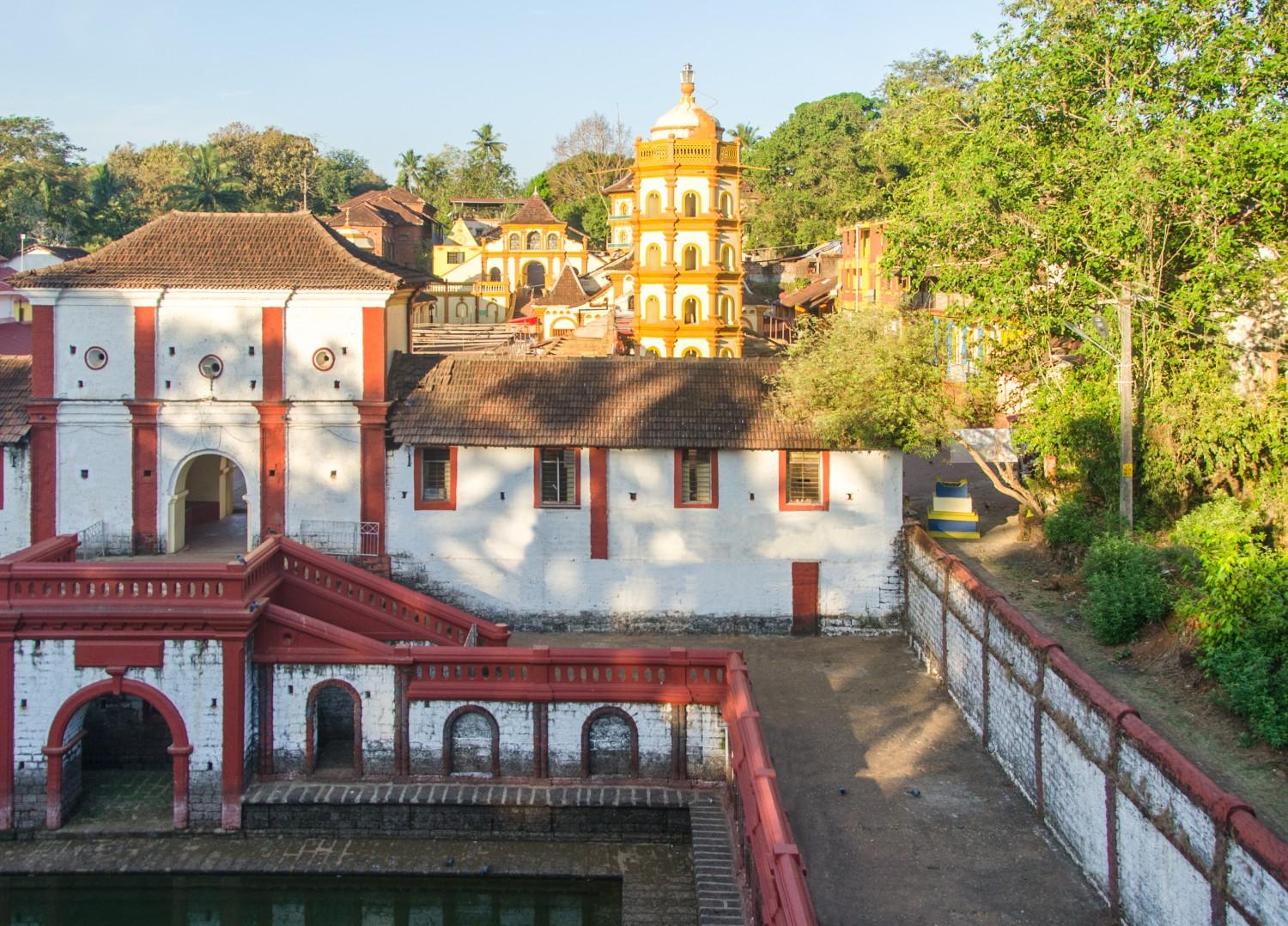
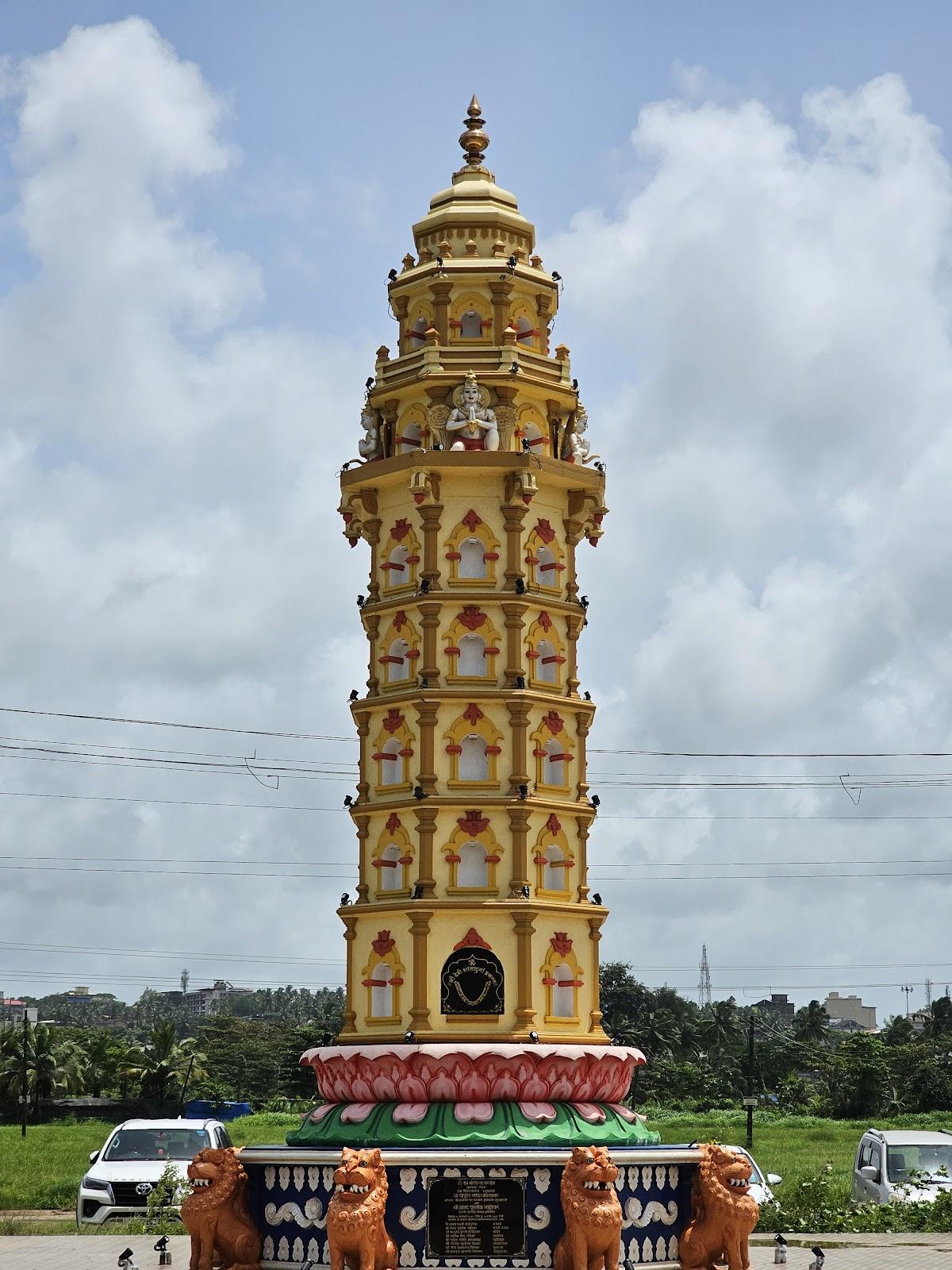
As you enter the temple complex, your eyes are immediately drawn to the Deepstambha (lamp tower). This is a quintessential feature of Goan temples. The Deepstambha at Shiroda is a towering, multi-storied white structure with intricate niches designed to hold oil lamps. During festivals, when hundreds of lamps are lit, the tower glows like a celestial pillar, casting a golden light over the entire courtyard. Adjacent to the main entrance is the Tali or the temple tank. This large, rectangular water body is lined with stone steps and is used for ritual bathing and various temple ceremonies. The reflection of the temple's white walls and red-tiled roofs in the still water of the Tali creates a stunning visual symmetry.
The main temple structure consists of a Mandapa (assembly hall) and the Garbhagriha (sanctum sanctorum). The Mandapa features a series of carved wooden pillars and a ceiling decorated with traditional motifs. One of the most striking features is the large, prominent dome that sits atop the sanctum. This dome, influenced by Bijapuri or Mughal architecture, is a departure from the traditional Shikhara (spire) found in North Indian temples. The exterior walls are often painted in bright whites and ochres, reflecting the coastal light. The roof is covered with red Mangalore tiles, which provide a rustic charm and practical protection against the rain. Inside, the use of silver plating on the doorways of the sanctum and the intricate wood carvings depicting scenes from the Puranas showcase the high level of craftsmanship prevalent in the region.
Main Deity / Spiritual Importance
The presiding deity of the temple is Shri Kamakshi. The idol is a mesmerizing sight, crafted with great detail and adorned with precious silks and gold jewelry. The Goddess is depicted in a seated posture, radiating a sense of calm, maternal power. In her four hands, she holds symbolic objects: a Pasha (noose), an Ankusha (goad), a Dhanush (bow), and Pushpabana (arrows made of flowers). These attributes signify her power to control worldly desires and guide the soul toward spiritual liberation. Her eyes, the defining feature of her "Kamakshi" form, are said to be filled with the "Kama" (desire) for the well-being of all living beings.
The spiritual importance of the temple is further elevated by the presence of several auxiliary deities. Within the temple complex, you will find shrines dedicated to:
- Shri Rayeshwar: A form of Lord Shiva, representing the masculine principle of the universe.
- Shri Laxmi-Narayana: The divine couple representing wealth, prosperity, and preservation.
- Shri Shantadurga: The goddess of peace, who is often worshipped alongside Kamakshi in Goan tradition.
- Shri Kalbhairav: The fierce guardian deity who protects the temple precincts.
The presence of these diverse deities highlights the
Panchayatana style of worship, where multiple forms of the Divine are honored in a single complex. For devotees, a visit to Shri Kamakshi is a holistic spiritual experience. It is believed that the Goddess is particularly responsive to the prayers of those seeking harmony in family life, success in endeavors, and inner peace. The ritual of
Prasad Kaul (seeking divine guidance through the placement of flowers on the idol) is a common practice here, where devotees seek the Goddess's "permission" or "advice" on important life decisions.
Festivals & Celebrations
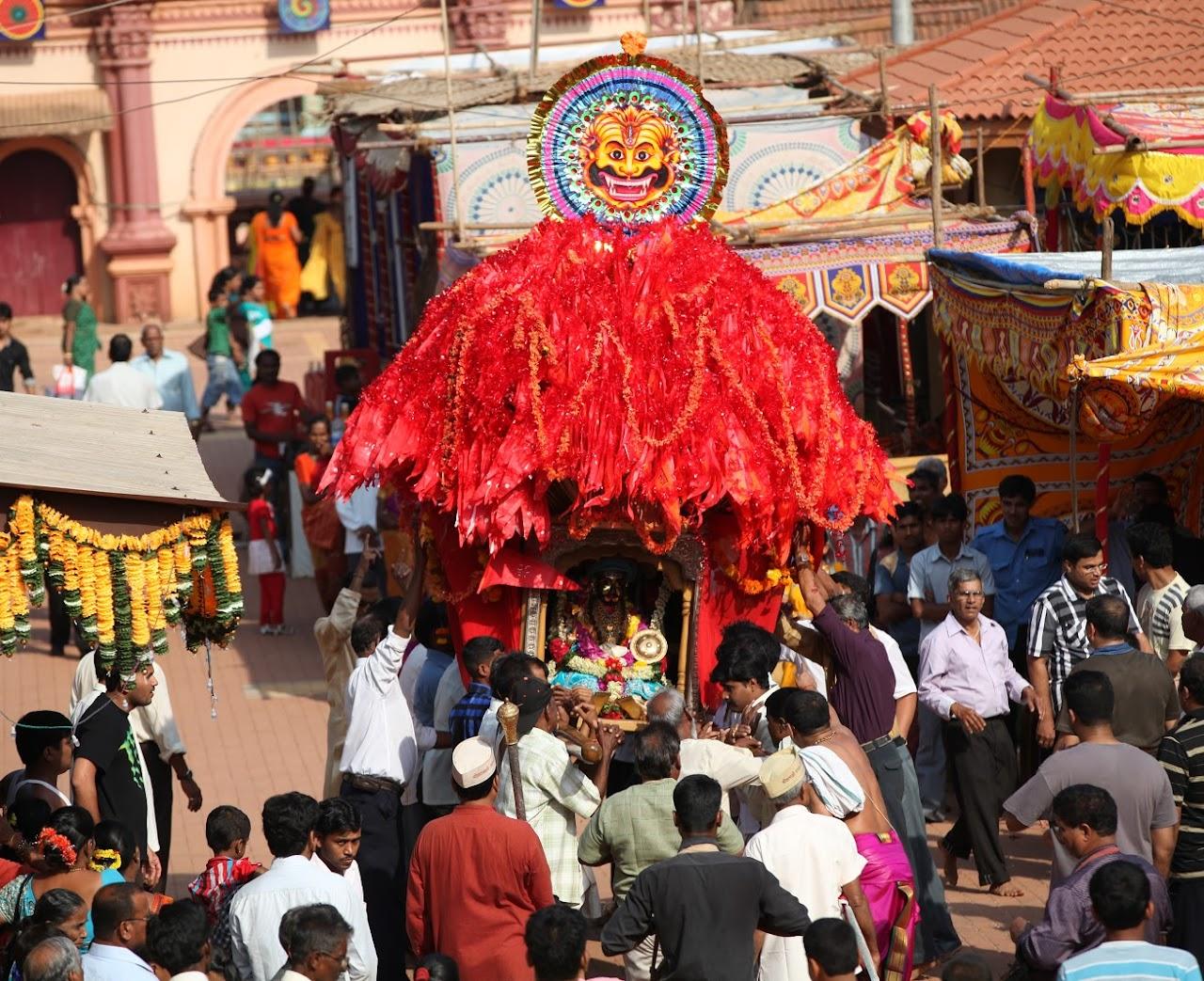
The Shri Kamakshi Temple comes alive with vibrant energy during its various festivals, which are celebrated with traditional Goan fervor and meticulous ritualistic detail. These events are not just religious ceremonies but are significant social gatherings that bring the community together. The most important festival is the Jatra (annual fair), which takes place in the Hindu month of Magha (usually falling in late January or early February). The Jatra of Shri Kamakshi is one of the most famous in Goa, lasting for several days. The highlight is the Rathotsava (chariot festival), where the deity is placed in a massive, intricately carved wooden chariot and pulled by hundreds of devotees through the village streets amidst chanting and traditional music.
Another major celebration is Navratri, the nine nights dedicated to the Goddess. During this time, the temple is decorated with thousands of flowers and lights. Each night, the deity is dressed in different "Alankaras" (ornaments and garments) representing different forms of the Devi. The atmosphere is electric with the performance of Bhajans (devotional songs) and Kirtans. The festival of Dussehra concludes the Navratri celebrations with the symbolic victory of good over evil, marked by the Taranga (procession of sacred umbrellas).
Every Friday is considered auspicious at the temple. On these days, a special Palkhi (palanquin) procession is held in the evening. The idol of the Goddess is carried around the temple courtyard in a silver palanquin, accompanied by the soulful music of the Shehnai and Chovada (traditional drums). This weekly ritual is a deeply moving experience, as the flickering lamps and the rhythmic chants create a sense of timeless devotion. Other significant days include Ambavade and the Vasant Panchami, each marked by specific rituals that have been preserved for generations.
Best Time to Visit
Choosing the right time to visit the Shri Kamakshi Temple can significantly enhance your experience. While the temple is open year-round, the winter months from November to February are undoubtedly the best. During this period, the weather in Goa is pleasantly cool and dry, making it comfortable for exploring the large temple complex and the surrounding village of Shiroda. This window also coincides with the major Jatra festival, offering visitors a chance to witness the temple in its full glory.
The monsoon season (June to September) offers a different, more contemplative charm. The Ponda region becomes incredibly lush and vibrant with various shades of green. The rain falling on the temple's red-tiled roofs and the sound of water rushing through the nearby streams create a serene, almost mystical atmosphere. However, be prepared for heavy downpours which might make travel a bit challenging. The summer months (March to May) can be quite hot and humid, but if you visit during the early morning hours or late evening, you can still enjoy the spiritual ambiance without the midday heat. Regardless of the season, visiting on a Friday is highly recommended to witness the weekly Palanquin procession.
Timings, Entry Fee & Dress Code
To ensure a respectful and smooth visit, it is important to be aware of the temple's operational hours and cultural expectations. The Shri Kamakshi Temple generally follows these timings:
- Morning: 5:30 AM to 12:30 PM
- Afternoon Break: 12:30 PM to 3:30 PM (The inner sanctum is usually closed during this time)
- Evening: 3:30 PM to 8:30 PM
Please note that during major festivals or special ritual days, these timings may be extended. There is
no entry fee to visit the temple; it is open to all people regardless of their caste, creed, or nationality. However, donations for the upkeep of the temple are welcomed and can be made at the designated office counter.
Regarding the dress code, modesty is strictly expected as this is a highly revered religious site. Visitors should avoid wearing shorts, sleeveless tops, miniskirts, or beachwear. Men are encouraged to wear trousers or traditional dhoti/kurta, while women are advised to wear sarees, salwar kameez, or long skirts with tops that cover the shoulders. It is customary to remove your footwear before entering the temple premises; there are designated stands near the entrance where you can safely leave your shoes. Maintaining silence and a respectful demeanor within the Mandapa and near the Garbhagriha is essential to preserve the sanctity of the space.
How to Reach Shri Kamakshi Temple Shiroda
The Shri Kamakshi Temple is located in Shiroda, which is approximately 12 kilometers from Ponda city and about 30 kilometers from the state capital, Panaji. Reaching the temple is relatively easy due to Goa's well-connected road network.
- By Road: You can hire a private taxi or a self-drive car from any major town in Goa. If you are coming from Margao (22 km away), the drive takes about 45 minutes via the Borim Bridge. From Panaji, the route takes you through the scenic heart of Ponda. Regular bus services also operate from the Ponda and Margao bus stands to Shiroda. Once you reach the Shiroda village center, the temple is a short walk or rickshaw ride away.
- By Rail: The nearest major railway station is Madgaon Junction (Margao). From the station, you can take a taxi or a local bus to Shiroda. The Karmali Railway Station is another option if you are coming from North Goa.
- By Air: The Dabolim International Airport is roughly 40 kilometers away from the temple. The newer Manohar International Airport (Mopa) is further north, about 75 kilometers away. Taxis are readily available at both airports to take you directly to Shiroda.
The drive to Shiroda is particularly beautiful, as it takes you through winding roads lined with dense vegetation, traditional Goan houses, and glimpses of the Zuari River. It provides a wonderful opportunity to see the rural side of Goa that remains untouched by large-scale tourism.
Things to Do
While the primary purpose of visiting the Shri Kamakshi Temple is spiritual, the complex and its surroundings offer several activities for the curious traveler:
- Observe the Rituals: Spend time sitting in the Mandapa and observing the various Poojas and Abhishekas performed by the priests. The precision and devotion involved in these ancient rituals are fascinating to witness.
- Architectural Photography: The temple is a photographer's delight (ensure you follow the guidelines regarding photography). Capture the intricate carvings on the wooden pillars, the majestic Deepstambha, and the unique dome structure.
- Walk Around the Tali: Take a peaceful stroll around the temple tank. The stone steps offer a great place to sit and reflect while watching the fish in the water and the devotees performing their prayers.
- Explore Shiroda Village: Walk through the lanes of Shiroda village to see traditional Goan-Hindu architecture. Many houses here feature beautiful balcãos (porches) and vibrant colors.
- Attend a Friday Palanquin Procession: If your schedule allows, stay for the evening Palkhi. The combination of music, light, and devotion is an unforgettable cultural experience.
- Visit the Temple Library/Museum: Some Goan temples have small collections of historical artifacts or religious texts. Check if there are any displays explaining the history of the deity’s migration.
Nearby Attractions
The Ponda region is often called the "Temple Heartland of Goa." Using the Shri Kamakshi Temple as a base, you can explore several other significant sites within a short driving distance:
- Shri Mangueshi Temple (Priol): One of the most famous and largest temples in Goa, dedicated to Lord Shiva. It is known for its stunning seven-story Deepstambha.
- Shri Shantadurga Temple (Kavalem): A massive temple complex dedicated to the Goddess of Peace. The architecture here is particularly grand, featuring a fusion of Indo-Portuguese styles.
- Sahakari Spice Farm: Located near Ponda, this farm offers guided tours where you can learn about various spices like cardamom, vanilla, and cinnamon. It usually includes a traditional Goan lunch.
- Tropical Spice Plantation: Another excellent spot for nature lovers, offering elephant rides and detailed insights into organic farming and Ayurvedic plants.
- Safa Shahouri Masjid: A 16th-century mosque built by Ibrahim Adil Shah of Bijapur. It is one of the oldest mosques in Goa and features a beautiful masonry tank and lush gardens.
- Butterfly Conservatory of Goa: Located in Rajnagar, Ponda, this is a small but enchanting place to see various local butterfly species in a natural habitat.
- Borim Bridge: A drive over this bridge offers spectacular views of the Zuari River and the surrounding mangroves.
Photography & Visitor Guidelines
To maintain the decorum and sanctity of the Shri Kamakshi Temple, visitors are requested to adhere to the following guidelines:
- Photography: Photography is generally prohibited inside the inner sanctum (Garbhagriha) and of the main deity. However, you can usually take photos of the temple's exterior, the Deepstambha, and the courtyard. Always look for signage or ask a temple official before using your camera.
- Mobile Phones: Keep your mobile phones on silent or vibrate mode. Avoid taking calls inside the prayer halls.
- Respect the Priests: The priests are often busy with rituals. If you wish to speak with them or offer a Pooja, wait for a suitable time and approach them respectfully.
- Offerings: You can buy flowers, incense, and coconuts from the stalls outside the temple. Do not throw trash within the temple premises; use the provided bins.
- Menstruation: In accordance with traditional customs followed by most Hindu temples in the region, women are requested not to visit the temple during their menstrual cycle.
- Prohibited Items: Alcohol, smoking, and non-vegetarian food are strictly prohibited within the entire temple complex.
By following these simple rules, you contribute to preserving the peaceful and sacred atmosphere that makes this temple so special.
Where to Eat Nearby
The Ponda region is famous for its authentic Goan-Hindu cuisine, which is quite different from the seafood-heavy, vinegar-infused Catholic Goan food found on the coast. When in Shiroda or Ponda, look for small local eateries (often called Khanavals) that serve "Thalis."
A traditional Goan Hindu thali usually includes Sheet (rice), Udid Methi (a fenugreek and lentil curry), Khatkhate (a mixed vegetable stew with coconut and teppal), Hooman (fish curry, though many temple-adjacent places serve pure veg), and Sol Kadhi (a refreshing digestive drink made from kokum and coconut milk).
- Local Small Cafes: Near the temple entrance, there are small stalls selling snacks like Batata Vada, Samosas, and Mirchi Bhajis along with hot tea.
- Farm-to-Table: If you visit the nearby spice plantations (Sahakari or Tropical), they offer elaborate traditional Goan buffet lunches served on banana leaves.
- Ponda City: For more formal dining, Ponda city has several restaurants like Kamat’s or Farmagudi Residency that serve reliable vegetarian and multi-cuisine meals.
Don't forget to try the local
Bebinca or
Dodol for dessert, which are often available in local bakeries in the Ponda market.
Accommodation Nearby
While many visitors choose to visit Shiroda as a day trip from the coastal areas, staying nearby allows for a more immersive experience, especially if you want to attend early morning or late evening rituals.
- Temple Guest Houses: Like many major Goan temples, the Shri Kamakshi Temple administration maintains guest houses (Agrashalas) for devotees. These provide basic, clean, and very affordable accommodation. Priority is often given to members of the community, but they are often open to others if rooms are available.
- GTDC Farmagudi Residency: Located about 15-20 minutes away in Farmagudi, this Goa Tourism Development Corporation property offers comfortable rooms in a quiet setting, close to several major temples.
- Boutique Homestays: The Ponda hinterlands are seeing a rise in eco-friendly homestays and heritage villas. These offer a chance to stay in traditional Goan homes and enjoy home-cooked local meals.
- Margao Hotels: Since Margao is only 45 minutes away, you can choose from a wide range of luxury and budget hotels in the city and travel to Shiroda for the day.
Travel Tips
To make the most of your spiritual journey to Shri Kamakshi Temple, keep these practical tips in mind:
- Start Early: To avoid the heat and the crowds, try to reach the temple by 8:00 AM. This also gives you ample time to visit other temples in Ponda before they close for the afternoon break.
- Carry Water: While there are shops nearby, it’s always good to have your own water bottle, especially during the humid months.
- Hire a Guide: If you are interested in the deep history and architectural nuances, consider hiring a local guide or visiting with someone who knows the local traditions.
- Respect Local Customs: Be observant of how locals behave. If people are sitting on the floor in prayer, try to avoid walking directly in front of them.
- Combine with Nature: Since Shiroda is in a hilly area, combine your visit with a trip to the nearby spice farms or a drive to the Dudhsagar Falls (which is further away but in the same general direction).
- Check the Calendar: Before planning your trip, check the Hindu lunar calendar for any local festivals or "Jatras" that might be happening. These events provide a unique cultural spectacle but also mean larger crowds.
Conclusion
The Shri Kamakshi Temple in Shiroda is far more than just a stop on a tourist itinerary; it is a profound testament to the enduring power of faith and the rich tapestry of Goan history. In its quiet courtyards and under its majestic dome, one finds a sense of continuity that stretches back centuries. It is a place where the legends of the past meet the devotion of the present, all framed by the stunning natural beauty of the Ponda hinterlands.
Whether you are drawn by the architectural beauty of the Deepstambha, the historical intrigue of the deity's journey from Raia, or a personal spiritual quest, a visit to this temple offers a deep and meaningful connection to the soul of Goa. As the golden lamps flicker in the evening breeze and the chants of the priests echo through the Mandapa, you realize that the true essence of Goa lies not just in its waves and sands, but in the steadfast gaze of Goddess Kamakshi, who has watched over her people through centuries of change. A journey to Shiroda is a journey into the heart of Goan identity—a journey that promises peace, perspective, and a profound sense of wonder.