Overview of Shri Mahalasa Temple Ponda
Nestled in the lush, emerald-green landscapes of Mardol, a small yet spiritually vibrant village in the Ponda taluka of Goa, lies the magnificent Shri Mahalasa Temple. Dedicated to Mahalasa Narayani, this temple is not just a place of worship but a cornerstone of Goan Hindu identity. Ponda is often referred to as the "Antruz Mahal" or the cultural and spiritual heart of Goa, as it served as a sanctuary for many deities during the era of Portuguese religious persecution. The Shri Mahalasa Temple stands as a testament to the resilience of the local community and the enduring nature of Goan traditions.
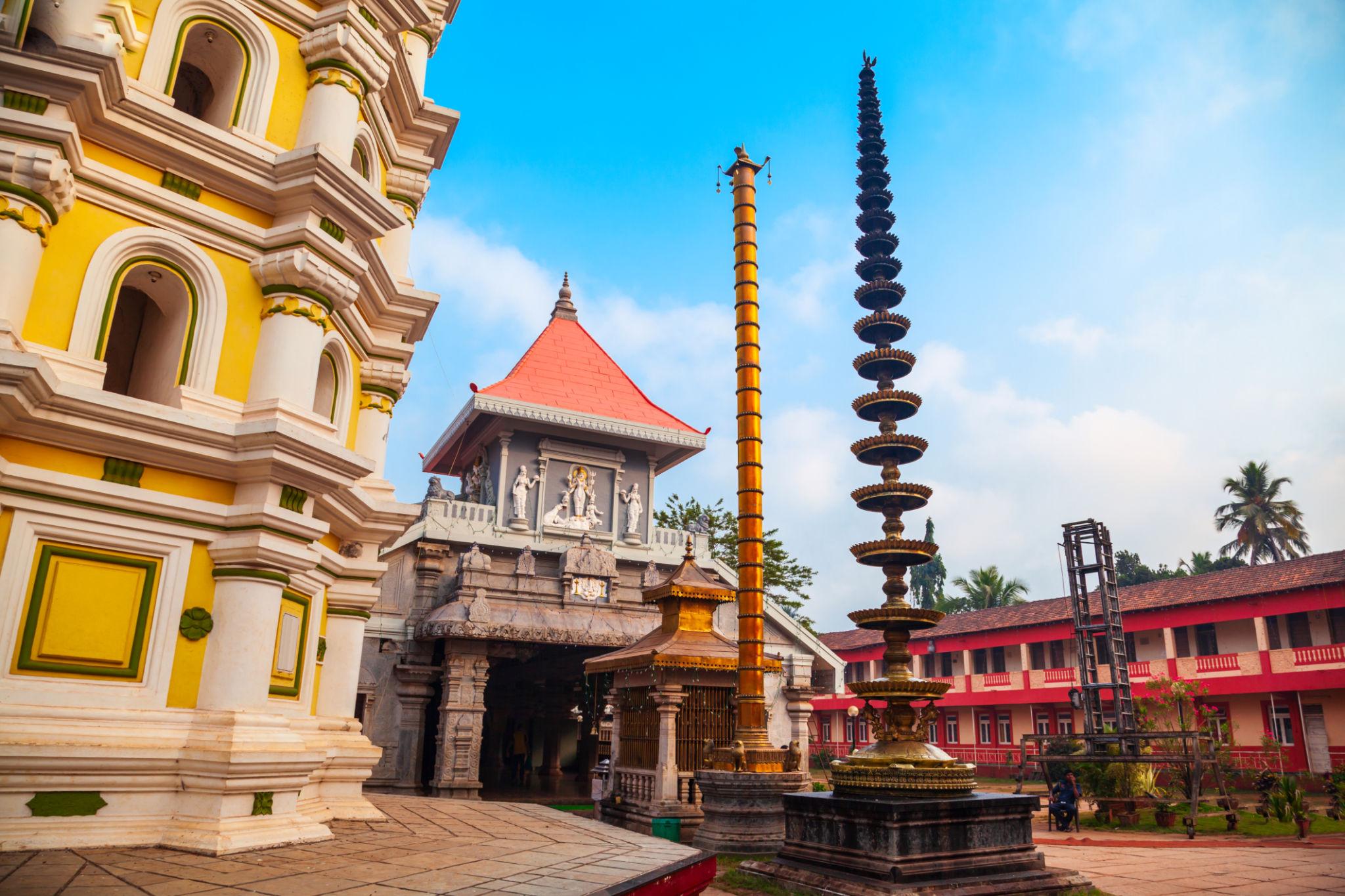
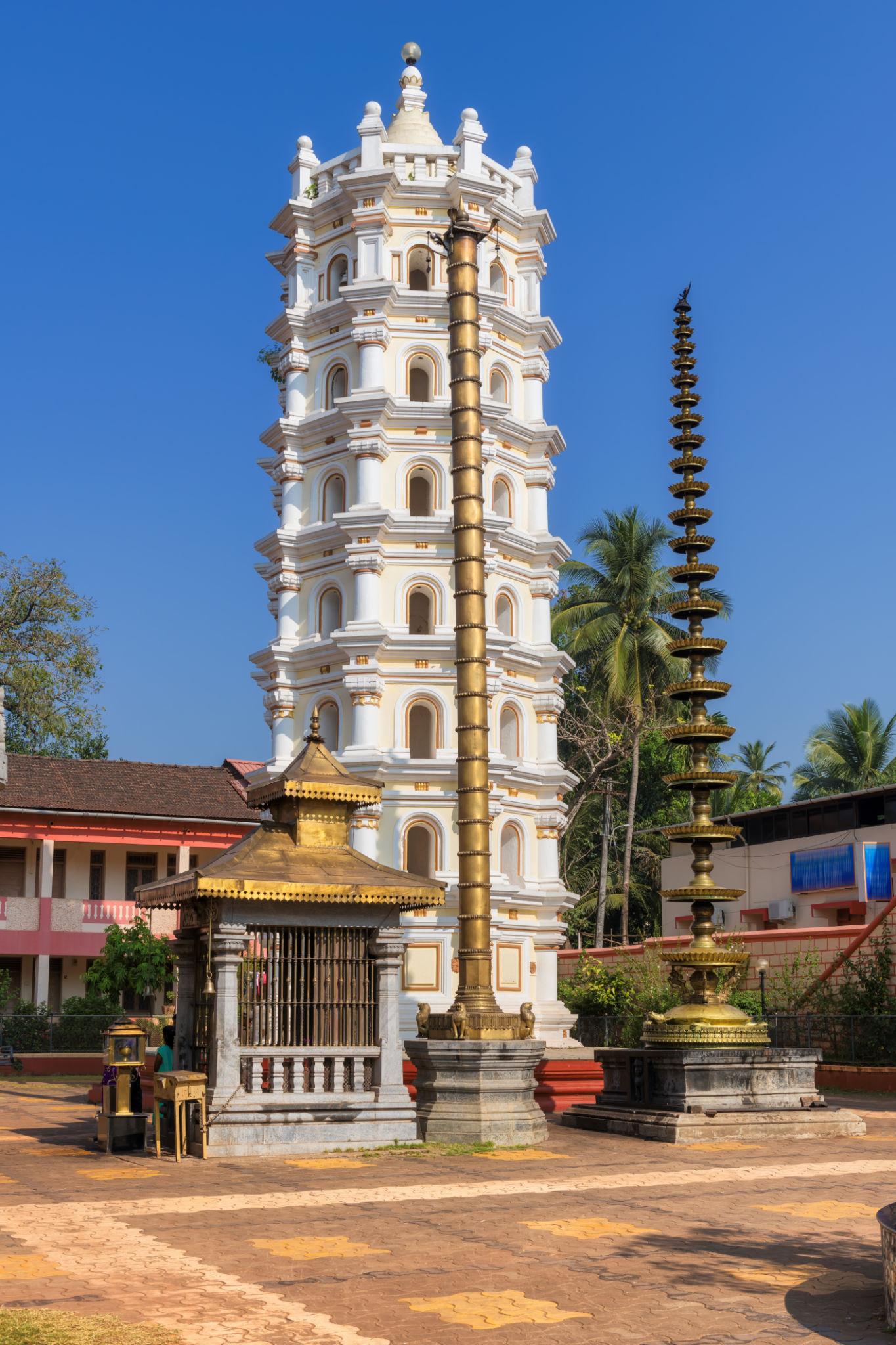
The temple is uniquely positioned within a cluster of other significant shrines, including the Mangueshi and Nageshi temples, creating a sacred circuit for pilgrims and tourists alike. What sets the Mahalasa Temple apart is the deity herself—Mahalasa Narayani—who is widely regarded as the female manifestation of Lord Vishnu, known as Mohini. The temple complex is a sprawling area that exudes peace, characterized by traditional Goan-Hindu architecture, intricate wood carvings, and a massive brass lamp tower that has become an iconic symbol of the state’s religious heritage. Whether you are a spiritual seeker, a history buff, or an architecture enthusiast, the Shri Mahalasa Temple offers a profound experience that transcends the typical beach-centric narrative of Goa.
Upon entering the temple precincts, visitors are greeted by a sense of timelessness. The atmosphere is thick with the scent of burning incense, fresh flowers, and the rhythmic chanting of Vedic hymns. The temple serves as the Kuladevi (family deity) for many families belonging to the Goud Saraswat Brahmin community and others across India, particularly from Karnataka and Maharashtra. Its significance is so deep-seated that thousands of devotees flock here annually to seek blessings, perform rituals, and participate in the vibrant festivals that define the Goan religious calendar.
History & Religious Significance
The history of the Shri Mahalasa Temple is a gripping saga of survival and devotion. Originally, the temple was located in the village of Varunapur (modern-day Verna) in the Salcete taluka. However, the 16th century brought a period of immense turmoil for the Hindu population of Goa. With the arrival of the Portuguese and the subsequent Inquisition in 1567, many Hindu temples were targeted for destruction. To save their beloved deity from desecration, the devotees of Mahalasa Narayani took the daring step of smuggling the idol across the Zuari River under the cover of darkness. They sought refuge in the territory of the Adil Shah of Bijapur, which was outside Portuguese control at the time. The idol was eventually re-consecrated in its current location in Mardol.
The religious significance of Mahalasa Narayani is rooted in the Puranas. According to Hindu mythology, during the Samudra Manthan (Churning of the Ocean), the nectar of immortality (Amrita) emerged. To prevent the demons (Asuras) from consuming it, Lord Vishnu took the form of an enchanting enchantress named Mohini. While Mohini is the primary identity, in the Goan tradition, she is worshipped as Mahalasa, often depicted with four arms, holding a Trishula (trident), a severed head, a drinking bowl, and a sword. This iconography is rare and signifies her role as both a nurturer and a fierce protector of dharma.
Interestingly, some traditions also link Mahalasa to Goddess Parvati or a combination of both Vishnu and Shiva's energies. This syncretism is a hallmark of Goan spirituality. Over the centuries, the temple has received patronage from various dynasties and wealthy merchant families, allowing it to evolve from a humble shelter into the grand structure seen today. The history of the temple is also intertwined with the social fabric of Goa, as it has historically been a center for learning, music, and the arts, particularly the traditional Kirtans and Bhajans that are still performed with great fervor.
Architecture of Shri Mahalasa Temple Ponda
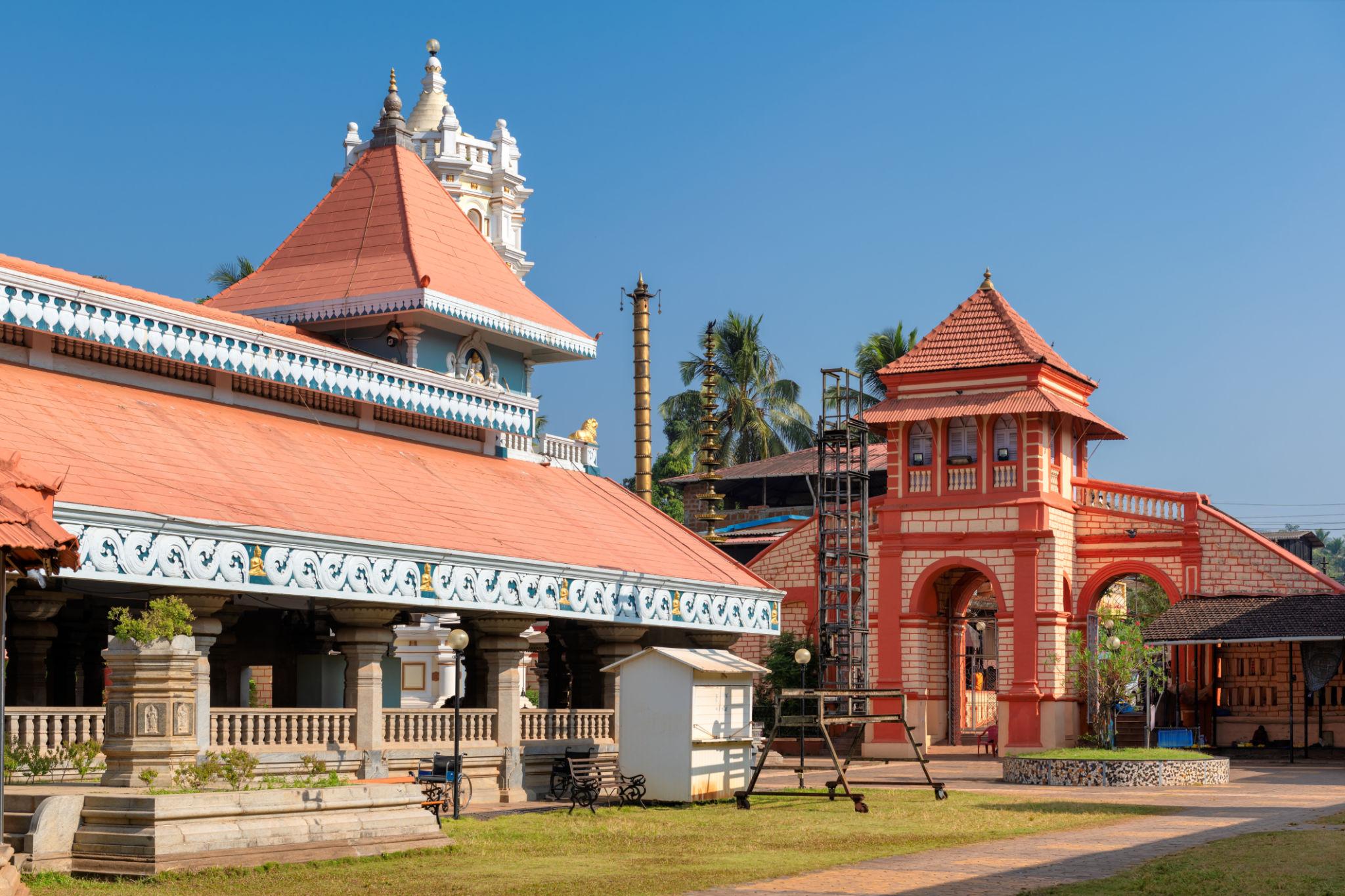
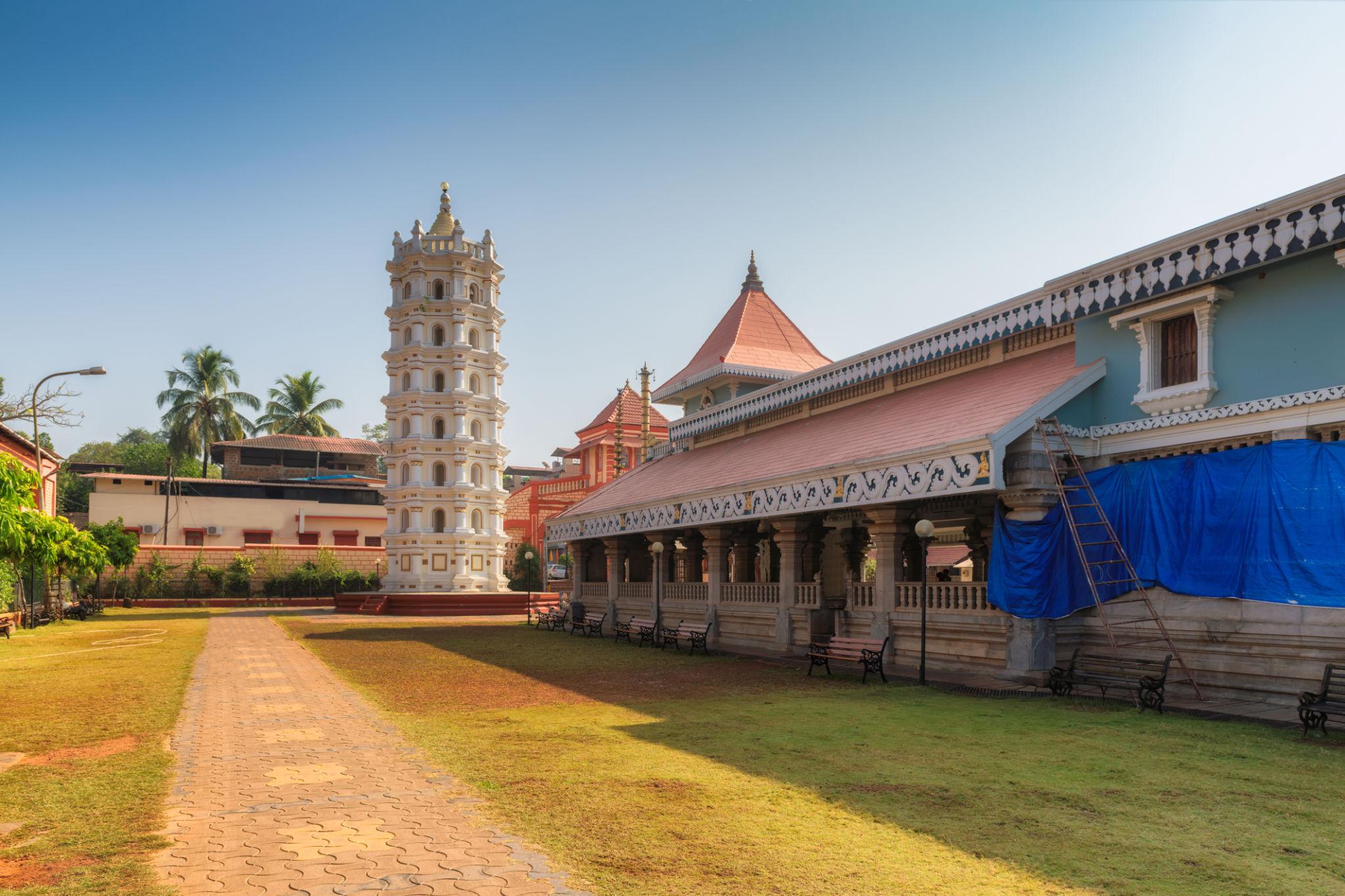
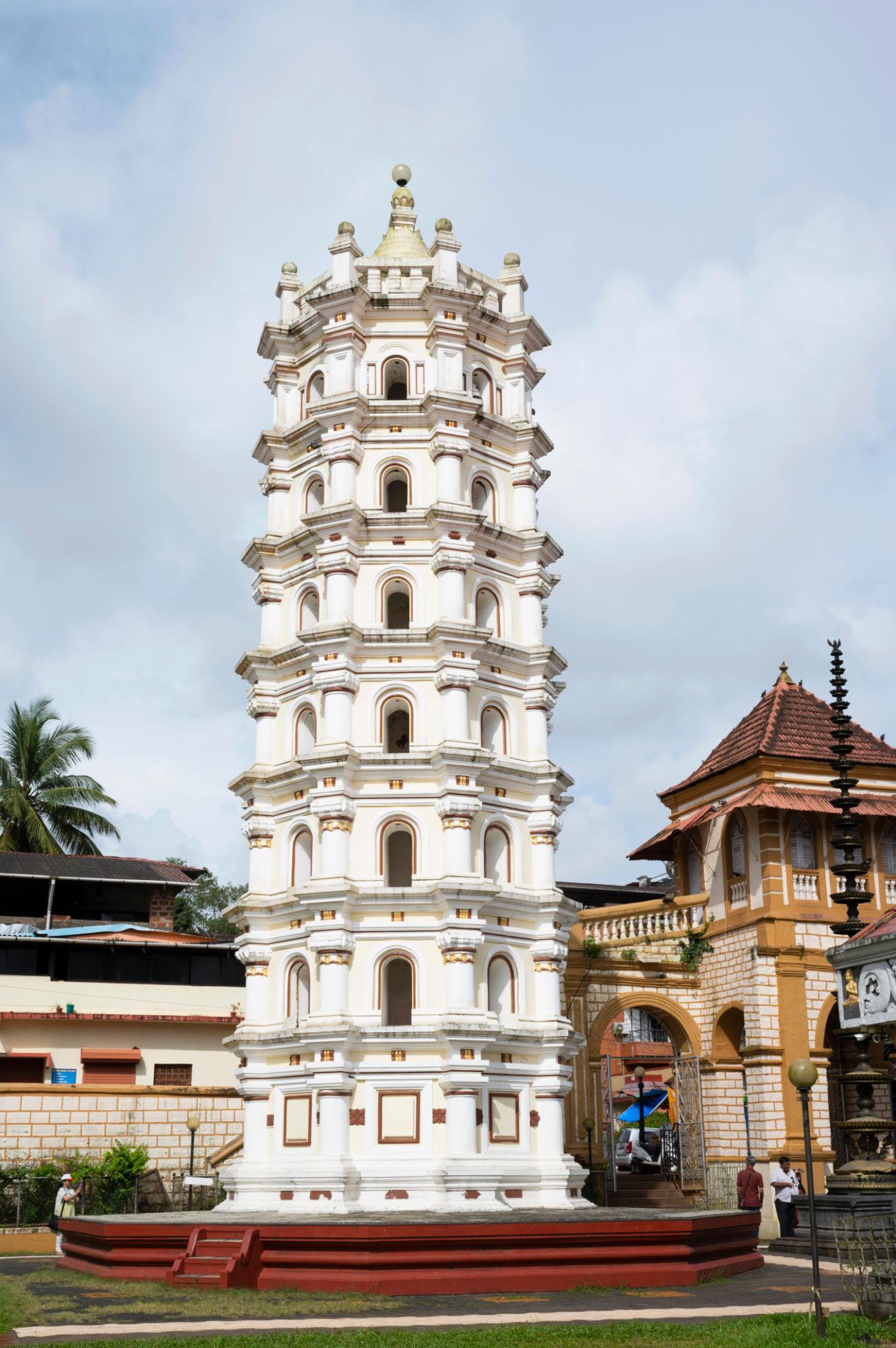
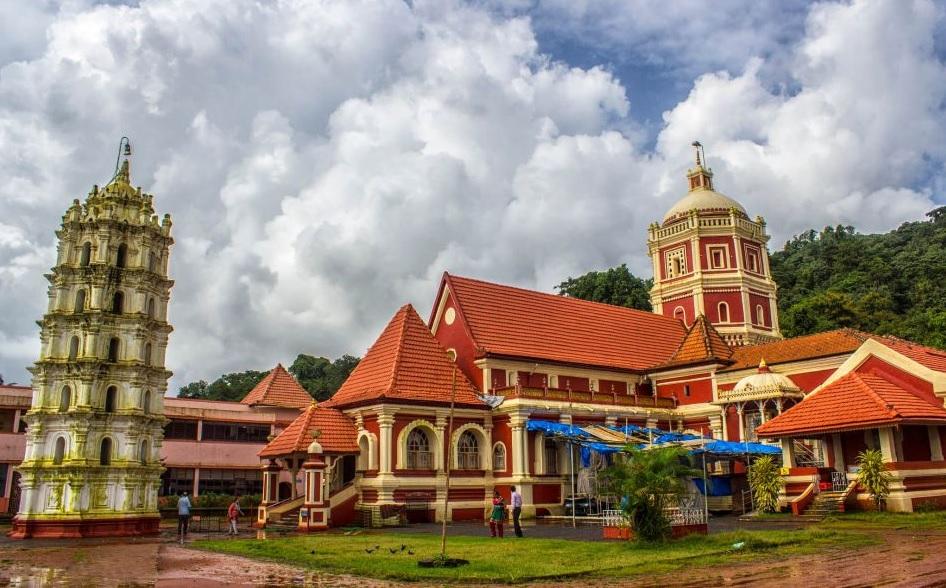
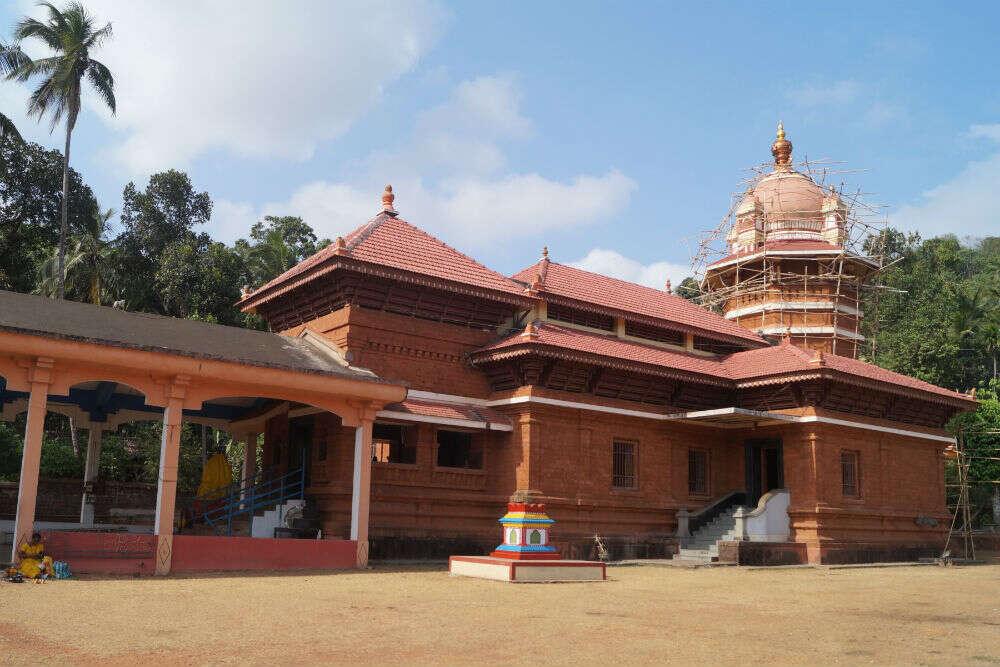
The architecture of the Shri Mahalasa Temple is a stunning blend of traditional Goan-Hindu styles with subtle influences that evolved over centuries of reconstruction. Unlike the towering 'Gopurams' of South India, Goan temples feature a distinct aesthetic characterized by tiled roofs, wooden pillars, and white-washed walls. The most striking feature of the temple is the Deepstambha (lamp tower). This 40-foot-tall brass tower is one of the largest and most intricate in all of India. It sits on a massive pedestal and features 21 tiers of lamps. When lit during festivals, it creates a celestial glow that can be seen from a distance, symbolizing the light of knowledge dispelling the darkness of ignorance.
The main temple building consists of a Sabhamandap (assembly hall) and the Garbhagriha (sanctum sanctorum). The Sabhamandap is a masterpiece of woodcraft. The ceiling and pillars are adorned with intricate carvings depicting scenes from the Ramayana, the Mahabharata, and the various incarnations of Lord Vishnu (Dashavatara). These carvings are not just decorative; they serve as a visual scripture for devotees. The use of dark, polished wood creates a somber yet regal atmosphere inside the hall. The flooring is typically made of cool marble or polished stone, providing a serene environment for meditation.
Another architectural highlight is the temple tank, known as the Anant Sarovar. This sacred water body is located within the complex and is used for various ritualistic baths and festivals. The steps leading down to the water are designed in a traditional stepped-well style. Surrounding the main shrine are smaller shrines dedicated to subsidiary deities like Santeri and Laxmi-Narayan. The exterior of the temple is painted in vibrant colors, often white with red or yellow accents, which contrast beautifully against the lush green background of Ponda’s tropical forests. The integration of the temple into its natural surroundings reflects the ancient Indian architectural philosophy of Vastu Shastra, aiming for harmony between man, God, and nature.
Main Deity / Spiritual Importance
The presiding deity, Shri Mahalasa Narayani, is the focal point of all spiritual activity in Mardol. The idol is carved from black stone and is a sight of immense beauty and power. She is depicted standing on a fallen demon, symbolizing the victory of good over evil. Unlike many other manifestations of Vishnu, Mahalasa is uniquely feminine yet carries attributes typically associated with Shiva, such as the Trishula. This makes her a Swayambhu (self-manifested) force of supreme consciousness in the eyes of her followers.
The spiritual importance of the temple lies in the belief that Mahalasa is a "Jagrut" deity—one who is vibrantly alive and responsive to the prayers of her devotees. Many pilgrims visit the temple to seek her intervention in personal matters, health issues, and spiritual growth. A unique tradition associated with this temple is the Kaul Prasad. This is a ritual where devotees seek the deity's guidance by placing flower petals on the idol; the way the petals fall is interpreted as a "yes" or "no" answer to the devotee's question. This practice highlights the deep, personal connection that the local community maintains with the goddess.
Furthermore, Mahalasa is considered the goddess of peace and prosperity. The daily rituals, known as Pujas, are conducted with extreme precision by the temple priests. These include the Abhishek (ritual bath), Alankar (dressing the deity), and Aarti. Participating in the evening Aarti, where the sounds of the 'Ghumot' (Goan percussion instrument), bells, and cymbals fill the air, is said to be a transformative spiritual experience. For many, the temple is a place of 'Moksha' or liberation, where the clutter of the material world fades away, leaving only the divine presence of the Mother Goddess.
Festivals & Celebrations
The Shri Mahalasa Temple is a hub of cultural activity, especially during festivals when the entire village of Mardol comes alive. The most significant event is the Magha Jatra, celebrated in the Hindu month of Magha (usually January or February). This annual fair attracts thousands of visitors. The highlight of the Jatra is the procession of the deity in a massive wooden chariot known as the Ratha. Devotees pull the chariot through the streets, accompanied by music, dance, and fireworks. It is a spectacle of faith and community spirit that is quintessential to Goan culture.
Another major celebration is Navratri, the nine nights dedicated to the Divine Feminine. During this time, the goddess is dressed in different silk sarees and adorned with exquisite gold jewelry every day. Special musical performances, including classical vocal concerts and traditional 'Dashavatar' plays, are held in the temple courtyard. The Jaiichi Jatra is another unique festival where the goddess is offered thousands of Jasmine (Jai) flowers, filling the entire temple complex with an intoxicating fragrance.
The Palakhi (palanquin) procession occurs every Sunday, which is considered the day of the goddess. The idol is placed in a beautifully decorated palanquin and carried around the temple premises. This weekly event is attended by many locals who consider it an auspicious start to their week. During the monsoon season, the Sangodd festival is celebrated in the temple tank, where decorated boats carry the deity’s image, symbolizing her grace over the waters. These festivals are not just religious events but are vital for the preservation of Goan folk arts, music, and social cohesion.
Best Time to Visit
The best time to visit the Shri Mahalasa Temple is during the winter months, specifically from November to February. During this period, the weather in Goa is pleasant and mild, with temperatures ranging from 20°C to 30°C. This makes it ideal for exploring the temple complex and the surrounding spice plantations without the discomfort of extreme heat or humidity. This window also coincides with major festivals like the Magha Jatra and Navratri, offering visitors a chance to witness the temple in its full glory.
If you prefer a more quiet and contemplative visit, the monsoon season (June to September) offers a different kind of beauty. The Ponda region becomes incredibly lush and vibrant with various shades of green. The rain brings a sense of freshness to the temple, and the sound of raindrops hitting the tiled roofs adds to the meditative atmosphere. However, be prepared for heavy downpours which might limit outdoor exploration. The summer months (March to May) can be quite hot and humid, but the temple interior remains relatively cool due to its traditional construction. Visiting during the early morning hours or late evenings in summer is recommended to avoid the midday sun.
Timings, Entry Fee & Dress Code
To ensure a smooth visit, it is important to be aware of the temple's operational hours and regulations. The Shri Mahalasa Temple is generally open to devotees and visitors during the following times:
- Morning: 6:30 AM to 12:30 PM
- Evening: 4:00 PM to 8:30 PM
Please note that the temple may remain open for longer hours during major festivals or special auspicious days. There is no entry fee to visit the temple; it is open to people of all faiths who approach with respect and devotion.
Dress Code: Like most Hindu temples in Goa, the Shri Mahalasa Temple follows a strict dress code to maintain the sanctity of the premises. Visitors are expected to dress modestly.
- For Men: Long trousers or dhotis and shirts. Shorts and sleeveless shirts are generally discouraged.
- For Women: Sarees, salwar kameez, or long skirts. Short skirts, sleeveless tops, and revealing clothing are strictly prohibited.
Visitors are required to remove their footwear before entering the temple complex. There are designated areas near the entrance where shoes can be safely kept.
How to Reach Shri Mahalasa Temple Ponda
Reaching the Shri Mahalasa Temple is relatively easy as it is well-connected by road to major parts of Goa. The temple is located in Mardol, about 22 kilometers from the capital city, Panaji, and about 7 kilometers from Ponda city.
- By Air: The nearest airport is Dabolim Airport (approximately 35 km away) and the newly inaugurated Manohar International Airport (Mopa) (approximately 55 km away). From the airport, you can hire a pre-paid taxi or use a ride-sharing app to reach Mardol.
- By Rail: The closest major railway station is Madgaon Junction (approximately 25 km away), which is well-connected to cities like Mumbai, Bangalore, and Delhi. Karmali Railway Station is also nearby (about 15 km away) and is convenient for those traveling on the Konkan Railway.
- By Road: State transport buses (Kadamba Transport Corporation) run frequently from Panaji and Ponda to Mardol. If you are driving, the temple is located just off the NH-4A (Panaji-Belgaum Highway). The roads are well-maintained and offer a scenic drive through the Goan countryside.
- By Taxi/Auto-rickshaw: Taxis and auto-rickshaws are readily available from Ponda and other major tourist hubs. For a more flexible experience, many tourists prefer renting a scooter or car for the day.
Things to Do
While the primary activity at the Shri Mahalasa Temple is prayer and seeking blessings, there are several other things visitors can do to enrich their experience:
- Observe the Architecture: Spend time admiring the intricate wood carvings in the Sabhamandap and the majestic brass Deepstambha. The craftsmanship is a window into the artistic heritage of the region.
- Attend the Evening Aarti: If possible, time your visit to coincide with the evening Aarti. The sensory experience of the lights, music, and chanting is deeply moving and provides a glimpse into local Goan devotion.
- Explore the Temple Tank: Take a quiet walk around the Anant Sarovar. The reflection of the temple in the water offers great peace and is a perfect spot for contemplation.
- Seek Kaul Prasad: If you are a believer, you might want to witness or participate in the 'Kaul' ritual, where the deity is consulted for guidance.
- Visit the Subsidiary Shrines: Don't miss the smaller shrines within the complex dedicated to Lord Ganesha, Goddess Santeri, and other deities.
- Engage with the Locals: Talk to the temple priests or local devotees to learn more about the legends and history of the temple. They often have fascinating stories that aren't found in guidebooks.
Nearby Attractions
The Ponda region is a treasure trove of cultural and natural attractions. You can easily combine your visit to the Shri Mahalasa Temple with these nearby spots:
- Shri Mangueshi Temple: Located just 1 km away in Priol, this is perhaps the most famous temple in Goa. Dedicated to Lord Shiva, its architecture and the seven-story Deepstambha are iconic.
- Shri Nageshi Temple: Situated in Bandora (about 3 km away), this temple is dedicated to Lord Shiva and is unique because it was one of the few temples not destroyed during the Portuguese era.
- Sahakari Spice Farm: A short drive from Mardol, this farm offers guided tours where you can learn about various spices, enjoy a traditional Goan lunch, and even watch elephants.
- Tropical Spice Plantation: Another excellent spice farm nearby that provides an educational and refreshing experience amidst nature.
- Safa Shahouri Masjid: One of the oldest mosques in Goa, built in 1560 by Ibrahim Adil Shah. It is located in Ponda and is known for its simple yet elegant architecture and garden.
- Butterfly Conservatory of Goa: Located in Rajnagar, Ponda, this is a great spot for nature lovers to see various species of butterflies in a natural habitat.
Photography & Visitor Guidelines
To ensure a respectful and pleasant visit for everyone, please adhere to the following guidelines:
- Photography: Photography is generally prohibited inside the inner sanctum (Garbhagriha) to maintain the sanctity of the deity. However, you are usually allowed to take photos of the temple exterior, the Deepstambha, and the courtyard. Always look for signage or ask a temple official before clicking pictures.
- Silence: Maintain a quiet demeanor within the temple premises. Avoid loud conversations and ensure your mobile phone is on silent mode.
- Respect Rituals: If a ritual or Puja is in progress, stand back and observe silently. Do not interrupt the priests or the devotees.
- Cleanliness: Do not litter. Use the bins provided within the complex. The temple is a sacred space, and keeping it clean is a shared responsibility.
- Donations: If you wish to make a donation, use the official 'Hundi' (donation box) or visit the temple office to get a receipt. Avoid giving money to unauthorized individuals.
- Social Distancing: During busy festival days, be patient and follow any queue systems or crowd management instructions provided by the temple volunteers.
Where to Eat Nearby
Ponda and Mardol offer some excellent options for experiencing authentic Goan vegetarian cuisine. Since many visitors are pilgrims, the food in this area is often "Sattvic" (prepared without onion and garlic) but incredibly flavorful.
- Temple Prasad: On certain auspicious days or during festivals, the temple serves 'Prasad' or a community meal. This is a simple, blessed meal that is highly recommended for an authentic experience.
- Local Eateries in Mardol: Small cafes near the temple entrance serve traditional Goan snacks like Patal Bhaji (dried pea curry with buns), Batata Vada, and Mirchi Bajji. Don't forget to try the local ginger tea.
- Spice Plantation Lunches: If you visit the nearby Sahakari or Tropical spice farms, they offer a traditional Goan buffet served on banana leaves, featuring local rice, vegetable curries, pickles, and 'Sol Kadi' (a refreshing kokum and coconut milk drink).
- Farmagudi Residency: Located a few kilometers away, this GTDC-run property has a restaurant that serves a variety of Indian and Goan dishes in a comfortable setting.
- Tirumala Dhaba: A popular spot on the highway for those looking for North Indian and basic Goan meals.
Accommodation Nearby
While many visitors choose to stay in the coastal areas and visit Ponda as a day trip, staying nearby allows for a more immersive experience. Options include:
- Farmagudi Residency (GTDC): Located in Ponda, this is a well-maintained government-run hotel offering clean rooms and proximity to all major temples. It is an excellent budget-friendly choice.
- Atreya Vedic Farm: For a more rustic and spiritual stay, this eco-farm offers cottages and a chance to live close to nature, with activities like yoga and meditation.
- Nirvana Hermitage: A mid-range option that provides a peaceful environment away from the hustle and bustle.
- Guesthouses in Ponda: There are several small guesthouses and lodges in Ponda city that cater to pilgrims and budget travelers.
- Homestays: Several families in the Mardol and Priol area offer homestay facilities, providing a unique opportunity to experience Goan hospitality and home-cooked food.
Travel Tips
To make the most of your visit to the Shri Mahalasa Temple, keep these practical tips in mind:
- Start Early: Reach the temple early in the morning (around 7:00 AM or 8:00 AM). The air is cool, the crowds are thin, and you can witness the morning rituals in peace.
- Stay Hydrated: Carry a water bottle, especially if you plan to explore other nearby temples and spice farms. However, ensure you don't drink water inside the main prayer hall.
- Footwear: Wear easy-to-remove footwear like flip-flops or sandals, as you will need to take them off frequently.
- Local Transport: If you are not driving, hiring a taxi for the entire day is more convenient than relying on local buses, especially if you want to visit multiple sites in Ponda.
- Respect Local Customs: Goan Hindus are very protective of their traditions. Be mindful of your actions, dress appropriately, and always ask before entering restricted areas.
- Carry Cash: While some larger establishments accept cards or UPI, smaller shops and vendors around the temple may only accept cash.
Conclusion
The Shri Mahalasa Temple in Ponda is far more than a religious landmark; it is a living chronicle of Goa’s complex history and its resilient spiritual heart. From the dramatic story of its relocation to the exquisite beauty of its brass lamp tower and wooden carvings, every corner of this temple tells a story of devotion and cultural pride. It offers a side of Goa that is often missed by those who stay strictly on the beaches—a side that is quiet, profound, and deeply rooted in ancient traditions.
Visiting this sacred site provides a unique opportunity to connect with the divine feminine energy of Mahalasa Narayani and to appreciate the unique architectural and social tapestry of the Goan Hindu community. Whether you are seeking the thrill of a vibrant festival like the Magha Jatra or the silent solace of a monsoon afternoon by the Anant Sarovar, the temple promises a rewarding and soul-stirring journey. As you leave the gates of Mardol, the rhythmic sounds of the temple bells and the serene image of the goddess are likely to stay with you, serving as a reminder of the enduring peace that resides in the heart of Goa.