Holy Trinity Church

Holy Trinity Church

4.9 1,845 Verified
Church South Goa

Quick Navigation

Explore sections of this guide

Overview of Holy Trinity Church

Nestled in the serene and culturally rich village of Benaulim in South Goa, the Holy Trinity Church stands as a magnificent testament to the enduring legacy of Christian faith and Portuguese architectural influence in the region. Unlike the bustling tourist hubs of North Goa, Benaulim offers a more contemplative and "Susegad" (relaxed) atmosphere, and this church is the spiritual heart of that experience. The Holy Trinity Church is not just a place of worship; it is a historical landmark that embodies the soul of the Salcete taluka. For travelers seeking a deeper connection with Goa’s religious tapestry, this church provides a sanctuary of peace, characterized by its pristine white-washed facade, towering belfry, and a sense of timelessness that permeates the air.

As you approach the church, the first thing that strikes you is its commanding presence against the backdrop of swaying coconut palms and lush green fields. The church is dedicated to the Most Holy Trinity—the central mystery of Christian faith representing the Father, the Son, and the Holy Spirit. It serves a vibrant local community, many of whom have ancestors who have worshipped within these walls for centuries. The Holy Trinity Church is often overshadowed by its neighbor, the Church of St. John the Baptist, but for those who take the time to visit, it offers a more intimate and detailed look at Goan parochial life. Whether you are a history buff, an architecture enthusiast, or a spiritual seeker, the Holy Trinity Church in Benaulim promises a profound experience that goes beyond the typical beach holiday.

In this comprehensive guide, we will explore every facet of this remarkable structure, from its 16th-century roots to the modern-day celebrations that bring the village to life. We will delve into the intricate details of its Baroque design, the significance of its spiritual relics, and provide practical information to help you plan your visit. This is more than a travel guide; it is an invitation to witness the living history of Catholic Goa through one of its most cherished monuments.

History & Religious Significance

The history of the Holy Trinity Church is intrinsically linked to the arrival of the Jesuits in Goa. The original structure was founded in the late 16th century, around 1596, during a period of intense missionary activity in the Salcete region. The Portuguese crown, alongside the Society of Jesus, sought to establish strong religious foundations in the newly conquered territories. Benaulim, being a significant agricultural and social hub, was chosen as a prime location for a parish church. However, the structure we see today is largely the result of a major reconstruction that took place in 1712. This rebuilding was necessary to accommodate the growing congregation and to reflect the evolving architectural tastes of the 18th century, which favored the grandiosity of the Baroque style.

The religious significance of the Holy Trinity Church is profound. In the context of the Goan Inquisition and the subsequent Christianization of the region, the church served as a beacon of the new faith. It was one of the many "mother churches" in South Goa that helped consolidate the Catholic identity of the local population. Over the centuries, the church has survived various political shifts, from the end of Portuguese rule in 1961 to the integration of Goa into the Indian Union. Throughout these changes, the church remained a constant for the people of Benaulim, serving as a site for baptisms, weddings, and funerals, thereby weaving itself into the very fabric of the community's genealogy.

One of the most significant spiritual aspects of this church is its dedication to the Holy Trinity. In the Catholic tradition of Goa, the Trinity is often invoked for protection over the village and its harvests. Local legends suggest that the site of the church was chosen carefully to replace pre-existing local shrines, a common practice during the Portuguese era to signify the transition of spiritual authority. Today, the church stands not just as a relic of the past, but as a living institution that continues to provide spiritual guidance and social support to thousands of devotees.

Architecture of Holy Trinity Church

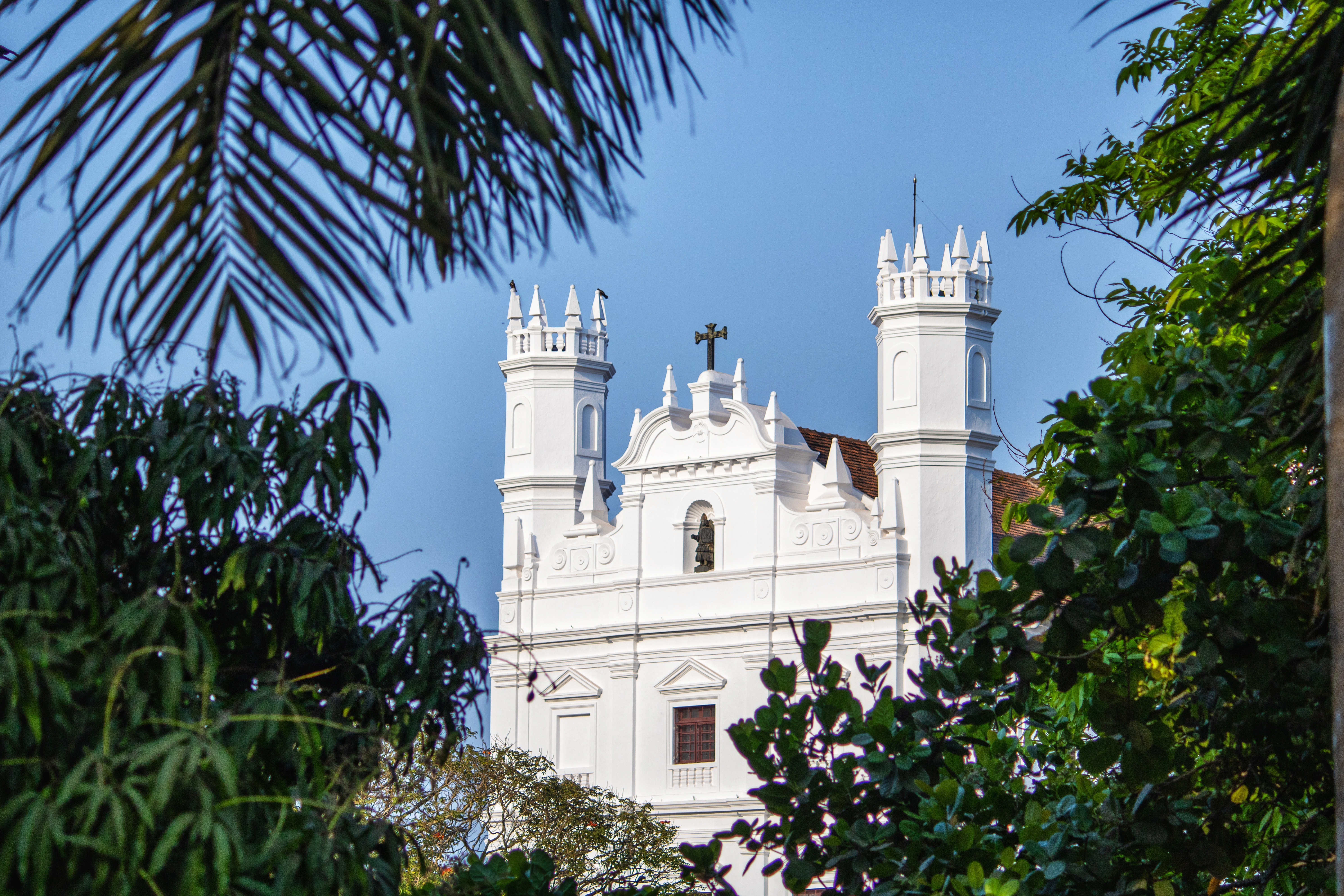
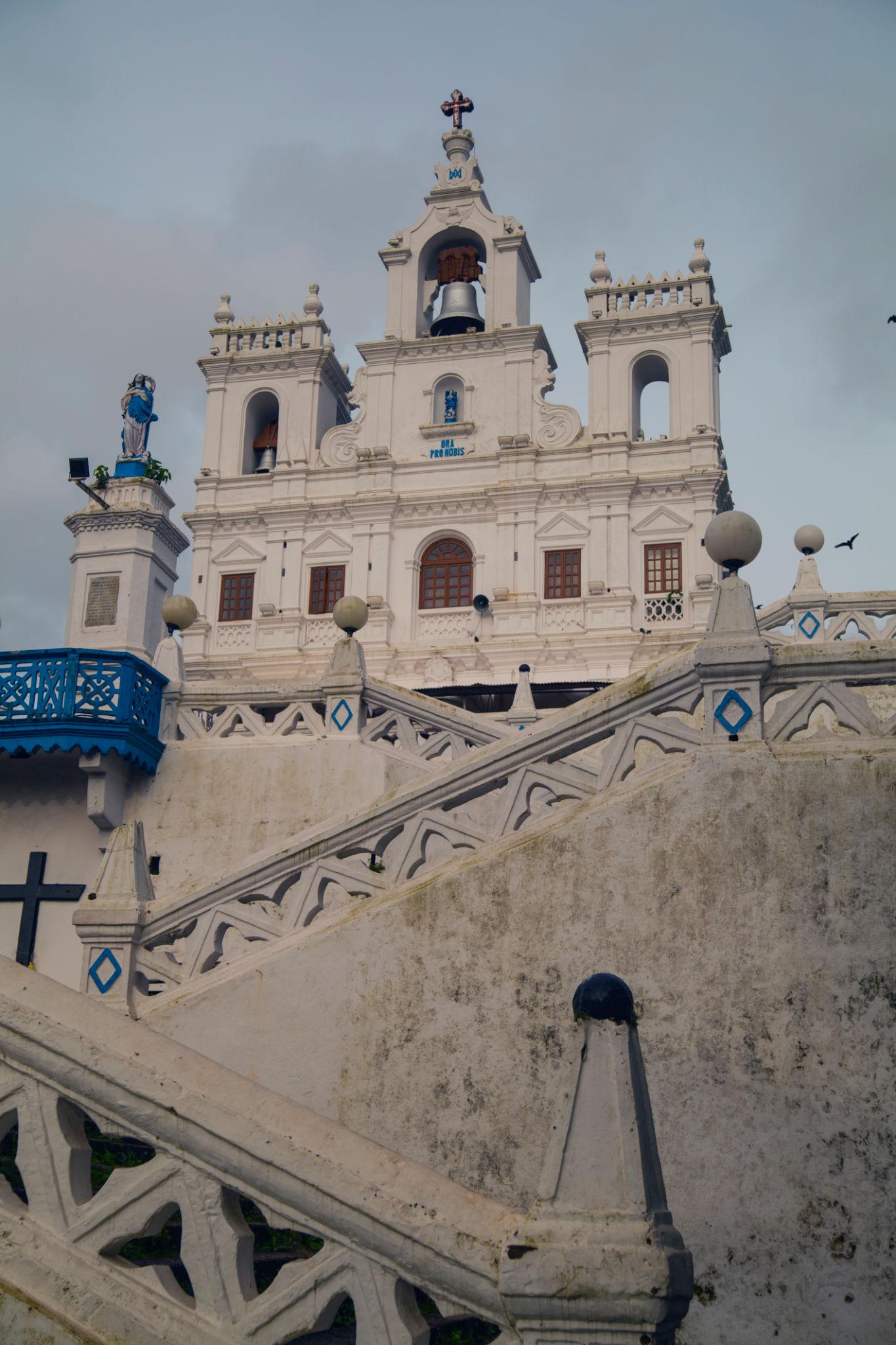
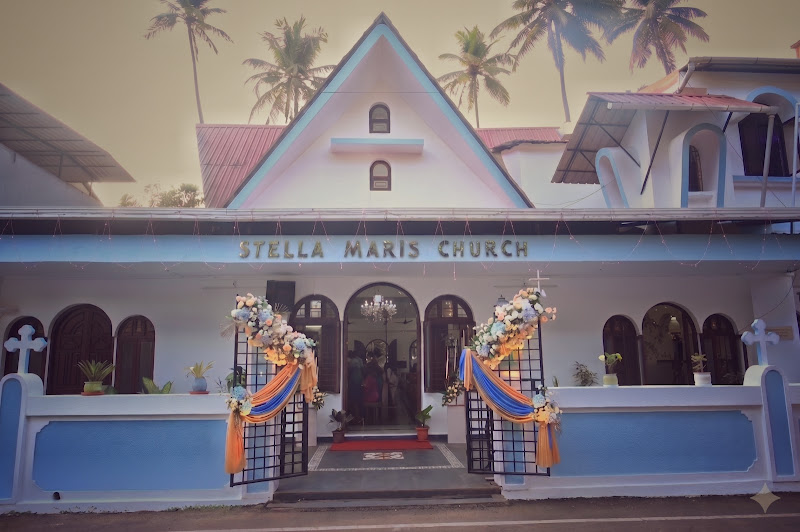
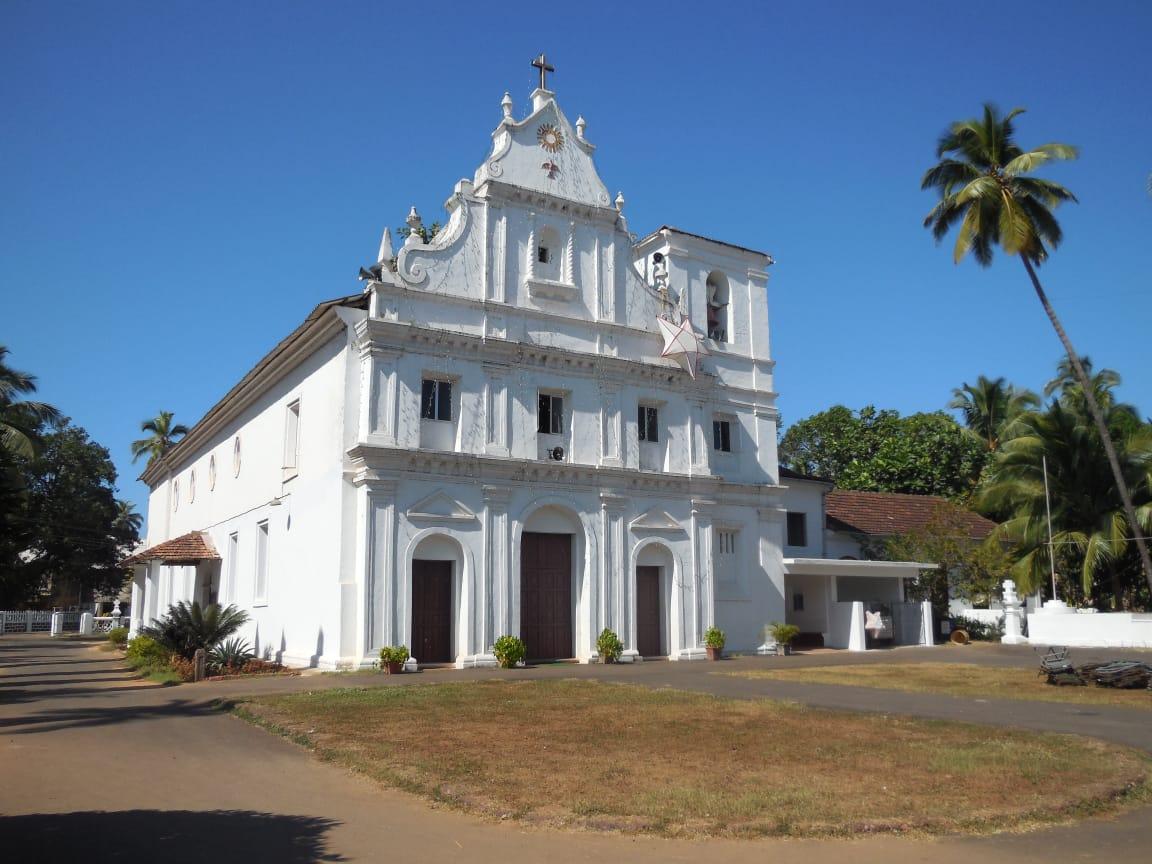
The architecture of the Holy Trinity Church is a stunning example of the Goan Mannerist style, which eventually transitioned into the more ornate Baroque and Rococo influences. The exterior is characterized by its stark white lime-plastered walls, a common feature in Goan churches designed to reflect the tropical sun and provide a sense of purity. The facade is divided into multiple tiers, separated by distinct horizontal cornices and vertical pilasters. The central portion of the facade features a beautifully carved pediment, often adorned with the symbol of the Holy Trinity or the Jesuit emblem.
Upon entering the church, one is immediately struck by the sense of space and light. The interior follows a traditional cruciform layout, but with specific Goan adaptations. The vaulted ceiling is a marvel of 18th-century engineering, designed to create an acoustic environment suitable for choral music and solemn masses. The most striking architectural feature inside is the Retable (Altar-piece). The main altar is a masterpiece of gilded woodcarving, featuring intricate motifs of grapevines, cherubs, and floral patterns. This "Golden Goa" style of woodcarving was perfected by local artisans who blended European designs with Indian craftsmanship.

Key architectural highlights include:

  • The Bell Tower: A sturdy, square tower located to the side of the main facade, housing bells that have signaled the time for prayer for generations.
  • The Pulpit: An exquisitely carved wooden pulpit attached to one of the side walls, featuring detailed iconography and often gilded in gold leaf.
  • The Baptistery: A dedicated space near the entrance, symbolizing the beginning of the spiritual journey, often featuring a stone font of significant age.
  • The Choir Loft: Located above the main entrance, this wooden gallery provides a vantage point for the choir and offers a panoramic view of the nave.
The use of Laterite stone, a local volcanic rock, as the primary building material is a testament to the adaptation of European styles to local conditions. The thick walls provide natural insulation against the intense Goan heat, ensuring that the interior remains cool and conducive to prayer.

Main Deity / Spiritual Importance

The primary spiritual focus of the church is the Holy Trinity. Unlike churches dedicated to a specific saint, the focus here is on the triune nature of God. This theological focus is reflected in the artwork and the arrangement of the altars. The central reredos prominently features representations of God the Father, Jesus Christ the Son, and the Holy Spirit (often depicted as a dove). This central mystery is considered the foundation of the Christian life, and the church serves as a space for devotees to contemplate this complex yet vital aspect of their faith.
In addition to the Holy Trinity, the church houses several side altars dedicated to various saints who hold a special place in the hearts of Goans. You will find altars dedicated to Our Lady of Mount Carmel and St. Anthony of Padua, the latter being immensely popular in Goa for his reputation as the finder of lost things and a patron of the poor. The spiritual importance of the church also lies in its role as a repository of local tradition. The "Ladainha" (Litanies in Latin or Konkani) sung here are part of an oral tradition that has been passed down through families. For many locals, the church is a "second home" where the community gathers not just for Sunday Mass, but for communal support during times of hardship.
The spiritual atmosphere is further enhanced by the presence of ancient statues and icons. These "Murtis" (as they are sometimes colloquially referred to by the locals, blending cultural terms) are treated with immense reverence. During the Lenten season, the church becomes a focal point for the Way of the Cross, a spiritual journey that draws hundreds of pilgrims who walk through the village streets in a display of public piety and penance.

Festivals & Celebrations

The calendar of the Holy Trinity Church is marked by several vibrant festivals, the most significant being the Feast of the Holy Trinity. This feast is celebrated with great pomp and fervor, usually occurring in late May or early June, depending on the liturgical calendar (the Sunday after Pentecost). The preparation for the feast begins nine days in advance with the Novena. Each day of the novena is dedicated to a different ward of the village, fostering a sense of healthy competition and community spirit as each group strives to organize the most beautiful service.

On the day of the feast, the village of Benaulim transforms. The church is draped in festive banners, and the air is filled with the sound of brass bands playing traditional Goan hymns and marches. A solemn High Mass is celebrated, often presided over by a visiting Bishop or high-ranking clergy. Following the religious service, a grand procession takes place around the church square, with the statue of the Holy Trinity carried on the shoulders of the faithful.

Other notable celebrations include:

  • The Feast of St. John the Baptist (Sao Joao): While primarily centered at the nearby St. John’s Church, the entire village of Benaulim, including the Holy Trinity parish, participates in this water-themed festival on June 24th.
  • Christmas and Easter: These major Christian festivals are celebrated with midnight masses, elaborate cribs (Presepio), and community gatherings that highlight the Goan love for music and food.
  • The Harvest Feast (Konsachem Fest): Usually celebrated in August, where the first sheaves of the rice harvest are blessed, symbolizing gratitude for the earth's bounty.
During these festivals, the church grounds host a "Feria" or fair, where vendors sell traditional Goan sweets like Bebinca, Dodol, and Khadkhade (gram flour sweets), along with toys and household items. It is a time when the religious and the social aspects of Goan life merge seamlessly.

Best Time to Visit

The best time to visit the Holy Trinity Church is during the winter months, from November to February. During this period, the weather in Goa is exceptionally pleasant, with clear blue skies and cool breezes, making it ideal for exploring the church grounds and the surrounding village of Benaulim. The humidity is at its lowest, and the temperature ranges between 20°C and 30°C.

If you wish to experience the spiritual vibrancy of the church, visiting during the Feast of the Holy Trinity (May/June) is highly recommended. Although the weather can be hot and humid, the cultural experience is unparalleled. For those who prefer a more somber and reflective atmosphere, the season of Lent (February/March) offers a unique look at the traditional rituals and penitential processions of Goan Catholics.

The Monsoon season (June to September) brings a different kind of beauty to Benaulim. The countryside turns a vivid emerald green, and the white church stands out dramatically against the dark, rain-filled clouds. While outdoor exploration might be limited by the rain, the interior of the church provides a cozy, meditative refuge. However, travelers should be aware that some local shops and eateries might have limited hours during the peak of the monsoon.

Timings, Entry Fee & Dress Code

To ensure a respectful and smooth visit, please take note of the following logistical details:

  • Timings: The church is generally open for visitors from 7:00 AM to 12:00 PM and from 4:00 PM to 7:00 PM. These timings may vary on Sundays and during special feast days when services are more frequent. It is best to arrive early in the morning to witness the quiet devotion of the locals.
  • Mass Timings: On weekdays, Mass is typically held at 7:00 AM. On Sundays, there are multiple Masses, usually at 6:30 AM, 8:30 AM, and sometimes an evening Mass at 5:00 PM. Masses are primarily conducted in Konkani, with occasional services in English.
  • Entry Fee: There is no entry fee to visit the Holy Trinity Church. It is a place of worship open to all, regardless of their religious background. However, donations for the maintenance of the church are always welcome and can be placed in the designated boxes.
  • Dress Code: As this is a sacred site, visitors are expected to dress modestly. Both men and women should ensure their shoulders and knees are covered. Avoid wearing swimwear, sleeveless tops, or very short skirts/shorts. Removing hats inside the church is a sign of respect.

How to Reach Holy Trinity Church

The Holy Trinity Church is located in the heart of Benaulim, South Goa, and is well-connected by various modes of transport. Benaulim is approximately 6 kilometers from Margao, the commercial capital of South Goa.

  • By Air: The nearest airport is the Manohar International Airport (Mopa) in the north or the Dabolim Airport in the south. Dabolim is much closer, situated about 25 kilometers away. You can hire a pre-paid taxi from the airport, which will take approximately 45 to 60 minutes to reach Benaulim.
  • By Rail: The Madgaon Railway Station (MAO) is the closest major railhead, located just 15-20 minutes away from the church. From the station, you can take an auto-rickshaw, a taxi, or a local bus heading towards Benaulim.
  • By Road: If you are staying in other parts of Goa, you can reach Benaulim via the NH66. Local buses run frequently from the Margao Bus Stand (Kadamba Bus Terminus) to Benaulim. For those who prefer independence, renting a scooter or a car is a popular option in Goa.
  • Local Navigation: Once you reach the Benaulim village square, the church is easily accessible. Most locals are friendly and will provide directions if you get lost in the winding village lanes.

Things to Do

Visiting the Holy Trinity Church is not just about seeing the building; it’s about engaging with the local culture and the spiritual environment. Here are some things you can do during your visit:

  • Attend a Konkani Mass: Even if you don't understand the language, the melodic chants and the rhythmic flow of a Konkani Mass offer a beautiful auditory experience and a glimpse into local devotion.
  • Observe the Woodwork: Spend time examining the intricate carvings on the altars and the pulpit. The level of detail achieved by 18th-century craftsmen is truly astounding.
  • Photography: Capture the stunning exterior architecture and the play of light on the white walls. (Note: Always check for permission before photographing the interior or during a service).
  • Light a Candle: Join the locals in their tradition of lighting a candle at the side altars, offering your own silent prayers or intentions.
  • Village Walk: After visiting the church, take a leisurely walk through the lanes of Benaulim. You will see traditional Indo-Portuguese houses with ornate balconies and well-maintained gardens.
  • Interact with Locals: If you see the parish priest or a local sacristan, don't hesitate to ask (politely) about the history of the church. Many have fascinating stories to share.

Nearby Attractions

Benaulim and its surrounding areas are packed with attractions that complement a visit to the Holy Trinity Church:

  • Benaulim Beach: Located just a couple of kilometers away, this is one of South Goa’s most beautiful and relatively quiet beaches. It’s perfect for a sunset stroll or enjoying fresh seafood at a beach shack.
  • St. John the Baptist Church: Another architectural marvel in Benaulim, known for its unique location on a hillock and its historical significance as the place where St. Joseph Vaz was baptized.
  • Goa Chitra Museum: A short drive away in Benaulim, this ethnographic museum showcases over 4,000 artifacts related to traditional Goan farming, lifestyle, and crafts. It is a must-visit for history enthusiasts.
  • Colva Beach: Just north of Benaulim, Colva is a more bustling beach destination with plenty of shopping and dining options.
  • Margao Market: For a taste of local life, head to the Margao Municipal Market to see vendors selling everything from fresh fish and spices to traditional Goan sausages (Chouriço).

Photography & Visitor Guidelines

To preserve the sanctity and the physical integrity of the Holy Trinity Church, visitors are requested to follow these guidelines:

  • Silence: Maintain absolute silence inside the church. It is a place of active prayer for many, and loud conversations are disruptive.
  • Interior Photography: While photographing the exterior is generally encouraged, some churches in Goa have strict rules against flash photography inside to protect the ancient paintings and gilded wood. Always look for signage or ask the staff.
  • No Posing: Avoid taking "fashion" or "lifestyle" photos that involve posing in front of the altar or sacred statues. Treat the space with the reverence it deserves.
  • Mobile Phones: Switch off your mobile phone or put it on silent mode before entering the church premises.
  • Respect Rituals: If a Mass, wedding, or funeral is in progress, do not walk around the nave or take photos. Stay at the back or wait until the service is concluded.
  • Littering: Ensure you do not leave any trash on the church grounds. Use the provided bins.

Where to Eat Nearby

Benaulim is a culinary delight, offering a mix of traditional Goan fare and international cuisine. After your spiritual visit, you can indulge in some of these local favorites:

  • Pedro's: A legendary spot near Benaulim beach known for its authentic Goan fish curry rice and seafood platters.
  • Cavala: While more famous in the north, the South Goa vibe in Benaulim has similar gems that offer live music and great pork sorpotel.
  • Goodfellas: If you are craving wood-fired pizzas in a cozy garden setting, this is the place to be.
  • The Southern Deck: For a more upscale dining experience with a view of the Arabian Sea, this restaurant offers a great selection of cocktails and fusion dishes.
  • Local Tavernas: For the adventurous, look for small local tavernas in the village lanes where you can try Feni (the local spirit) and simple snacks like Ros Omelette.

Accommodation Nearby

Whether you are looking for luxury or a budget-friendly stay, Benaulim has plenty of options near the Holy Trinity Church:

  • Taj Exotica Resort & Spa: A luxury 5-star property located on the beach, offering world-class amenities and sprawling gardens.
  • Fairfield by Marriott: A modern and comfortable option located slightly inland, providing easy access to both the church and the beach.
  • Carina Beach Resort: A mid-range hotel that captures the laid-back essence of South Goa.
  • Homestays: Benaulim is famous for its charming homestays and villas. Staying with a local family is the best way to experience Goan hospitality and learn about the village's traditions.
  • Lotus Eco Beach Resort: A great choice for eco-conscious travelers looking for a peaceful stay close to nature.

Travel Tips

To make the most of your visit to the Holy Trinity Church and Benaulim, keep these tips in mind:

  • Stay Hydrated: The Goan sun can be unforgiving. Always carry a bottle of water and wear sunscreen.
  • Learn a few Konkani words: Simple phrases like "Dev borem korum" (Thank you/God bless you) go a long way in building rapport with the locals.
  • Cash is King: While many places accept cards or UPI, small village shops and transport providers often prefer cash.
  • Respect the Susegad: Remember that life moves slower in South Goa. Don't be in a rush, and embrace the leisurely pace of the village.
  • Local Transport: Renting a "Pilot" (motorcycle taxi) is a unique Goan way to get around quickly for short distances.
  • Check the Calendar: Before visiting, check if there are any local feast days or public holidays that might affect church timings or local transport.

Conclusion

The Holy Trinity Church in Benaulim is more than just a beautiful building; it is a sanctuary where history, architecture, and living faith converge. It offers a rare opportunity to step back in time and witness the cultural synthesis that defines Goa. From the intricate carvings of its Baroque altars to the rhythmic tolling of its ancient bells, every element of the church tells a story of devotion and resilience. Visiting this sacred site allows you to experience the "other" Goa—the one that exists away from the neon lights and crowded beaches. It is a place of quiet reflection, community spirit, and architectural wonder. Whether you are saying a prayer, admiring the craftsmanship, or simply soaking in the peaceful atmosphere, a visit to the Holy Trinity Church is a journey into the heart of Goan heritage that will leave a lasting impression on your soul.

Photo Gallery

Holy Trinity Church Gallery Image

User Reviews

4.9
1845 Reviews
5
85%
4
10%
3
3%
2
1%
1
1%

Login to post a review

Join the community to share your spiritual experiences.

Login / Sign Up

Location Details

Address
Holy Trinity Church, Nagoa, Bardez, Goa 403516, India
Visiting Hours
All year round

Share Peace

Share this spiritual guide with your friends and family on WhatsApp!

Share Now

Nearest Beaches from Holy Trinity Church

Nearest Forts from Holy Trinity Church

Nearest Waterfalls from Holy Trinity Church

Nearby Nightlife from Holy Trinity Church