Overview of Our Lady of Remedios Church
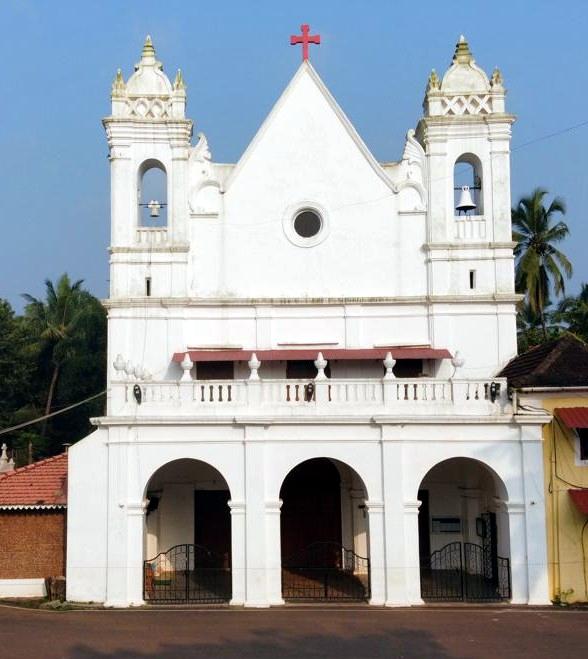
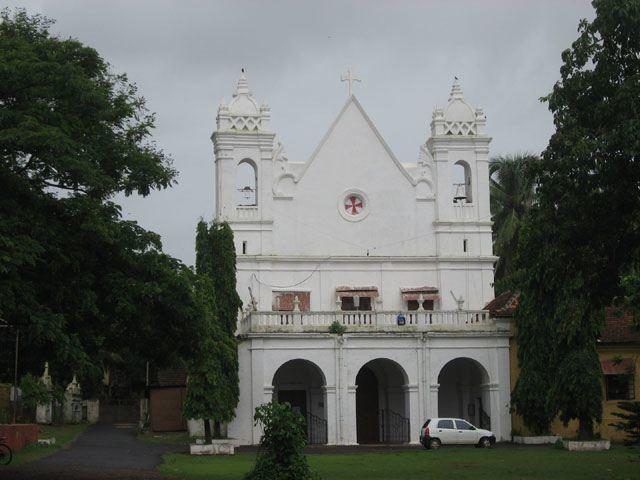
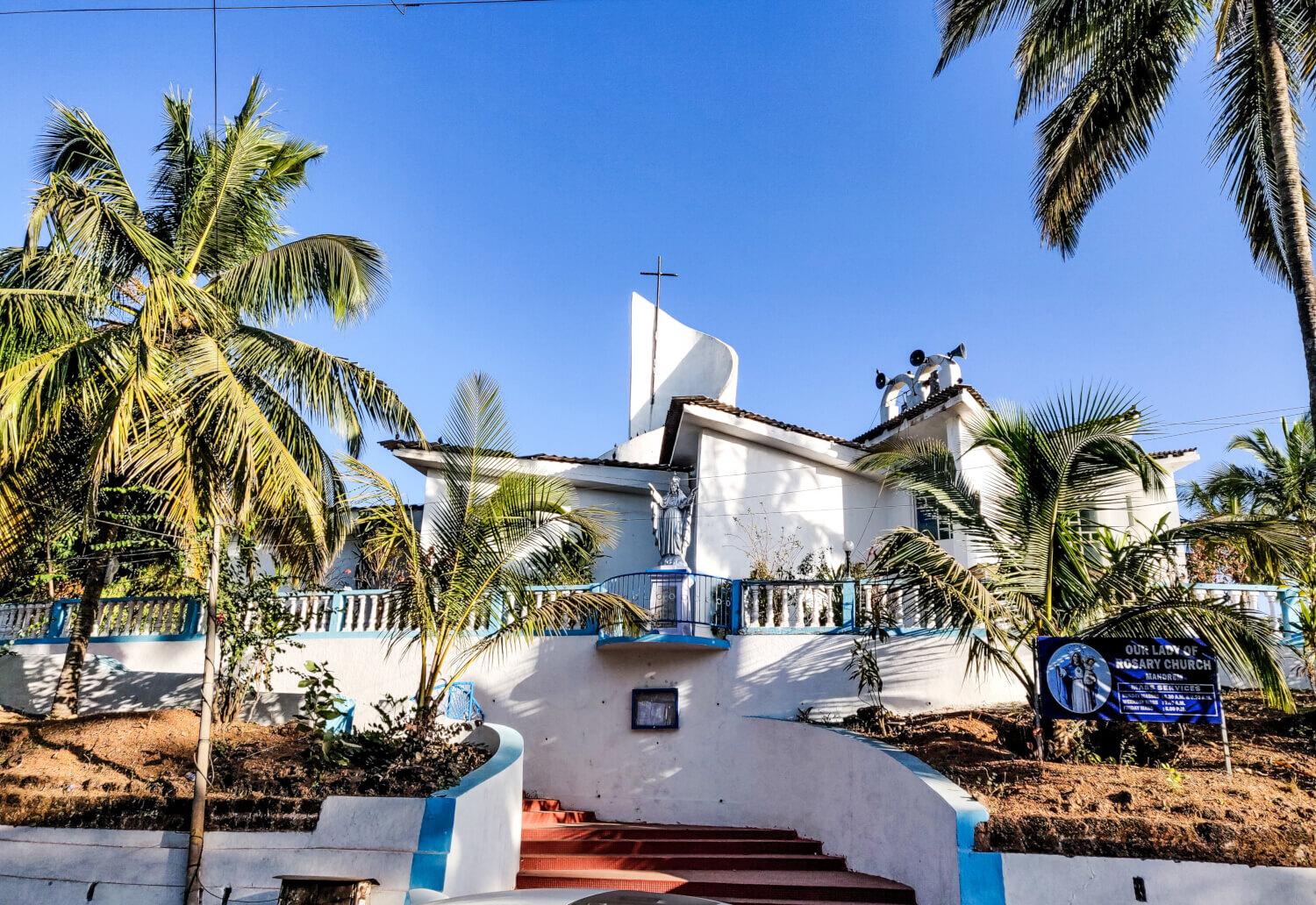
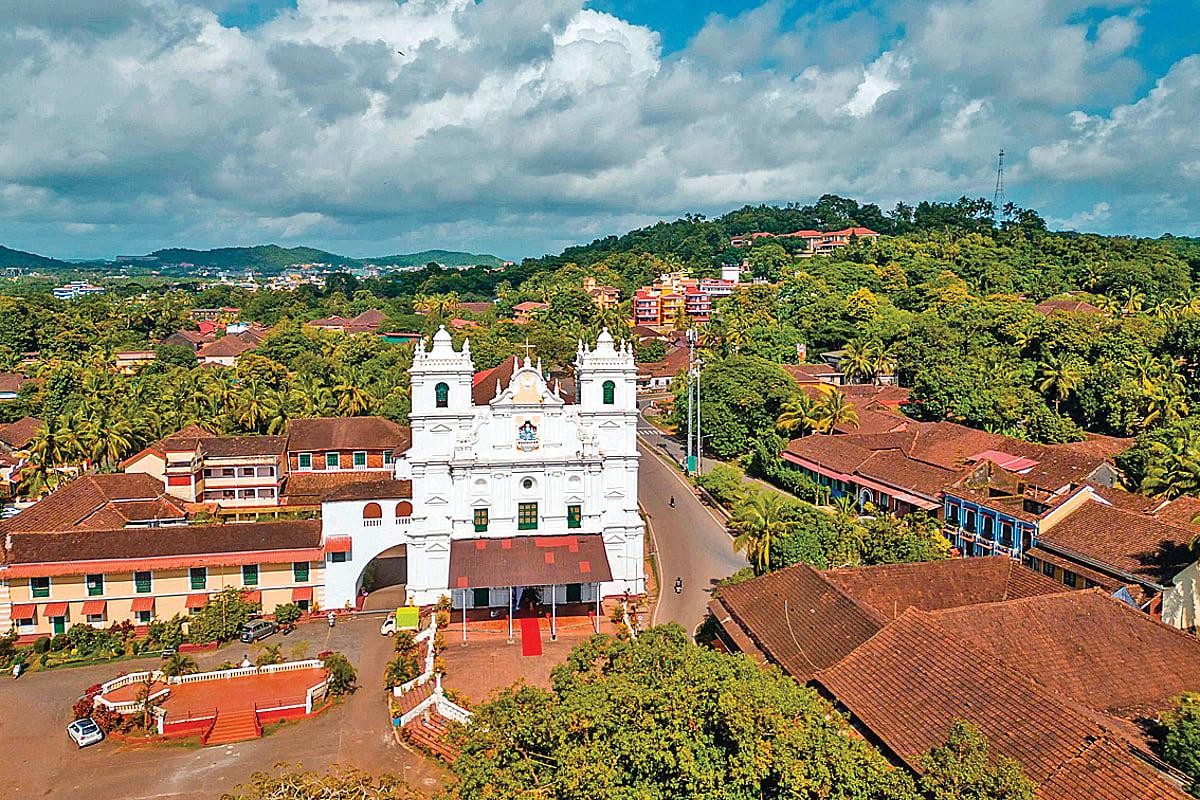
Nestled in the heart of the serene village of Betalbatim in South Goa, the Our Lady of Remedios Church (Nossa Senhora dos Remedios Igreja) stands as a testament to the enduring faith and architectural grandeur of the Portuguese era. Far from the bustling tourist hubs of North Goa, this church offers a sanctuary of peace, characterized by its brilliant white-washed facade and lush green surroundings. It is one of the most significant religious landmarks in the Salcete taluka, serving not just as a place of worship but as a communal hub for the local Catholic population.
The church is dedicated to Our Lady of Remedios (Our Lady of Remedies), a title of the Virgin Mary associated with healing and protection. Visitors to this site are often struck by the profound silence that permeates the air, broken only by the rustling of palm fronds and the occasional tolling of the church bell. For the traveler seeking a deeper connection with Goa’s spiritual heritage, a visit to Betalbatim is indispensable. The church’s location, surrounded by traditional Goan ancestral homes and expansive paddy fields, provides a glimpse into the "Old Goa" charm that many fear is fading. It represents a living history, where centuries-old traditions are still practiced with the same fervor as they were in the 17th century.
As you approach the church, the manicured gardens and the well-maintained cemetery adjacent to the main structure reflect the community’s devotion to their spiritual home. The church is not merely a monument; it is the heartbeat of Betalbatim. Whether you are a history buff, an architecture enthusiast, or a pilgrim seeking solace, the Our Lady of Remedios Church welcomes you with open arms and a sense of timelessness that is uniquely Goan.
History & Religious Significance
The history of the Our Lady of Remedios Church is deeply intertwined with the Jesuit mission in Goa. Founded in 1607, the church was established during a period of intense Christianization in the Salcete region. The original structure was a modest chapel, which was later expanded and elevated to the status of a parish church to accommodate the growing number of converts in the village of Betalbatim. The Jesuits, known for their architectural prowess and educational missions, played a pivotal role in the design and administration of the church during its formative years.
The religious significance of the church is rooted in the devotion to Nossa Senhora dos Remedios. In the Catholic tradition, "Remedios" translates to "Remedies" or "Cures." Historically, the devotion gained prominence in Europe during the Middle Ages as people sought the Virgin Mary’s intercession against plagues and physical ailments. When the Portuguese brought this devotion to Goa, it resonated deeply with the local population, who integrated their indigenous understanding of healing with the Catholic faith. To this day, many locals believe in the miraculous healing powers of the patroness, often visiting the church to pray for the health of loved ones.
Over the centuries, the church has survived various political and social upheavals, including the expulsion of the Jesuits in the 18th century and the eventual transition of Goa from Portuguese rule to Indian statehood. Despite these changes, the religious practices within the church have remained remarkably consistent. The church serves as a repository of the village’s collective memory, housing records of births, marriages, and deaths that span generations. It is a site where the past and present coexist, making it a vital link in the chain of Goan ecclesiastical history.
Architecture of Our Lady of Remedios Church
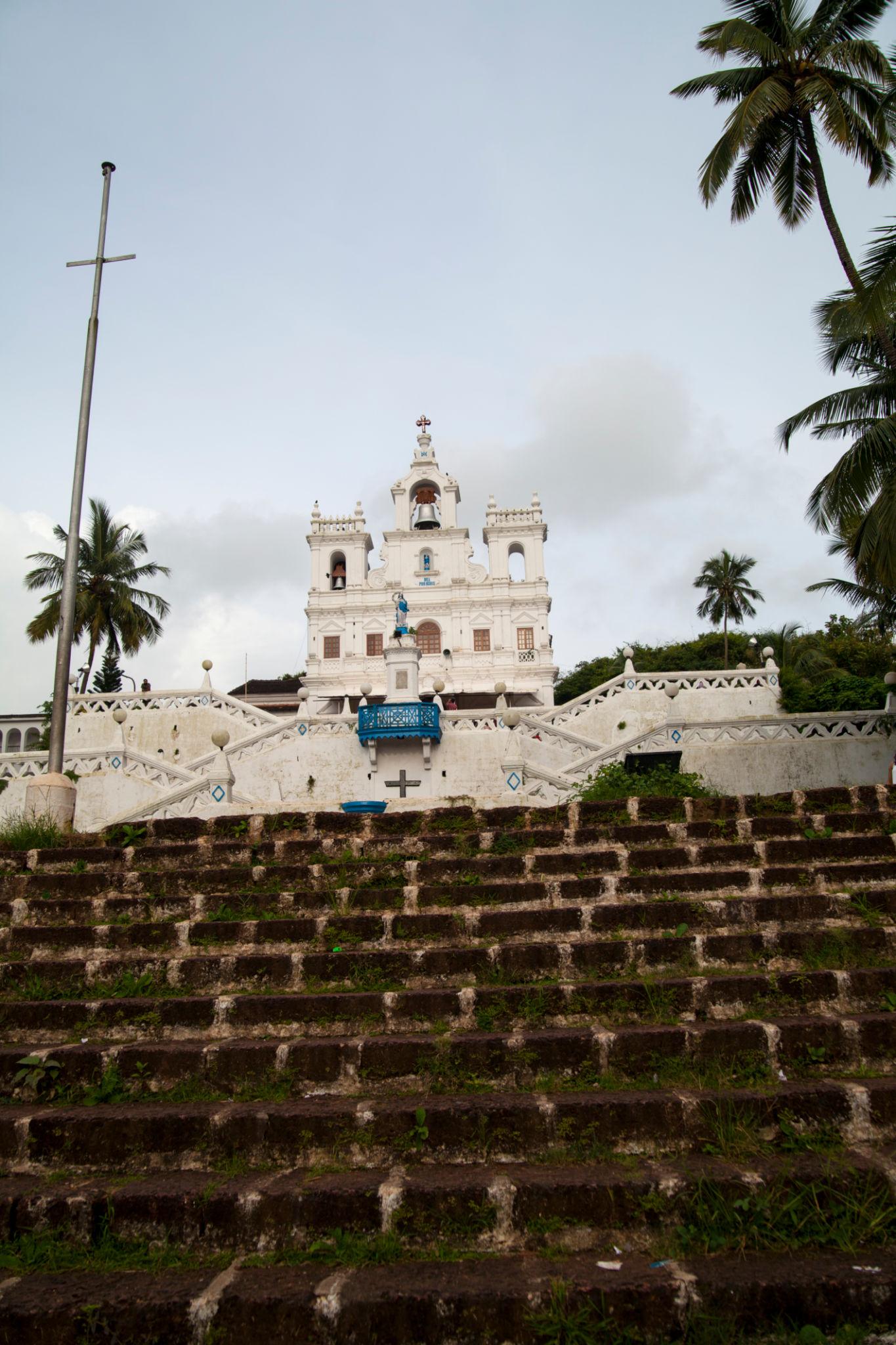
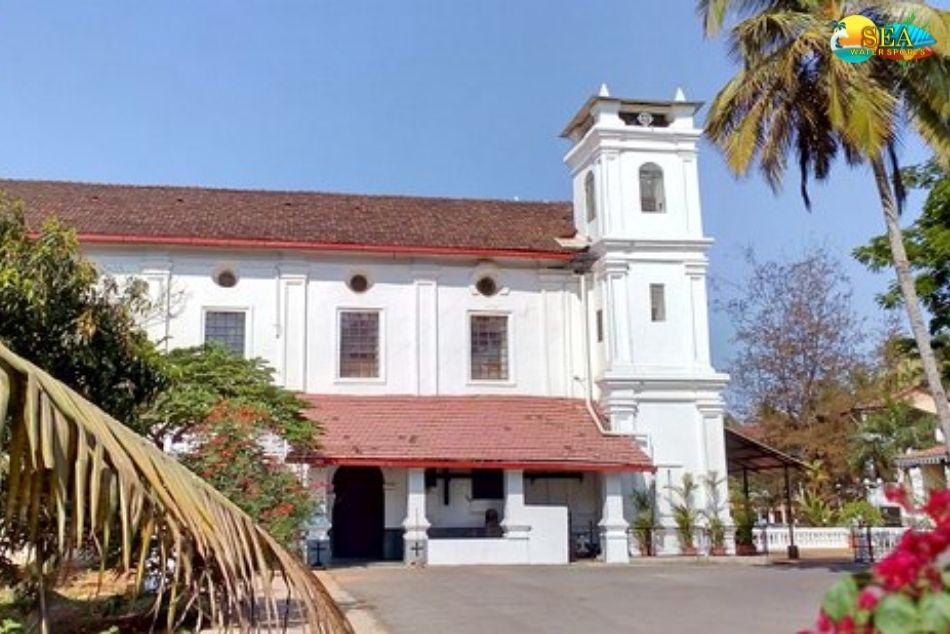
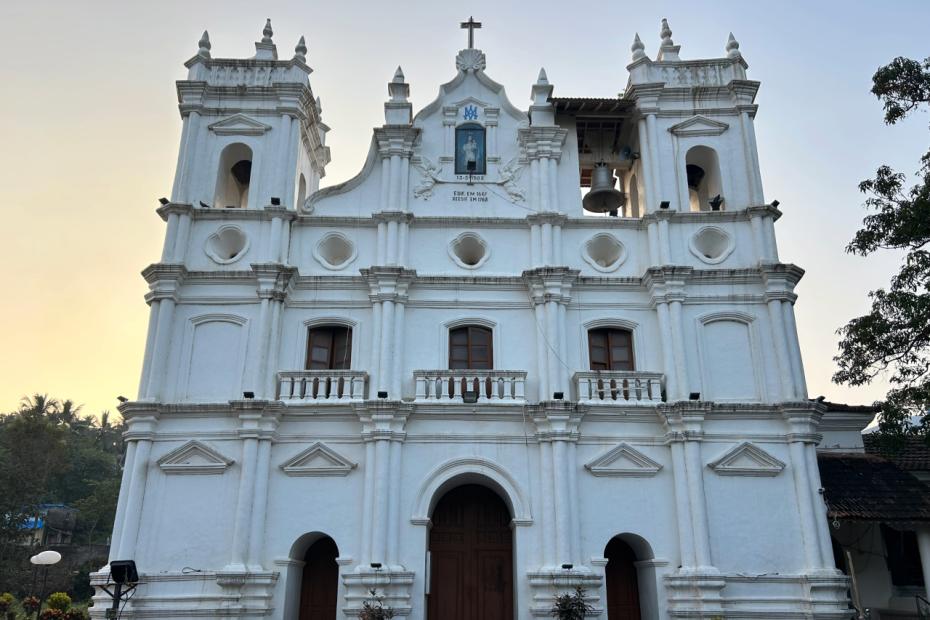
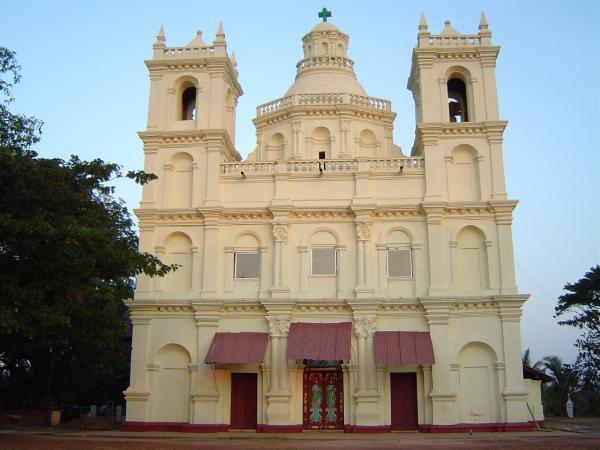
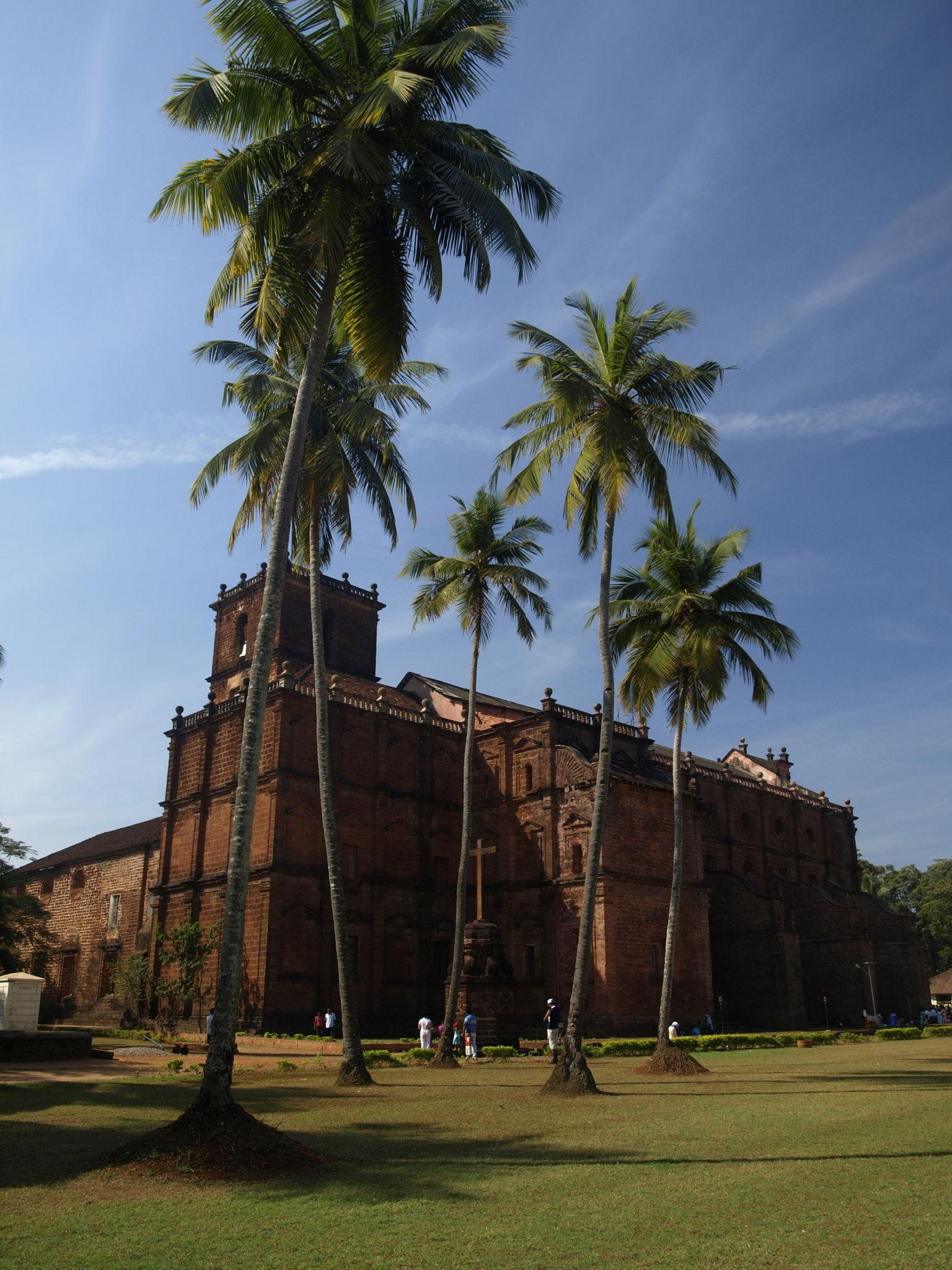
The architecture of the Our Lady of Remedios Church is a quintessential example of the Mannerist style, which was prevalent in Goa during the late 16th and early 17th centuries. This style acts as a bridge between the Renaissance and the Baroque, characterized by a sense of harmony, proportion, and subtle ornamentation. The facade of the church is divided into three vertical sections, with a central pediment that rises majestically towards the sky. The use of white lime plaster over local laterite stone is a classic Goan technique, designed to protect the structure from the heavy monsoon rains while providing a radiant glow under the tropical sun.
One of the most striking features of the exterior is the bell tower, which is integrated into the main structure. The bells, often cast in local foundries using a mix of metals to produce a distinct resonance, are still used to announce masses, funerals, and festive celebrations. The windows are often framed with intricate moldings, and in some sections, one might still find the use of translucent oyster shells (mother-of-pearl) instead of glass—a traditional Goan architectural element that filters the harsh sunlight into a soft, ethereal glow inside the nave.
Stepping inside, the interior follows a single-nave plan, common in Jesuit churches to ensure that the congregation’s focus remains entirely on the high altar. The main altar (retable) is a masterpiece of wood carving, gilded in gold leaf. It features the statue of Our Lady of Remedios at its center, flanked by various saints. The ceiling is often vaulted or decorated with wooden beams, providing excellent acoustics for choral singing. The side altars are equally impressive, dedicated to various saints and the Passion of Christ, showcasing the skill of local Goan artisans who blended European motifs with indigenous craftsmanship. The flooring, often made of terracotta tiles or patterned cement, adds a rustic warmth to the grand interior.
Main Deity / Spiritual Importance
The spiritual focal point of the church is the Blessed Virgin Mary under the title of Our Lady of Remedios. The statue of the patroness is positioned prominently on the main altar. She is typically depicted holding the Infant Jesus in one arm and a scepter or a vessel of medicine in the other, symbolizing her role as a healer and a protector. For the devotees of Betalbatim and the surrounding villages, she is more than just a religious figure; she is a motherly presence who provides comfort in times of distress.
The spiritual importance of this site is heightened by the miraculous reputation of the deity. It is common to see devotees offering "ex-votos"—small wax or metal tokens representing parts of the body that have been healed—as a sign of gratitude. The spiritual atmosphere is particularly palpable during the morning Angelus and the evening Rosary, when the community gathers to recite prayers in Konkani, the local language. This linguistic connection ensures that the faith remains deeply rooted in the local culture.
Furthermore, the church emphasizes the importance of the Holy Family and the community's role in the larger Catholic Church. The spiritual teachings practiced here focus on charity, humility, and the sanctity of family life. For many visitors, even those who do not share the same faith, the church offers a space for quiet meditation and reflection. The "Remedios" aspect of the deity invites everyone to seek internal healing and peace, making it a universal spiritual destination.
Festivals & Celebrations
The most significant event in the liturgical calendar of the church is the Feast of Our Lady of Remedios, celebrated with immense grandeur on the 6th of January. This date coincides with the Epiphany, or the Feast of the Three Kings. While the village of Cuelim is famous for the Three Kings procession, Betalbatim also observes this day with deep religious fervor. The celebration is preceded by a nine-day period of prayer known as the Novena. During the novenas, the village comes alive with early morning masses, traditional hymns, and communal gatherings.
On the day of the feast, a grand procession is held where the statue of Our Lady is carried through the streets of the village on a decorated palanquin. The air is filled with the sound of brass bands playing traditional Goan hymns, and the streets are lined with stalls selling sweets, toys, and religious artifacts. This "festa" is a time for "maddie" (the traditional raising of the banner) and "fama" (the day the feast is officially announced). It is also a time for families to reunite, with relatives traveling from across the globe to participate in the celebrations.
Apart from the main feast, the church also celebrates the Lenten season with great solemnity. The "Passos" (the re-enactment of the stages of the Cross) are performed with life-sized statues, drawing large crowds. Christmas and Easter are also celebrated with beautiful decorations and midnight masses that showcase the community's vibrant musical heritage. The local harvest festival (Konsachem Fest) is another important event, where the first stalks of grain are blessed, signifying the close relationship between the church and the agrarian lifestyle of the villagers.
Best Time to Visit
The best time to visit the Our Lady of Remedios Church is during the winter months, from November to February. During this period, the weather in Goa is exceptionally pleasant, with cool breezes and clear blue skies, making it ideal for exploring the church grounds and the surrounding village. This window also aligns with the major festivals, including Christmas and the Feast of Our Lady of Remedios on January 6th, offering visitors a chance to witness the church in its full festive glory.
If you prefer a more contemplative and quiet experience, the monsoon season (June to September) has its own charm. The Goan countryside turns into a lush, vibrant green, and the white church stands out beautifully against the dark, rain-heavy clouds. However, be prepared for heavy downpours which might limit outdoor exploration. The "off-season" months of March to May can be quite hot and humid, but they offer the advantage of fewer crowds, allowing for a more private spiritual experience.
For photographers, the golden hour—just after sunrise or shortly before sunset—is the best time to capture the architecture. The low sun casts a warm glow on the facade, highlighting the intricate details of the moldings and the textures of the lime wash. Visiting during a Sunday morning mass is also recommended if you wish to experience the local culture and hear the traditional Konkani choir, though you should remain respectful of the ongoing service.
Timings, Entry Fee & Dress Code
The Our Lady of Remedios Church is generally open to visitors daily. The standard timings are from 6:00 AM to 12:30 PM and again from 3:30 PM to 7:00 PM. However, these timings can vary on feast days or during special liturgical events. It is always best to visit in the early morning or late afternoon to avoid the midday heat and to ensure the church is open. Mass timings are typically at 6:30 AM on weekdays and multiple sessions on Sunday mornings (usually 7:00 AM and 8:30 AM).
There is no entry fee to visit the church. As a place of worship, it is open to people of all faiths and backgrounds. However, donations for the upkeep of the church and its charitable activities are always welcomed and can be placed in the designated offering boxes inside the nave.
Regarding the dress code, visitors are expected to dress modestly out of respect for the sanctity of the site. This means covering shoulders and knees. Sleeveless tops, short skirts, and beachwear are strictly discouraged. Hats and caps should be removed before entering the church. If you are visiting during a mass, it is also expected that you maintain silence and refrain from walking around the altar area. Following these simple guidelines ensures a respectful experience for both the visitor and the local congregation.
How to Reach Our Lady of Remedios Church
Reaching the Our Lady of Remedios Church in Betalbatim is relatively easy, as it is well-connected by road to major parts of South Goa. If you are arriving by air, Dabolim Airport is approximately 20 kilometers away. You can hire a pre-paid taxi from the airport, which will take about 30 to 45 minutes to reach Betalbatim. For those traveling by train, the Madgaon Railway Station is the nearest major railhead, located about 8 kilometers from the church. Taxis and auto-rickshaws are readily available at the station.
For those staying in other parts of Goa, renting a scooter or a car is the most convenient way to travel. The drive to Betalbatim is scenic, passing through winding village roads lined with coconut groves. If you are using public transport, you can take a bus from Margao (Madgaon) towards Betalbatim or Colva. The bus stop is usually a short walk from the church entrance.
For travelers staying in the nearby beach areas of Majorda or Colva, the church is just a 5-10 minute drive or a pleasant 20-minute walk. Using a navigation app like Google Maps is highly recommended, as the internal village roads can sometimes be confusing for first-time visitors. The church is a well-known landmark, so asking locals for "Betalbatim Church" will easily get you the right directions.
Things to Do
- Attend a Konkani Mass: Experience the local culture firsthand by attending a Sunday morning mass. Even if you don't understand the language, the rhythmic chants and the community's devotion are deeply moving.
- Architectural Photography: Capture the stunning Mannerist facade and the intricate wood carvings of the altars. The exterior cemetery with its unique tombstones also offers interesting photographic opportunities.
- Meditation and Prayer: The interior of the church is exceptionally quiet during non-mass hours, making it a perfect spot for silent reflection or meditation.
- Explore the Cemetery: The church cemetery is a place of history. Reading the inscriptions on the old graves provides insight into the prominent families of Betalbatim and the village's past.
- Walk through Betalbatim Village: After visiting the church, take a stroll through the village. You will see traditional Goan houses with large porches (balcãos) and vibrant gardens.
- Visit the Parish Hall: If there is a local event or a wedding happening, you might get a glimpse of Goan social life and traditional celebrations.
- Light a Candle: It is a common practice to light a candle at the side altars while making a silent petition or offering a prayer of thanks.
Nearby Attractions
The Our Lady of Remedios Church is situated in a prime location that allows visitors to explore several other attractions in South Goa. Just a couple of kilometers away is the Betalbatim Beach, often called the "Sunset Beach." It is one of the cleanest and quietest beaches in Goa, perfect for a peaceful walk or watching the sun dip into the Arabian Sea. Unlike the more commercialized beaches, Betalbatim offers a sense of seclusion.
A short drive south will take you to Colva Beach, one of the most famous and busiest beaches in South Goa, known for its white sand and numerous shacks. To the north lies Majorda Beach, famous for its association with Goan bread-making history and its beautiful stretch of sand. For those interested in more religious sites, the St. Andrew's Church in Vasco and the Rachol Seminary are within a 30-minute driving radius and offer further insights into Goa's Christian heritage.
For nature lovers, the Froggyland Water Park is nearby for some family fun, though most visitors prefer the natural beauty of the Sal River backwaters. If you are interested in history beyond the ecclesiastical, the Goa Chitra Museum in Benaulim is a must-visit. It houses a vast collection of indigenous artifacts, traditional farming tools, and historical items that showcase the ethnographic history of Goa.
Photography & Visitor Guidelines
Photography is a popular activity at the Our Lady of Remedios Church, but it comes with certain responsibilities. Inside the church, photography is generally discouraged, especially during mass or when people are praying. If you wish to take photos of the altars or the interior architecture, it is polite to ask the parish priest or the sacristan for permission first. Flash photography is strictly prohibited inside as it can damage the ancient gilded wood and disturb the solemn atmosphere.
Outside the church, you are free to take as many photos as you like. The facade, the bell tower, and the surrounding gardens are all excellent subjects. However, please be mindful of the cemetery area; avoid stepping on graves or taking intrusive photos of grieving families if a burial is taking place. Drones are generally not allowed without prior official permission from the church authorities and local government bodies.
General visitor guidelines include maintaining a low volume when speaking, turning off mobile phones or putting them on silent mode, and not touching the statues or the gilded portions of the altars. If you are visiting as part of a large group, try to break into smaller units to avoid overwhelming the space. Remember, this is a functioning parish, and the needs of the worshipping community always take precedence over tourism.
Where to Eat Nearby
Betalbatim and its surrounding areas are a paradise for food lovers, offering everything from fine dining to rustic beach shacks. One of the most famous landmarks nearby is Martin’s Corner in Binwaddo. This legendary restaurant is known for its authentic Goan seafood, particularly the King Crab Masala and Pork Vindaloo. It’s a favorite among celebrities and locals alike and offers a great atmosphere with live music on many evenings.
For a more laid-back experience, Fishka Bar & Restaurant is highly recommended. It serves delicious tandoori dishes and fresh seafood in a relaxed, garden-like setting. If you are heading towards the beach, you will find several shacks like Magzika Beach Shack, where you can enjoy a chilled beer and some prawn balchão while keeping your feet in the sand. These shacks are perfect for a post-church visit lunch.
If you are looking for something more upscale, the restaurants within the Alila Diwa Goa resort offer exquisite multi-cuisine options. For those who want to try traditional Goan snacks like samosas, batata vadas, or choriz pao, several small local bakeries and tea stalls can be found along the main road leading to the church. Don't forget to try the local bebinca or dodol for dessert, which are staples in any Goan Catholic household.
Accommodation Nearby
Whether you are looking for luxury or a budget-friendly stay, the area around Betalbatim has plenty of options. For a high-end experience, Alila Diwa Goa is the premier choice. This 5-star resort is designed with traditional Goan aesthetics in mind and offers stunning views of the paddy fields, located just a stone's throw from the church. Another luxury option is the ITC Grand Goa in nearby Arossim, which features Indo-Portuguese architecture and world-class amenities.
For mid-range travelers, Nanu Resort and Coconut Grove offer comfortable rooms and great service within walking distance of the beach and a short drive from the church. These resorts often have beautiful pools and landscaped gardens that mirror the tranquility of the village. If you are a budget traveler or a backpacker, there are numerous guest houses and homestays in Betalbatim. Staying in a local homestay is a wonderful way to experience Goan hospitality and learn more about the village traditions.
Many visitors also choose to stay in Colva or Majorda, which have a higher density of hotels and hostels. From there, the Our Lady of Remedios Church is easily accessible by a short bike ride. Regardless of where you stay, South Goa's accommodation tends to be more spread out and peaceful compared to the crowded strips of the north, ensuring a restful stay.
Travel Tips
- Stay Hydrated: The Goan sun can be quite intense, even in winter. Always carry a bottle of water with you while exploring the church grounds.
- Respect Local Customs: Goans are very protective of their religious traditions. Always be polite, speak softly, and follow the instructions of the church staff.
- Learn Basic Konkani: Knowing a few words like "Dev borem korum" (Thank you/God bless you) can go a long way in building a rapport with the locals.
- Footwear: Wear comfortable walking shoes, as you may want to explore the village on foot. However, remember that you may need to remove your shoes if you enter certain private areas or smaller chapels.
- Cash is King: While larger restaurants and resorts accept cards, small local shops and auto-rickshaws often prefer cash. There are ATMs available in the main Betalbatim market area.
- Sun Protection: Use sunscreen and carry an umbrella or a hat, especially if you plan to walk to the beach after your church visit.
- Timing: Try to reach the church by 9:00 AM to beat the heat and the potential influx of day-trippers.
Conclusion
The Our Lady of Remedios Church in Betalbatim is far more than just a historical monument; it is a sanctuary where the soul of Goa resides. Its pristine white walls, its centuries-old history, and its deep-seated spiritual significance make it a must-visit for anyone looking to go beyond the stereotypical beach parties of Goa. It offers a rare opportunity to witness the harmonious blend of European architectural styles and Indian cultural sensibilities, all set within the idyllic backdrop of a South Goan village.
A visit to this church is a journey through time. As you stand in the nave, surrounded by the scent of incense and the echoes of ancient prayers, you can’t help but feel a sense of peace that is hard to find in the modern world. Whether you are seeking a miracle from Our Lady of Remedies, admiring the craftsmanship of the 17th-century Jesuits, or simply looking for a quiet place to reflect, this church provides the perfect setting. It remains a beacon of faith and a proud symbol of Betalbatim’s identity, inviting every traveler to pause, breathe, and experience the spiritual essence of Goa.