Explore sections of this guide
Nestled on the serene and verdant island of Santo Estevao, also known as Juvem, St. Stephens' Church stands as a monumental testament to Goa’s rich ecclesiastical history and architectural grandeur. Located in the Tiswadi taluka, approximately 20 kilometers from the state capital, Panjim, this church is not merely a place of worship but a cultural landmark that defines the identity of the islanders, known locally as Juvekars. Unlike the bustling tourist hubs of North Goa, St. Stephens' Church offers a tranquil retreat into the heart of "Old Goa" charm, surrounded by expansive emerald-green paddy fields, winding creek waters, and the rustic simplicity of village life.
The church is dedicated to St. Stephen the Proto-martyr, the first Christian martyr, and is one of the largest parish churches in the Archdiocese of Goa and Daman. Its imposing structure, perched on a slight elevation, dominates the island's landscape, serving as a beacon for those traveling through the backwaters of the Mandovi River. Visitors to this church are often struck by its sheer scale—a surprising contrast to the quiet, secluded nature of the island itself. The island of Santo Estevao is unique in its geography, connected to the mainland by a bridge and ferries, which has helped preserve its traditional Goan Catholic heritage from the rapid commercialization seen elsewhere in the state.
For the spiritual seeker, St. Stephens' Church represents a space of profound silence and devotion. For the history buff and architecture enthusiast, it is a masterclass in colonial-era design, blending European styles with local craftsmanship. Whether you are arriving by the scenic ferry from Ribandar or driving through the winding roads of Banastarim, the first sight of the church’s gleaming white facade against the blue Goan sky is an experience that lingers long after the visit. It is a site where time seems to slow down, allowing one to appreciate the intricate nuances of Goan Christian art and the enduring faith of a community that has called this island home for centuries.
The history of St. Stephens' Church is deeply intertwined with the Jesuit mission in Goa during the 16th century. The original foundation of the church dates back to 1575, established by the Jesuits who were instrumental in the evangelization of the Ilhas (Islands) region. However, the structure we see today is not the original 16th-century building. The history of the church is marked by periods of destruction and resilient reconstruction, reflecting the turbulent geopolitical landscape of colonial Goa.
In the late 17th century, specifically in 1683, the island of Santo Estevao faced a significant threat during the Maratha invasion led by Sambhaji Maharaj. During this conflict, the original church suffered extensive damage. Local oral traditions and historical records suggest that the island was a strategic point of defense, and the church often stood at the center of these historical upheavals. Following the withdrawal of the Marathas and the subsequent stabilization of the region, the church was painstakingly rebuilt. The current grand structure was completed in 1759, showcasing the evolution of architectural tastes from the early Mannerist styles to the more ornate Baroque and Corinthian influences that were popular in the 18th century.
Religiously, the church holds immense significance as it is dedicated to St. Stephen, whose life is chronicled in the Acts of the Apostles. As the first martyr of the Christian faith, St. Stephen symbolizes unwavering courage and forgiveness, themes that resonate deeply with the local congregation. The church has served as the spiritual heart of the island for over four centuries, surviving the suppression of religious orders and the transition of Goa from Portuguese rule to Indian integration. It remains a focal point for the Goan Catholic identity, preserving traditional liturgical practices and community celebrations that have been passed down through generations of Juvekars.
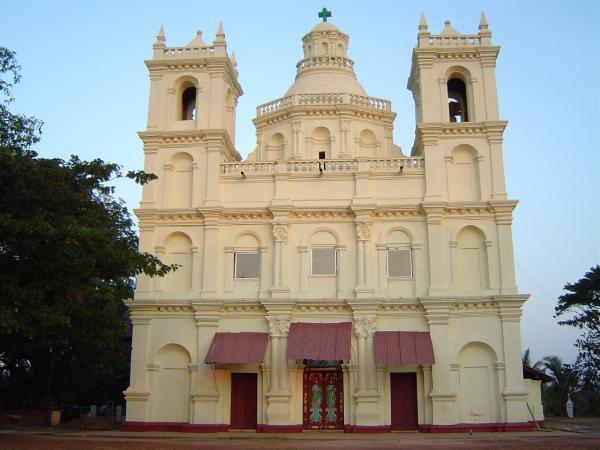
The architecture of St. Stephens' Church is often described as one of the most ambitious and large-scale designs in rural Goa. Built in the Late Baroque style with significant Corinthian influences, the church is a visual marvel. The exterior facade is characterized by its massive scale and rhythmic arrangement of pilasters and windows. The frontispiece is divided into multiple tiers, a classic feature of Goan church architecture, culminating in a decorative pediment topped with a cross.
One of the most striking features of the exterior is the pair of twin towers that flank the main facade. These towers, topped with cupolas, house the church bells and provide a sense of verticality that makes the church visible from miles away. The use of laterite stone—a locally available reddish volcanic rock—forms the core of the structure, which is then plastered with lime to achieve that iconic brilliant white finish typical of Portuguese-Goan churches. The lime plastering not only protects the laterite from the heavy monsoon rains but also reflects the tropical sun, keeping the interiors relatively cool.
Upon entering the church, the interior reveals a vast, single-nave hall that emphasizes the "hall church" concept favored by the Jesuits to ensure that the entire congregation had an unobstructed view of the high altar. The ceiling is a magnificent barrel vault, decorated with intricate stucco work. However, the true architectural glory lies in its seven altars. The main altar (Retable) is a masterpiece of woodcarving, gilded in gold leaf. It features elaborate motifs of vines, flowers, and cherubs, surrounding the central statue of St. Stephen. The six side altars are equally impressive, dedicated to various saints and manifestations of the Virgin Mary, each showcasing the high level of craftsmanship achieved by local Goan artisans who blended European designs with indigenous aesthetic sensibilities. The pulpit, located on the side wall, is another fine example of ornate woodcarving, featuring delicate floral patterns and religious iconography.
The central figure of devotion at this church is St. Stephen, the Proto-martyr. In Christian theology, St. Stephen was one of the seven deacons appointed by the Apostles to distribute food and charitable aid to the poorer members of the community in the early church. He is celebrated for his eloquent defense of the faith and his eventual martyrdom by stoning, during which he famously prayed for his executioners. This spirit of sacrifice and charity is the cornerstone of the spiritual life at St. Stephens' Church.
Inside the church, the main altar houses a majestic statue of St. Stephen, usually depicted in the vestments of a deacon, holding a palm frond (a symbol of martyrdom) and sometimes stones, representing the manner of his death. The spiritual importance of the church extends beyond the patron saint. The side altars are dedicated to Our Lady of the Rosary, St. Sebastian, and the Sacred Heart of Jesus, among others. These altars serve as secondary focal points for prayer, especially during specific feast days or novenas.
For the locals, the church is the "soul" of the island. It is where every major life event is sanctified, from baptisms and weddings to funerals. The spiritual atmosphere is particularly palpable during the Angelus bell at dawn and dusk, when the village pauses for a moment of reflection. The church also houses several relics and antique liturgical objects that are brought out during special processions, reinforcing the deep-rooted connection between the divine and the daily lives of the islanders. The practice of the Rosary and the Ladainha (litany sung in Latin and Konkani) are integral parts of the spiritual fabric here, maintaining a bridge to the island's historical past.
The liturgical calendar at St. Stephens' Church is vibrant, but the most significant event is undoubtedly the Feast of St. Stephen, celebrated annually on December 26th. This day, following Christmas, turns the entire island into a festive hub. The celebration begins with a nine-day Novena, where the community gathers for daily mass and hymns. On the feast day, a grand High Mass is celebrated, often presided over by high-ranking clergy from the Archdiocese. This is followed by a traditional procession where the statue of the saint is carried around the church square, accompanied by a brass band playing somber yet triumphant melodies.
Another unique celebration on the island is the Feast of Our Lady of the Rosary. Given the island's agricultural roots, festivals often coincide with the harvest cycles. The Konsachem Fest (Harvest Festival) involves the blessing of the first sheaves of grain, a tradition that signifies gratitude for the land's bounty. During these festivals, the church grounds are filled with stalls selling traditional Goan sweets like bebinca, dodol, and doce, as well as local handicrafts.
The Goan Carnival and Easter are also celebrated with great fervor. During Holy Week, the church hosts poignant reenactments of the Passion of Christ, including the Passos (processions of the suffering of Jesus). What makes celebrations at Santo Estevao special is the communal harmony. Even though it is a Catholic parish, the entire village, including members of other faiths, participates in the cultural aspects of the festivals, reflecting the syncretic nature of Goan society. The island is also famous for its traditional boat races and cultural programs that take place in the creek during festive seasons, adding a unique maritime flavor to the celebrations.
The ideal time to visit St. Stephens' Church is during the winter months, from November to February. During this period, the weather in Goa is exceptionally pleasant, with cool breezes and clear blue skies, making it perfect for exploring the island of Santo Estevao. The humidity is at its lowest, and the temperature ranges between 20°C and 30°C, which is ideal for walking around the church grounds and the village.
If you wish to experience the church in its full spiritual and cultural glory, plan your visit around December 26th for the Feast of St. Stephen. The atmosphere is electric, the church is beautifully decorated, and you get to witness authentic Goan traditions. However, do note that this is also the peak tourist season in Goa, so the island might be slightly more crowded than usual.
Alternatively, the monsoon season (June to September) offers a different kind of beauty. The island of Santo Estevao turns into a lush, vibrant green paradise. The sight of the white church against the backdrop of rain-washed fields and grey monsoon clouds is incredibly poetic and a favorite for photographers. However, be prepared for heavy downpours which might make travel by ferry or narrow village roads a bit challenging. The summer months (March to May) can be quite hot and humid, so if you visit during this time, it is best to arrive early in the morning or late in the evening.
St. Stephens' Church is a place of active worship, and visitors are expected to respect the sanctity of the environment. The general timings for visitors are:
There is no entry fee to visit the church. It is open to people of all faiths and backgrounds. However, donations for the upkeep of the historical structure are always appreciated by the parish office.
Regarding the dress code, modesty is key. As with most religious sites in Goa, visitors should follow these guidelines:
Reaching Santo Estevao Island is an adventure in itself, as it involves crossing the scenic backwaters of Goa. Here are the primary ways to reach the church:
Note: The roads on the island are narrow and winding. If you are driving a large SUV, be prepared for tight turns and yield to local traffic. Renting a scooter is perhaps the best way to explore the island at a leisurely pace.
While the church is the main attraction, the island of Santo Estevao offers several activities for the curious traveler:
The location of St. Stephens' Church in the Tiswadi taluka puts it in close proximity to several other historical and natural wonders:
To ensure a respectful and pleasant visit, please adhere to the following guidelines:
Santo Estevao is a quiet residential island, so you won't find large commercial restaurants or fast-food chains. However, this is part of its charm. For food, consider the following:
If you wish to stay close to St. Stephens' Church to experience the island's tranquility, your best options are:
St. Stephens' Church is more than just an architectural marvel; it is a repository of Goan history, a sanctuary of faith, and a symbol of the enduring spirit of the island of Santo Estevao. Its grand white towers and the magnificent seven altars stand as a tribute to the craftsmanship and devotion of past generations. A visit here is a journey back in time, away from the neon lights and crowded beaches, into a world where the rhythm of life is dictated by the church bells and the flow of the Mandovi River. Whether you come for the history, the art, or the spiritual peace, St. Stephens' Church offers a profound experience that captures the true essence of Goa Dourada (Golden Goa). It remains a hidden gem, waiting to be discovered by those who seek the soul of this beautiful coastal state.