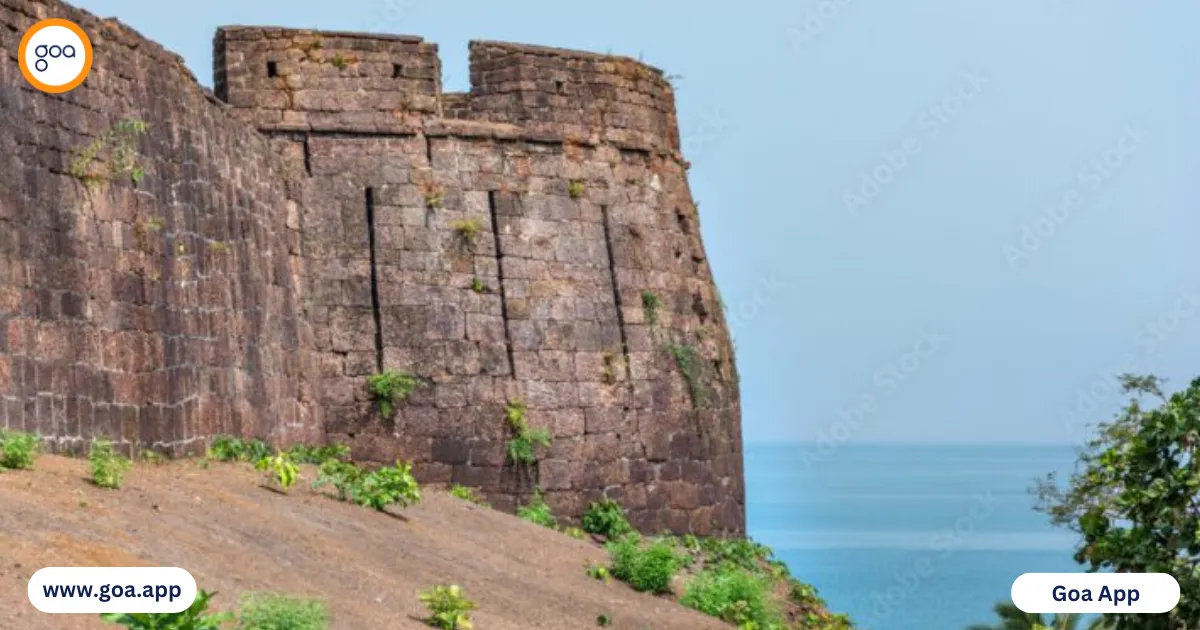
Cabo de Rama Fort

Cabo de Rama Fort

4.7 1,260 Verified
Historical Fort South Goa

Quick Navigation

Explore sections of this guide

Introduction to Cabo de Rama Fort

Perched majestically on a high cliff overlooking the sapphire waters of the Arabian Sea, Cabo de Rama Fort stands as one of the most evocative and historically significant landmarks in South Goa. Located in the Canacona taluka, this ancient citadel is far removed from the neon lights and bustling crowds of North Goa, offering a serene escape into a world where history and nature converge. As a professional travel writer who has spent years exploring the hidden corners of the Sunshine State, I can confidently say that Cabo de Rama is not just a monument; it is a sensory experience that captures the very essence of Goan heritage.

The fort spreads across a sprawling 180,000 square meters, its weathered laterite walls telling tales of Hindu kings, Portuguese conquerors, and British occupiers. The drive to the fort is an adventure in itself, taking you through the winding, emerald-green lanes of South Goa, past sleepy villages like Canaguinim and Cola, where the pace of life remains delightfully slow. As you approach the entrance, the salty sea breeze carries the scent of the ocean, and the sight of the white-washed church standing in stark contrast against the rustic orange stones of the fort creates a visual masterpiece that is uniquely Goan.

Whether you are a history buff looking to trace the footsteps of the Soonda Kings, a nature lover seeking the perfect sunset, or a photographer hunting for the ultimate cliff-side shot, Cabo de Rama Fort delivers in abundance. It is a place where the roar of the waves crashing against the rocks below provides a constant soundtrack to your exploration. In this comprehensive guide, we will delve deep into the layers of this magnificent fortress, uncovering its secrets and providing you with everything you need to know for an unforgettable visit to this southern gem.

History of Cabo de Rama Fort

The history of Cabo de Rama Fort is as layered and complex as the stones that form its ramparts. Its name is steeped in ancient Indian mythology, specifically the epic Ramayana. Local legend holds that Lord Rama, along with his wife Sita and brother Lakshmana, took shelter within the precincts of this fort during their 14-year exile from Ayodhya. This association gives the fort its name—"Cabo" meaning cape in Portuguese and "de Rama" referring to Lord Rama. While the mythological roots are difficult to prove, they add a spiritual aura to the site that resonates with locals and pilgrims alike.

In the documented historical era, the fort was originally a Hindu stronghold. It was constructed and maintained by various local dynasties, most notably the Soonda Kings of Karnataka. These rulers recognized the strategic value of the high cliff, using it to monitor maritime activity and protect their kingdom from naval invasions. However, the mid-18th century brought significant changes to the geopolitical landscape of Goa. In 1763, the Portuguese, who were expanding their "Estado da Índia," captured the fort from the Raja of Soonda. Seeing its immense potential as a defensive outpost, the Portuguese immediately began extensive renovations, adding their distinct architectural flourishes and reinforcing the walls to withstand heavy artillery.

The Portuguese occupation of Cabo de Rama lasted for nearly two centuries, but it was not always a purely military installation. For a brief period between 1797 and 1813, the fort was occupied by British forces who were stationed there to prevent a potential French invasion during the Napoleonic Wars. After the British left, the Portuguese reclaimed it and eventually repurposed the fort into a government prison. It served this grim function until 1955, housing political prisoners and criminals alike. Following the liberation of Goa in 1961, the prison was closed, and the fort was eventually handed over to the Department of Archaeology. Today, it stands as a protected monument, a silent witness to the rise and fall of empires and the ultimate triumph of Goan independence.

Architecture

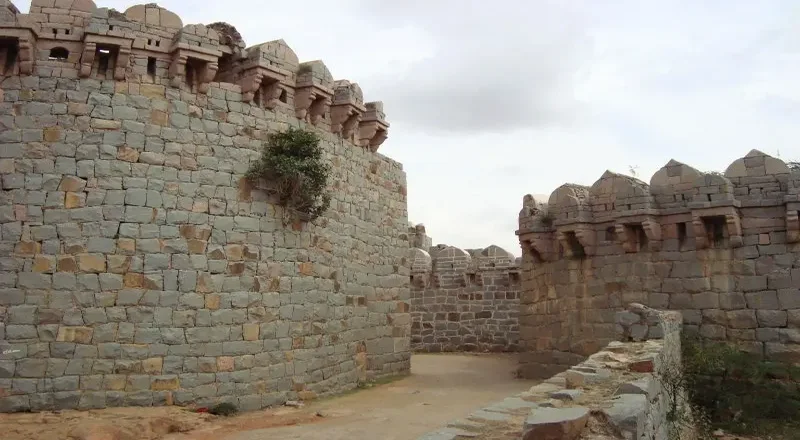
The architecture of Cabo de Rama Fort is a fascinating blend of indigenous Hindu defensive styles and colonial Portuguese military engineering. Built primarily using laterite stone—a reddish-brown rock abundant in the Konkan region—the fort’s walls are remarkably resilient despite centuries of exposure to the harsh monsoon rains and salty sea air. The main entrance is a grand gatehouse that still retains much of its original character, leading visitors across a bridge that spans a deep, dry moat. This moat was once a formidable obstacle for any invading force attempting to breach the fort from the landward side.

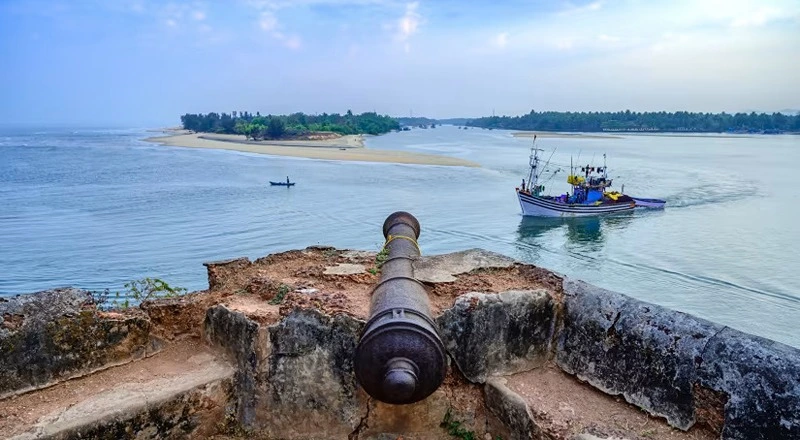
Once inside, the layout reveals a series of bastions and ramparts that follow the natural contours of the cliff. The Portuguese added several watchtowers and mounted 21 cannons at various points along the walls, though only a few of these iron relics remain today, rusted by time but still pointing defiantly toward the sea. One of the most striking architectural features within the fort complex is the Church of St. Antonio. This small, white-washed chapel is a classic example of Portuguese colonial architecture, featuring a simple facade and a bell tower that rings out during the annual feast. The contrast between the stark white church and the weathered orange laterite of the surrounding ruins is one of the most iconic sights in South Goa.

The fort also contains the remains of several internal structures, including barracks, administrative buildings, and a large water tank or cistern used for rainwater harvesting. The engineering required to maintain a freshwater supply on a dry, rocky headland is a testament to the ingenuity of the fort’s builders. As you walk along the western ramparts, you will notice the sheer verticality of the cliffs, which served as a natural defense mechanism. The integration of man-made walls with the natural topography makes Cabo de Rama a masterpiece of military architecture, designed to be nearly impregnable from the sea.

Why Cabo de Rama Fort is Famous

Cabo de Rama Fort has earned its fame through a combination of mythological significance, historical intrigue, and breathtaking natural beauty. For many, its primary claim to fame is the Ramayana connection. The belief that Lord Rama himself walked these grounds makes it a site of cultural pilgrimage, distinguishing it from other forts in Goa like Aguada or Chapora. This legendary status gives the fort a soul that transcends its physical ruins, making it a must-visit for those interested in the spiritual tapestry of India.

Beyond mythology, the fort is famous for offering some of the most panoramic views in the entire state. From the edge of the cliffs, visitors can look out over the vast expanse of the Arabian Sea, where the water transitions from turquoise to deep indigo. To the north, you can see the mouth of the Sal River and the distant sands of Betul Beach. To the south, the rugged coastline stretches toward Agonda and Palolem. These vistas have made Cabo de Rama a favorite spot for sunset seekers. Watching the sun dip below the horizon, painting the sky in hues of fiery orange and soft violet, is a quintessential South Goa experience that attracts thousands of tourists every year.

The fort is also famous for its unique "hidden" beach, often referred to as Cabo de Rama Beach or Pebble Beach. Accessible via a steep trek down the northern side of the fort, this secluded cove features volcanic rocks and crystal-clear water, offering a stark contrast to the sandy expanses of northern Goa. Finally, the fort’s presence in popular culture, including its use as a filming location for various Indian movies and music videos, has cemented its status as an iconic Goan landmark. It represents the "quiet side" of Goa—a place of reflection, history, and raw natural power.

Strategic Importance

The strategic importance of Cabo de Rama Fort cannot be overstated. Throughout history, whoever controlled this cape controlled the maritime traffic along the southern Konkan coast. Its location on a high, jutting headland provided a 360-degree view of the surrounding landscape, making it impossible for enemy ships to approach the coast of South Goa undetected. In an era where naval supremacy was key to colonial dominance, Cabo de Rama was a vital sentinel of the sea.

For the Portuguese, the fort served as a crucial link in their chain of coastal defenses, which included Fort Aguada in the north and the forts at Marmagoa and Anjediva. It protected the southern flank of their territory and provided a safe harbor for Portuguese vessels navigating between Goa and their southern outposts in Mangalore and Cochin. The fort’s 21-gun battery was one of the most powerful in the region, capable of deterring even the most ambitious naval incursions. Furthermore, the fort served as a lookout point for monitoring the movements of the Marathas and the British, both of whom were constantly vying for control over Goan territory.

Even the internal layout of the fort was strategically planned. The high walls and deep moats were designed to withstand prolonged sieges, while the elevated position ensured that the defenders always had the advantage of height. The presence of the St. Antonio Church inside the fort also had a strategic psychological component, providing spiritual solace to the soldiers stationed in this remote outpost. Even today, the strategic value of the site is recognized; the Indian Coast Guard and Navy often utilize the surrounding waters for patrols, acknowledging the same geographical advantages that the Soonda Kings and Portuguese once exploited.

Best Time to Visit

Choosing the right time to visit Cabo de Rama Fort is essential for getting the most out of your experience. Because the fort is largely an open-air site with very little shade, the weather plays a major role in your comfort and the quality of your photographs. The absolute best time to visit is during the winter months, from November to February. During this period, the weather in South Goa is pleasant, with clear blue skies and a cool breeze blowing off the ocean. The temperatures usually hover between 20°C and 30°C, making it perfect for exploring the sprawling grounds without the risk of heat exhaustion.

If you are a fan of lush landscapes, the monsoon season (June to September) offers a completely different perspective. During the rains, the entire fort complex and the surrounding hills turn a vibrant, velvety green. The sight of dark rain clouds gathering over the Arabian Sea is incredibly dramatic. However, be prepared for heavy downpours and slippery paths. The trek down to the beach can be dangerous during this time, and the fort walls can become quite slick. For those who enjoy the "melancholy beauty" of rain-soaked ruins, the monsoon is a magical time, provided you carry sturdy umbrellas and waterproof footwear.

In terms of the time of day, late afternoon is the ideal window. Arriving around 4:00 PM allows you enough time to explore the church and the northern ramparts before settling down on the western edge for the sunset. The "Golden Hour" at Cabo de Rama is legendary among photographers. The morning hours (8:00 AM to 10:00 AM) are also excellent if you want to avoid the crowds and enjoy the fort in relative solitude. Avoid visiting during the midday sun (12:00 PM to 3:00 PM), as the laterite stones absorb heat, making the environment quite stifling.

Timings & Entry Fee

Visiting Cabo de Rama Fort is relatively straightforward, as it is one of the more accessible historical sites in South Goa. As of the latest updates, the timings for Cabo de Rama Fort are generally from 9:00 AM to 5:30 PM, seven days a week. It is important to note that while the main gates may close around 5:30 PM, visitors are often allowed to stay on the outer ramparts to watch the sunset, though it is always best to check with the guards on duty. Being a government-protected site, these timings are strictly enforced to ensure the safety of visitors and the preservation of the ruins.

Regarding the entry fee, one of the best things about Cabo de Rama Fort is that there is currently no entry fee for visitors. Entry is free for both domestic and international tourists. This makes it an excellent budget-friendly destination for families and backpackers. However, there may be a nominal charge if you are carrying professional filming equipment or conducting a commercial photo shoot, for which prior permission from the Department of Archaeology in Panjim may be required.

While entry is free, there are a few practical considerations. There is a small parking area near the entrance where you can park your scooters or cars. During the peak tourist season, this area can get crowded, so arriving early is recommended. There are also a few local vendors near the gate selling bottled water, coconut water, and light snacks like Ross Omelette or chips. Since there are no major restaurants inside the fort, it is a good idea to carry your own hydration, especially if you plan on trekking down to the beach or spending several hours exploring the ramparts.

Things To Do at Cabo de Rama Fort

A visit to Cabo de Rama Fort is not just about looking at old walls; it is about engaging with the landscape and the history of the region. Here are the top things to do when you visit:

  • Explore the St. Antonio Church: Start your journey by visiting this beautiful chapel. If you are lucky, you might witness a local mass or the annual feast. The interior is simple but peaceful, offering a quiet moment of reflection before you head out into the ruins.
  • Walk the Ramparts: The fort walls are surprisingly well-preserved in many sections. Walking along the perimeter gives you a sense of the sheer scale of the defense system. You can climb up to the bastions to see the rusted cannons and get a bird's-eye view of the coastline.
  • Trek to the Secret Beach: To the left of the main entrance, there is a narrow, winding path that leads down the cliff to the Cabo de Rama Beach. This is a bit of a steep hike, but the reward is a secluded beach with black volcanic rocks and white sand. It is a great spot for a quiet dip, though the currents can be strong, so be careful.
  • Sunset Watching: This is the highlight for most visitors. Find a spot on the western wall, sit on the ancient stones, and watch the sun go down. The unobstructed view of the horizon is one of the best in Goa.
  • Bird Watching: The area surrounding the fort is home to various species of birds, including sea eagles, kingfishers, and kites. If you are a birding enthusiast, bring your binoculars to spot these majestic creatures soaring over the cliffs.
  • Picnicking: Many locals bring a small picnic to enjoy under the shade of the trees near the church. Just remember to be a responsible traveler and do not litter; the fort is a heritage site and should be kept clean.

Photography Spots

For photographers, Cabo de Rama Fort is a literal goldmine of visual storytelling. The combination of textures, colors, and natural light provides endless opportunities for stunning shots. Here are the best photography spots you should not miss:

  • The Entrance Bridge: The bridge leading over the moat toward the main gatehouse is a classic shot. Use the leading lines of the bridge to draw the eye toward the weathered archway of the fort.
  • The White Church against the Blue Sky: The Church of St. Antonio is exceptionally photogenic. Capture it from a low angle to emphasize its bell tower against the stark blue Goan sky. The contrast between the white lime-wash and the red laterite walls in the background is striking.
  • The Cliff Edge: For dramatic landscape photography, head to the westernmost point of the fort. Here, you can capture the waves crashing against the jagged rocks hundreds of feet below. Use a wide-angle lens to capture the curve of the coastline.
  • The Rusted Cannons: The few remaining cannons offer a great subject for close-up shots. The texture of the rusted iron against the backdrop of the sea tells a story of the fort's military past.
  • The "Lone Tree": There are several gnarled, wind-swept trees growing along the ramparts. These make for excellent silhouettes during sunset, providing a sense of scale and isolation.
  • The Secret Beach Trail: On your way down to the beach, there are several points where the path opens up to reveal a framed view of the cove below. This is perfect for capturing the "hidden paradise" vibe of South Goa.

Nearby Attractions

Cabo de Rama Fort is located in a relatively secluded part of South Goa, but there are several incredible attractions within a short driving distance that you can combine with your visit:

  • Cabo de Rama Beach: Located right below the fort, this beach is famous for its multicolored pebbles and clear water. It is much quieter than the main tourist beaches and is perfect for those who prefer solitude.
  • Cola Beach: Just a 15-minute drive away, Cola Beach is famous for its "Blue Lagoon." A freshwater stream meets the sea here, creating a calm lagoon where you can swim or go kayaking. It is one of the most beautiful and unique beaches in Goa.
  • Agonda Beach: About 30 minutes south of the fort, Agonda is a long, pristine stretch of sand known for being a nesting site for Olive Ridley turtles. It is a "silent beach" with no loud music, making it ideal for a relaxing evening.
  • Betul Lighthouse: To the north of the fort lies the Betul Lighthouse. The drive to the lighthouse through the coastal villages is scenic, and the view from the top of the hill offers a different perspective of the Sal River estuary.
  • Palolem Beach: Further south (about 45 minutes) is the famous Palolem Beach, known for its crescent shape and colorful beach huts. It is busier than Agonda but offers a wide range of dining and shopping options.
  • Netravali Wildlife Sanctuary: For those willing to drive a bit inland, this sanctuary offers lush forests and beautiful waterfalls like Savari and Mainapi. It is a great way to experience the biodiversity of the Western Ghats.

How To Reach Cabo de Rama Fort

Reaching Cabo de Rama Fort requires a bit of planning, as it is not directly served by frequent public transport. However, the journey is incredibly scenic and is part of the overall experience. Here are the best ways to get there:

By Two-Wheeler: This is the most popular way for tourists to reach the fort. You can rent a scooter or a motorbike from Margao, Colva, or Palolem. The ride from Palolem takes about 45 minutes, while from Margao it takes around an hour. The roads are generally in good condition, but be prepared for some narrow stretches and sharp turns as you climb the hills toward the fort.

By Car/Taxi: If you are traveling in a group or prefer comfort, hiring a private taxi is the best option. Most taxi drivers in South Goa are familiar with the route. Be sure to book a round-trip taxi, as finding a return taxi from the fort can be difficult. If you are driving your own car, there is ample space for parking near the entrance.

By Bus: This is the most economical but time-consuming option. There are infrequent buses from Margao Bus Stand to the village of Cabo de Rama. From the bus stop, you may have to walk a couple of kilometers to reach the fort entrance. It is highly recommended to check the bus timings in advance, as they are not very frequent.

Distance from Major Hubs:

  • From Dabolim Airport: Approximately 60 km (1.5 to 2 hours drive).
  • From Madgaon Railway Station: Approximately 30 km (1 hour drive).
  • From Panjim: Approximately 65 km (2 hours drive).
  • From Palolem Beach: Approximately 25 km (45 minutes drive).

Travel Tips

To ensure you have a safe and enjoyable visit to Cabo de Rama Fort, keep the following travel tips in mind:

  • Wear Comfortable Footwear: The terrain inside the fort is uneven, with loose stones and steep steps. Sturdy sneakers or hiking sandals are much better than flip-flops.
  • Stay Hydrated: South Goa can be incredibly humid. Bring at least a liter of water per person. While there are vendors at the gate, there is nothing inside the fort itself.
  • Sun Protection: The sun can be brutal on the open ramparts. Wear a hat, use sunscreen, and carry sunglasses.
  • Safety First: The cliffs at Cabo de Rama are sheer and do not always have railings. Do not lean over the edge for photos, especially during windy conditions. Be extremely careful if you are trekking down to the beach, as the path can be slippery.
  • Respect the Sanctity: The St. Antonio Church is an active place of worship for the local community. Dress modestly if you plan to enter the church and maintain silence during services.
  • Leave No Trace: As a professional traveler, I cannot stress this enough. Do not litter. Carry your plastic bottles and wrappers back with you. Let’s keep this historical site pristine for future generations.
  • Mobile Connectivity: Be aware that mobile signals can be spotty in this remote part of South Goa. It is a good idea to download offline maps or let someone know your whereabouts before you head out.
  • Local Food: On your way back, stop at one of the small local tavernas in Cola or Agonda for an authentic Goan fish thali. The seafood in this region is incredibly fresh and much cheaper than in the tourist hubs.

Conclusion

Cabo de Rama Fort is more than just a collection of ruins; it is a bridge between Goa’s mythical past and its vibrant present. It stands as a testament to the resilience of the Goan spirit and the strategic importance of this coastal paradise. Whether you are standing on the ramparts gazing at the infinite horizon, exploring the quiet aisles of the St. Antonio Church, or feeling the pebbles beneath your feet at the hidden beach below, Cabo de Rama leaves a lasting impression on your soul.

In a world that often feels rushed, this fort invites you to slow down. It asks you to listen to the wind, watch the flight of the sea eagles, and reflect on the many lives that have passed through its gates over the centuries. It is the crowning jewel of South Goa, offering a perfect blend of history, spirituality, and raw natural beauty. No trip to the southern part of the state is complete without a visit to this majestic cape. So, pack your bags, hop on a scooter, and discover the magic of Cabo de Rama for yourself—you won’t regret it.

User Reviews

4.7
1260 Reviews
5
80%
4
15%
3
3%
2
1%
1
1%

Login to post a review

Join the community to share your heritage experiences.

Login / Sign Up

Location Details

Address
Cabo de Rama Fort, Canaguinim, South Goa, Goa 403703, India
Best Time
October to March

Plan Together

Share this heritage guide with your travel group on WhatsApp!

Share Now

Nearest Beaches from Cabo de Rama Fort

Nearest Waterfalls from Cabo de Rama Fort

Nearby Religious Sites from Cabo de Rama Fort

Nearby Nightlife from Cabo de Rama Fort