St. Francis Xavier's Church

St. Francis Xavier's Church

4.9 1,905 Verified
Church South Goa

Quick Navigation

Explore sections of this guide

Overview of St. Francis Xavier's Church

Located in the heart of Old Goa, the Basilica of Bom Jesus, more commonly referred to by locals and pilgrims as St. Francis Xavier's Church, stands as a monumental testament to the architectural and spiritual legacy of the Portuguese era in India. This UNESCO World Heritage site is not merely a building; it is the beating heart of Goan Catholicism and a site of immense global pilgrimage. As one of the oldest churches in India and a landmark of the "Rome of the East," the Basilica is renowned for housing the sacred and miraculously preserved relics of St. Francis Xavier, the patron saint of Goa, affectionately known as "Goencho Saib" (Lord of Goa).

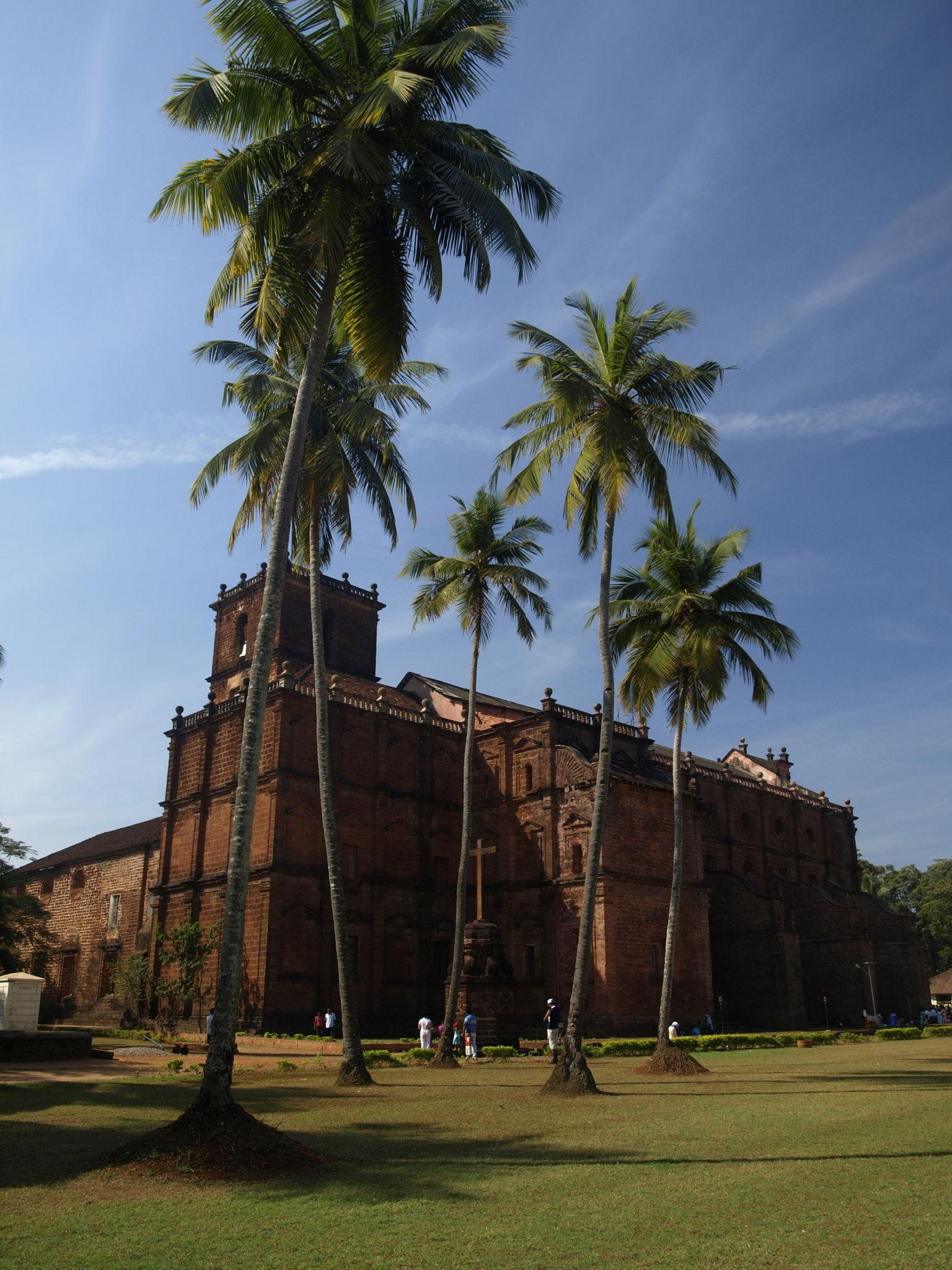
The church is a masterpiece of Baroque and Mannerist architecture, rising majestically with its unplastered laterite exterior, which distinguishes it from the lime-washed white facades of other colonial-era churches in the region. Visitors from across the globe—spanning various faiths—flock to this site to witness its historical grandeur and to seek the blessings of the saint. The atmosphere here is one of profound reverence, where the scent of incense mingles with the salty breeze of the Mandovi River nearby. Whether you are a history buff, an architecture enthusiast, or a spiritual seeker, St. Francis Xavier’s Church offers a deep, multi-layered experience that encapsulates the complex colonial history and the enduring faith of the Goan people.

The site serves as a cornerstone of the Old Goa heritage circuit, surrounded by other monumental structures like the Se Cathedral and the Church of St. Cajetan. However, the Basilica holds a unique emotional and religious weight due to its direct association with the Jesuit mission in Asia. It represents the pinnacle of the Jesuit influence in the 16th and 17th centuries, serving as a beacon of Christian proselytization and cultural synthesis in the Indian subcontinent. Today, it remains an active place of worship, where the tolling of the ancient bells continues to call the faithful to prayer, just as they have for over four centuries.

History & Religious Significance

The history of St. Francis Xavier's Church is inextricably linked to the life and legacy of St. Francis Xavier, a co-founder of the Society of Jesus (Jesuits). Born in the Kingdom of Navarre, Xavier arrived in Goa in 1542, embarking on a mission that would take him across the South Asian coast, the East Indies, and Japan. He died in 1552 on Sancian Island while waiting to enter China. The miracle of his "incorrupt body" began shortly after his death. When his body was exhumed months later to be moved, it was found to be fresh and lifelike, showing no signs of decay despite the tropical heat and the lime used to accelerate decomposition.

The construction of the Basilica of Bom Jesus (meaning "Good Jesus" or "Infant Jesus") began in 1594 and was consecrated in 1605 by Archbishop Dom Fr. Aleixo de Menezes. It was the first church in India to be elevated to the status of a Minor Basilica in 1946. The Jesuit architects designed the church to reflect the power and prestige of their order. Following the suppression of the Jesuits in the 18th century, the church faced periods of neglect, yet the presence of the saint’s relics ensured its preservation.

The religious significance of the church reached a fever pitch when the body of St. Francis Xavier was permanently moved here in 1624. For centuries, the body was displayed regularly, but due to its fragile state, it is now kept in a silver casket and only brought down for public viewing during the Exposition, an event that occurs once every ten years. The church serves as a symbol of the "Goan identity," bridging the gap between the Portuguese colonial past and the modern Indian state. For many Goans, St. Francis Xavier is the spiritual protector of the land, believed to have saved the territory from numerous invasions and natural disasters throughout history.

Architecture of St. Francis Xavier's Church

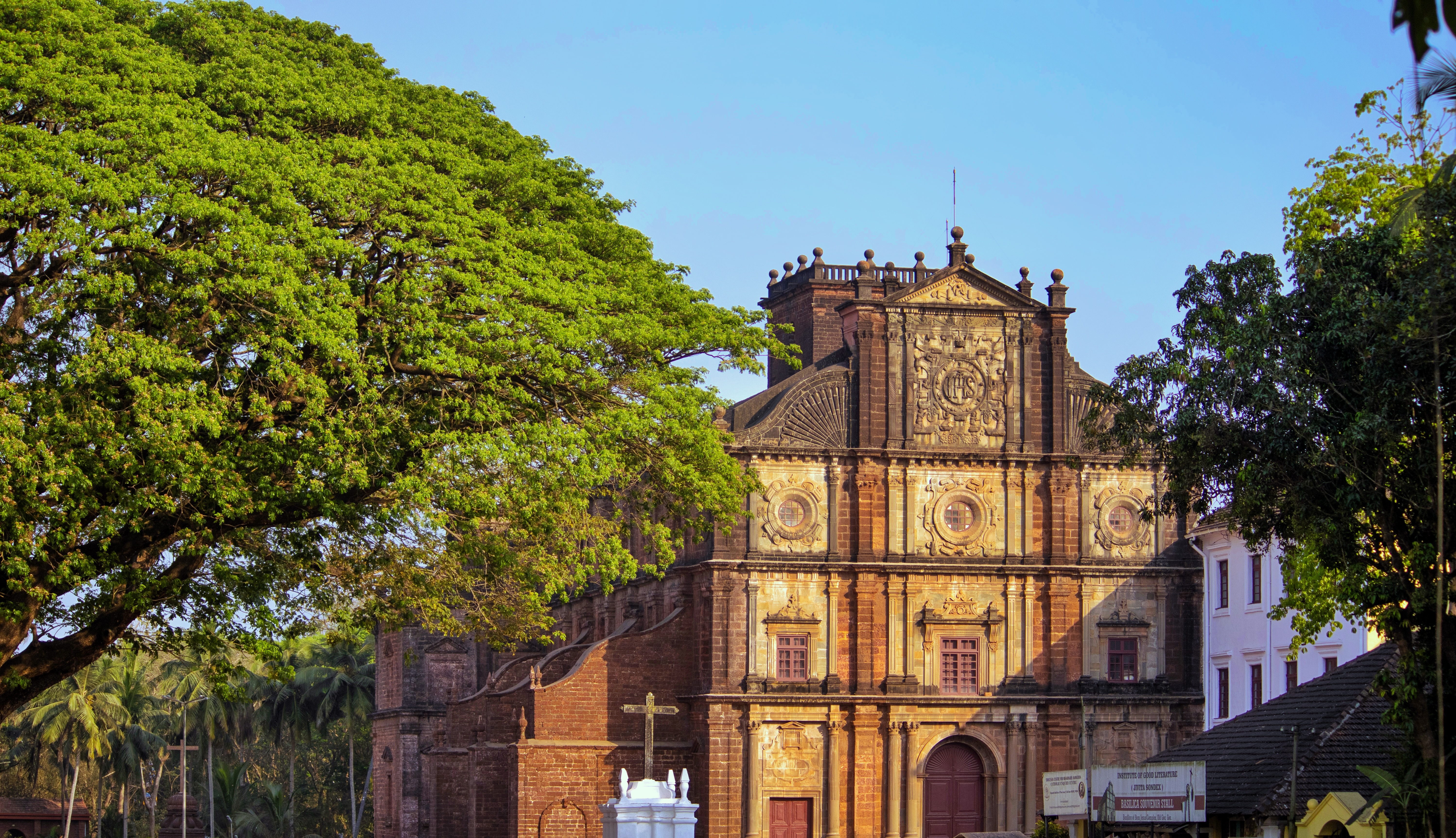
The architecture of the Basilica of Bom Jesus is a stunning example of Baroque architecture with strong Mannerist influences. Unlike the typical whitewashed churches of Goa, the Basilica’s exterior is composed of exposed red laterite stone. Originally, the church was plastered, but the plaster was stripped away in the mid-20th century by a Portuguese conservationist, revealing the raw, rugged beauty of the stone underneath. This gives the building a unique, weathered appearance that stands out against the lush green landscape of Old Goa.

The facade is divided into four levels. The lowest level features three portals, with the central entrance being the largest, flanked by heavy Ionic columns. The second level boasts three large square windows, while the third level features three circular windows. The top of the facade is adorned with a large, ornate pediment featuring the Jesuit emblem "IHS" (Iesus Hominum Salvator). The use of black basalt for the carvings and decorative elements provides a sharp contrast to the red laterite, highlighting the intricate craftsmanship of the time.

Inside, the church follows a simple cruciform plan but is breathtaking in its scale and detail. The ceiling is a simple barrel vault, but the main altar is a riot of gold and intricate woodcarvings. The reredos (altar screen) is one of the largest in Goa, featuring a massive statue of St. Ignatius of Loyola, the founder of the Jesuit order, protecting a smaller figure of the Child Jesus. To the right of the main altar lies the Chapel of St. Francis Xavier. This is where the saint’s remains are kept. The chapel itself is a masterpiece of 17th-century art, featuring marble carvings and paintings depicting scenes from the saint's life. The silver casket, which holds the relics, was crafted by Goan silversmiths between 1636 and 1637 and is placed atop a magnificent three-tiered marble mausoleum, a gift from the Grand Duke of Tuscany, Cosimo III.

Main Deity / Spiritual Importance

While the church is formally dedicated to the Infant Jesus (Bom Jesus), the primary focus of devotion for the millions who visit is St. Francis Xavier. In the Catholic tradition, Xavier is considered one of the greatest missionaries since the time of the Apostles. His spiritual importance in Goa cannot be overstated. He is viewed as the "Apostle of the Indies" and the "Patron of the East."

The spiritual core of the Basilica is the belief in the miraculous nature of the saint’s body. For the faithful, the fact that the body remained incorrupt for centuries is a "divine sign" of his sanctity. Pilgrims often spend hours in prayer near the casket, offering intentions for healing, family welfare, and spiritual guidance. The church is also home to a significant collection of sacred art and relics, but it is the presence of the "Goencho Saib" that transforms this architectural marvel into a living shrine.

The spiritual atmosphere is particularly palpable during the morning masses, which are conducted in Konkani (the local language) and English. The blend of local Goan hymns and traditional Latin liturgy reflects the unique cultural synthesis of the region. For the local Catholic community, the Basilica is the site of major life milestones, from baptisms to funeral masses for prominent figures, making it a central pillar of the Goan spiritual landscape.

Festivals & Celebrations

The most significant event at St. Francis Xavier's Church is the Feast of St. Francis Xavier, celebrated annually on December 3rd. This is preceded by a nine-day period of prayer known as the Novena. During these ten days, Old Goa transforms into a massive pilgrimage hub. Thousands of people from all over India and abroad camp in the vicinity to attend the dawn masses. The feast day itself is a public holiday in Goa, marked by grand processions, high masses led by the Archbishop, and a vibrant "mela" (fair) outside the church selling traditional Goan sweets like khaje, revdi, and local handicrafts.

Another monumental event is the Exposition of the Sacred Relics. Every ten years, the silver casket is lowered, and the body of the saint is carried in a solemn procession to the nearby Se Cathedral for public veneration. The last exposition took place in 2014, and the next is scheduled for late 2024. During this period, millions of pilgrims queue for hours to catch a glimpse of the saint’s feet and seek his blessing.

Other celebrations include:

  • Holy Week and Easter: Observed with great solemnity, featuring traditional processions that date back to the 16th century.
  • Christmas: The Basilica is beautifully lit, and the midnight mass is a major draw for locals and tourists alike.
  • Feast of St. Ignatius of Loyola (July 31st): Celebrating the founder of the Jesuit order with special liturgical services.

Best Time to Visit

The best time to visit St. Francis Xavier's Church is during the winter months, specifically from November to February. During this period, the weather in Goa is pleasant, with cool breezes and lower humidity, making it ideal for exploring the vast grounds of Old Goa. Visiting in early December allows you to experience the fervor of the Feast of St. Francis Xavier, though you should be prepared for massive crowds.

If you prefer a quieter, more contemplative experience, the monsoon season (June to September) offers a different charm. The rain-washed laterite stone of the Basilica takes on a deep, dark hue, and the surrounding gardens are incredibly lush. However, outdoor exploration can be challenging due to heavy downpours. The summer months (March to May) can be quite hot and humid, so if you visit during this time, it is best to go early in the morning to avoid the midday heat.

Timings, Entry Fee & Dress Code

To ensure a respectful and smooth visit, keep the following details in mind:

  • Timings: The Basilica is generally open from 9:00 AM to 6:30 PM on weekdays and Saturdays. On Sundays, the visiting hours for tourists are slightly restricted due to multiple masses, typically opening for the public after 10:30 AM and closing around 6:30 PM.
  • Mass Timings: On weekdays, masses are usually held at 7:00 AM and 8:00 AM. On Sundays, masses are held throughout the morning (6:30 AM, 8:00 AM, 9:15 AM in Konkani, and 10:15 AM in English).
  • Entry Fee: There is no entry fee to visit the Basilica of Bom Jesus. It is a place of worship open to all.
  • Dress Code: As this is a highly sacred site, a modest dress code is strictly enforced. Both men and women should ensure their shoulders and knees are covered. Avoid wearing sleeveless tops, short skirts, or beachwear. If your attire is deemed inappropriate, you may be asked to wrap a shawl around you (often available for rent or purchase outside the gate).
  • Silence: Visitors are expected to maintain absolute silence inside the church, especially near the chapel of the relics and during mass.

How to Reach St. Francis Xavier's Church

The Basilica is located in Old Goa, which is about 10 kilometers east of the state capital, Panjim. It is well-connected by various modes of transport:

  • By Air: The nearest airport is Manohar International Airport (Mopa) or Dabolim Airport. From either airport, you can hire a pre-paid taxi directly to Old Goa, which takes approximately 45 to 60 minutes.
  • By Train: The closest railway station is Karmali (KRMI), located just 2 kilometers away from the Basilica. You can take an auto-rickshaw or a local bus from the station. For major long-distance trains, Madgaon Railway Station is the primary hub, about 35 kilometers away.
  • By Road: Frequent buses ply between Panjim and Old Goa (leaving from the Panjim KTC Bus Stand). The journey takes about 20 minutes. You can also rent a scooter or car, which is a popular way to explore Goa at your own pace.
  • By Ferry: For a more scenic route, you can take a ferry from Divar Island to Old Goa, which lands you within walking distance of the church complex.

Things to Do

Visiting St. Francis Xavier's Church is an immersive experience. Here are the top things to do:

  • Venerate the Relics: Spend a few moments of reflection in the Chapel of St. Francis Xavier, looking up at the silver casket.
  • Admire the Altar: Take a close look at the gilded main altar, which is a masterpiece of woodcarving and gold leafing.
  • Visit the Bom Jesus Art Gallery: Located within the church complex, this gallery houses modern Christian art and is one of the largest of its kind in Asia.
  • Explore the Cloisters: Walk through the adjoining Jesuit house to see the ancient corridors and the sacred courtyard.
  • Attend a Mass: Even if you are not Catholic, attending a mass in Konkani is a beautiful way to experience the local culture and the acoustic grandeur of the Basilica.
  • Photography: Capture the stunning exterior architecture and the intricate carvings of the facade (note: photography is restricted inside during mass).
  • Walk the Grounds: The area between the Basilica and the Se Cathedral is a beautifully maintained garden, perfect for a slow walk to soak in the history.

Nearby Attractions

Old Goa is a treasure trove of historical sites. Within walking distance of the Basilica, you can visit:

  • Se Cathedral: Located directly across the road, this is the largest church in Asia and is famous for its "Golden Bell."
  • Church of St. Cajetan: Modeled after St. Peter's Basilica in Rome, this church is stunningly beautiful and often less crowded.
  • St. Augustine Tower: The ruins of a massive 46-meter high bell tower that was once part of a grand monastery.
  • Museum of Christian Art: Located in the Convent of Santa Monica, it houses a rare collection of Indo-Portuguese Christian art.
  • Archaeological Museum of Goa: Situated in the convent portion of the Church of St. Francis of Assisi, it contains artifacts from the Hindu, Muslim, and Portuguese periods.
  • Viceroy’s Arch: The ceremonial gateway through which the Portuguese Viceroys used to enter the city.

Photography & Visitor Guidelines

To preserve the sanctity and the physical structure of the Basilica, visitors are asked to follow these guidelines:

  • No Interior Photography during Mass: While photography is generally allowed inside the church, it is strictly prohibited during religious services. Always check for signage or ask the ushers.
  • Flash Photography: The use of flash is discouraged inside the church as it can damage the ancient paintings and the gilded surfaces over time.
  • Respect the Worshipers: Many people come here for deep prayer. Avoid loud conversations and do not walk into restricted areas near the altar.
  • Do Not Touch: The carvings and walls are centuries old. The oils from human hands can cause degradation, so please refrain from touching the altars or the mausoleum.
  • Footwear: While you don't always have to remove your shoes to enter the main hall, you may be required to do so if entering certain side chapels or prayer areas.

Where to Eat Nearby

After exploring the spiritual sites, you can enjoy local Goan flavors at these nearby spots:

  • The Heritage Bistro: Located within walking distance, offering a mix of Goan and continental dishes in a quiet setting.
  • Café Tinto: A great spot for quick snacks, local patties, and traditional Goan sweets like bebinca and dodol.
  • Viva Panjim (in Panjim): A short drive away, this famous eatery serves authentic Goan Catholic cuisine like Fish Curry Rice and Pork Vindaloo in a heritage home.
  • Ritz Classic: For those who want a proper Goan fish thali, this is the go-to place in the nearby city of Panjim.
  • Local Stalls: Outside the church complex, you will find vendors selling fresh coconut water, roasted corn, and local snacks.

Accommodation Nearby

While most tourists stay in the beach belts of North or South Goa, staying near Old Goa offers a more peaceful, historical experience:

  • Old Goa Residency: A GTDC (Goa Tourism) property located right in the heart of the heritage circuit, offering basic but clean rooms.
  • The Postcard Velha: A luxury boutique hotel located on a hillock nearby, offering a colonial-style stay with world-class amenities.
  • Pousada Tauma: A high-end boutique resort in the nearby area for those seeking privacy and traditional architecture.
  • Guest Houses in Panjim: Many travelers prefer staying in the Fontainhas (Latin Quarter) of Panjim, which is only 15-20 minutes away by car.

Travel Tips

To make the most of your visit to St. Francis Xavier's Church, consider these professional travel tips:

  • Hire a Guide: The history of the Basilica is dense. Hiring an official guide at the entrance can help you understand the symbolism behind the carvings and the details of the saint's life.
  • Stay Hydrated: Goa can be very hot. Carry a water bottle, though there are plenty of vendors outside.
  • Wear Comfortable Shoes: You will be doing a lot of walking between the various churches in Old Goa.
  • Combine Your Visit: Plan to spend at least half a day in Old Goa to see the Se Cathedral and the Museum of Christian Art along with the Basilica.
  • Check the Calendar: If you are visiting in late 2024, keep an eye on the dates for the Exposition of the Relics, as this will involve significant traffic and crowd management changes.
  • Respect Local Customs: Goans are very protective of their religious traditions. Always be polite and follow the instructions of the church volunteers.

Conclusion

The Basilica of Bom Jesus, or St. Francis Xavier's Church, is more than just a historical monument; it is a living bridge between the past and the present. Its massive red walls have stood through centuries of colonial rule, religious shifts, and the modernization of India, yet the devotion to the saint remains unchanged. The church offers a rare glimpse into the 16th-century world, where European Baroque art met Indian craftsmanship, creating something truly unique to the Goan soil.

Whether you come to admire the silver casket of St. Francis Xavier, to marvel at the gilded altars, or simply to find a moment of peace in the hallowed halls, the Basilica leaves a lasting impression on every visitor. It is a place where history is tangible, and faith is visible. As you leave the cool interiors of the church and step back into the tropical warmth of Goa, you carry with you a piece of the "Rome of the East"—a reminder of the enduring power of spirit and the architectural brilliance of a bygone era. A visit here is an essential part of any Goan itinerary, providing a necessary spiritual and historical context to the beautiful "Emerald of the East."

Photo Gallery

St. Francis Xavier's Church Gallery Image

User Reviews

4.9
1905 Reviews
5
85%
4
10%
3
3%
2
1%
1
1%

Login to post a review

Join the community to share your spiritual experiences.

Login / Sign Up

Location Details

Address
St Francis Xavier's Church, Old Goa, Goa 403402, India
Visiting Hours
All year round

Share Peace

Share this spiritual guide with your friends and family on WhatsApp!

Share Now

Nearest Beaches from St. Francis Xavier's Church

Nearest Forts from St. Francis Xavier's Church

Nearest Waterfalls from St. Francis Xavier's Church

Nearby Nightlife from St. Francis Xavier's Church