Quick Navigation
Explore sections of this guide
Overview of Reis magos church
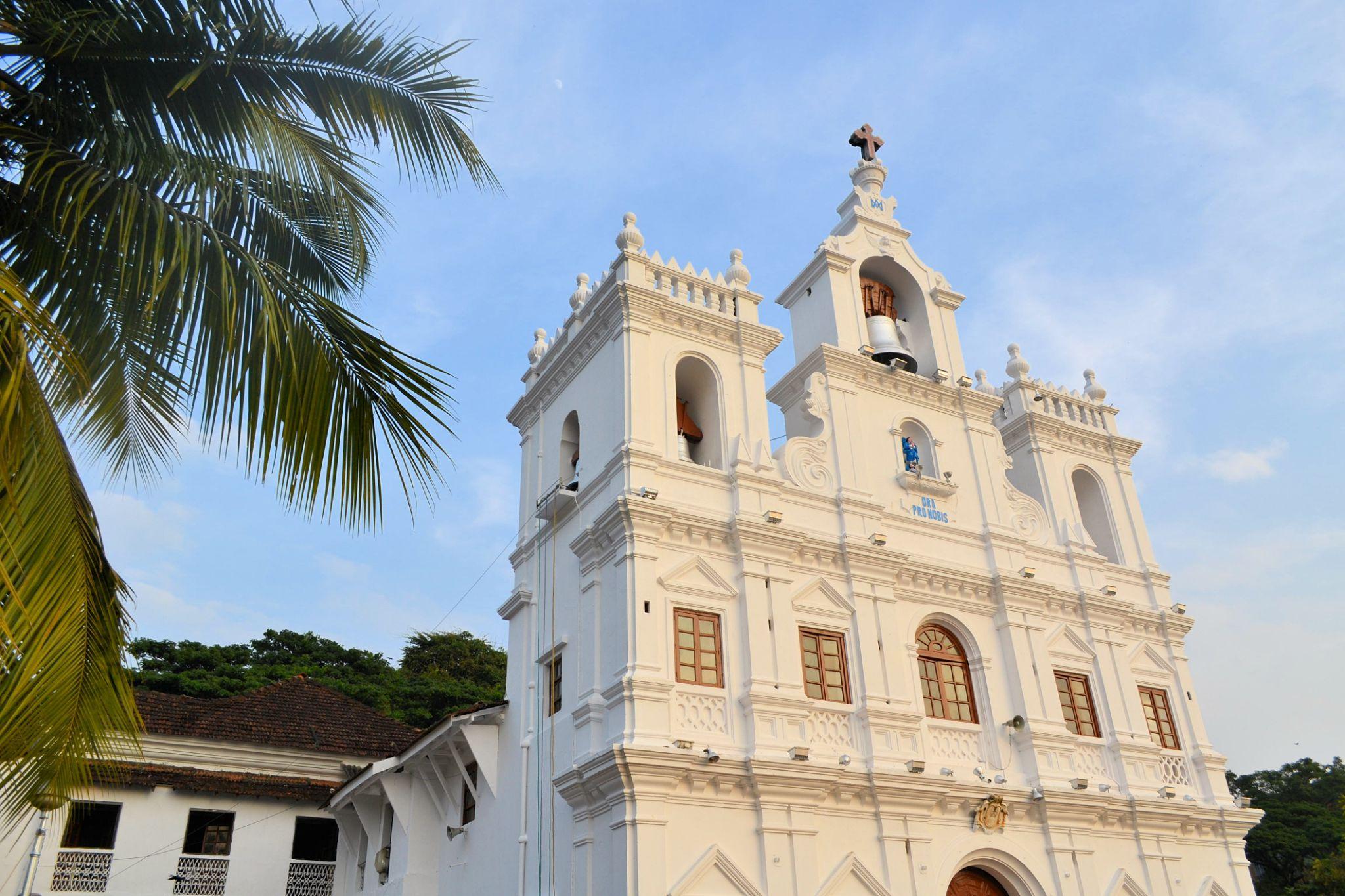
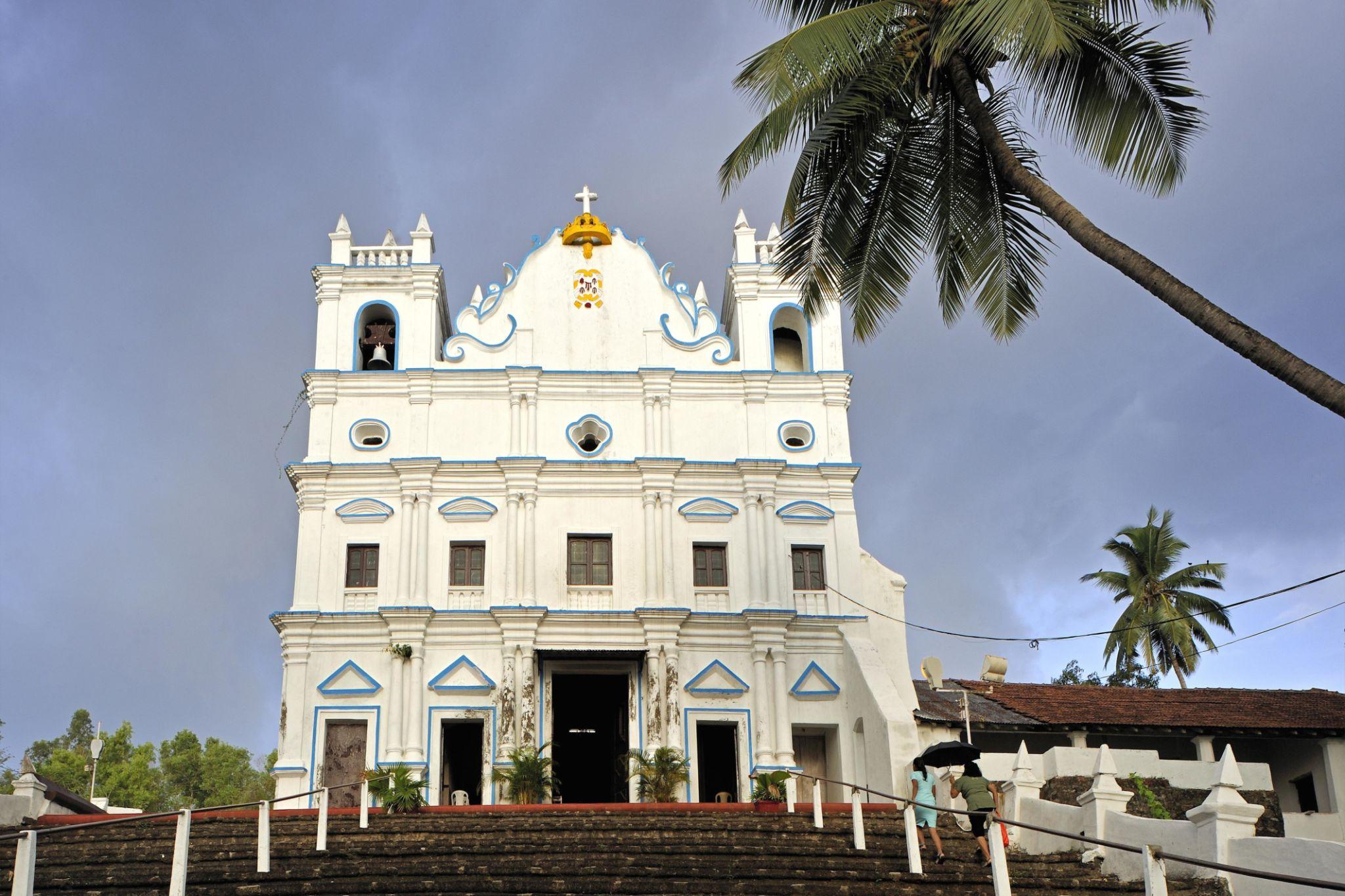
The Reis Magos Church, also known as the Church of the Three Magi Kings, stands as a majestic sentinel on the northern banks of the Mandovi River in the village of Verem, Goa. As one of the oldest and most significant religious landmarks in the state, this church is not merely a place of worship but a living chronicle of Goa’s complex colonial history and spiritual evolution. Its brilliant white-washed facade, set against the backdrop of lush green hills and the shimmering blue waters of the river, makes it one of the most photographed and revered sites in North Goa.
Unlike many other churches in Goa that are tucked away in bustling town centers, the Reis Magos Church enjoys a serene, almost meditative location. It is positioned at the base of a hill, just a short distance from the historic Reis Magos Fort. This proximity is no coincidence; in the 16th and 17th centuries, the church and the fort worked in tandem to protect the mouth of the Mandovi River and the approach to the then-capital, Old Goa. Today, visitors are greeted by a grand staircase that leads from the road level up to the church courtyard, offering a panoramic view of the Panjim skyline across the water.
For the traveler seeking a deeper connection with Goa’s "Golden Age," the Reis Magos Church represents the first bastion of the Franciscan Order in the province of Bardez. It is a site where the spiritual meets the strategic, and where European architectural sensibilities were first grafted onto the Indian landscape. Whether you are a history buff, an architecture enthusiast, or a pilgrim, this church offers a profound sense of peace and a window into the soul of Goan Christian heritage.
History & Religious Significance
The history of the Reis Magos Church is inextricably linked with the arrival of the Portuguese and the missionary zeal of the Franciscan friars. Established in 1555, it holds the distinction of being the first church built in the Bardez taluka. The site itself carries layers of history; local records and archaeological insights suggest that the church was constructed over the ruins of an ancient Hindu temple, a common practice during the early years of the Portuguese "Conquista" as they sought to establish a new religious order.
The church was dedicated to the Three Wise Men (the Magi)—Gaspar, Melchior, and Balthazar—who, according to the Bible, traveled from the East to worship the infant Jesus. This choice of patron saints was significant, symbolizing the "discovery" of the East by the West. During the 16th century, the church became a prestigious institution, serving as a mission center and a school for the sons of the local "Ganvkars" (village noblemen and landowners), who were converted to Christianity.
One of the most notable historical figures associated with the church is Dom Manoel de Sousa, a former Portuguese Viceroy. Upon his death, he was buried within the church precincts, and his tombstone remains a point of historical interest today. The church also enjoyed royal patronage; it was a tradition for new Viceroys arriving from Portugal to first stop at Reis Magos to pay their respects before proceeding to the capital of Old Goa. This elevated the church's status from a local parish to a site of geopolitical and ecclesiastical importance.
Over the centuries, the church has survived various geopolitical shifts, including threats from the Marathas and the Dutch. It underwent significant restoration in 1771, which added to its structural integrity and aesthetic beauty. Today, it stands as a testament to the enduring faith of the local community and the historical legacy of the Franciscan missionaries who played a pivotal role in shaping the cultural fabric of North Goa.
Architecture of Reis magos church
The architecture of the Reis Magos Church is a masterful blend of Late Renaissance and Manueline styles, with distinct Portuguese-Goan influences that emerged as European designs were adapted to tropical conditions. The facade is characterized by its stark white lime-plastered walls, a common feature in Goan churches to reflect the intense sun. It features tall, elegant Corinthian columns and a series of decorative pediments that give it a sense of verticality and grandeur.
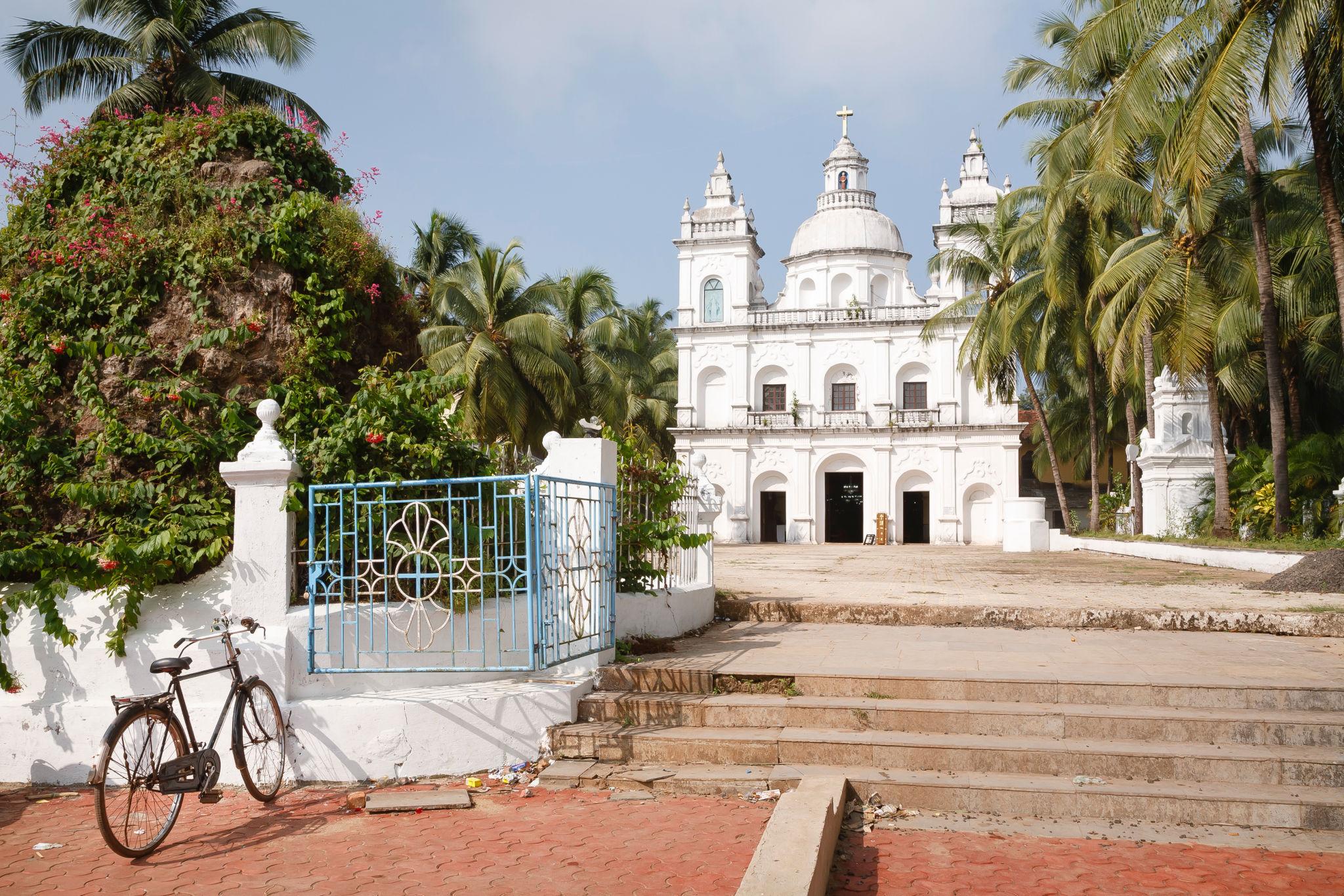
As you ascend the grand flight of laterite stone steps, you are struck by the symmetry of the structure. The church is built primarily using laterite stone, a local volcanic rock that is soft when quarried but hardens upon exposure to the air. This stone was then covered with a thick layer of lime mortar to protect it from the heavy Goan monsoons. The facade is divided into several tiers, with the uppermost tier housing the church bell, which traditionally summoned the villagers for mass and alerted the nearby fort of incoming vessels.
The interior of the church is where the true architectural brilliance lies. The reredos (the large altarpiece behind the main altar) is an exquisite example of wood carving. It is gilded in gold and features intricate motifs of vines, flowers, and angels. The central focus of the altar is a beautiful depiction of the Three Kings offering gifts to the Christ Child. Unlike the more austere exteriors, the interior is vibrant, with painted wooden panels and statues that reflect the Baroque love for drama and detail.
Another unique architectural feature is the pulpit, which is intricately carved and stands as a fine specimen of Goan craftsmanship. The floor is lined with granite and marble tombstones of Portuguese dignitaries, their inscriptions providing a silent narrative of the people who once walked these halls. The high vaulted ceilings and the thick walls ensure that the interior remains cool even in the height of summer, creating a sanctuary of physical and spiritual comfort.
Main Deity / Spiritual Importance
The primary spiritual focus of the Reis Magos Church is the Epiphany, the manifestation of Christ to the Gentiles, represented by the journey of the Three Magi. The "Reis Magos" (Portuguese for "Three Wise Kings") are the central figures of devotion here. This focus on the Magi is relatively rare in India, making this church a unique pilgrimage site for those who hold a special devotion to these biblical figures.
The spiritual importance of the church extends beyond its patron saints. For the local Catholic community in Verem and the surrounding villages, the church is the heart of their spiritual life. It is believed that the intercession of the Three Kings brings wisdom, guidance, and protection to the community. The Infant Jesus, held in the arms of the Virgin Mary, is also a focal point of prayer, representing the vulnerability and divinity that the Magi came to honor.
The church also houses a significant statue of St. Jerome, the patron saint of scholars and translators, reflecting the church's early history as a center of learning. The spiritual atmosphere is heightened during the daily masses, where the blending of Konkani hymns with traditional Latin-influenced liturgy creates a uniquely Goan atmosphere. For many visitors, the spiritual importance lies in the "Genius Loci" or the spirit of the place—a sense of continuity that bridges the gap between the 16th-century explorers and the modern-day faithful.
Festivals & Celebrations
The crowning glory of the Reis Magos Church is the Feast of the Three Kings (Festa dos Reis), celebrated annually on January 6th. This is one of the most vibrant and culturally significant festivals in Goa. While the feast is also celebrated in Cuelim (Cansaulim) and Chandor, the celebration at Reis Magos has its own distinct flavor due to its historical backdrop and the participation of the local youth.
The highlight of the festival is a colorful procession involving three local boys from the village, who are chosen to represent the Three Kings. Dressed in regal robes, wearing glittering crowns, and carrying "gifts" of gold, frankincense, and myrrh, these "kings" ride on horseback from the church through the village. The procession symbolizes the journey of the Magi to Bethlehem. The entire village turns out in their Sunday best, and the air is filled with the sound of brass bands playing traditional Goan melodies.
* The High Mass: A solemn and grand Eucharistic celebration is held in the morning, attended by thousands of devotees from across the state.
* The Traditional Fair: Outside the church, a massive fair (mela) springs up. Stalls sell everything from traditional Goan sweets like khaje and laddoos to household items, copperware, and clothing.
* Communal Dining: Many local households host elaborate feasts, serving traditional Goan Catholic delicacies like Sorpotel, Sanna, and Bibinca.
Apart from the Feast of the Kings, the church also celebrates Holy Week with great solemnity, including the "Passos" (processions depicting the stages of the Passion of Christ). The feast of St. Francis of Assisi is also observed, honoring the Franciscan friars who founded the parish.
Best Time to Visit
The best time to visit the Reis Magos Church is during the winter months, specifically from November to February. During this period, the weather in Goa is pleasant, with clear blue skies and a cool breeze blowing off the Mandovi River. This makes climbing the church steps and exploring the outdoor premises much more comfortable.
If you wish to experience the church in all its cultural glory, plan your visit for January 6th to witness the Feast of the Three Kings. However, be prepared for large crowds and limited parking during this time. For those seeking a quiet, contemplative experience, a weekday morning in November or December is ideal.
The monsoon season (June to September) offers a different kind of beauty. The surrounding hills turn a vibrant emerald green, and the river becomes moody and dramatic. While the rain might limit outdoor exploration, the church interior remains a peaceful refuge. However, do note that the river ferry services might occasionally be disrupted during heavy downpours.
Timings, Entry Fee & Dress Code
To ensure a respectful and smooth visit, please keep the following logistical details in mind:
* Timings: The church is generally open for visitors from 9:00 AM to 12:30 PM and from 4:00 PM to 7:00 PM daily. These timings may vary on Sundays or during special feast days when masses are in progress.
* Mass Timings: On weekdays, mass is typically held at 7:00 AM. On Sundays, there are multiple masses, usually at 7:30 AM and 9:30 AM (in Konkani).
* Entry Fee: There is no entry fee to visit the Reis Magos Church. It is a functioning place of worship and is open to people of all faiths.
* Dress Code: As this is a sacred religious site, visitors are expected to dress modestly. Shoulders and knees should be covered. Avoid wearing swimwear, sleeveless tops, or very short skirts/shorts. Removing hats inside the church is also a sign of respect.
* Footwear: While you can wear footwear in the courtyard and on the steps, it is customary to be mindful of where you step inside the sanctuary.
How to Reach Reis magos church
The Reis Magos Church is located in Verem, which is well-connected to major hubs in North Goa.
* From Panjim: The most scenic way to reach the church is by taking the ferry from the Panjim jetty to Betim. The ferry ride takes about 5-10 minutes and is free for pedestrians. From the Betim ferry wharf, the church is a short 2-kilometer rickshaw or taxi ride away. Alternatively, you can drive via the Atal Setu or Mandovi Bridge, heading towards Verem.
* From Calangute/Baga: If you are staying in the popular beach belt of North Goa, the church is approximately 8-10 kilometers away. You can easily hire a scooter or a taxi. The route takes you through the charming village of Nerul.
* From Mapusa: Mapusa is about 12 kilometers away. Frequent local buses run from the Mapusa Bus Stand towards Betim or Verem.
* By Private Vehicle: There is limited parking space near the base of the church steps. It is advisable to park carefully as the road is somewhat narrow.
Things to Do
A visit to the Reis Magos Church can be a multi-faceted experience. Here are some things you should not miss:
* Attend a Mass: Even if you are not Catholic, attending a Konkani mass allows you to experience the local culture and the acoustic beauty of the church.
* Explore the Cemetery: Adjacent to the church is a small, historic cemetery with ornate graves that offer insights into the local families and Portuguese officials buried there.
* Photography: Capture the stunning contrast of the white church against the blue river. The view of Panjim from the church courtyard is particularly beautiful at sunset.
* Observe the Woodwork: Spend time looking at the intricate details of the main altar and the pulpit. The craftsmanship is among the best in Goa.
* Walk to the Fort: After visiting the church, take a short walk to the Reis Magos Fort. The fort has been beautifully restored and houses a gallery of the works of the famous Goan artist Mario Miranda.
* Riverfront Stroll: The road along the church offers a peaceful walk along the Mandovi River, where you can watch local fishermen at work.
Nearby Attractions
The area surrounding the Reis Magos Church is rich in history and natural beauty. You can easily combine your visit with these nearby spots:
* Reis Magos Fort: Located just a few hundred meters away, this 16th-century fort offers incredible views of the Arabian Sea and the Mandovi River. It also houses a cultural center.
* Verem Village: Take a walk through the narrow lanes of Verem to see traditional Indo-Portuguese houses with their characteristic balcãos and oyster-shell windows.
* Coco Beach: About 3 kilometers away, this quiet beach is a popular spot for boat trips to see dolphins and the nearby Aguada Fort from the water.
* Panjim City: Just across the river, you can explore the Latin Quarter (Fontainhas), the Immaculate Conception Church, and the bustling markets of the capital.
* Dr. Salim Ali Bird Sanctuary: Located on the nearby island of Chorao (accessible by ferry from Ribandar), this is a haven for nature lovers and birdwatchers.
Photography & Visitor Guidelines
To ensure that the sanctity of the church is maintained and that you have a pleasant experience, please follow these guidelines:
* Indoor Photography: Photography is generally prohibited inside the church during mass. At other times, it is polite to ask the sacristan or the priest for permission. Never use flash, as it can damage the ancient pigments of the paintings and altars.
* Silence: Maintain a low volume. Many people come to the church for private prayer and meditation.
* Respect the Altar: Do not enter the sanctuary area (the raised platform behind the altar rails) unless invited.
* Drones: The use of drones is strictly regulated in Goa, especially near religious sites and military/strategic areas like the nearby fort. Always check for local permits.
* Littering: Please dispose of any trash in designated bins. Keep the church grounds clean.
Where to Eat Nearby
After your spiritual journey, you can indulge in some local Goan flavors. The Verem and Nerul areas offer several excellent dining options:
* The Lazy Goose: Located under the Nerul Bridge, this upscale restaurant offers fantastic seafood and a great view of the river.
* Bhatti Village: A hidden gem in Nerul, known for its authentic, home-cooked Goan food. Try the Pork Ambot Tik or the Fish Thali.
* Local Tavernas: You will find small local bars and eateries in Verem where you can try traditional snacks like rissois and croquettes.
* Panjim Eateries: If you cross the ferry back to Panjim, the options are endless, from the legendary Ritz Classic for seafood to Viva Panjim for a colonial dining experience.
Accommodation Nearby
If you wish to stay in this peaceful part of North Goa, there are several options ranging from heritage villas to boutique hotels:
* Ahilya by the Sea: A luxury boutique hotel located in Nerul, offering a serene and high-end experience with stunning sea views.
* Coco Shambhala: A collection of luxury villas in Nerul that emphasize privacy and tropical elegance.
* Heritage Homestays: Look for restored Portuguese houses in the Verem and Reis Magos area on platforms like Airbnb for a more authentic local experience.
* Panjim Hotels: For more budget-friendly or business-style hotels, the capital city across the river offers a wide range of choices.
Travel Tips
* Hydration: Carry a bottle of water, especially if you plan to climb the steps and walk to the fort.
* Sun Protection: The Goan sun can be harsh. Wear sunscreen, a hat (remember to remove it inside), and sunglasses.
* Local Transport: If you are using public transport, keep track of the ferry timings, though they usually run every 15-30 minutes until late evening.
* Language: Most locals speak Konkani and English. A few basic Konkani words like "Dev barem koru" (Thank you/May God do good to you) are always appreciated.
* Cash: While many places accept cards or UPI, carry some cash for small purchases at the local stalls or for offerings at the church.
Conclusion
The Reis Magos Church is far more than a historical monument; it is a symbol of Goa’s resilient spirit and its unique cultural synthesis. From its Franciscan origins and royal Portuguese connections to the vibrant, modern-day celebration of the Three Kings, the church offers a narrative that is as deep as the Mandovi River it overlooks.
Visiting this church allows you to step away from the commercialized noise of the beaches and enter a space of historical gravity and spiritual calm. As you stand on the church steps, looking out over the water where ancient galleons once sailed, you realize that you are part of a story that has been unfolding for nearly five centuries. Whether you come for the architecture, the history, or a moment of prayer, the Reis Magos Church leaves an indelible mark on your soul, reminding you that in Goa, the past is never truly gone—it is simply waiting to be rediscovered.