Overview of Brahma Temple
Deep within the verdant embrace of the Sattari Taluka in North Goa lies a spiritual gem that remains one of the state's best-kept secrets. The Brahma Temple, located in the small village of Nagargao (often referred to as Brahma Karmali), is not just another religious site; it is a rare architectural and theological marvel. While India is home to thousands of temples dedicated to Lord Vishnu and Lord Shiva, temples dedicated to Lord Brahma, the Creator in the Hindu Trinity (Trimurti), are exceedingly rare. The most famous one resides in Pushkar, Rajasthan, but the Brahma Temple in Goa holds a unique position due to its historical journey and the exquisite craftsmanship of its central idol.
Visitors traveling to this site are often struck by the profound silence that permeates the air. Unlike the bustling, tourist-heavy temples of Ponda or the coastal stretches of North Goa, the Brahma Temple offers a meditative atmosphere. It is surrounded by the lush greenery of the Western Ghats, providing a backdrop of emerald forests and misty hills. For the spiritual seeker, the temple represents a connection to the primordial act of creation. For the history buff, it serves as a testament to the resilience of Goan culture against colonial pressures. This guide explores every facet of this magnificent site, ensuring you have all the information needed to appreciate its beauty and significance fully.
The temple is situated approximately 7 kilometers from the town of Valpoi and about 60 kilometers from the capital city, Panaji. Its remote location has helped preserve its sanctity and traditional Goan "Gram-Devata" (village deity) atmosphere. As you approach the temple, the rhythmic sounds of the forest and the occasional ringing of the temple bell create an immersive experience that transports you back several centuries. Whether you are a devotee or a traveler looking to explore the "offbeat" side of Goa, the Brahma Temple is a destination that demands a spot on your itinerary.
History & Religious Significance
The history of the Brahma Temple in Nagargao is a gripping tale of survival, migration, and devotion. The origins of the main idol date back to the 12th century, during the height of the Kadamba Dynasty's rule over Goa. Originally, the deity was not located in Sattari but was enshrined in a village called Carambolim (Karmali) in the Tiswadi Taluka, near the present-day Old Goa. During the 12th century, the Kadambas were great patrons of art and religion, and they commissioned the carving of this magnificent Brahma idol from a single block of black basalt stone.
The turning point in the temple's history occurred in the 16th century with the arrival of the Portuguese. In the 1540s, the Portuguese colonial administration, driven by religious zeal and the Inquisition, began a systematic campaign to destroy Hindu temples in the "Velhas Conquistas" (Old Conquests) regions, which included Tiswadi. Fearing the desecration of their beloved deity, the devotees of Carambolim took a courageous step. Under the cover of darkness, they smuggled the heavy stone idol out of the village, crossing the borders of Portuguese territory into the "Novas Conquistas" (New Conquests) areas, which were then under the control of local Maratha or Sawantwadi rulers and later the Kingdom of Bijapur.
The idol was hidden in the dense forests of Sattari for several years before a modest shrine was built for it in Nagargao. Because the idol came from the village of Carambolim, the new location came to be known as Brahma Karmali. This historical migration is a source of great pride for the local community, symbolizing their ancestors' dedication to preserving their religious heritage. Religiously, the temple is significant because Lord Brahma is rarely worshipped in a standalone temple due to a mythological curse. However, in this Goan hamlet, he is the primary deity, making it a site of immense theological importance for Hindus across the country.
Architecture of Brahma Temple
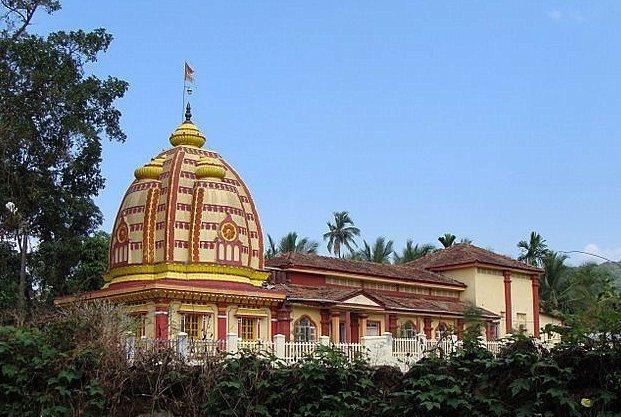
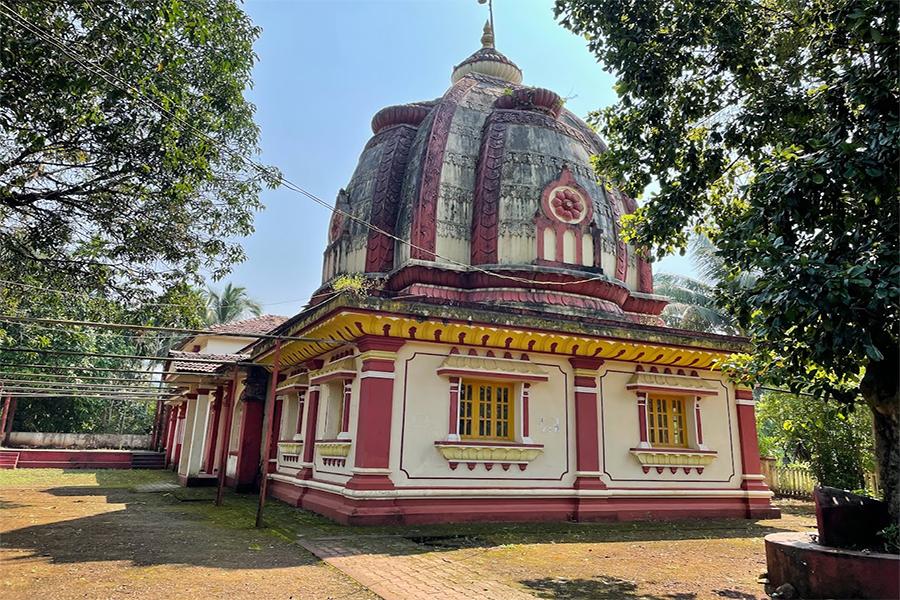
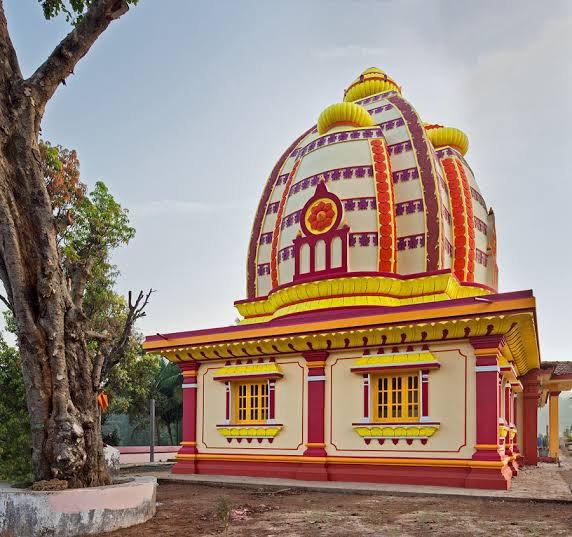
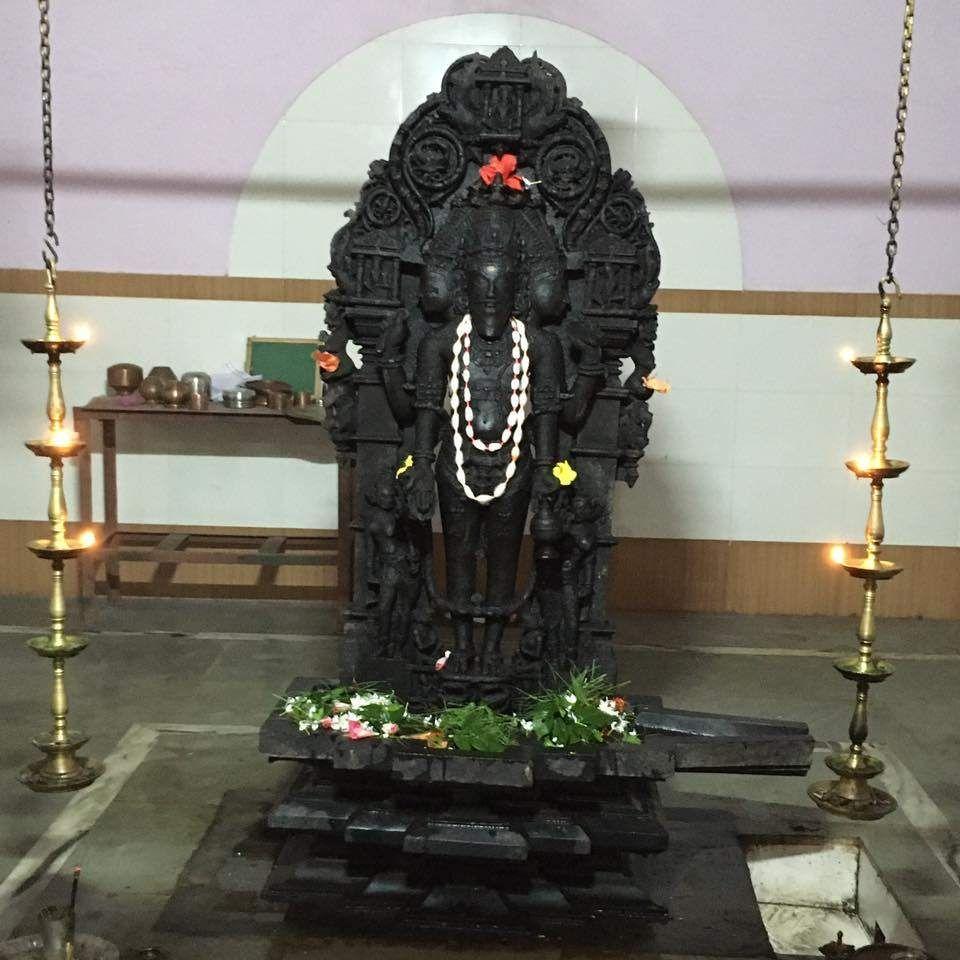
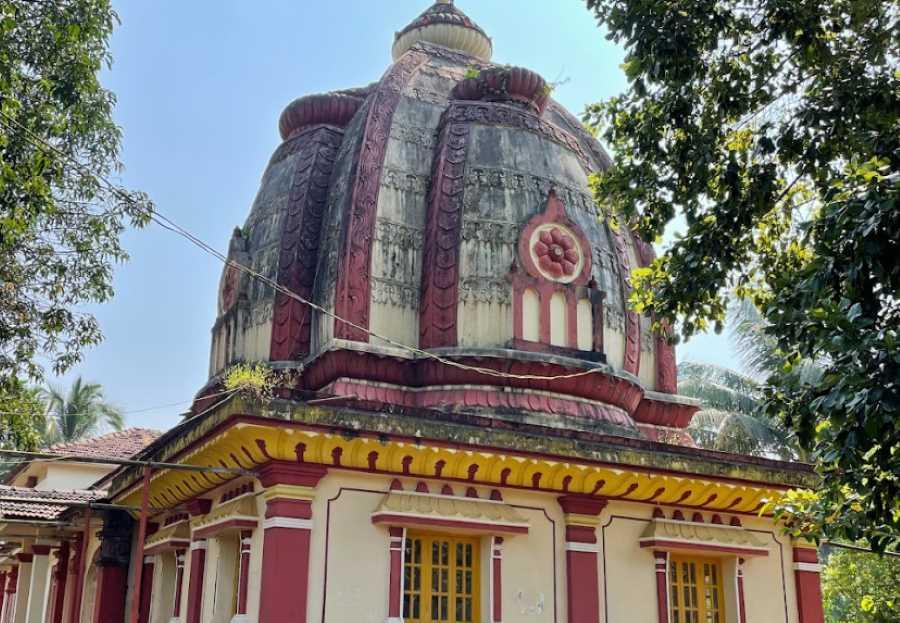
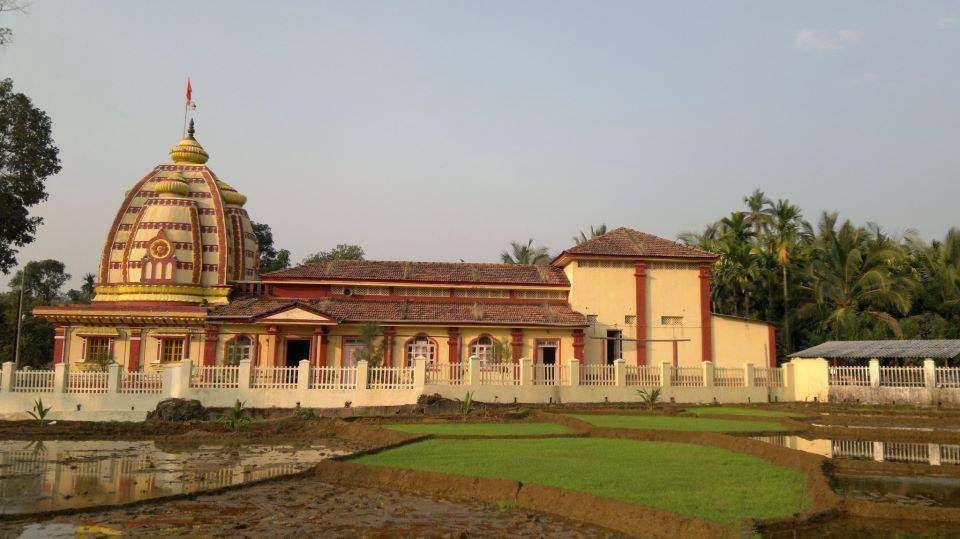
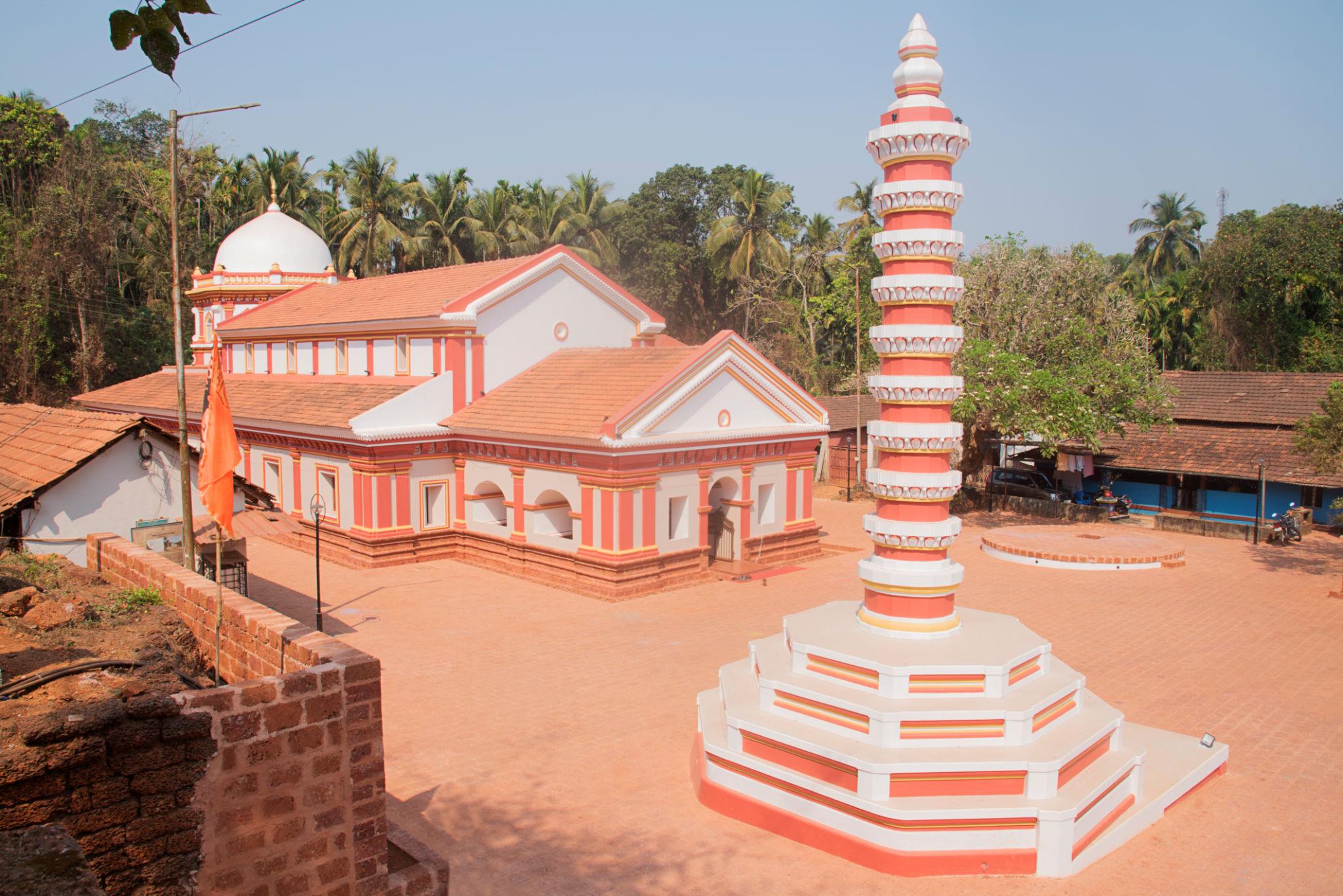
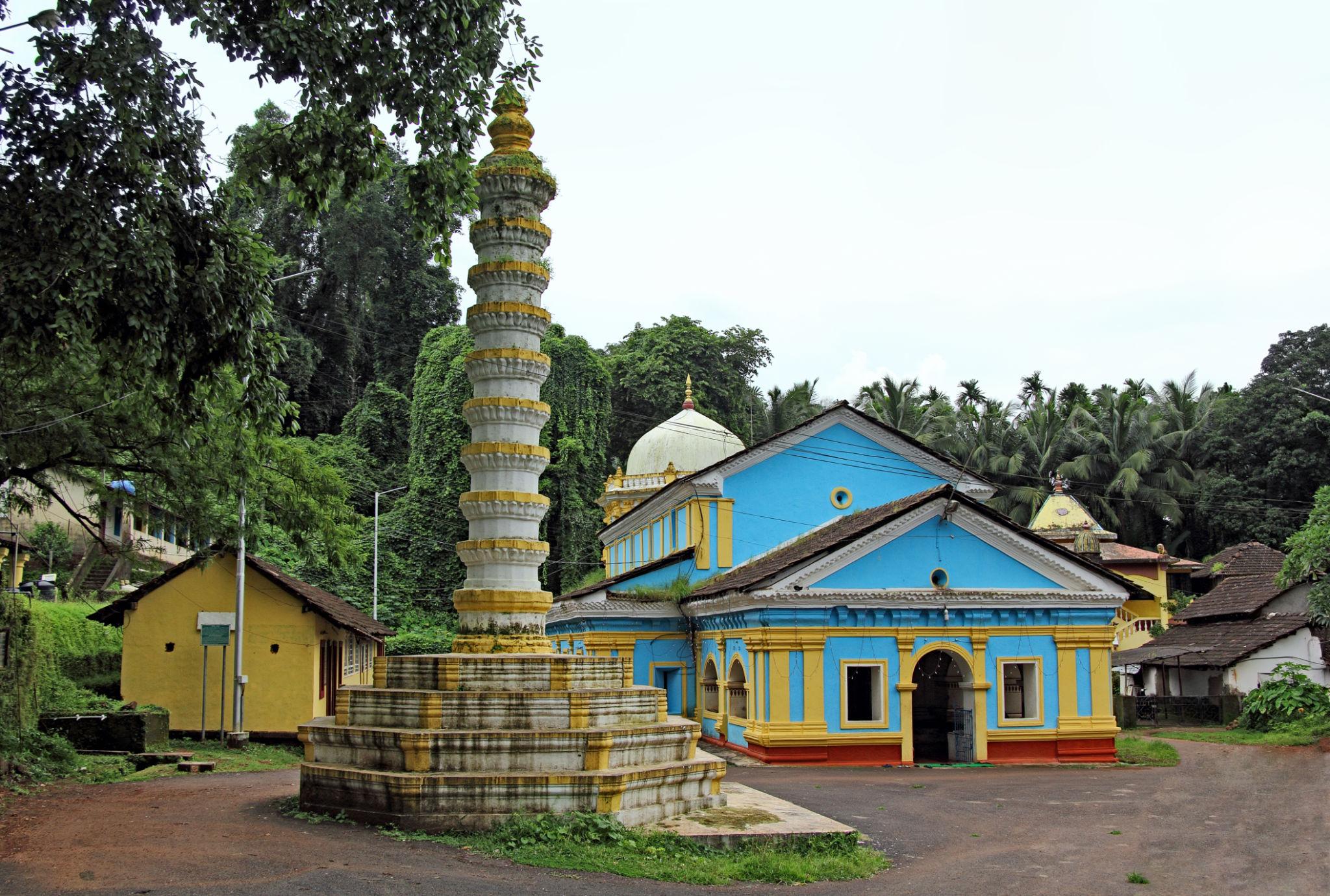
The architecture of the Brahma Temple is a blend of ancient Kadamba artistry and modern Goan temple design. While the external structure of the temple has undergone renovations and appears relatively modern with its sloping tiled roofs and concrete walls, the Garbhagriha (Sanctum Sanctorum) houses a masterpiece of medieval sculpture. The idol of Lord Brahma is the centerpiece of the temple’s architectural value. Carved from high-quality black basalt, it stands as a brilliant example of the Kadamba-Chitpavan style of sculpture.
The idol is depicted in a standing posture (Sthanaka) and features four faces, representing the four Vedas and the four directions. The level of detail is staggering:
- The Faces: Three faces are visible from the front, while the fourth is at the back. Each face bears a serene, meditative expression with intricately carved features.
- The Hands: The deity is shown with four arms. In his hands, he holds symbolic objects: a Kamandalu (water pot), a Rosary (Akshamala), a Sruk (sacrificial ladle), and the Vedas (scrolls).
- The Attire: The idol is adorned with traditional jewelry, a sacred thread (Yajnopavita), and a finely carved dhoti, all etched into the hard basalt stone with precision.
- The Prabhavali: Behind the idol is an ornate arch or Prabhavali, which features carvings of other deities and floral motifs, typical of the Hoysala influence that sometimes filtered into Kadamba art.
The temple complex itself follows the traditional Goan layout with a Deepastambha (lamp tower) standing tall at the entrance. The courtyard is spacious, allowing for the circumambulation (Pradakshina) of the shrine. The use of local laterite stone in the foundation and the surrounding walls gives the temple an earthy, grounded feel that contrasts beautifully with the polished black stone of the deity inside.
Main Deity / Spiritual Importance
The main deity of the temple is Lord Brahma, the creator of the universe. In the Hindu pantheon, Brahma is the first member of the Trimurti, alongside Vishnu (the Preserver) and Shiva (the Destroyer). Despite his role as the creator, temples dedicated to him are scarce. According to Puranic legends, Brahma's lack of worship is often attributed to a curse by Lord Shiva or Goddess Saraswati, or his obsession with his own creation. However, the presence of this temple in Goa suggests a local tradition that remained untouched by these widespread myths or perhaps a specific regional devotion that predates the popularization of those legends.
Spiritually, Lord Brahma represents Prajna (wisdom) and the creative intellect. Devotees believe that offering prayers here helps in the pursuit of knowledge, creativity, and the manifestation of one's goals. The idol is flanked by his consorts, Savitri and Gayatri, though they are often depicted symbolically or in smaller proportions. The spiritual energy of the temple is described by many as "Sattvic"—pure, calm, and enlightening.
For the locals of Nagargao and the surrounding Sattari villages, Lord Brahma is their protector. They seek his blessings for everything from a good harvest to the well-being of their children. The rituals performed here follow the Agamic traditions, and the priests are known for their strict adherence to ancient Vedic chants. Participating in the morning Abhishek (ritual bathing of the idol) is considered a highly merit-earning activity for pilgrims.
Festivals & Celebrations
The Brahma Temple comes alive during various Hindu festivals, drawing crowds from all over Goa and neighboring Maharashtra and Karnataka. The most significant celebration is the Brahmaotsav, which is the annual temple festival. This event usually takes place in the month of December or January and involves elaborate processions, traditional music, and special pujas. The entire village of Nagargao participates, turning the quiet hamlet into a vibrant hub of cultural activity.
Other major festivals celebrated with great fervor include:
- Maha Shivratri: Since Lord Brahma is part of the Trinity, Shivratri is observed with great respect, emphasizing the unity of the three gods.
- Navratri: The nine nights dedicated to the Divine Mother are celebrated with the installation of a ritual lamp and traditional Ghumat Aarti (devotional music using a local Goan percussion instrument).
- Zatra: The annual village fair or Zatra is a time for the "Palkhi" (palanquin) procession, where the deity's symbolic representation is carried around the village so that every resident can receive blessings.
- Vasant Panchami: Dedicated to Goddess Saraswati (Brahma's consort), this festival marks the beginning of spring and is a major day for students and artists to seek blessings.
During these festivals, visitors can witness authentic Goan folk performances such as Dashavatara (dramatic reenactments of the ten incarnations of Vishnu) and Fugdi (a traditional dance performed by women). The air is filled with the scent of marigolds and incense, and the temple is illuminated with thousands of oil lamps, creating a magical sight.
Best Time to Visit
The best time to visit the Brahma Temple is during the winter months, from November to February. During this period, the weather in Goa is pleasant, with cool breezes and daytime temperatures ranging from 20°C to 30°C. This makes the drive through the winding roads of Sattari enjoyable and allows you to explore the temple complex without the discomfort of extreme heat.
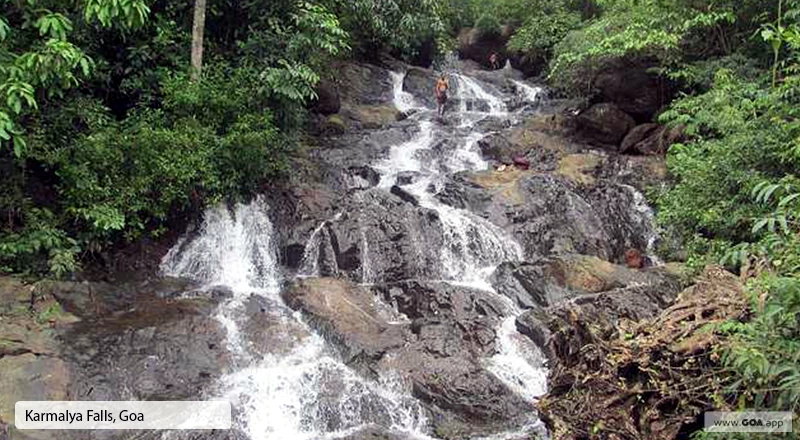
However, for those who love nature in its rawest form, the monsoon season (June to September) offers a different kind of beauty. Sattari is the greenest part of Goa, and during the rains, the forests surrounding the temple turn a brilliant shade of emerald. The nearby streams and waterfalls are in full flow, making the journey incredibly scenic. The only downside is the high humidity and occasional heavy downpours that might hinder outdoor exploration.
If you wish to experience the temple’s spiritual vibrancy, try to align your visit with Brahmaotsav in December/January. For a quiet, meditative experience, visiting on a weekday morning during the shoulder season (October or March) is ideal. Avoid visiting during the peak of summer (April and May), as the inland areas of Goa can become quite hot and dusty.
Timings, Entry Fee & Dress Code
To ensure a respectful and smooth visit, it is important to be aware of the temple's operational hours and etiquette. The Brahma Temple is a place of active worship, not just a tourist attraction.
- Timings: The temple is generally open from 7:00 AM to 1:00 PM and then from 4:00 PM to 8:00 PM. The best time to arrive is around 8:30 AM to witness the morning rituals or around 6:30 PM for the evening Aarti.
- Entry Fee: There is no entry fee to visit the Brahma Temple. Donations for the maintenance of the temple are welcome and can be placed in the Hundi (donation box).
- Dress Code: As with most Hindu temples in Goa, a modest dress code is strictly enforced. Men should wear trousers or traditional dhotis; shorts are generally discouraged. Women should wear sarees, salwar kameez, or long skirts. Shoulders and knees must be covered. It is customary to remove your footwear before entering the temple premises.
- Photography: Photography of the main idol inside the Garbhagriha is strictly prohibited to maintain the sanctity of the deity. However, you can usually take photos of the temple exterior and the surrounding landscape.
How to Reach Brahma Temple
The Brahma Temple is located in Nagargao, Sattari, which is somewhat remote compared to the coastal belt. Here is how you can reach it:
By Road: This is the most convenient way to reach the temple.
- From Panaji: The temple is about 60 km from the capital. You can take the route via Ribandar, Ponda, and then head towards Valpoi. The drive takes about 1.5 to 2 hours.
- From North Goa (Calangute/Baga): It is approximately 65-70 km away. The route takes you through Mapusa and Bicholim.
- From South Goa (Margao): It is about 55 km away. You will travel through Ponda and Usgao to reach Valpoi.
By Bus: State-run Kadamba buses and private buses operate regularly from Panaji and Mapusa to Valpoi. From the Valpoi bus stand, you can hire a local taxi or an auto-rickshaw to take you the remaining 7 km to the temple in Nagargao. Note that bus frequency can be low in the afternoons.
By Train: The nearest major railway station is Thivim, located about 40 km away. From Thivim, you can hire a taxi. Karmali Railway Station is also an option (approx. 45 km away), which is ironically near the original home of the deity.
By Air: The Manohar International Airport (Mopa) is closer to Sattari than the Dabolim Airport. From Mopa, the drive is roughly 1.5 hours. Taxis are readily available at the airport.
Things to Do
A visit to the Brahma Temple can be more than just a quick prayer. Here are some things you can do to make your trip more fulfilling:
- Meditation: The temple's quietude is perfect for meditation. Spend 15-20 minutes sitting in the mandapa (hall) to soak in the peaceful vibrations.
- Observe the Art: Bring a pair of binoculars or stand close (if permitted) to observe the intricate carvings on the black basalt idol. The craftsmanship is among the finest in the Konkan region.
- Interact with the Priest: If the priest is not busy with rituals, you can ask him about the history of the idol’s migration. Many of the families serving the temple have been there for generations and have fascinating stories to tell.
- Nature Walk: The village of Nagargao is surrounded by spice plantations and forest trails. A short walk around the village will give you a glimpse into the traditional Goan rural lifestyle.
- Ghumat Aarti Experience: If you visit during a festival or a special Tuesday/Friday evening, stay for the Ghumat Aarti. The sound of the clay pot drum (Ghumat) accompanied by cymbals is a quintessential Goan spiritual experience.
Nearby Attractions
Since the Brahma Temple is located in the scenic Sattari Taluka, you can combine your visit with several other nearby attractions to create a full-day itinerary:
- Tambdi Surla Mahadev Temple: Located about 25 km from the Brahma Temple, this is a 13th-century Shaivite temple and the oldest standing temple in Goa. It is also carved from black basalt and is a masterpiece of Kadamba architecture.
- Mhadei Wildlife Sanctuary: This sanctuary is a biodiversity hotspot. It is home to tigers, black panthers, and a variety of endemic bird species. It’s a paradise for nature lovers and trekkers.
- Hivre Waterfalls: For the adventurous, a trek to the Hivre waterfalls offers stunning views of the Sahyadri range. It is particularly beautiful just after the monsoon.
- Bondla Wildlife Sanctuary: Located about 30 km away, this is a great spot for families, featuring a small zoo, a botanical garden, and deer safari parks.
- Valpoi Town: Explore the local market in Valpoi to buy fresh forest produce, local spices, and traditional Goan snacks like Khaje.
Photography & Visitor Guidelines
To ensure you are a responsible traveler, please follow these guidelines during your visit to the Brahma Temple:
- Respect the Sanctum: As mentioned, do not take photos of the main idol. It is considered disrespectful and against the temple's rules.
- Silence is Golden: Maintain a low volume when speaking. Many devotees come here for silent prayer.
- No Leather Items: Some traditional temples request that you do not carry leather bags or wear leather belts inside the main sanctum. It is best to leave these in your vehicle.
- Environmental Responsibility: Sattari is an ecologically sensitive zone. Do not litter. Ensure you carry any plastic bottles or wrappers back with you to the city.
- Seek Permission: If you wish to photograph the locals or the priests, always ask for permission first. Most people are friendly but appreciate the courtesy.
- Footwear: Always leave your shoes at the designated area outside the temple entrance.
Where to Eat Nearby
Nagargao is a small village, so do not expect luxury dining options in the immediate vicinity of the temple. However, you can find excellent local food nearby:
- Local Eateries in Valpoi: The town of Valpoi (7 km away) has several small restaurants serving authentic Goan Hindu cuisine. Look for a "Special Fish Thali" or "Vegetarian Thali" which includes local preparations like Khatkhate (a mixed vegetable stew) and Tikhans.
- Small Tea Stalls: Near the temple, there are usually one or two small stalls selling tea, coffee, and local snacks like Batata Vada, Samosas, and Mirchi Bajji.
- Spice Plantation Lunches: If you are visiting a nearby spice plantation (like those in Savoi Verem or nearby areas), they often provide a traditional Goan lunch served on a banana leaf, which is a fantastic culinary experience.
- Pack a Picnic: Given the scenic beauty of Sattari, many visitors choose to carry their own snacks and water. There are many beautiful spots along the riverbanks where you can enjoy a quiet meal (just remember to clean up!).
Accommodation Nearby
For those who wish to stay overnight and explore the wilderness of Sattari, there are several unique accommodation options:
- Wildernest Nature Resort: Located on the border of Goa and Karnataka, this eco-resort offers stunning views of the Vazira Falls and the valley. It is perfect for those who want a luxury eco-stay.
- Swapnagandha Resort: A sister concern of Wildernest, this resort offers similar breathtaking views and is located in the Chorla Ghat region, about an hour's drive from the temple.
- Mauxi Homestays: Some villages near Valpoi offer humble homestay facilities where you can experience local hospitality and home-cooked Goan food.
- Government Rest Houses: There are Forest Department guest houses in the Mhadei region, but these require prior booking through the Goa Forest Department office.
- Stay in North Goa: Most tourists visit the Brahma Temple as a day trip from Panaji or the northern beach belt, where accommodation ranges from budget hostels to 5-star resorts.
Travel Tips
To make the most of your journey to the Brahma Temple, keep these practical tips in mind:
- Hire a Self-Drive Car/Bike: The roads to Sattari are winding and beautiful. Having your own vehicle gives you the freedom to stop at scenic viewpoints or detour to nearby waterfalls.
- Check Fuel Levels: Petrol pumps are sparse once you leave the main highways. Ensure your tank is full before heading deep into the Sattari taluka.
- Offline Maps: Mobile network can be patchy in the forested areas of Nagargao. Download offline maps of the region on Google Maps before you start your journey.
- Hydration: Carry sufficient drinking water, as the humidity can be dehydrating, even in winter.
- Local Language: While many people speak English and Hindi, knowing a few words of Konkani (like "Dev bare koru" - May God do good/Thank you) will endear you to the locals.
- Combine with Tambdi Surla: Since both temples feature Kadamba-style basalt carvings, visiting them on the same day provides a comprehensive look at Goa’s medieval Hindu art.
Conclusion
The Brahma Temple at Nagargao is a poignant reminder that Goa’s identity is far more complex than its famous beaches and nightlife. It is a place where history, art, and spirituality converge in the shade of ancient trees. The journey of the Brahma idol—from the coastal plains of Carambolim to the rugged hills of Sattari—is a story of endurance that mirrors the spirit of the Goan people themselves.
Visiting this temple offers a rare opportunity to stand before one of the few shrines in the world dedicated to the Creator. Whether you are drawn by the exquisite 12th-century craftsmanship of the black basalt idol, the historical intrigue of the Portuguese era, or simply the desire to find a quiet corner of Goa to reflect, the Brahma Temple will not disappoint. It is a sanctuary for the soul, a treasure for the historian, and a must-visit for any traveler seeking the true heart of "Goa Dourada" (Golden Goa). As you leave the temple and head back through the winding forest roads, you carry with you a sense of peace and a deeper understanding of the rich, multi-layered heritage of this beautiful coastal state.