Introduction to Alorna Fort
Deep within the emerald hinterlands of North Goa, far removed from the neon lights of Baga and the crowded shacks of Calangute, lies a silent sentinel of history: Alorna Fort. Known locally as the "Halarn Fort," this historical gem is situated in the Pernem Taluka, gracefully perched on the northern banks of the serene Chapora River. While most tourists flock to the coastal fortifications of Aguada or Chapora, Alorna remains one of Goa’s best-kept secrets, offering a profound sense of tranquility and a raw, unedited glimpse into the region’s colonial and pre-colonial past.
Alorna Fort is not just a collection of weathered stones; it is a testament to the shifting tides of power in the 17th and 18th centuries. Surrounded by lush cashew plantations and traditional Goan hamlets, the fort provides a stark contrast to the typical "sun, sand, and sea" imagery associated with the state. Here, the air is thick with the scent of fertile earth and the rhythmic flow of the river, creating an atmosphere that appeals to history buffs, soul-seekers, and offbeat travelers alike. As a professional travel writer who has traversed the length and breadth of the Konkan coast, I find Alorna to be one of the most evocative sites in Goa, standing as a bridge between the maritime dominance of the Portuguese and the terrestrial ambitions of the local chieftains.
The journey to Alorna is as enchanting as the destination itself. As you drive through the winding roads of Pernem, you witness the rustic side of Goa—white-washed chapels, ancient Hindu temples with deepa-stambhas, and vast stretches of paddy fields. Alorna Fort serves as the crowning glory of this rural landscape, inviting visitors to step back in time and imagine an era when these very walls echoed with the sounds of cannon fire and the strategic whispers of generals. In this guide, we will explore every facet of this remarkable structure, from its bloody battles to its architectural nuances, ensuring you have all the information needed for a comprehensive visit.
History of Alorna Fort
The history of Alorna Fort is a complex tapestry of territorial disputes, brave sieges, and strategic maneuvers. The fort was originally constructed in the 17th century by the Bhonsles of Sawantwadi, a powerful local dynasty that controlled much of the northern frontier of Goa. During this period, the Bhonsles were often at odds with the expanding Portuguese Empire, which sought to secure its borders against Maratha influence and local insurgencies. The fort was built primarily as a defensive outpost to guard the kingdom against invasions from the riverine routes.
The most significant turning point in the fort’s history occurred in 1746. The Portuguese, under the command of the ambitious Marquis of Alorna (Dom Pedro Miguel de Almeida), launched a massive military campaign to neutralize the threat posed by the Bhonsles. After a fierce and bloody battle, the Portuguese successfully captured the fort. This victory was so prestigious that the Portuguese monarch bestowed the title of "Marquis of Alorna" upon Dom Pedro Miguel de Almeida, a title that remains famous in Lusitanian military history. The capture of Alorna, along with the nearby fort of Bicholim, significantly expanded the Portuguese "Novas Conquistas" (New Conquests) territory.
However, the Portuguese hold on Alorna was not continuous. Over the next few decades, the fort changed hands several times. The Bhonsles managed to reclaim their stronghold, only to lose it again to the Portuguese in 1781 under the leadership of Frederico Guilherme de Sousa. The final treaty between the Portuguese and the Sawantwadi rulers eventually solidified Portuguese control over the Pernem region. By the late 19th century, specifically around 1894, the military importance of the fort began to wane. With the advent of modern warfare and the stabilization of colonial borders, the Portuguese military officially abandoned the fort, leaving it to the mercy of the elements and the encroaching jungle.
For over a century, Alorna Fort remained a forgotten ruin, its stones slowly being reclaimed by the roots of banyan trees and thick tropical undergrowth. It wasn't until the 21st century that the Directorate of Archives and Archaeology of the Government of Goa took significant steps to restore and preserve the site. Today, the restored bastions stand as a tribute to the diverse forces—the Marathas, the Bhonsles, and the Portuguese—that shaped the destiny of this small but significant corner of India.
Architecture
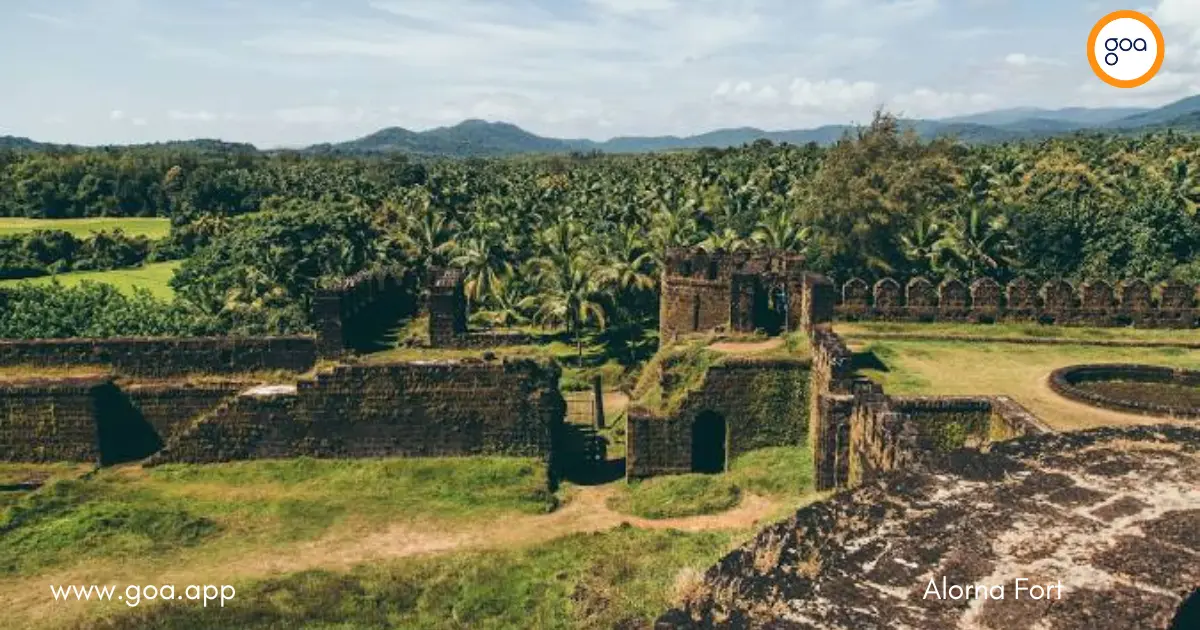
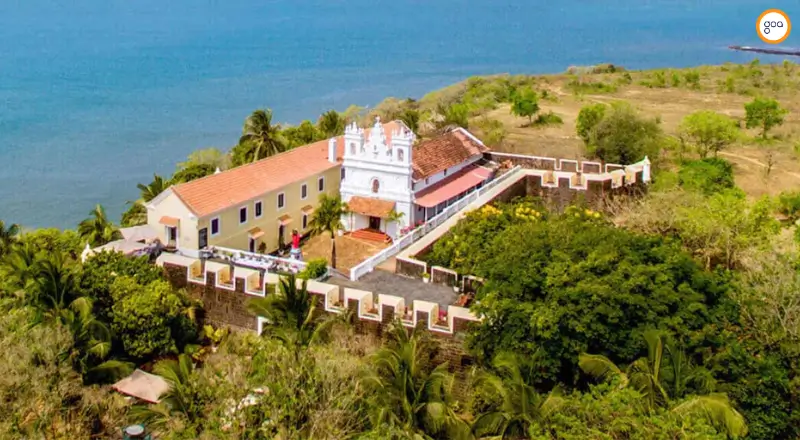
The architecture of Alorna Fort is a fascinating study in military engineering adapted to the local topography. Built primarily using laterite stone—the porous, red volcanic rock ubiquitous in Goa—the fort exhibits a blend of indigenous design and subsequent Portuguese modifications. Unlike the grand, sprawling coastal forts, Alorna is relatively compact, designed for intensive defense and surveillance of the Chapora River.
The fort originally featured four main bastions, though today two primary bastions remain prominently visible and well-preserved. These bastions are strategically positioned to provide a 270-degree view of the river and the surrounding plains. The walls are thick and rugged, designed to withstand the impact of heavy artillery. One of the most striking architectural features is the deep moat that once surrounded the landward side of the fort. In its heyday, this moat would have been filled with water, possibly even crocodiles, to deter infantry attacks. Today, the moat is largely dry and filled with vegetation, but its contours are still clearly identifiable, giving visitors a sense of the fort’s former invulnerability.
Inside the fort complex, the layout is functional and minimalist. There are remnants of quarters that once housed the garrison, as well as storage rooms for ammunition and supplies. The Portuguese influence is evident in the refined masonry of the gateways and the specific placement of the cannon embrasures. These slits in the walls were meticulously angled to allow soldiers to fire upon approaching vessels while remaining protected from return fire. The presence of a small well within the fort premises highlights the necessity of self-sufficiency during long sieges. The juxtaposition of the weathered red laterite against the bright green moss and the deep blue of the river creates a visual palette that is uniquely Goan, making the architecture not just a historical study, but a sensory experience.
Why Alorna Fort is Famous
Alorna Fort holds a special place in the annals of Goan history primarily because of its association with the Marquis of Alorna. In the hierarchy of Portuguese colonial honors, being named a Marquis after a specific conquered territory was a rare distinction. This association has immortalized the fort in European historical records, making it a point of interest for researchers studying the 18th-century Portuguese overseas empire.
Beyond its colonial fame, Alorna is famous among locals and seasoned travelers for being one of the few riverine forts in Goa that has survived the passage of time. Most of Goa’s famous forts are maritime, built to guard the Arabian Sea. Alorna, however, was built to guard the interior waterways. This makes it a unique geographical landmark. It is also famous for its sheer scenic beauty. The view from the bastions, looking out over the winding Chapora River toward the hills of Maneri and Ibrampur, is considered one of the most picturesque vistas in North Goa.
In recent years, Alorna has gained fame as a premier destination for heritage tourism and "slow travel." It is a favorite spot for those looking to escape the commercialized aspects of Goa. The fort’s relative obscurity has preserved its "undiscovered" vibe, making it a hit among photographers and writers who seek the "Real Goa." Its fame is also tied to the local folklore of the Pernem taluka, where stories of the brave Bhonsle warriors and their resistance against foreign invaders are still told by village elders during local festivals like Zambaulim Gulal or the Shigmo parade.
Strategic Importance
To understand why Alorna Fort was built, one must look at a map of the 17th-century Konkan region. The Chapora River was a vital artery for trade and movement. Any power that controlled the river could effectively control the flow of goods—spices, timber, and grains—from the Western Ghats to the coast. Alorna was the gateway to the interior. By occupying this point, the Bhonsles could levy taxes on passing boats and prevent Portuguese incursions into their heartland.
From the Portuguese perspective, Alorna was a frontier outpost. During the 18th century, the Portuguese were constantly threatened by the Maratha Empire under the Peshwas. Alorna served as a buffer zone. If the Marathas were to launch an attack from the north or the east, Alorna would be the first line of defense. Its elevation allowed for early detection of enemy movements, giving the central command in Old Goa or Panjim enough time to mobilize reinforcements. The fort was also crucial for maintaining communication between the coastal settlements and the inland territories of the New Conquests.
The strategic importance also extended to the supply lines. The fertile lands around Alorna were rich in agricultural produce. Controlling the fort meant controlling the food supply for the surrounding garrisons. Furthermore, the fort acted as a psychological deterrent. The sight of the Portuguese flag flying over the bastions of Alorna was a constant reminder to the local chieftains and the neighboring Sawantwadi rulers of the European power's reach and military prowess. Even when the fort was no longer needed for active combat, it remained a vital administrative post for monitoring the northern borders of the "Estado da Índia."
Best Time to Visit
The timing of your visit to Alorna Fort can significantly influence your experience. To see the fort in its most majestic state, the winter months (November to February) are undoubtedly the best. During this period, the weather in Goa is pleasant, with clear blue skies and a cool breeze blowing off the Chapora River. The temperature ranges from a comfortable 20°C to 30°C, making it ideal for exploring the open-air ruins without the scorching heat of the tropical sun.
For those who appreciate raw, dramatic beauty, the Monsoon season (June to September) offers a different but equally captivating experience. During the rains, the laterite stones of the fort turn a deep, dark red, and the surrounding landscape erupts in every imaginable shade of green. The Chapora River swells and flows with renewed vigor, creating a powerful backdrop. However, be prepared for heavy downpours and slippery surfaces. The moss-covered stones can be treacherous, so sturdy footwear is a must. The humidity is also very high during this time.
The Summer months (March to May) can be quite intense. The Goan sun is unforgiving, and since Alorna Fort has limited shaded areas, the heat can be draining. If you visit during summer, it is highly recommended to reach the fort early in the morning (around 8:00 AM) or late in the afternoon (after 4:00 PM). The "Golden Hour" just before sunset is particularly beautiful in summer, as the orange light reflects off the river and illuminates the ancient walls, providing excellent opportunities for photography.
Timings & Entry Fee
One of the most appealing aspects of Alorna Fort is its accessibility. As of the current regulations, there is no entry fee to visit the fort. It is a public heritage site managed by the state government, making it an excellent option for budget travelers and families.
The official timings for Alorna Fort are generally from 9:00 AM to 6:00 PM, seven days a week. Unlike some of the more commercialized forts, Alorna does not have a strict ticketing counter or a formal gate that shuts precisely at sunset. However, for safety reasons and to respect the local community, it is best to visit during daylight hours. There is no artificial lighting at the site, so once the sun goes down, the fort becomes pitch black and potentially hazardous due to the uneven terrain and the proximity to the river.
It is worth noting that since the fort is located in a quiet village, there are no elaborate facilities like lockers or guided tours provided at the entrance. It is a self-guided experience. I recommend spending at least 1 to 1.5 hours at the fort to truly soak in the history and enjoy the views. If you are a photography enthusiast, you might want to allocate even more time to capture the shifting light patterns on the river and the ruins.
Things To Do at Alorna Fort
While Alorna is a quiet site, there is plenty to engage the curious traveler. Here are the top things to do during your visit:
- Explore the Bastions: Climb up the remaining bastions to get a bird’s-eye view of the Chapora River. These elevated platforms are perfect for understanding the fort’s defensive layout and imagining the sentries who once stood guard here.
- River Gazing: The fort offers a unique vantage point of the river. You can watch local fishermen in their traditional wooden canoes (known as 'hodi') casting nets or simply enjoy the peaceful flow of the water.
- Historical Contemplation: Sit on the weathered walls and read about the Marquis of Alorna. The silence of the location makes it an ideal spot for reflection and connecting with the past.
- Nature Walk: The area around the fort is rich in local flora. You can spot cashew trees, mango groves, and various species of wild ferns. It’s a great place for a gentle nature walk.
- Bird Watching: The riverine ecosystem attracts a variety of birds. Keep an eye out for kingfishers, egrets, and even the occasional brahminy kite soaring above the river.
- Picnicking: While there are no cafes inside, you can carry some light snacks and water (ensure you carry your trash back with you) and enjoy a quiet picnic with a view. The serene environment is a welcome change from the noisy beach shacks.
Photography Spots
Alorna Fort is a paradise for photographers, offering a mix of textures, colors, and landscapes. If you are looking to capture the essence of the fort, keep these spots in mind:
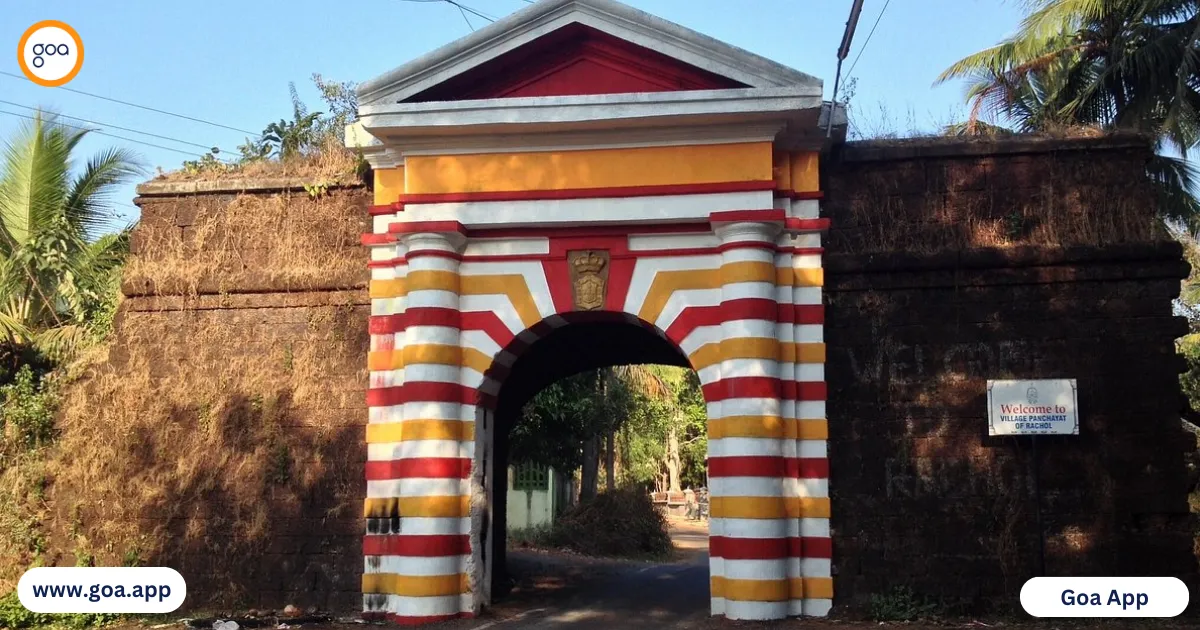
- The Main Gateway: The entrance to the fort, with its arched structure and weathered laterite blocks, provides a perfect "frame" for shots. The contrast between the dark stone and the bright sky is striking.
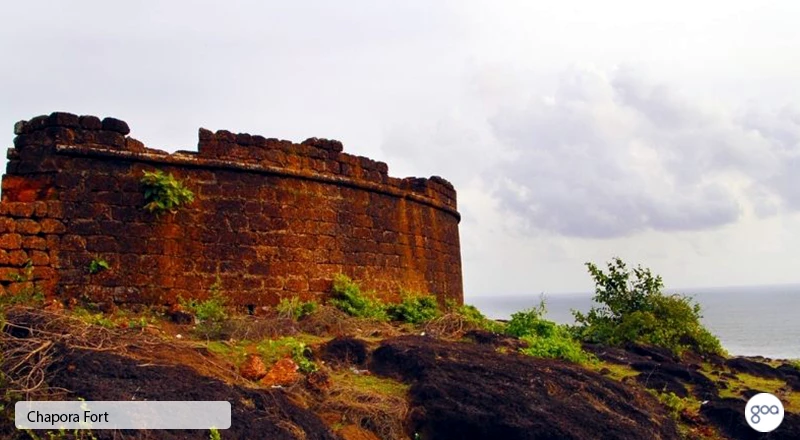
- The River-Facing Bastion: This is the "hero shot" of Alorna. Position yourself so you can capture the curve of the bastion with the winding Chapora River stretching out into the distance. It’s particularly stunning during the late afternoon.
- The Dry Moat: For those interested in textures and "ruin-porn" photography, the overgrown moat offers a moody, atmospheric setting. The way the sunlight filters through the trees into the moat creates beautiful dappled light effects.
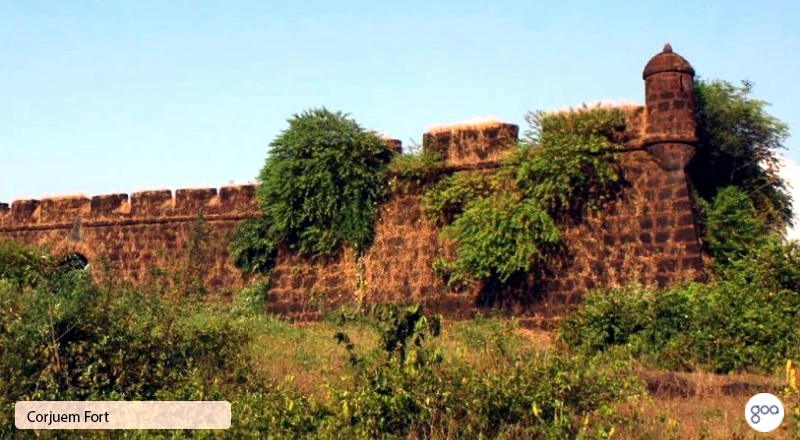
- Macro Shots of the Walls: The laterite stone is full of character. Close-up shots of the moss, the ferns growing out of the crevices, and the rough texture of the rock tell a story of time and nature’s resilience.
- Panoramic Views from the Top: Use a wide-angle lens to capture the vast expanse of the Pernem countryside. The patchwork of green fields, coconut palms, and the river creates a quintessential Goan landscape.
Nearby Attractions
A visit to Alorna Fort can be easily combined with other interesting sites in North Goa. Since you are already in the Pernem Taluka, consider exploring these nearby attractions:
- Tiracol Fort: Located at the northernmost tip of Goa, this fort has been converted into a heritage hotel but remains open to the public. It offers spectacular views of the Arabian Sea and the Querim beach.
- Arambol Beach: About a 45-minute drive away, Arambol is famous for its bohemian vibe, sweet water lake, and paragliding activities. It’s a great place to relax after your historical excursion.
- Mandrem and Ashwem Beaches: These are some of the cleanest and most peaceful beaches in North Goa, ideal for a quiet sunset walk or a high-end dining experience at one of the boutique resorts.
- Mulvir Temple: Located in the heart of Pernem, this ancient temple is a fine example of Goan temple architecture and provides a glimpse into the local religious culture.
- The Village of Alorna: Don’t just visit the fort; drive through the village itself. You’ll see traditional Goan houses with tiled roofs and decorative balcãos, offering a glimpse into the local lifestyle that hasn't changed much over decades.
- Bicholim: If you are heading back toward Central Goa, a detour to Bicholim will allow you to see the Mayem Lake and the famous Saptakoteshwar Temple, which was renovated by Shivaji Maharaj.
How To Reach Alorna Fort
Reaching Alorna Fort requires a bit of planning as it is not on the main tourist bus routes. The most convenient way to get there is by private vehicle (car or scooter).
- From Panjim: The fort is approximately 40-45 kilometers from the capital city. You can take the NH66 (formerly NH17) heading north toward Maharashtra. Once you reach the town of Pernem, follow the local signs or GPS toward Alorna village. The drive takes about 1 hour and 15 minutes.
- From Mapusa: Mapusa is the nearest major town, about 25 kilometers away. The route through the interior roads of Colvale and Revora is particularly scenic, crossing the river and passing through lush countryside.
- By Train: The nearest railway station is Pernem (PERN) on the Konkan Railway line. From the station, you can hire a local taxi or an auto-rickshaw to take you to the fort, which is about 10-12 kilometers away.
- By Bus: While there are local buses from Mapusa to Pernem, they are infrequent and may not drop you right at the fort. You would likely need to walk a significant distance or find a local lift.
Pro Tip: The roads leading to Alorna are narrow and winding. While they are generally in good condition, drive carefully, especially during the monsoons. Keep an eye out for the Alorna Bridge, a modern structure that provides a great view of the fort from a distance as you approach.
Travel Tips
To ensure a smooth and enjoyable trip to Alorna Fort, keep these practical tips in mind:
- Carry Water and Snacks: There are no shops or restaurants in the immediate vicinity of the fort. Carry at least a liter of water per person and some light snacks to keep your energy up.
- Wear Comfortable Footwear: The terrain inside the fort is uneven, with loose stones and steep steps. Sneakers or hiking sandals with good grip are much better than flip-flops.
- Dress Appropriately: While there is no strict dress code, light cotton clothing is best for the Goan heat. A hat and sunglasses are also highly recommended.
- Respect the Heritage: Alorna is a protected site. Do not litter, do not deface the walls, and do not remove any stones or artifacts. Let’s keep the site pristine for future generations.
- Check Your Fuel: If you are driving from the coastal belt, ensure your tank is full. Petrol pumps are sparse once you head into the interior villages of Pernem.
- Download Offline Maps: Mobile network can be spotty in the hinterlands. Download the map of the Alorna area on Google Maps before you leave your hotel to ensure you don’t get lost.
- Engage with Locals: The people of Alorna are friendly. If you get lost or want to know a bit of local trivia, don’t hesitate to ask. A simple "Dev barem koru" (Thank you/May God do good to you) goes a long way!
Conclusion
Alorna Fort is a poignant reminder that Goa’s identity is much deeper than its shoreline. It is a place where the river whispers secrets of ancient battles and the laterite walls stand as silent witnesses to the passage of empires. For the traveler who seeks authenticity, Alorna offers a rare opportunity to disconnect from the modern world and reconnect with history. It is a site that rewards the patient visitor with stunning views, a peaceful atmosphere, and a profound sense of place.
Whether you are a history enthusiast tracing the footsteps of the Marquis of Alorna, a photographer capturing the interplay of light and stone, or simply a traveler looking for a quiet corner of paradise, Alorna Fort will not disappoint. It represents the "Other Goa"—the one that is green, quiet, and steeped in a rich, multi-layered heritage. As you stand on the bastions and watch the Chapora River flow toward the sea, you realize that while the soldiers and kings are long gone, the spirit of Alorna remains, as enduring as the red earth upon which it was built. So, on your next trip to the Sunshine State, take the road less traveled, head north to Pernem, and discover the timeless allure of Alorna Fort for yourself.