Overview of Church of our lady of Rosary
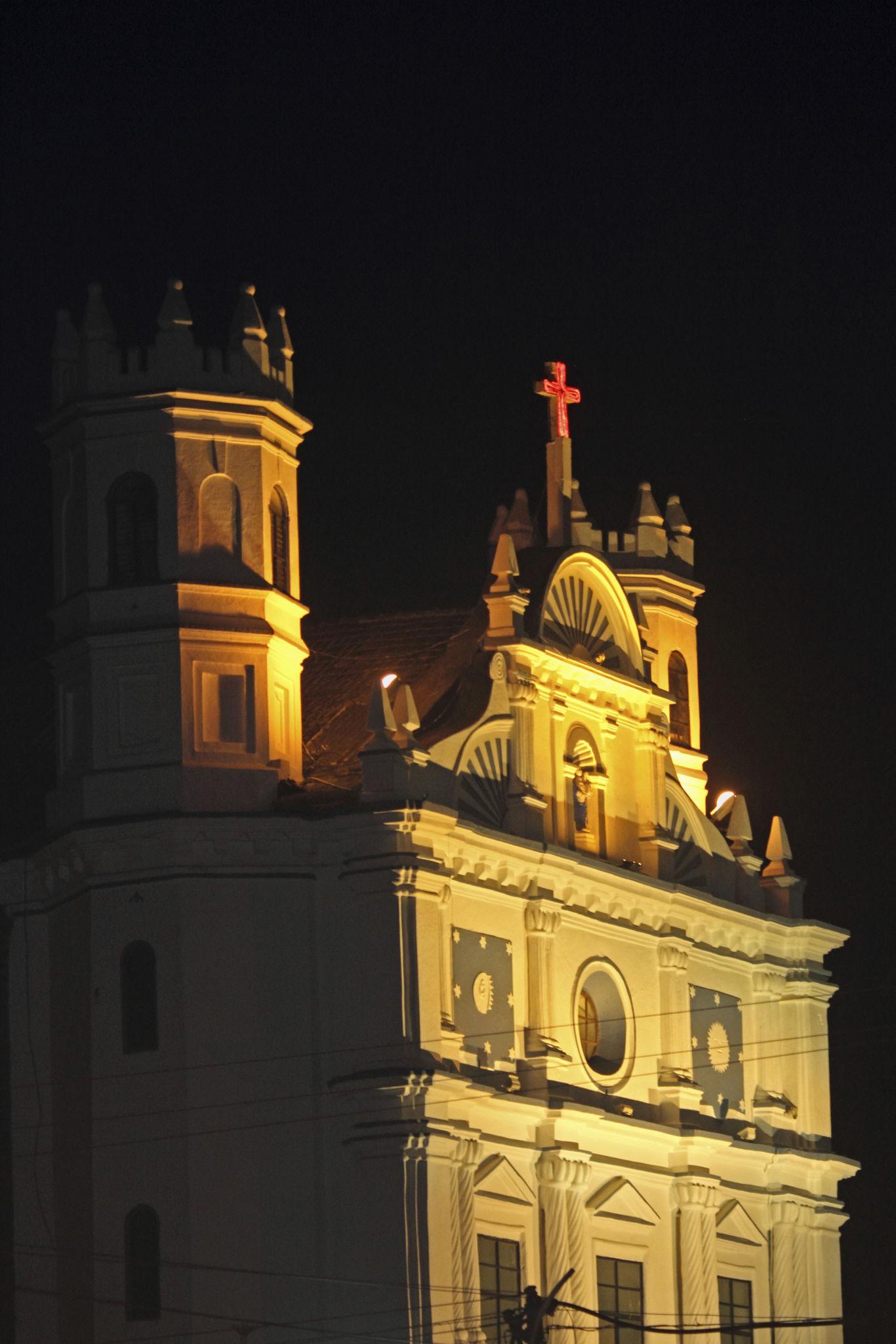
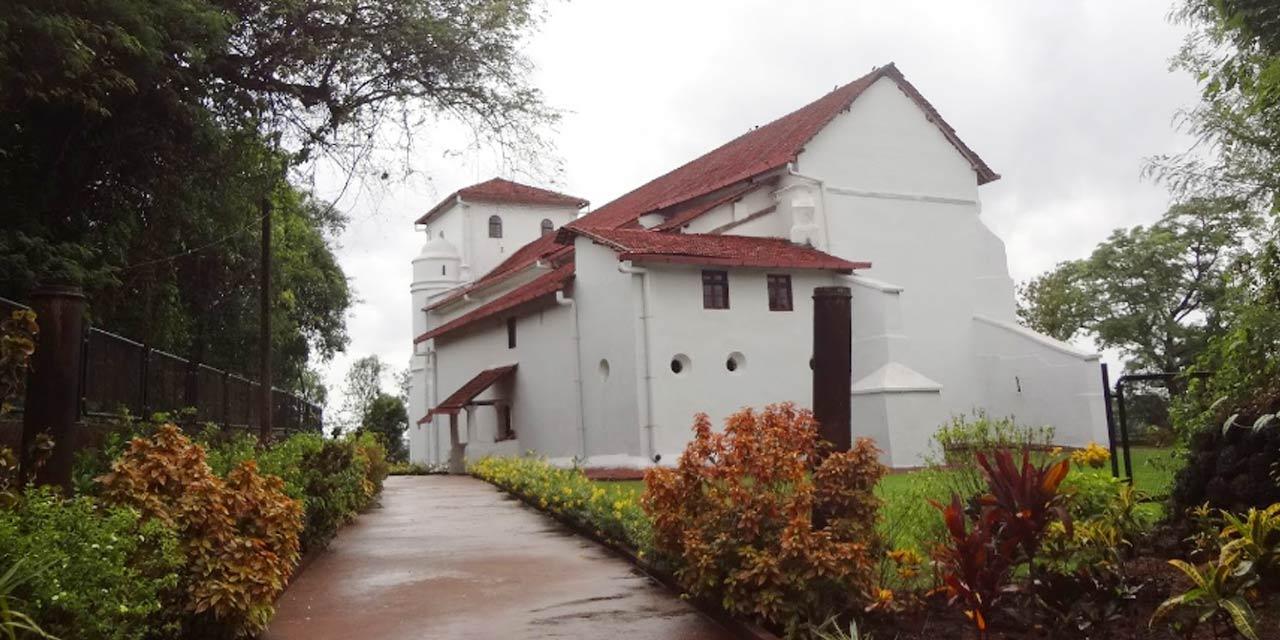
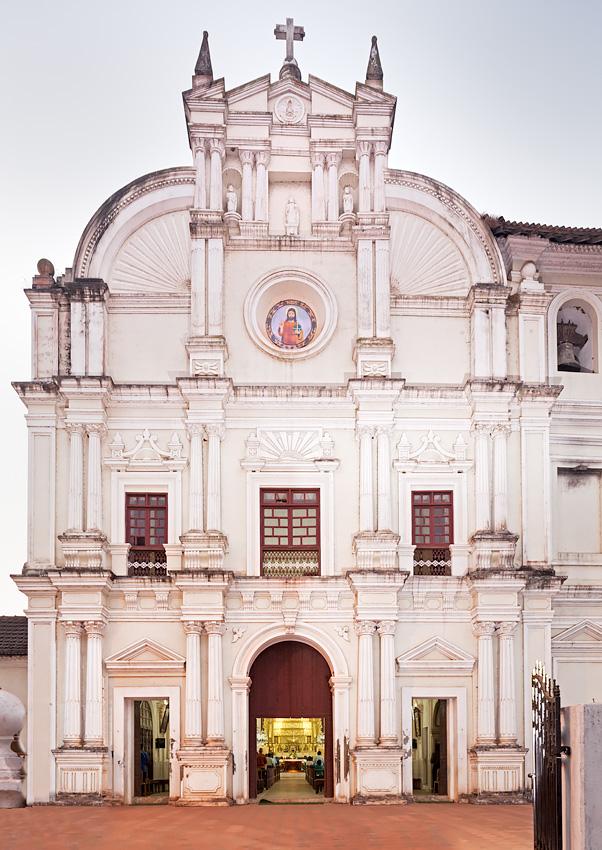
The Church of Our Lady of the Rosary (Nossa Senhora do Rosário) stands as a silent, stoic sentinel atop the Monte Santo (Holy Hill) in Old Goa. Unlike the more frequented and ornate structures like the Basilica of Bom Jesus or the Se Cathedral located in the valley below, this church offers a serene, almost meditative atmosphere, far removed from the bustling tourist crowds. It is one of the oldest surviving religious structures in Goa, serving as a poignant reminder of the early days of Portuguese conquest and the subsequent Christianization of the region. As a vital component of the UNESCO World Heritage Site ensemble of "Churches and Convents of Goa," it holds a unique position in the architectural and spiritual landscape of India.
The location of the church is strategically significant. From its elevated vantage point, visitors are treated to a panoramic vista of the Mandovi River, the lush islands of Divar and Chorao, and the sprawling ruins of what was once the "Rome of the East." The church’s austere, fortress-like exterior is a stark contrast to the later, more flamboyant Baroque and Rococo styles found elsewhere in Goa. This simplicity is its greatest charm, evoking a sense of the mid-16th century when Goa was transitioning from a coastal trading post to the capital of the Portuguese Empire in the East. For the spiritual traveler, the Church of Our Lady of the Rosary represents a bridge between medieval European traditions and the emerging Indo-Portuguese culture.
Top Goa Experience • Part 1
Highly Recommended Near Church of our lady of Rosary
Explore All
Visiting this site is not merely about checking a box on a sightseeing list; it is about stepping back in time. The air here feels thinner, the wind from the Mandovi carries whispers of history, and the golden hour sunlight bathes the laterite walls in a warm, ethereal glow. It is a place for contemplation, historical inquiry, and an appreciation for the sheer endurance of stone and faith. Whether you are an architecture enthusiast, a history buff, or a seeker of spiritual peace, this church provides a profound experience that captures the raw essence of Old Goa’s complex heritage.
History & Religious Significance
The history of the Church of Our Lady of the Rosary is inextricably linked to the very foundation of Portuguese Goa. Its origins trace back to the year 1510, a turning point in Indian history. When Afonso de Albuquerque, the Portuguese general and conqueror, was engaged in a fierce battle to reclaim Goa from the forces of the Sultan of Bijapur, Adil Shah, he found himself in a precarious position on Monte Santo. Legend has it that amidst the heat of the battle, Albuquerque made a solemn vow to the Virgin Mary: if he were victorious, he would build a church on the very spot where he stood to commemorate the triumph.
Recommended Guide
North Goa vs South Goa: Which is Better for Your Goa Trip?
Goa is India's most popular beach destination and attracts millions of domestic and international tourists every year. One of the most common questions tra...
Read Guide →
Following the successful conquest on November 25, 1510 (the feast day of St. Catherine), a small commemorative chapel was initially erected. However, the church as we see it today was constructed between 1543 and 1549. This period marked the consolidation of Portuguese power and the formal establishment of ecclesiastical structures in the colony. The church was dedicated to Our Lady of the Rosary, a title of the Virgin Mary that became particularly significant during the Counter-Reformation and the maritime expansions of the era, as the Rosary was seen as a spiritual weapon for protection and victory.
One of the most significant historical events associated with this church is the arrival of St. Francis Xavier. Upon his arrival in Goa in 1542, it is said that he chose this church as the primary location to teach the catechism to the local population and the children of the Portuguese settlers. The church thus became a cradle for Jesuit missionary activity in the East. Furthermore, the church is the final resting place of Garcia de Sá, one of the early Governors of Goa, and his wife, Catarina a Piro. Their marriage is historically significant as it is often cited as the first formal Christian marriage between a Portuguese nobleman and a local woman (though her exact origins are a subject of historical debate, she is believed to have been of Persian or local descent), symbolizing the early social integration in the colony.
Recommended Guide
Tourist Season in Goa – Complete Travel Guide for Every Season
The winter season in Goa, stretching from November to February, is widely considered the best and most popular tourist season in Goa. This period attracts...
Read Guide →
Over the centuries, while other grander churches were built and eventually fell into ruin or required massive restoration, the Church of Our Lady of the Rosary remained relatively unchanged. Its survival is a testament to the sturdy construction methods of the 16th century. It stands today not just as a religious monument, but as a historical document in stone, recording the vows of conquerors, the zeal of missionaries, and the birth of a unique Luso-Indian society.
Architecture of Church of our lady of Rosary
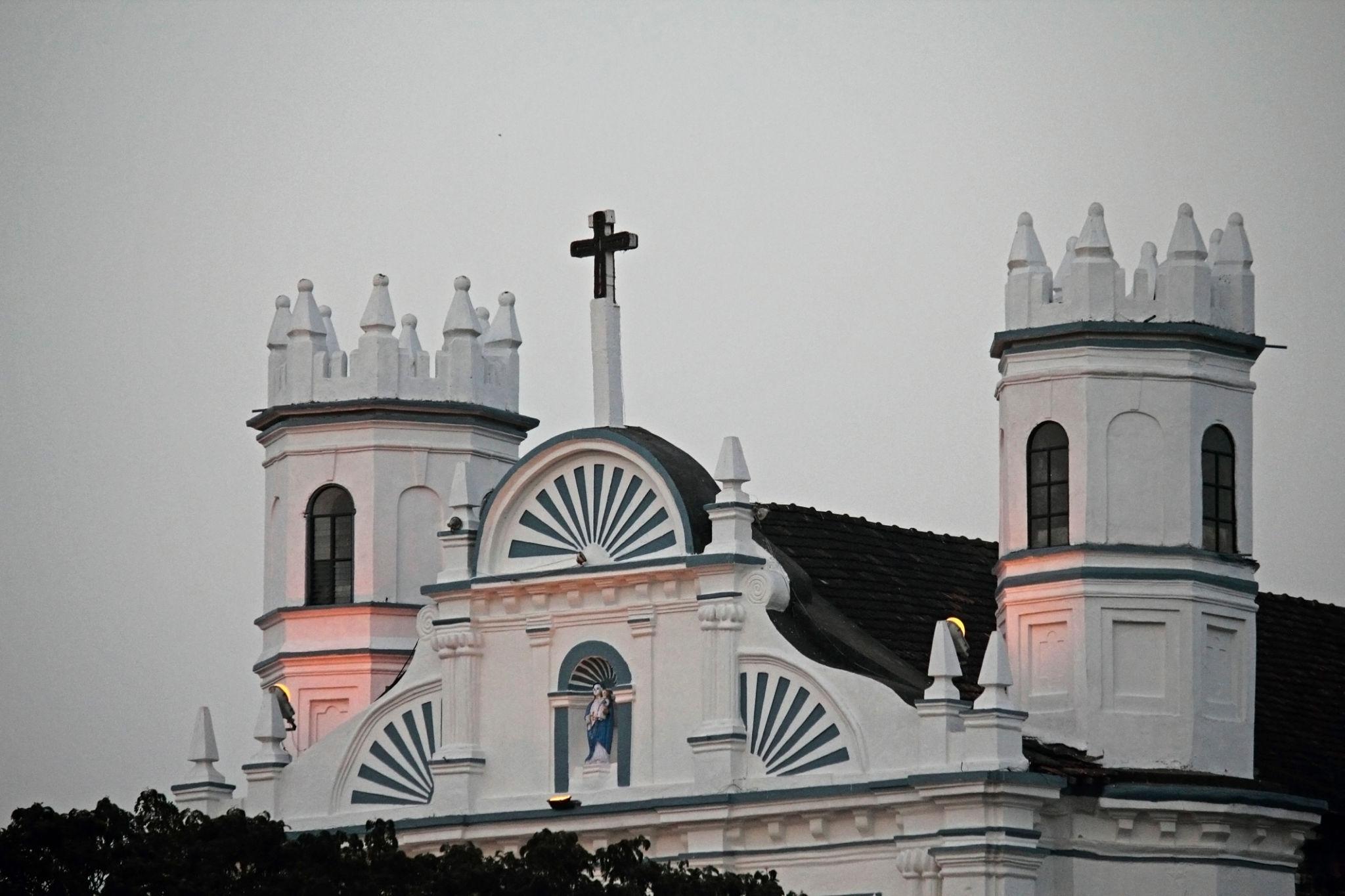
The architectural style of the Church of Our Lady of the Rosary is a fascinating study in transition. It is the only church in Goa that predominantly reflects the Manueline style, which was the Portuguese version of Late Gothic architecture, named after King Manuel I. This style is characterized by its maritime motifs, intricate carvings, and a blend of Gothic and Renaissance elements. However, given its early construction and its location in a newly conquered territory, the church also possesses a distinct fortress-like appearance, often referred to as a "fortress church."
Recommended Guide
Common Scams in Goa Tourists Still Fall For
Goa is one of India’s most loved travel destinations, attracting millions of tourists every year with its beaches, nightlife, and relaxed vibe. But like...
Read Guide →
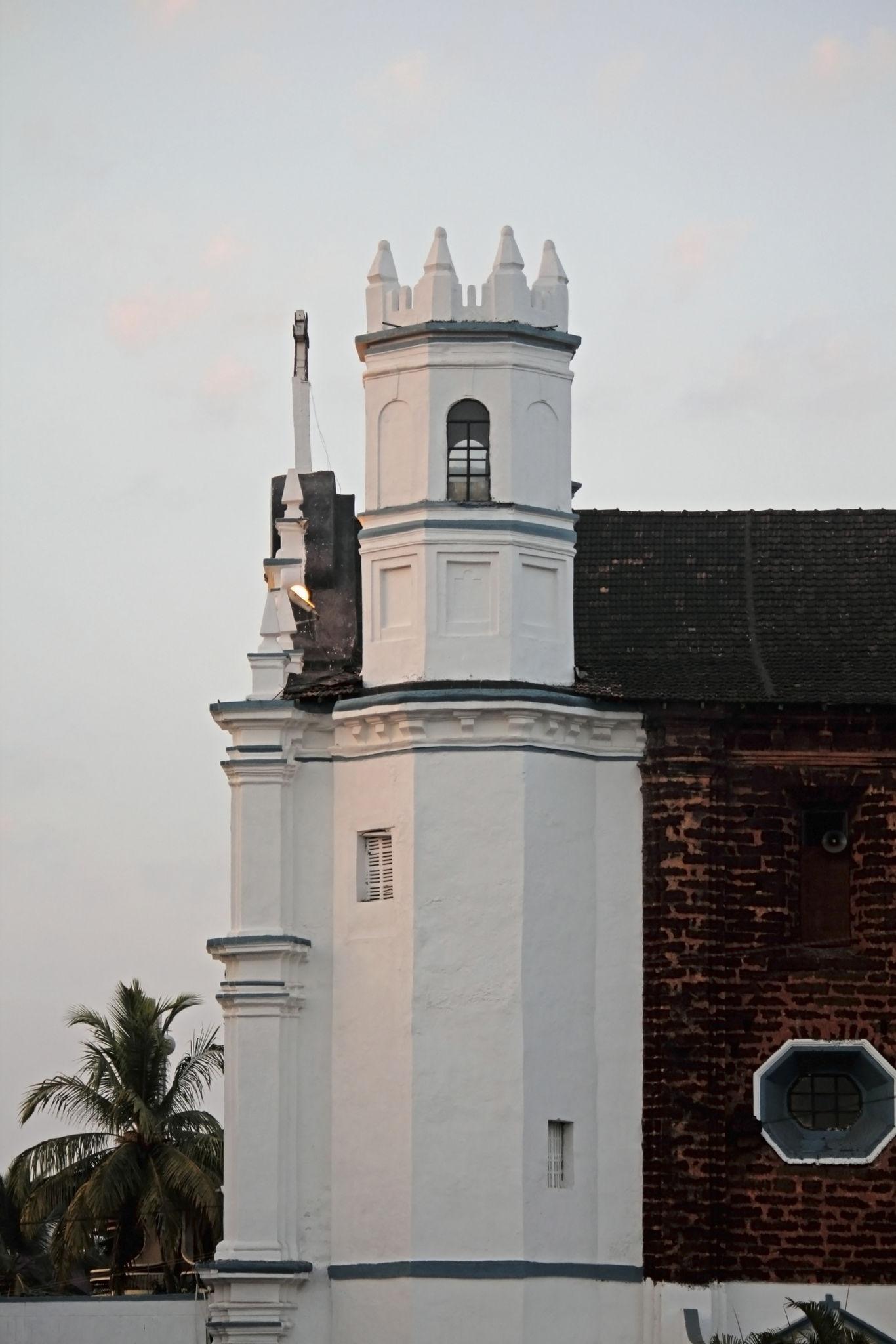
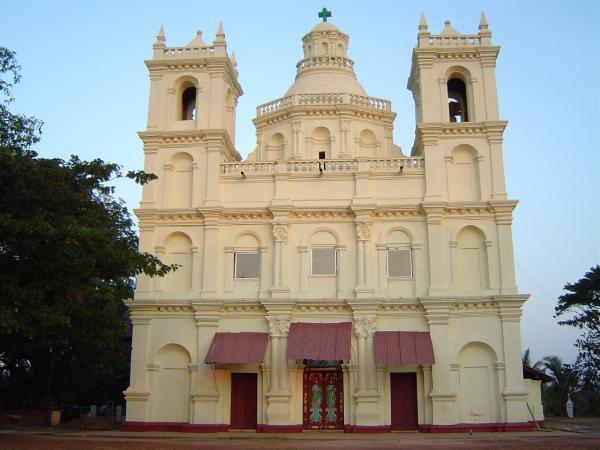
The exterior is built primarily of local laterite stone, which has weathered to a dark, rugged texture over the centuries. The facade is flanked by two high, cylindrical towers that resemble bastions, reinforcing the defensive nature of the building. These towers are capped with small domes and features narrow slits that could have served as lookout points. The use of round towers is a rare feature in Goan ecclesiastical architecture, making this church instantly recognizable. The main portal is a masterpiece of Manueline design, featuring delicate stonework that contrasts with the heavy, masculine walls of the main structure.
Top Goa Experience • Part 2
Highly Recommended Near Church of our lady of Rosary
Explore All
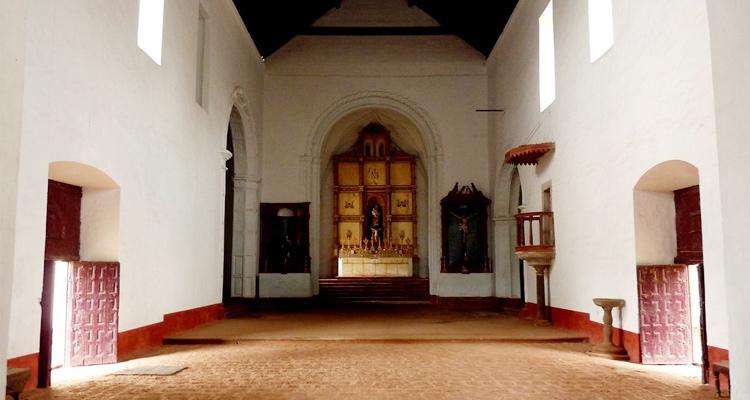
Inside, the church follows a simple, single-nave plan with a vaulted ceiling. The interior is surprisingly spacious and airy, despite the thick walls. The high altar is dedicated to Our Lady of the Rosary and is flanked by two side altars. These altars are decorated with intricate carvings that show an early influence of the Renaissance style, moving away from the purely Gothic. One of the most remarkable features inside is the cenotaph of Catarina a Piro, located near the main altar. The inscription and the design of the tomb are distinctly Manueline, featuring ropes, knots, and other nautical themes typical of the era of discoveries.
The windows are placed high up on the walls, typical of the early colonial period where security was as much a priority as light. The choir loft is supported by heavy pillars, and the overall aesthetic is one of somber dignity. Unlike the gilded, overwhelming interiors of the later Baroque churches in Old Goa, the Church of Our Lady of the Rosary relies on its proportions and the raw beauty of its materials to create a spiritual atmosphere. The architectural significance lies in its "purity"—it represents the very first wave of European architecture in India, before the styles became heavily localized and more decorative.
Main Deity / Spiritual Importance
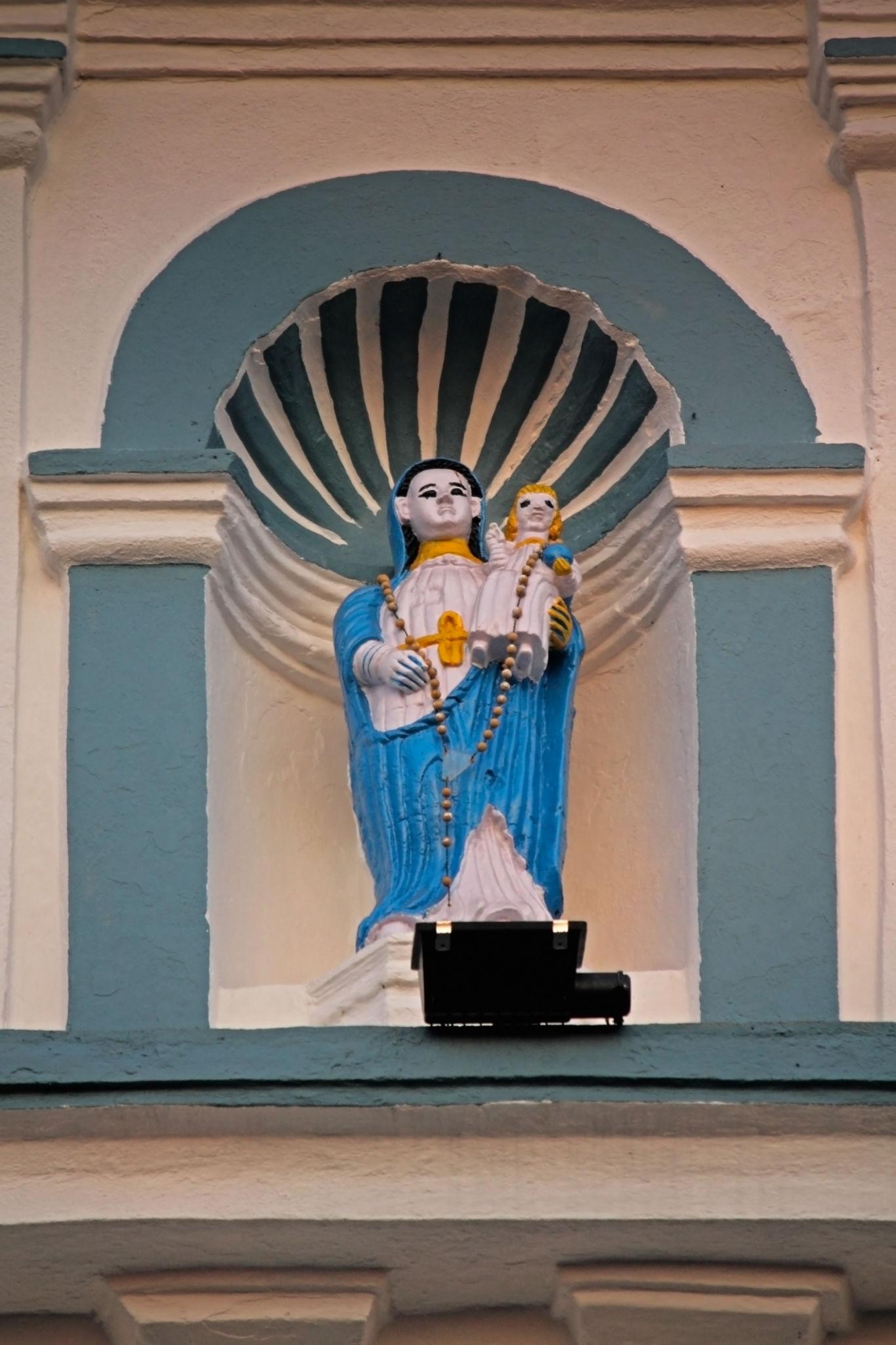
The primary deity of the church is Our Lady of the Rosary (Nossa Senhora do Rosário). In Catholic tradition, the Rosary is a form of prayer that meditates on the lives of Jesus Christ and the Virgin Mary. For the Portuguese of the 16th century, devotion to the Rosary was deeply intertwined with their identity as a maritime and crusading nation. They believed that the intercession of the Virgin Mary through the Rosary brought them safety on the treacherous seas and victory in their territorial expansions.
The spiritual importance of this site is heightened by its association with St. Francis Xavier. For many Goan Catholics and pilgrims from around the world, the church is a "touchstone" of the Saint's early ministry. Standing in the space where the "Apostle of the Indies" once stood to preach the fundamental tenets of faith creates a powerful sense of continuity. The church is seen as a place of "beginnings"—the beginning of the Portuguese presence, the beginning of the formal Catholic Church in India, and the beginning of the Jesuit mission that would eventually reach as far as Japan and China.
The Our Lady of the Rosary statue within the church is a focal point for local devotion. While the church does not host massive daily congregations like the Basilica of Bom Jesus, it remains a site for quiet prayer and personal vows. The spiritual atmosphere is one of "solitude and strength." Many visitors find that the lack of commercial activity and the physical climb to reach the church makes the spiritual experience more rewarding. It is a place where one can contemplate the "Joyful, Sorrowful, and Glorious Mysteries" of the Rosary in a setting that has remained virtually unchanged for nearly five centuries.
Festivals & Celebrations
While the Church of Our Lady of the Rosary is quieter than other major shrines in Goa, it comes alive during specific liturgical events. The most significant celebration is the Feast of Our Lady of the Rosary, which is typically held in November. This feast day is celebrated with a traditional High Mass, followed by a procession where the statue of the Virgin Mary is carried around the church grounds. The local community from the surrounding areas of Ribandar and Bainguinim often participates, keeping alive the age-old traditions of the parish.
Another important period is the Month of the Rosary (October), during which special prayers and novenas are held. While these are not massive public spectacles, they offer a glimpse into the authentic, lived religion of the local Goan populace. The solemnity of these prayers in the ancient, vaulted hall of the church is a moving experience for any observer.
During the Feast of St. Francis Xavier (December 3rd), although the main celebrations are centered at the Basilica of Bom Jesus, many pilgrims make the trek up Monte Santo to visit the Church of the Rosary as part of their spiritual journey. The church also plays a role during Holy Week, particularly on Good Friday, when the somber atmosphere of the old laterite walls perfectly complements the liturgical mourning of the occasion. For those looking to experience the local culture, visiting during these times provides a chance to see traditional Goan Konkani hymns being sung and to witness the deep-rooted faith of the community.
Best Time to Visit
To fully appreciate the beauty and serenity of the Church of Our Lady of the Rosary, timing is essential. The best months to visit are from November to February. During this winter period, the weather in Goa is pleasant, with clear blue skies and a cool breeze blowing in from the Mandovi River. This makes the walk up the hill much more enjoyable and allows for better visibility of the surrounding landscapes.
In terms of the time of day, early morning (between 9:00 AM and 10:30 AM) is ideal for those who wish to experience the church in total silence before the few tourists who venture here arrive. However, the late afternoon (from 4:00 PM to sunset) is perhaps the most magical time. As the sun begins to set over the Arabian Sea, the golden light hits the dark laterite stone of the church, turning it into a glowing monument. The view from the hill at sunset is widely considered one of the best in Old Goa, offering a perfect silhouette of the surrounding church towers against the orange sky.
The monsoon season (June to September) offers a different kind of beauty. The hill becomes lush and vibrant green, and the church takes on a moody, gothic appearance against the dark rain clouds. While the walk can be slippery and the humidity high, the sight of the mist rolling over the Mandovi River from the church porch is incredibly romantic and atmospheric. However, be prepared for sudden downpours and ensure you have sturdy footwear.
Timings, Entry Fee & Dress Code
The Church of Our Lady of the Rosary is generally open to visitors during the following hours:
- Opening Hours: 9:00 AM to 5:30 PM (Daily).
- Mass Timings: Masses are not held daily for the public as it is not a primary parish church, but special services occur on feast days and Sundays. It is best to check locally if you wish to attend a service.
Entry Fee: There is no entry fee to visit the church. It is a protected monument under the Archaeological Survey of India (ASI) and is free for all visitors, regardless of nationality. However, donations for the maintenance of the church are always appreciated by the local caretakers.
Dress Code: As this is a functioning place of worship and a site of great religious significance, visitors are expected to dress modestly.
- Men: Should avoid sleeveless shirts and short shorts. Trousers or long shorts and t-shirts with sleeves are appropriate.
- Women: Should ensure that their shoulders and knees are covered. Avoid transparent or very tight-fitting clothing. Carrying a scarf or shawl is a good idea to cover up if necessary.
- Footwear: You will need to remove your shoes if you enter certain designated prayer areas, though generally, walking through the main nave with shoes is permitted unless otherwise stated.
How to Reach Church of our lady of Rosary
The church is located in Old Goa (Velha Goa), approximately 10 kilometers from the state capital, Panjim. Reaching the site is relatively easy, but it requires a bit more effort than the main cluster of churches.
- By Road: You can hire a taxi or a self-drive car/scooter from Panjim, which will take about 20-25 minutes. Follow the main Panjim-Ponda highway (NH748). Once you reach the Old Goa bypass, look for signs pointing towards "Monte Santo" or the "Church of Our Lady of the Rosary." The road winds up the hill and is well-paved.
- By Bus: Frequent Kadamba (government) buses and private buses run between Panjim and Old Goa. Get off at the main Old Goa bus stand (near the Basilica). From there, you can either hire an auto-rickshaw to take you up the hill or embark on a 15-20 minute uphill walk.
- On Foot: If you are already exploring the main churches of Old Goa, the walk to the Rosary Church is highly recommended for the fit traveler. Starting from the St. Augustine Tower, follow the road that leads further up the hill. The walk is scenic and passes by the Royal Chapel of St. Anthony.
- By Train: The nearest railway station is Karmali (KRMI), located just 3 kilometers away. From the station, you can take a quick taxi or auto-rickshaw ride directly to the church.
Things to Do
A visit to the Church of Our Lady of the Rosary offers several engaging activities for the mindful traveler:
- Architectural Photography: The church is a dream for photographers. Capture the unique Manueline portal, the fortress-like towers, and the play of light and shadow in the vaulted interior. The panoramic view of the Mandovi River from the churchyard is one of the most photographed spots in Goa.
- Historical Exploration: Spend time reading the inscriptions and examining the cenotaph of Catarina a Piro. Look for the subtle Manueline details in the stonework. Understanding the historical context of the "vow" of Albuquerque adds a layer of depth to the visit.
- Quiet Contemplation: Unlike the crowded Se Cathedral, this church offers peace. Sit in one of the ancient wooden pews and soak in the silence. It is an excellent place for meditation or personal prayer.
- Enjoy the View: Take a walk around the church perimeter. The view from the edge of the hill covers the Divar Island, the Viceroy’s Arch, and the Church of St. Cajetan. It provides a unique "bird's eye view" of the layout of the former capital.
- Combine with Nearby Ruins: Use the church as a starting or ending point for a walking tour of the "Holy Hill," which includes the St. Augustine Tower and the Museum of Christian Art.
Nearby Attractions
The Church of Our Lady of the Rosary is situated in a high-density historical zone. You can easily combine your visit with these nearby sites:
- St. Augustine Tower: Located just a few hundred meters away, these are the majestic ruins of what was once one of the largest churches in the world. The lone standing tower is an iconic symbol of Old Goa.
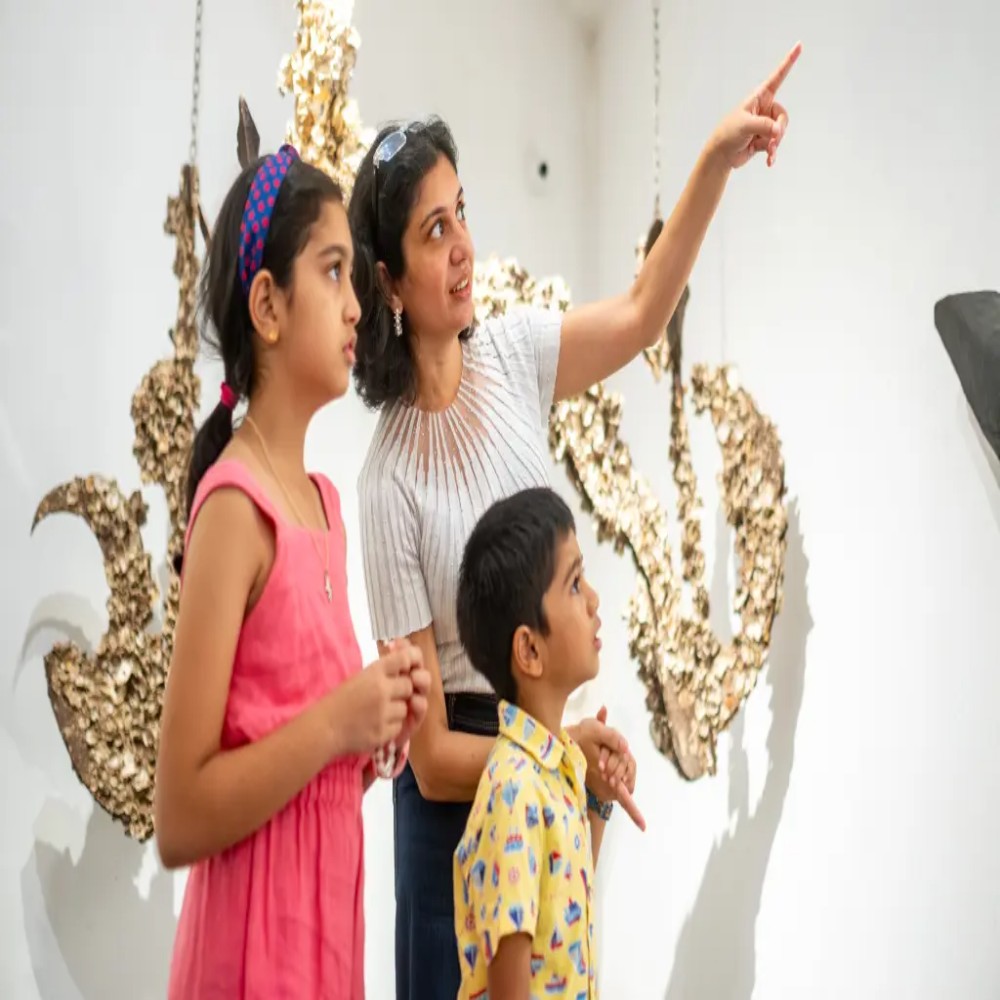
- Museum of Christian Art: Housed within the Convent of Santa Monica, this museum contains a world-class collection of Indo-Portuguese art, including sculptures, paintings, and textiles.
- Basilica of Bom Jesus: A short drive or walk down the hill leads you to this world-famous basilica which houses the sacred relics of St. Francis Xavier.
- Se Cathedral: Located across from the Basilica, this is the largest church in Asia, known for its "Golden Bell" and stunning Tuscan-style architecture.
- Church of St. Cajetan: Modeled after St. Peter's Basilica in Rome, this beautiful white church is located near the Viceroy's Arch and is often overlooked by tourists.
- Viceroy’s Arch: The ceremonial gateway to the city, through which the Portuguese Governors used to enter the capital.
Photography & Visitor Guidelines
To ensure a respectful and productive visit, keep the following guidelines in mind:
- Photography: Photography is generally allowed outside and inside the church. However, avoid using flash inside as it can damage ancient pigments and disturb people praying. Tripods may require special permission from the ASI if you are doing professional work.
- Silence: Maintain a low voice. The acoustics of the stone church carry sound easily, and loud talking can be disruptive to the sanctity of the site.
- Respect the Altar: Do not cross the railings near the main altar. These areas are considered sacred.
- Littering: The church grounds are part of a heritage site. Please ensure you do not leave any trash behind. There are bins located near the entrance.
- Avoid Touching Walls: The laterite and lime plaster are delicate. Avoid leaning against or touching the ancient walls and inscriptions to prevent erosion from skin oils.
- Drones: The use of drones is strictly regulated in heritage zones in India. Do not fly a drone without explicit written permission from the ASI and local authorities.
Where to Eat Nearby
After the climb to Monte Santo, you will likely be looking for some refreshment. While there are no cafes directly at the church, several options are available nearby:
- The Heritage Bistro: Located near the main Old Goa church complex, this offers a range of Goan and continental dishes in a pleasant setting.
- Anantashram: If you are willing to drive back towards Panjim or Ribandar, this is a famous spot for authentic Goan fish thalis.
- Local Snack Stalls: Near the Basilica of Bom Jesus, there are numerous small stalls selling fresh coconut water, Ross Omelette, and local Goan snacks like Samosas and Cutlet Pao.
- Viva Panjim: A short drive into Panjim's Fontainhas area (about 20 mins) will take you to this award-winning restaurant serving traditional Goan Catholic cuisine like Pork Vindaloo and Prawn Balchao.
Accommodation Nearby
Most visitors stay in the coastal belt or Panjim, but there are options closer to Old Goa for those who want to stay in the heart of history:
- The Postcard Velha: A luxury boutique hotel located on a hillock in Old Goa, offering a serene and high-end experience that matches the historical vibe of the area.
- Old Goa Residency: Run by the GTDC (Goa Tourism Development Corporation), this offers basic, clean, and affordable rooms right in the center of the heritage zone.
- Pousada Tauma: Located a bit further away but offering a unique themed stay that reflects Goan architecture and hospitality.
- Guest Houses in Ribandar: The nearby riverside village of Ribandar has several charming heritage homes converted into Airbnbs, offering a local feel and great views of the Mandovi.
Travel Tips
- Hydration: The walk up to the church can be taxing in the Goan heat. Always carry a bottle of water with you.
- Footwear: Wear comfortable walking shoes with good grip. The stone paths and the incline to the church can be uneven.
- Guided Tours: Consider hiring a certified heritage guide. The history of the Church of Our Lady of the Rosary is complex, and a guide can point out architectural nuances you might otherwise miss.
- Combine Your Trip: Don't just visit this church. Plan a half-day to explore the entire "Holy Hill" (Monte Santo) area to see the St. Augustine ruins and the Museum of Christian Art.
- Local Etiquette: If you see a religious service in progress, wait outside or stand quietly at the back. Do not take photos of people during prayer.
- Safety: The road up the hill is a bit secluded. While generally safe, it is better to visit during daylight hours and avoid staying too late after sunset if you are traveling alone.
Conclusion
The Church of Our Lady of the Rosary is more than just a monument; it is a profound testament to the layered history of Goa. As one of the earliest examples of European architecture in India, it stands as a bridge between the medieval world of the Portuguese explorers and the vibrant, multicultural identity of modern-day Goa. Its austere beauty, strategic location, and deep spiritual significance make it a must-visit for anyone looking to go beyond the surface-level attractions of the state.
Standing on the windswept Monte Santo, looking out over the Mandovi River, one cannot help but feel the weight of the centuries. From the battle-vow of Albuquerque to the humble teachings of St. Francis Xavier, the church has witnessed the rise and fall of empires. It remains a place of quiet power—a "fortress of faith" that continues to inspire awe and reflection. Whether you come for the history, the Manueline architecture, or the unparalleled sunset views, the Church of Our Lady of the Rosary offers a soulful experience that lingers long after you have descended the hill.