Overview of Chandreshwar Temple
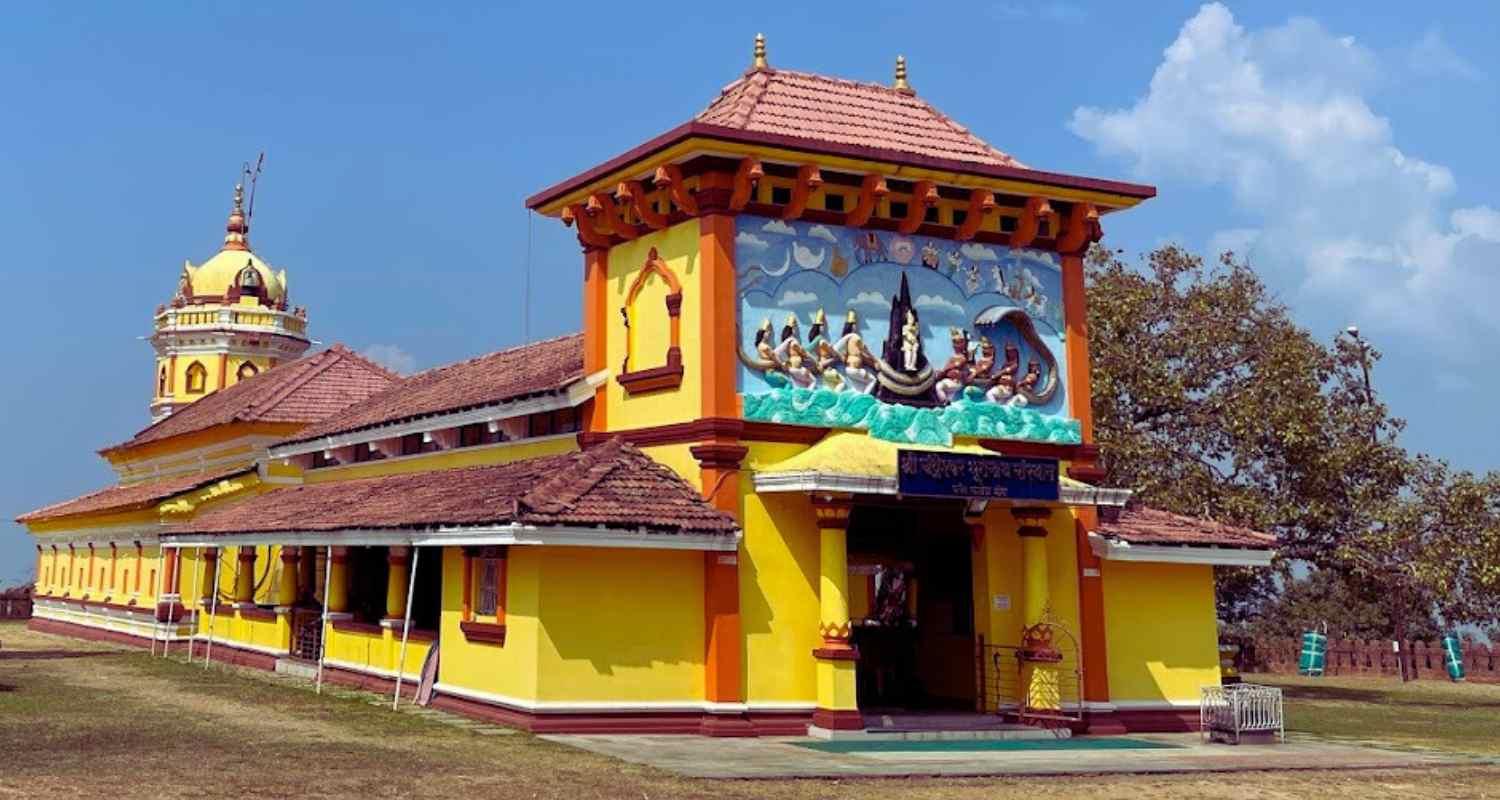
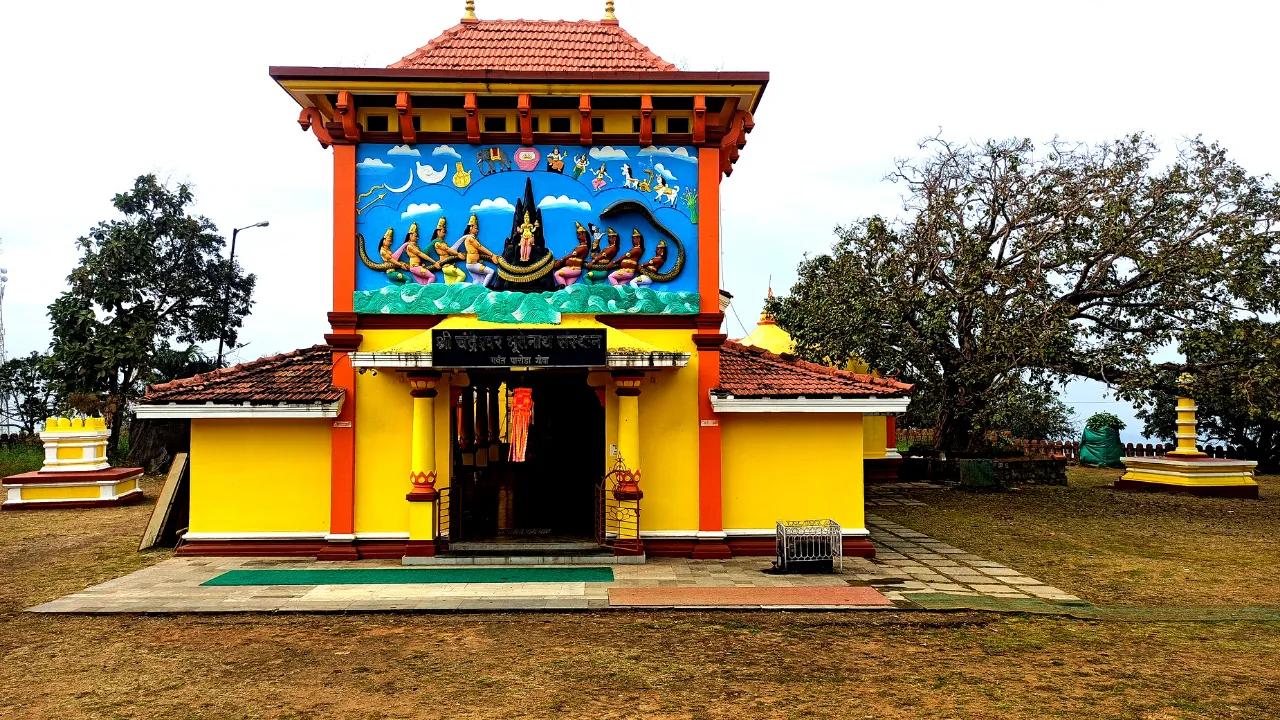
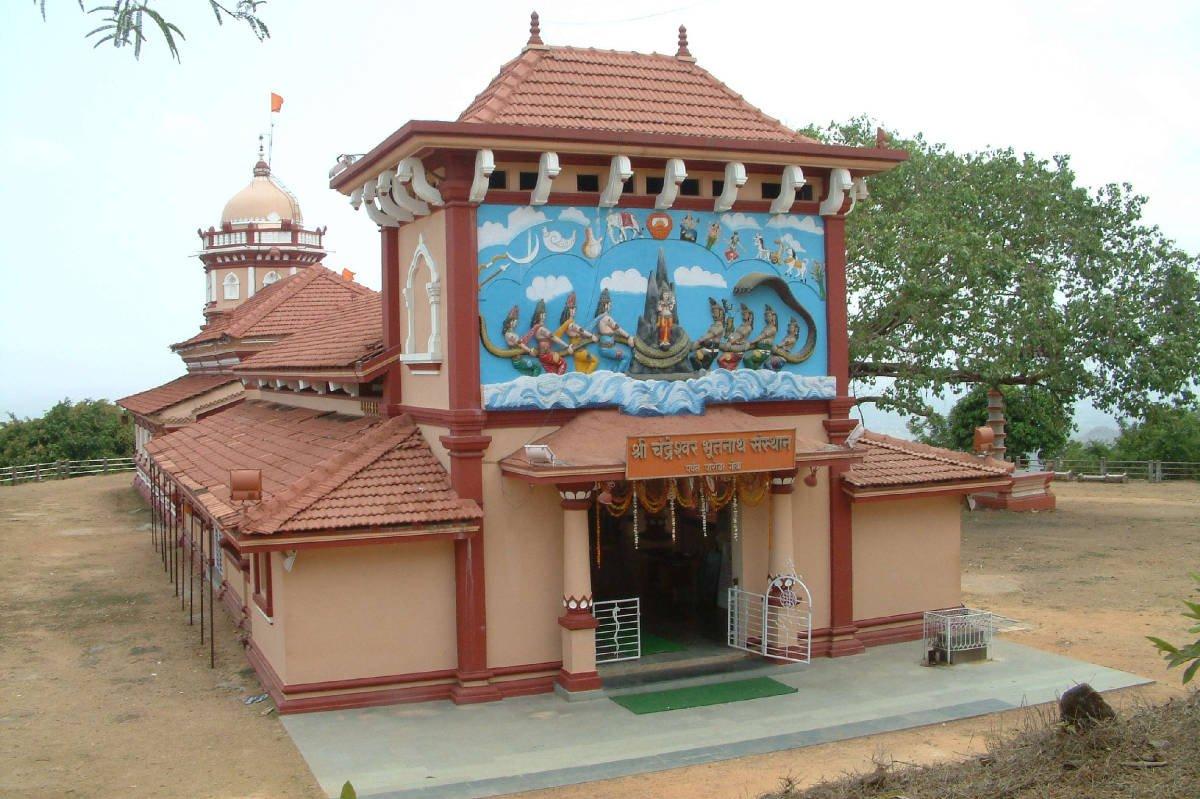
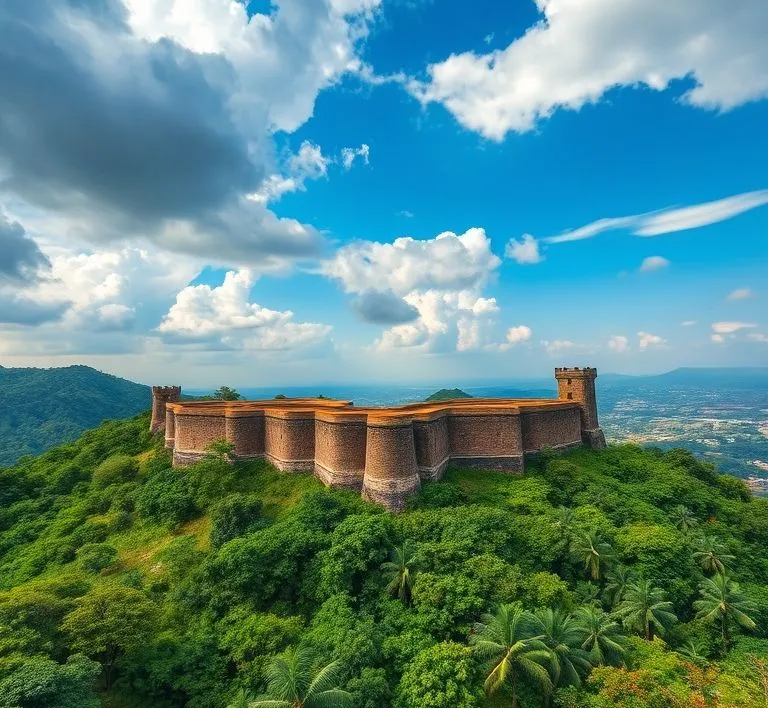
Perched majestically atop the verdant Chandranath Hill (also known as Paroda Hill) in the Quepem taluka of South Goa, the Chandreshwar Temple stands as a silent sentinel of Goa’s ancient spiritual heritage. At an elevation of approximately 350 meters above sea level, this sacred site offers more than just religious solace; it provides a breathtaking 360-degree panoramic view of the surrounding emerald valleys, dense deciduous forests, and the shimmering coastline of South Goa in the far distance. The temple is dedicated to Lord Shiva, worshipped here as Chandreshwar—the Lord of the Moon. This is not merely a place of worship but a confluence of natural beauty, historical depth, and celestial mystery.
For the discerning traveler and the devout pilgrim, Chandreshwar Temple represents a side of Goa that is often overshadowed by its sun-kissed beaches and vibrant nightlife. It is a place where the air is thinner and purer, filled with the scent of wild wildflowers and the distant chime of temple bells. The ascent to the temple, whether by vehicle or via the ancient stone steps, is a transition from the mundane to the divine. As one climbs higher, the humidity of the Goan plains gives way to a cooler, crisper breeze, setting the stage for a profound spiritual experience. The temple complex also includes a smaller shrine dedicated to Bhutnath, a fierce manifestation of Shiva, adding another layer to the site's mystical atmosphere. For anyone seeking to understand the "Old Goa" of the interior—the land of the Bhoja Kings and ancient Vedic traditions—the Chandreshwar Temple is an essential pilgrimage.
The site is shrouded in a sense of timelessness. Even during the peak tourist season, the hill maintains a serene dignity. The temple serves as a focal point for the local community, particularly the residents of Paroda and Quepem, who have maintained these traditions for over a millennium. It is a site where astronomy meets theology, as the very positioning of the temple is said to be aligned with lunar cycles, a testament to the scientific and spiritual prowess of ancient Indian architects. Whether you are a history buff, a nature lover, or a spiritual seeker, the Chandreshwar Temple offers an immersive experience that resonates long after you have descended the hill.
History & Religious Significance
The history of the Chandreshwar Temple is inextricably linked with the Bhoja Dynasty, which ruled parts of Goa, Konkan, and North Karnataka from the 3rd to the 8th century AD. The Bhojas were the first major dynasty to establish a centralized administration in Goa, and they chose Chandrapur (modern-day Chandor) as their capital. The Chandreshwar Temple served as the family deity (Kuldevta) of the Bhoja kings, making it one of the most politically and spiritually significant sites in ancient Goa. Inscriptions found in the region, dating back to the 4th and 5th centuries, mention the grants made to this temple, proving its antiquity and the high esteem in which it was held by royalty.
According to the Sahyadri Khanda of the Skanda Purana, the temple finds mention as a site of great merit. Mythologically, it is believed that Lord Shiva took up residence on this hill to find peace and to bless his devotees who sought liberation from the cycles of birth and death. The name 'Chandreshwar' itself carries deep religious weight. It refers to Shiva as the one who wears the crescent moon as an ornament in his matted hair. Legend suggests that the moon god, Chandra, performed rigorous penance on this very hill to seek Lord Shiva’s blessings, leading to the establishment of the shrine. This connection to the moon is not just symbolic; it is physically manifested in the temple's unique Shiva Lingam, which is said to glow or appear to have water oozing from it during full moon nights when the moonlight falls directly upon it.
Over the centuries, as power shifted from the Bhojas to the Kadambas of Goa and later survived the periods of various invasions, the temple remained a steadfast bastion of Hindu faith. Unlike many temples in North Goa that were destroyed or relocated during the early Portuguese colonial era, the Chandreshwar Temple’s remote hilltop location provided a natural defense, allowing it to preserve its original sanctity and many of its ancient traditions. Today, it stands as a symbol of resilience, representing a continuous thread of Goan Hindu identity that stretches back nearly two thousand years. The religious significance is further bolstered by the presence of the Bhutnath Shrine nearby, indicating the synthesis of Vedic Shiva worship with local, indigenous "Bhuta" (spirit) traditions that are unique to the Konkan region.
Architecture of Chandreshwar Temple
The architecture of the Chandreshwar Temple is a fascinating blend of ancient stone craftsmanship and the later refinements of the Goan Temple style. While the core sanctum (Garbhagriha) retains elements of its ancient origins, the exterior structures have been renovated over the centuries, displaying the characteristic sloping roofs and white-washed walls typical of Goan Hindu architecture designed to withstand the heavy monsoon rains of the Western Ghats.
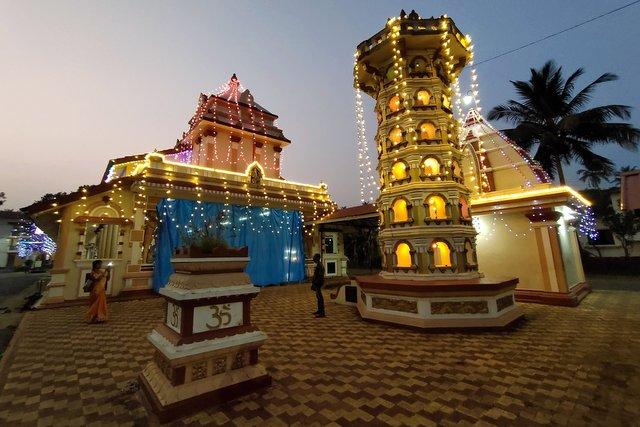
- The Deepastambha: One of the most striking features of the temple complex is the Deepastambha (lamp tower). This tall, elegant structure is a hallmark of Goan temples. During festivals, hundreds of oil lamps are placed in its niches, creating a pillar of fire that can be seen from the valleys below.
- The Sanctum Sanctorum: The inner chamber is carved out of granite. It is small, intimate, and designed to focus the devotee’s energy entirely on the deity. The Shiva Lingam is placed on a raised platform, and the ceiling of the sanctum is often decorated with intricate carvings of lotus flowers and geometric patterns.
- The Sabhamandapa: The main hall or Sabhamandapa features heavy wooden pillars and a spacious layout to accommodate devotees during prayers. The woodwork often showcases the skill of local Goan artisans, with motifs inspired by local flora and fauna.
- The Stone Chariot: Within the temple premises, one can find a beautifully carved stone chariot, which is used during the annual Rath Yatra (chariot festival). The craftsmanship on the wheels and the body of the chariot reflects the Hoysala and Kadamba influences that filtered into Goan art.
- The Ancient Steps: For those who choose to walk, the ancient stone staircase leading up the hill is an architectural feat in itself. These steps have been trodden by pilgrims for centuries, worn smooth by time and devotion.
The temple's layout follows the traditional Vastu Shastra principles, ensuring that the energy flow is conducive to meditation and prayer. The use of local laterite stone for the outer walls and granite for the inner sanctum creates a thermal balance, keeping the interiors cool even during the scorching Goan summers. The surrounding courtyard is spacious, allowing for the circumambulation (Pradakshina) of the temple, a vital ritual for devotees. The integration of the temple into the natural rock of the hill suggests that the site was originally a cave shrine that gradually evolved into the structured temple we see today.
Main Deity / Spiritual Importance
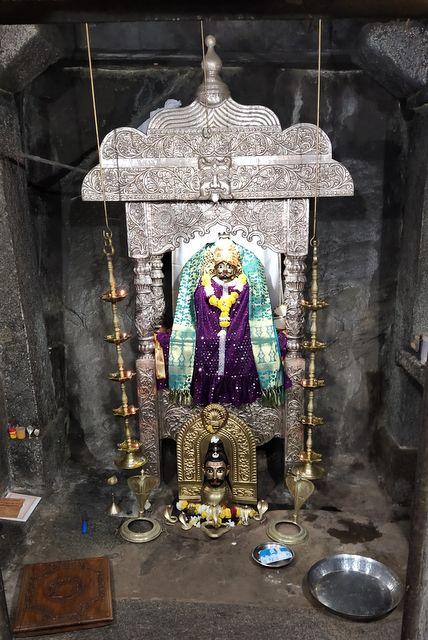
The presiding deity of the temple is Lord Chandreshwar, an aspect of Lord Shiva. The deity is represented by a Swayambhu (self-manifested) Shiva Lingam. What makes this Lingam extraordinary is its composition and its interaction with celestial bodies. It is carved from a type of stone that is said to be highly sensitive to light. Local lore and many devotees claim that on a full moon night, the Lingam emits a subtle glow, and water naturally oozes from the stone to perform an 'Abhisheka' (ritual bathing) of the deity. This phenomenon is attributed to the precise astronomical alignment of the temple, where the moonlight is funneled through a specific opening to strike the Lingam directly.
Spiritual seekers visit Chandreshwar not just for ritualistic worship but for the high vibrational energy associated with the hill. In Hindu cosmology, hills and mountains are considered the abodes of the gods, and Chandranath Hill is no exception. The temple is a site for Sadhana (spiritual practice) and meditation. The silence of the hilltop, broken only by the rustle of leaves and the occasional temple bell, provides an ideal environment for introspection. The deity is believed to be the protector of the region, and many Goan families consider Chandreshwar their Rakhandar (guardian spirit).
Adjacent to the main temple is the shrine of Lord Bhutnath. In Goan spiritual tradition, Bhutnath is the lord of the spirits and a protector against evil forces. He is often depicted in a more fierce form, and his presence signifies the balance between the peaceful, meditative aspect of Shiva (Chandreshwar) and the protective, powerful aspect (Bhutnath). Devotees usually pay their respects at both shrines to ensure complete spiritual well-being. The spiritual importance of the temple also extends to the ancestral roots of the local people; many perform 'Pitru Dosha' rituals here, believing that the proximity to the heavens on this hill helps in the liberation of ancestral souls.
Festivals & Celebrations
The Chandreshwar Temple comes alive during its various festivals, which are celebrated with traditional Goan fervor, music, and community spirit. These events offer a glimpse into the vibrant cultural tapestry of the state, far removed from the commercialized festivals of the coastal belt.
- Mahashivratri: This is the most significant festival at the temple. Thousands of devotees trek up the hill to offer prayers, milk, and Bilva leaves to Lord Shiva. The temple remains open throughout the night, with continuous chanting of "Om Namah Shivaya" and the performance of various Prahars (prayer sessions). The atmosphere is electric with devotion.
- The Annual Jatra: The Jatra (temple fair) of Chandreshwar is a massive event held usually in the month of Chaitra (March/April). The highlight is the Rath Yatra, where the deity is placed in a grand wooden chariot and pulled by hundreds of devotees around the temple complex. The fair includes local markets selling traditional sweets, toys, and household items.
- Shigmo: The Goan version of Holi, Shigmo, is celebrated with folk dances like the Ghode Modni and Fugdi in the temple courtyard. Traditional drums (Dhol and Tasha) resonate through the hills, echoing the joy of the spring harvest.
- Full Moon (Purnima) Pujas: Every full moon is a special occasion at Chandreshwar. Special Abhishekas are performed, and many devotees stay late into the night to witness the moonlight falling on the Lingam.
- Navratri: The nine nights dedicated to the Goddess are also celebrated with great piety, reflecting the Shakta influence in Goan Hinduism, where Shiva and Shakti are seen as inseparable.
During these festivals, the Palkhi (palanquin) procession is a sight to behold. The deity is carried on the shoulders of devotees in a beautifully decorated palanquin, accompanied by traditional music and umbrellas (Chhatris). The sense of community is palpable, as people from all castes and backgrounds come together to serve the Lord.
Best Time to Visit
The best time to visit the Chandreshwar Temple depends largely on whether you are looking for spiritual solitude, festive excitement, or natural beauty.
- Winter (October to February): This is the ideal time for most travelers. The weather is pleasant, with cool mornings and evenings. The climb to the temple is not taxing, and the visibility from the hilltop is at its peak, offering clear views of the Arabian Sea and the Western Ghats.
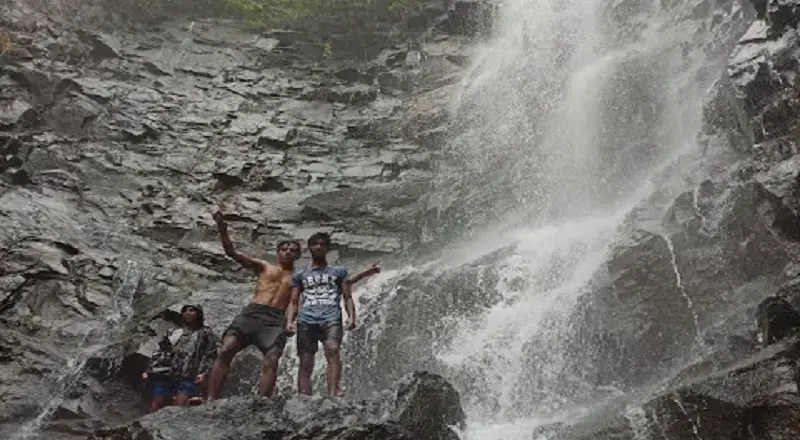
- Monsoon (June to September): For nature lovers, the monsoon transforms the Chandranath Hill into a lush, misty paradise. The entire hill is covered in varying shades of green, and small seasonal waterfalls spring up along the path. However, the stone steps can be slippery, and the view might be obscured by clouds. The experience of the temple shrouded in mist is incredibly ethereal and romantic.
- Summer (March to May): The afternoons can be quite hot and humid. If visiting during these months, it is best to reach the temple early in the morning (by 7:00 AM) or late in the evening to avoid the midday sun. This period also coincides with the annual Jatra, which is a great time to witness local culture.
For a truly unique experience, try to time your visit with a Full Moon night. Even if you cannot stay late into the night, the energy of the temple during the Purnima hours is considered exceptionally potent for meditation and prayer.
Timings, Entry Fee & Dress Code
To ensure a respectful and smooth visit, it is important to be aware of the temple's logistical details. The temple follows a strict schedule of rituals that have remained unchanged for decades.
- Timings: The temple is generally open from 5:30 AM to 8:30 PM daily. The morning 'Aarti' usually takes place around 6:30 AM, and the evening 'Aarti' is around 7:00 PM. During festivals like Mahashivratri, the temple remains open 24 hours.
- Entry Fee: There is no entry fee to visit the Chandreshwar Temple. It is a place of public worship open to everyone regardless of nationality or religion. Donations are voluntary and can be made at the temple office for the maintenance of the site.
- Dress Code: As with most traditional Goan temples, a modest dress code is expected. Men are encouraged to wear trousers or traditional dhotis (shorts are generally discouraged). Women should wear sarees, salwar kameez, or long skirts. Shoulders and knees should be covered. Avoid wearing revealing clothing or beachwear, as this is a sacred site.
- Footwear: You must remove your footwear before entering the main temple complex. There are designated areas to keep your shoes.
It is also worth noting that non-Hindus are generally allowed into the main hall (Sabhamandapa) but may be restricted from entering the innermost sanctum (Garbhagriha), depending on the specific rituals being performed at the time. Always look for signage or ask the resident priest if you are unsure.
How to Reach Chandreshwar Temple
Chandreshwar Temple is located in South Goa, approximately 15 kilometers from Margao, the commercial hub of the south. Reaching the temple is an adventure in itself, as the road winds through quaint Goan villages and dense forests.
- By Road: This is the most convenient way to reach the temple. You can hire a taxi or rent a scooter from Margao or the coastal areas like Colva or Palolem. From Margao, follow the road towards Quepem. At the village of Paroda, there is a clearly marked diversion that leads up the Chandranath Hill. The road to the top is well-paved but narrow and steep with several hairpin bends. Drive carefully, especially during the monsoons.
- By Rail: The nearest major railway station is Madgaon Junction (MAO). From the station, you can take a pre-paid taxi or a local bus to Quepem/Paroda and then hire a local rickshaw to take you to the temple.
- By Air: The Dabolim Airport is about 40 kilometers away, while the Manohar International Airport (Mopa) is significantly further (around 80-90 km). From Dabolim, a taxi ride will take approximately 1 hour and 15 minutes.
- Trekking: For the physically fit, there is an ancient pilgrim path consisting of stone steps starting from the base of the hill in Paroda. It takes about 30 to 45 minutes to climb. This route is highly recommended for those who want to experience the spiritual journey as pilgrims did in the past.
Parking is available near the temple entrance at the top of the hill. However, during major festivals, vehicles may be stopped at the base, and you might have to walk or take a shuttle if provided.
Things to Do
A visit to Chandreshwar Temple is not just about a quick prayer; there are several activities that can make your trip more enriching.
- Seek Blessings: Participate in the 'Aarti' or request the priest to perform a special 'Archana' (offering) in your name. The vibration of the Sanskrit chants in the small sanctum is a powerful experience.
- Meditate: Find a quiet corner in the temple courtyard or on the rocks overlooking the valley. The natural silence and the spiritual history of the site make it an excellent spot for meditation and mindfulness.
- Photography: Capture the stunning architecture of the Deepastambha and the breathtaking views of the South Goa landscape. The play of light and shadow on the ancient stone walls is a photographer’s delight.
- Visit the Bhutnath Shrine: Don't miss the smaller shrine dedicated to Bhutnath. It has a unique energy and is an integral part of the hill's spiritual ecosystem.
- Nature Walk: Explore the trails around the temple. The hill is home to various species of birds, butterflies, and unique flora. It’s a great spot for birdwatching in the early morning.
- Picnic: While you shouldn't eat inside the temple, the surrounding forested areas have spots where you can sit and enjoy a quiet snack while taking in the views. Just remember to carry your trash back with you.
Nearby Attractions
Since the temple is located in the heart of South Goa’s hinterland, you can combine your visit with several other interesting sites nearby.
- Chandor Village: Located just a few kilometers away, this was the ancient capital of the Bhojas and Kadambas. Visit the Menezes Braganza House, a 17th-century mansion that showcases the grandeur of colonial Goa.
- Quepem Town: Explore this quiet town known for the Palacio do Deao, an 18th-century mansion built by a Portuguese nobleman that features beautiful gardens and a blend of Hindu and Portuguese architecture.
- Paroda River: The Kushavati River flows nearby, and the banks offer scenic spots for relaxation. The river is also associated with ancient rock carvings at Pansaimol, which are about 30 minutes away and date back to the Neolithic period.
- Buddhists Caves of Rivona: Located about 15 km from the temple, these ancient caves are carved out of laterite and offer a glimpse into Goa's pre-Hindu and Buddhist past.
- Margao Market: On your way back, stop at the bustling Margao market to buy authentic Goan spices, sausages (chorizo), and local handicrafts.
Photography & Visitor Guidelines
To maintain the sanctity of the temple and ensure a pleasant experience for everyone, visitors are requested to follow these guidelines:
- Photography: Photography is generally permitted in the outer courtyard and of the temple's exterior. However, taking photos or videos inside the Garbhagriha (sanctum sanctorum) is strictly prohibited. Always ask for permission before photographing priests or devotees engaged in prayer.
- Silence: Maintain a low volume. The temple is a place of meditation and worship; loud conversations and music are disrespectful.
- Cleanliness: Chandranath Hill is an ecologically sensitive area. Do not litter. Ensure you bring back any plastic bottles or wrappers you carry.
- Monkeys: Like many hilltop temples in India, Chandreshwar has a resident population of macaques. Do not feed them, and keep your belongings (especially bags and spectacles) secure, as they can be quite mischievous.
- Respect Traditions: If you happen to visit during a ritual, stand aside and observe quietly. Do not interrupt the priests or the flow of the ceremony.
Where to Eat Nearby
Being a remote hilltop location, there are no major restaurants at the temple itself. However, you have several options in the vicinity:
- Local Tea Stalls: At the base of the hill in Paroda, you will find small stalls serving hot tea, coffee, and local snacks like Batata Vada and Samosas.
- Quepem Town: About 5-7 km away, Quepem has several small eateries serving authentic Goan Hindu 'Thalis' (fish or veg). Look for places like Hotel Sanman for a simple, delicious meal.
- Palacio do Deao: If you book in advance, you can enjoy a sophisticated Indo-Portuguese lunch in the gardens of this historic mansion in Quepem. It is a premium experience and highly recommended.
- Margao: For a wider variety of cuisines, head back to Margao. Martins Corner (a bit further away) or local favorites like Ritz Classic offer excellent Goan seafood.
Always carry a bottle of water with you, especially if you plan to climb the steps, as the ascent can be dehydrating.
Accommodation Nearby
Most visitors visit Chandreshwar Temple as a day trip from the coastal areas. However, if you wish to stay closer to the spiritual heart of South Goa, consider these options:
- Heritage Stays in Chandor: There are a few boutique homestays in Chandor that offer a chance to live in renovated ancestral houses, providing a deep dive into Goan history.
- Guesthouses in Margao: Margao has a range of budget and mid-range hotels. It serves as an excellent base for exploring the inland temples and the southern beaches.
- South Goa Beach Resorts: If you prefer luxury, the resorts in Varca, Cavelossim, or Benaulim are about 30-45 minutes away by car. You can enjoy the beach and take a morning drive to the temple.
- Eco-Stays: There are a few eco-resorts located towards the Netravali Wildlife Sanctuary (about 45 minutes away) that offer a more rustic, nature-focused accommodation experience.
Travel Tips
To make the most of your visit to the Chandreshwar Temple, keep these practical tips in mind:
- Start Early: Aim to reach the temple by 8:00 AM. The air is cool, the light is perfect for photos, and you will avoid the afternoon heat.
- Footwear: Wear comfortable walking shoes for the climb. If you are driving to the top, slip-ons are convenient as you will need to remove them frequently.
- Hydration: Carry at least one liter of water per person. There are no shops at the very top of the hill.
- First Aid: Carry basic first aid, especially if trekking, as the stone steps can be uneven.
- Language: While Konkani is the local language, most people understand and speak basic English and Hindi. A "Namaskar" goes a long way in building rapport with the locals.
- Respect the Priests: The priests are the custodians of the temple’s traditions. Be polite and follow their instructions regarding where to sit or stand during ceremonies.
Conclusion
The Chandreshwar Temple is more than just a religious site; it is a bridge to Goa’s ancient soul. It stands as a testament to a time when kings sought divine guidance from the hills and when the rhythm of life was dictated by the phases of the moon. In the modern world, where Goa is often equated with fleeting pleasures, Chandreshwar offers something permanent and profound—a sense of peace that only comes from being in a place where nature and divinity have coexisted for millennia.
Whether you are standing on the ramparts of the hill looking out over the vast Goan landscape, or sitting in the cool shadows of the granite sanctum listening to the rhythmic chanting of the priests, the temple leaves an indelible mark on your spirit. It is a reminder of the rich cultural heritage of the Bhoja and Kadamba dynasties and the enduring power of faith. A visit to this sacred hilltop is not just a journey through the winding roads of South Goa, but a journey inward, offering a moment of stillness in an ever-changing world. Make sure to include the Chandreshwar Temple in your Goan itinerary to experience the true, mystical essence of this beautiful state.