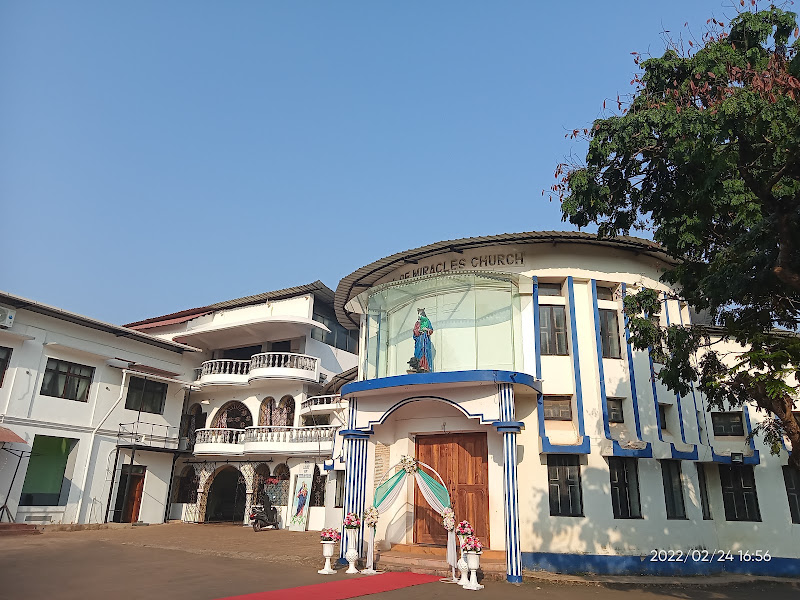
Our Lady of Miracles Church

Our Lady of Miracles Church

4.8 1,840 Verified
Church North Goa

Quick Navigation

Explore sections of this guide

Overview of Our Lady of Miracles Church

Nestled in the bustling heart of Mapusa, the commercial nerve center of North Goa, stands the majestic Our Lady of Miracles Church, locally known as Milagres Church. This sacred edifice is not merely a place of worship but a profound symbol of Goa’s unique syncretic culture, where the lines between different faiths blur into a unified expression of devotion. For a traveler exploring the hinterlands and the spiritual landscape of Goa, the Milagres Church offers a serene sanctuary away from the neon lights of the coastal belt.

The church is dedicated to Our Lady of Miracles (Nossa Senhora de Milagres) and is celebrated throughout the state for its historical depth and the miraculous powers attributed to the presiding deity. As you approach the church, the first thing that strikes you is its commanding presence atop a slight elevation, overlooking the busy streets of Mapusa. The whitewashed facade, a hallmark of Goan ecclesiastical architecture, gleams under the tropical sun, inviting pilgrims and tourists alike to witness its quiet grandeur. Unlike the more tourist-heavy basilicas of Old Goa, the Our Lady of Miracles Church retains a deeply local, community-centric atmosphere, making it an essential stop for anyone seeking an authentic Goan spiritual experience.

What makes this church truly extraordinary is its role as a bridge between the Christian and Hindu communities of Goa. It is perhaps the most prominent example of communal harmony in the region, centered around a legendary connection with a local Hindu goddess. This cultural intersection defines the very soul of the church, drawing thousands of devotees from various religious backgrounds, especially during its annual feast. Whether you are an architecture enthusiast, a history buff, or a spiritual seeker, the Our Lady of Miracles Church provides a rich tapestry of narratives that reflect the complex and beautiful identity of Bardez, the northern province of Goa.

History & Religious Significance

The history of Our Lady of Miracles Church is as dramatic as it is ancient. The original structure was commissioned by the Portuguese and built in 1594, during the peak of the colonial missionary era in the Bardez taluka. The church was established on the site of an ancient Hindu temple, a common practice during the early years of Portuguese rule as they sought to replace local religious centers with Christian ones. However, the history of this specific site took a unique turn over the centuries.

The initial 16th-century building was a modest structure compared to what we see today. In 1838, the church underwent a massive reconstruction after the original building was severely damaged by a fire. The current structure reflects the architectural sensibilities of the mid-19th century, blending traditional Portuguese styles with local influences. Throughout the colonial period, the church served as the primary parish for the growing Catholic population of Mapusa, which was evolving into a significant trading hub.

The true religious significance of the church, however, lies in its legendary association with the Lairai Devi Temple in Shirgao. According to local folklore, the Goddess Lairai and Our Lady of Miracles (Milagres Saibinn) are considered sisters. The legend speaks of seven sisters and one brother who arrived in Goa from across the sea. While six of the sisters remained Hindu goddesses (Lairai, Mahamaya, Kelbai, Monai, Advait, and Shitala), one sister—Milagres—converted to Christianity. Despite the difference in faith, the bond between the sisters is believed to remain unbroken.

This legend is not just a story; it is lived out through rituals. Every year, during the feast of Our Lady of Miracles, the devotees of Goddess Lairai send a pot of jasmine oil to the church to be used for the lamp of the Virgin Mary. In return, the church sends a gift to the Lairai temple during its annual Zatra (festival). This reciprocal relationship is a cornerstone of Goan "In-depth" history, showcasing a level of inter-religious respect that has survived centuries of political and social change. The church thus stands as a monument to the resilience of local traditions and the shared spiritual heritage of the Goan people.

Architecture of Our Lady of Miracles Church

The architecture of Our Lady of Miracles Church is a classic example of the Neo-Roman style that flourished in Goa during the later Portuguese period. While it lacks the excessive ornamentation of the Baroque churches in Old Goa, it possesses a refined elegance that is both welcoming and imposing. The church features a symmetrical facade with two sturdy bell towers flanking a central gable. These towers are capped with pyramidal roofs, a common feature in Goan church design that provides a sense of verticality and balance.

The facade is divided into several tiers by horizontal cornices, with the central portal featuring a rounded arch. Above the main entrance, you will find a large choir window that allows natural light to flood the interiors. The use of laterite stone, the local volcanic rock of Goa, as the primary building material is evident in the thick walls, which are plastered with lime and painted a brilliant white. This white color is not just aesthetic; it serves a functional purpose by reflecting the intense tropical heat.

Stepping inside, the interior of the church is a vast, single-nave hall that leads the eye toward the magnificent high altar. The reredos (the decorative screen behind the altar) is a masterpiece of gilded woodcarving. It features intricate motifs of vines, flowers, and angels, framing the central statue of Our Lady of Miracles. The altar is designed in the Rococo style, characterized by its playful curves and elaborate gilding. The side altars, dedicated to various saints, are equally impressive, showcasing the craftsmanship of local Goan artisans who were trained by European masters but infused their work with indigenous sensibilities.

One of the most striking features of the interior is the pulpit, located on the left side of the nave. Carved from dark wood and adorned with gold leaf, it stands as a testament to the importance of oratory in the Catholic tradition. The flooring consists of traditional patterned tiles, and the high vaulted ceiling adds to the acoustic resonance of the space, making the choir’s hymns during Sunday mass a truly ethereal experience. The overall architectural language of the church is one of "simplicity meets splendor," reflecting the dual nature of Mapusa as both a humble market town and a significant religious center.

Main Deity / Spiritual Importance

The presiding deity of the church is Our Lady of Miracles, a title for the Virgin Mary that emphasizes her role as a compassionate intercessor and a performer of divine wonders. To the local Catholic population, she is Milagres Saibinn, a motherly figure who protects the town of Mapusa and its inhabitants. The statue of the Virgin Mary, dressed in fine silks and adorned with jewelry, occupies the central position on the high altar, radiating a sense of peace and maternal grace.

The spiritual importance of the deity extends far beyond the Catholic community. Our Lady of Miracles is widely revered by the Hindu community of Goa as well, who often refer to her as the "sister" of their local goddesses. This dual identity makes her a unique figure in the Goan pantheon. Devotees believe that she has the power to heal the sick, grant children to the childless, and bring prosperity to businesses. It is common to see people of all faiths standing side-by-side in the church, offering prayers and seeking her blessings.

The spiritual atmosphere inside the church is palpable. Unlike the more formal atmosphere of European cathedrals, the devotions here are deeply personal and emotional. People often bring votive offerings—small wax figures representing parts of the body (like a leg, a hand, or a heart) that they wish to be healed. This practice, known as "promessa," is a significant part of the local spiritual culture. The act of lighting a candle or offering oil at the feet of Milagres Saibinn is considered a powerful way to connect with the divine. For the people of Mapusa, the church is the spiritual heart of their city, a place where they bring their sorrows, their hopes, and their gratitude.

Festivals & Celebrations

The Feast of Our Lady of Miracles is the most significant event in the church’s calendar and one of the most important religious festivals in North Goa. It is celebrated on the sixteenth day after Easter, usually falling in late April or early May. The feast is not just a one-day event but a multi-day celebration that transforms the entire town of Mapusa into a vibrant hub of activity.

The highlight of the feast is the Oil Pouring Ritual. In a tradition that dates back centuries, thousands of devotees, particularly Hindus, queue up to pour coconut oil over the statue of Our Lady of Miracles. This ritual is a direct manifestation of the "sisterhood" legend between the Virgin Mary and Goddess Lairai. The oil is believed to have medicinal and protective properties. The sight of thousands of people, regardless of their caste or creed, participating in this Catholic feast with such Hindu-influenced fervor is a powerful testament to Goa's integrated social fabric.

Beyond the religious rituals, the feast is accompanied by a massive fair (locally called a 'festa'). The streets surrounding the church are lined with hundreds of stalls selling everything from traditional Goan sweets like Khaje (ginger-infused jaggery sticks) and Ladu to copperware, furniture, and clothing. The air is thick with the aroma of roasted gram, choris pao (Goan sausage bread), and the sounds of brass bands playing traditional Konkani tunes. It is a time for family reunions, where Goans living abroad or in other parts of India return to their ancestral home in Mapusa to pay their respects to the Saibinn and enjoy the festive spirit.

Best Time to Visit

To experience Our Lady of Miracles Church in its full glory, the best time to visit is during the annual feast (16 days after Easter). This usually occurs in April or May. While the weather can be quite warm and humid during this period, the cultural richness and the vibrant energy of the feast are unparalleled. Witnessing the oil-pouring ceremony is a once-in-a-lifetime experience that offers deep insight into Goan culture.

For those who prefer a more tranquil and contemplative visit, the winter months from November to February are ideal. During this time, the weather in Goa is pleasant, with cool breezes and clear skies. The church is less crowded, allowing you to appreciate the architecture and the quiet spirituality of the interiors without the hustle and bustle of the festival. Visiting during the morning hours (between 8:00 AM and 10:00 AM) is recommended, as the soft morning light beautifully illuminates the facade and the interior altars.

The monsoon season (June to September) offers a different kind of charm. The surrounding landscape turns a lush, vibrant green, and the white church stands out dramatically against the dark, rain-laden clouds. However, be prepared for heavy downpours, which might make exploring the nearby Mapusa market a bit challenging. If you are interested in the liturgical life of the church, visiting during Christmas or Holy Week is also a great option, as the church is beautifully decorated and the services are conducted with great solemnity and musical accompaniment.

Timings, Entry Fee & Dress Code

The Our Lady of Miracles Church is an active place of worship, and visitors are expected to follow specific guidelines to maintain the sanctity of the site. The church is generally open to the public daily from 7:00 AM to 12:30 PM and again from 4:00 PM to 7:00 PM. These timings may vary slightly on Sundays or during special feast days when multiple masses are held.

  • Mass Timings: On weekdays, masses are usually held at 6:30 AM and 7:15 AM. On Sundays, there are multiple masses, often starting as early as 6:00 AM, with the main high mass around 8:00 AM or 9:00 AM. Masses are primarily conducted in Konkani, though English masses are also available at specific times.
  • Entry Fee: There is no entry fee to visit the church. It is open to people of all faiths and backgrounds. Donations for the upkeep of the church are always welcome but never mandatory.
  • Dress Code: As with all religious sites in Goa, a modest dress code is strictly enforced. Both men and women should ensure that their shoulders and knees are covered. Avoid wearing sleeveless tops, short skirts, or beachwear. It is a sign of respect to remove your hat or sunglasses upon entering the church. While footwear is generally allowed inside the main hall, some people choose to leave theirs at the entrance as a mark of humility.

How to Reach Our Lady of Miracles Church

Located in the heart of Mapusa, the church is one of the most accessible landmarks in North Goa. Mapusa serves as a major transportation hub, making it easy to reach from various parts of the state.

  • By Bus: The Mapusa Bus Stand is just a short walk (about 10-15 minutes) or a quick rickshaw ride away from the church. Regular buses run from Panjim (the capital city), Calangute, Baga, Anjuna, and Vagator. The "shuttle" buses from Panjim are a fast and economical way to reach Mapusa.
  • By Taxi/Auto-Rickshaw: Taxis and auto-rickshaws are readily available throughout North Goa. If you are staying in the coastal belt of Calangute or Candolim, a taxi ride to the church will take approximately 20-30 minutes, depending on traffic. Auto-rickshaws are a great way to navigate the narrow streets of Mapusa town.
  • By Scooter/Car: Many tourists prefer to rent a scooter or a self-drive car. The church is well-marked on Google Maps. There is limited parking available near the church entrance, so it is advisable to park in the designated municipal parking areas in Mapusa and walk the rest of the way, especially on market days.
  • By Train: The nearest railway station is Thivim, located about 10 kilometers from Mapusa. From Thivim, you can take a taxi or a local bus to reach the church in about 20 minutes.

Things to Do

While the primary purpose of visiting Our Lady of Miracles Church is spiritual, there are several things you can do to enrich your visit:

  • Attend a Konkani Mass: Even if you don't understand the language, attending a mass allows you to experience the local culture and the beautiful choral music that is a hallmark of Goan Catholicism. The devotion of the locals is deeply moving.
  • Observe the Architecture: Take the time to walk around the exterior and interior. Note the intricate carvings on the pulpit, the gilded details of the high altar, and the heavy laterite walls that have stood the test of time.
  • Light a Candle: Join the locals in the simple yet profound act of lighting a candle at the side altars. It is a moment of quiet reflection and a way to participate in the spiritual life of the church.
  • Interact with Locals: Goans are known for their warmth and hospitality. If you visit during a non-service time, you might find a local parishioner or a sacristan who can share stories about the church’s history or the "sisterhood" legend.
  • Visit the Parish Office: If you are interested in the administrative or social work of the church, a quick visit to the parish office can provide information about the community services and events the church organizes.
  • Explore the Church Grounds: The area around the church offers a great vantage point to look down upon the Mapusa market area. It is a good spot for some quiet observation of the town's daily rhythm.

Nearby Attractions

Mapusa is more than just the church; it is a gateway to several other fascinating sites in North Goa. Combining your visit to the church with these nearby attractions makes for a perfect day trip:

  • Mapusa Friday Market: This is arguably the most famous attraction in the town. Every Friday, the streets around the church and the municipal market explode with color and activity. Farmers from all over Bardez come to sell fresh produce, spices, local sausages (chorizo), pottery, and traditional textiles. It is the best place to experience the authentic "Goan bazaar" atmosphere.
  • Shri Bodgeshwar Temple: Located just a few kilometers from the church, this temple is dedicated to Lord Bodgeshwar, the guardian deity of Mapusa. Like the Milagres Church, this temple is a major spiritual center and hosts a massive fair in December/January. The walk between the church and the temple offers a glimpse into the suburban life of Mapusa.
  • St. Jerome’s Church: Another historical church in Mapusa, located near the market. It is known for its beautiful altars and its historical significance in the region.
  • Assagao Village: Known as the "Village of Flowers," Assagao is a short drive from Mapusa. It is famous for its well-preserved Portuguese-style mansions, boutique cafes, and a more bohemian, laid-back vibe compared to the coastal towns.
  • Aldona Village: For those who want to see the quintessential Goan countryside, Aldona is a must-visit. It features the stunning St. Thomas Church and the scenic Corjuem Fort.
  • Khorjuem Fort: A small but picturesque inland fort that offers panoramic views of the Mapusa river and the surrounding lush greenery.

Photography & Visitor Guidelines

To ensure a respectful visit and to capture the best memories, please adhere to the following guidelines:

  • Interior Photography: Photography is generally prohibited inside the church during mass or other religious services. Even during non-service hours, it is polite to ask for permission from the sacristan or a church official before taking photos of the high altar. If you do take photos, ensure your flash is turned off to avoid disturbing those in prayer.
  • Exterior Photography: The exterior of the church, with its white facade and twin towers, is a fantastic subject for photography. The best light for exterior shots is in the early morning or late afternoon.
  • Respect the Silence: The church is a place of prayer. Even if there is no service going on, maintain a low voice and avoid making unnecessary noise. Turn your mobile phone to silent mode before entering.
  • No Food or Drink: Consuming food or beverages inside the church premises is strictly forbidden.
  • Be Mindful of Rituals: If you happen to visit during a wedding, funeral, or a special feast ritual, keep a respectful distance and do not interrupt the proceedings for photos or questions.
  • Footwear: While not always mandatory to remove footwear inside Goan churches, look at what the locals are doing. If you see a pile of shoes at the entrance, it is best to follow suit.

Where to Eat Nearby

Mapusa is a culinary delight, offering a range of options from traditional Goan eateries to modern cafes. After your visit to the church, you can explore these local favorites:

  • Hotel Sanman: A legendary spot in Mapusa, famous for its authentic Goan Fish Thali. It is a no-frills place where the focus is entirely on the quality of the seafood and the traditional spices.
  • Cafe Tato: Located near the municipal market, this is the go-to place for a traditional Goan breakfast. Try the Patal Bhaji (dried peas curry) with Pao (local bread) and a cup of strong tea.
  • Starlight: A popular choice for those looking for a mix of Goan, North Indian, and Chinese cuisine. It has a relaxed atmosphere and is great for families.
  • The Verandah (Assagao): If you are looking for something more upscale, head to nearby Assagao. This restaurant offers a sophisticated take on Goan and Mediterranean flavors in a beautiful heritage setting.
  • Local Market Snacks: If you are visiting on a Friday, don't miss the chance to try street food in the market. Look for stalls selling Mirchi Bajji (chili fritters), Samosas, and the sweet Bibinca or Dodol.
  • Bawri: Another gem in the Assagao-Mapusa belt, offering high-end Indian cuisine in a stunningly designed space.

Accommodation Nearby

While most tourists stay at the beaches, staying in or near Mapusa offers a more local experience and easy access to the church and the market.

  • Heritage Stays in Assagao: Many old Portuguese mansions in Assagao (5-10 minutes from Mapusa) have been converted into boutique hotels and villas. These offer a luxurious and culturally immersive experience.
  • Budget Hotels in Mapusa: There are several budget-friendly hotels and guesthouses near the Mapusa Bus Stand and the market. These are ideal for travelers who want a central base for exploring North Goa.
  • Green Park: Located on the outskirts of Mapusa, this hotel offers comfortable rooms and a swimming pool, making it a good mid-range option.
  • Eco-Resorts in Moira: The nearby village of Moira has some beautiful eco-conscious stays and heritage homes that provide a peaceful retreat from the city's noise.
  • Beach Resorts: If you prefer the ocean, the beaches of Anjuna and Vagator are only 15-20 minutes away by car, offering everything from backpacker hostels to five-star resorts.

Travel Tips

To make the most of your trip to Our Lady of Miracles Church, keep these practical tips in mind:

  • Plan for the Market: If possible, schedule your visit for a Friday. You can visit the church in the morning when it's quiet and then spend the rest of the day exploring the incredible Friday Market.
  • Stay Hydrated: Mapusa can get quite hot, especially during the mid-day hours. Carry a water bottle and wear a hat or use an umbrella if you are walking between sites.
  • Carry Cash: While many shops in Mapusa now accept digital payments, the smaller stalls in the market and local rickshaws often prefer cash. There are plenty of ATMs near the church and the market area.
  • Learn a Few Konkani Words: A simple "Dev barem koru" (Thank you/God bless you) goes a long way in building rapport with the locals.
  • Be Wary of Traffic: Mapusa is a busy town with narrow streets. Be careful while walking, especially near the bus stand and market areas where traffic can be chaotic.
  • Respect Local Customs: Remember that you are in a deeply religious and traditional part of Goa. Be mindful of your actions and dress to ensure you don't inadvertently cause offense.
  • Check Feast Dates: If you are planning your trip around the feast, check the exact date beforehand, as it changes every year based on the Easter calendar.

Conclusion

The Our Lady of Miracles Church in Mapusa is far more than just a historical monument or a religious site; it is a living testament to the soul of Goa. In its white walls and gilded altars, one finds a narrative of colonial history, architectural evolution, and, most importantly, a profound sense of communal unity. The legend of the sisters—one Christian and six Hindu—serves as a beautiful metaphor for the Goan identity, where different traditions don't just coexist but actively nourish one another.

Visiting this church offers a chance to step away from the stereotypical "sun, sand, and sea" image of Goa and delve into its spiritual and cultural heart. Whether you are witnessing the incredible spectacle of the oil-pouring ritual during the feast or sitting in silent meditation on a quiet Tuesday morning, the Milagres Church leaves an indelible mark on your spirit. It reminds us that miracles, in their truest sense, are found in the moments of shared faith, mutual respect, and the quiet beauty of a community coming together. As you leave the church and head back into the vibrant chaos of the Mapusa market, you carry with you a piece of Goa’s enduring peace and its miraculous ability to bridge the gap between the earthly and the divine.

Photo Gallery

Our Lady of Miracles Church Gallery Image

User Reviews

4.8
1840 Reviews
5
85%
4
10%
3
3%
2
1%
1
1%

Login to post a review

Join the community to share your spiritual experiences.

Login / Sign Up

Location Details

Address
Our Lady of Miracles Church, Mapusa, Goa 403507, India
Visiting Hours
All year round

Share Peace

Share this spiritual guide with your friends and family on WhatsApp!

Share Now

Nearest Beaches from Our Lady of Miracles Church

Nearest Forts from Our Lady of Miracles Church

Nearest Waterfalls from Our Lady of Miracles Church

Nearby Nightlife from Our Lady of Miracles Church