Explore sections of this guide
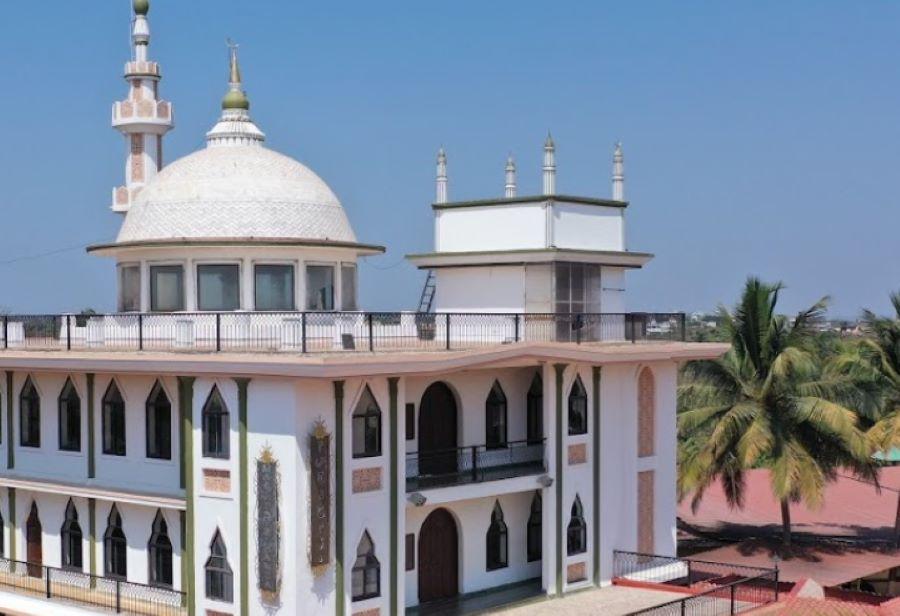
Perched majestically atop the serene Altinho hill in the heart of Panaji, the capital city of Goa, the Idgah Masjid stands as a profound symbol of the state’s rich multicultural fabric and enduring spiritual heritage. Unlike the more ornate and enclosed mosques found in other parts of India, an Idgah is traditionally an open-air enclosure used specifically for the Eid prayers—Eid-ul-Fitr and Eid-ul-Adha. The Idgah Masjid in Panaji is one of the most significant Islamic sites in North Goa, offering not just a place for communal worship but also a tranquil retreat from the bustling urban life below.
As a professional travel writer who has traversed the winding lanes of Goa, I find the Idgah Masjid to be one of the most evocative locations in the city. It is located in the upscale residential area of Altinho, which is home to the Bishop's Palace, the Chief Minister’s residence, and several government bungalows. This placement is symbolic of the communal harmony that defines Goa; here, the calls to prayer from the Idgah mingle with the church bells of the nearby Immaculate Conception Church and the temple bells of the Maruti Temple. The site provides a panoramic, breathtaking view of the Mandovi River, the red-tiled roofs of the Latin Quarter (Fontainhas), and the distant horizon of the Arabian Sea. For visitors, the Idgah Masjid is more than just a religious landmark; it is a viewpoint that captures the essence of Panaji’s historical and geographical beauty.
The atmosphere at the Idgah is one of profound stillness. Surrounded by lush greenery and ancient trees, the white-washed walls of the structure gleam under the tropical Goan sun. It serves as a reminder that Goa’s identity is a complex tapestry woven from Hindu, Christian, and Islamic threads. While the coastal stretches of Goa are famous for their beaches and nightlife, sites like the Idgah Masjid offer a deeper, more contemplative experience, inviting travelers to explore the spiritual soul of the "Pearl of the Orient."
The history of the Idgah Masjid in Panaji is deeply intertwined with the broader narrative of Islamic influence in Goa, which predates the Portuguese conquest. Long before the arrival of Afonso de Albuquerque in 1510, the region was under the rule of the Adil Shahi dynasty of Bijapur. Sultan Yusuf Adil Shah had established a significant presence in Goa, using it as a major port and a second capital. During this era, Islamic architecture and culture flourished across the islands of Tiswadi.
The Idgah Masjid is believed to have roots dating back to this pre-Portuguese period, or at the very least, it stands on ground that has been sacred to the Muslim community for centuries. Historically, Idgahs were built outside the main city walls to accommodate large congregations that could not fit into regular mosques. In the context of Panaji, the Altinho hill served as a strategic and spiritual high ground. When the Portuguese took control of Goa, many Islamic and Hindu structures were repurposed or destroyed; however, the persistent presence of the Idgah signifies the resilience of the local Muslim community.
In terms of religious significance, the Idgah is dedicated to the Salat al-Eid, the special prayers performed on the two major festivals of Islam. Because these prayers are sunnah (practiced by the Prophet Muhammad) to be performed in an open field, the Idgah Masjid is designed without a roof. This openness symbolizes the equality of all believers under the vastness of the heavens. In the Goan context, the Idgah serves as a unifying point for the "Goan Musalmans," a community that has lived in harmony with their neighbors for generations, adopting local customs while maintaining their core religious identity. The site is a testament to the "Gonyponn" (Goanness) that transcends religious boundaries, representing a history of coexistence that survived the colonial era and continues to thrive in modern India.
The architecture of the Idgah Masjid is a masterclass in minimalist Indo-Islamic design, adapted to the coastal climate of Goa. Unlike the grand, domed mosques of Delhi or Agra, this structure prioritizes function, climate, and the specific requirements of an open-air prayer ground. The most striking feature is the Qibla wall, which faces the direction of the Kaaba in Mecca. This wall is brilliantly white-washed, a common practice in Goan architecture to reflect the intense heat and humidity of the region.
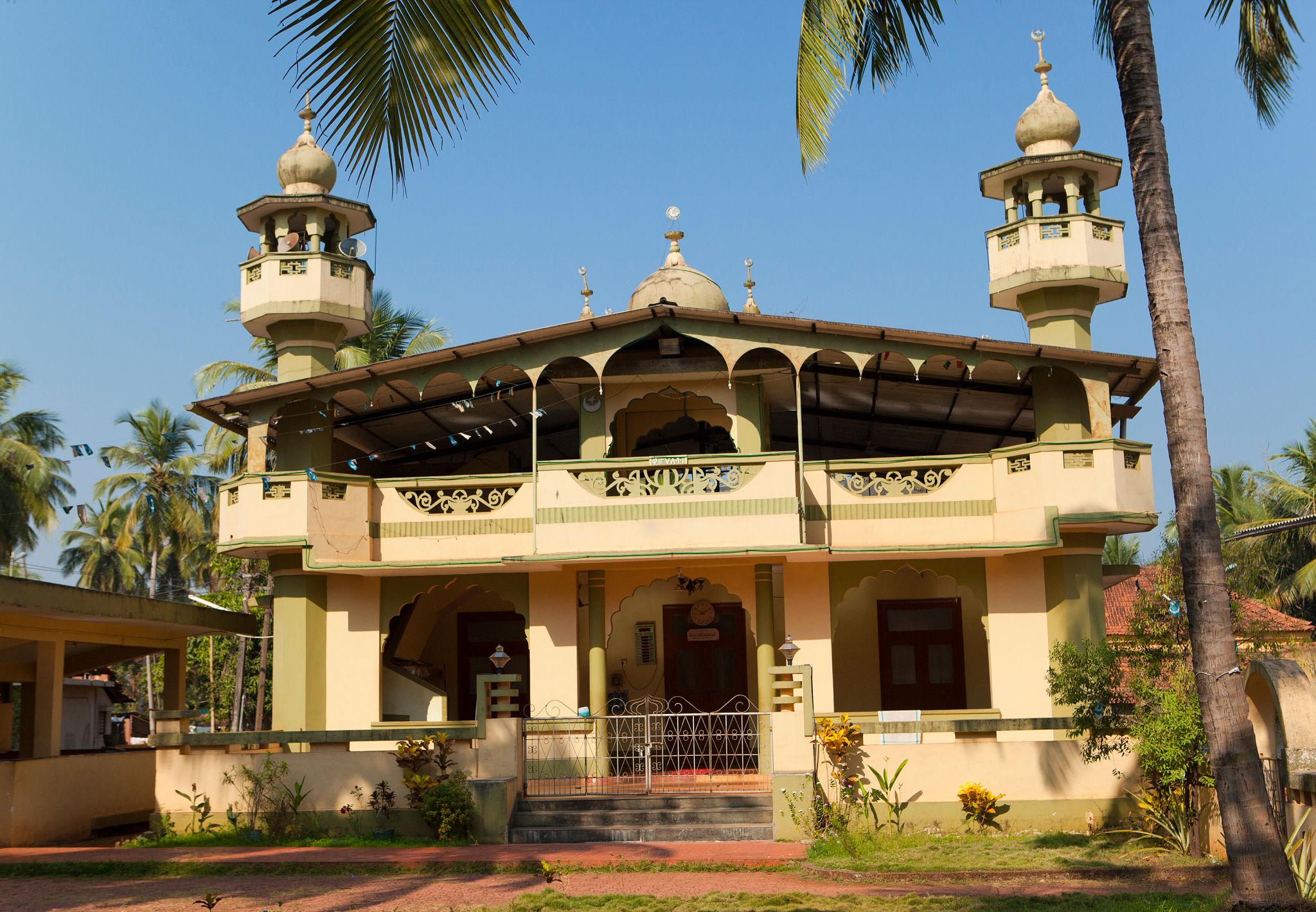
The wall is punctuated by several arched niches, known as mihrabs, and is flanked by slender minarets that rise into the sky. These minarets are not overly tall but are elegantly proportioned, featuring simple geometric patterns and traditional moldings. The use of laterite stone—the local red stone of Goa—in the foundation and core of the walls is a nod to regional building materials. The entire enclosure is paved with cool stone flooring, allowing hundreds of worshippers to stand in neat rows (saffs) during the morning prayers.

One of the unique architectural aspects of this Idgah is its integration with the natural topography of Altinho hill. The structure does not fight the landscape; instead, it sits comfortably within the foliage. There are no massive gateways or intimidating barriers, reflecting the welcoming nature of Goan spiritual sites. The lack of a roof is the most significant architectural choice, ensuring that the space is perpetually ventilated by the sea breezes blowing in from the Mandovi. The simplicity of the design directs the focus of the worshipper inward, away from worldly distractions, towards the spiritual. The clean lines, the contrast between the white walls and the blue sky, and the absence of ornate calligraphy create a Zen-like atmosphere that is rare in urban religious sites.
In Islam, there is no "deity" in the sense of an idol or image; the focus of worship is the strictly monotheistic concept of Allah. The Idgah Masjid is a space dedicated to the remembrance of the Divine through the act of Sajdah (prostration). The spiritual importance of this site lies in its role as a "Jami" or gathering place for the entire community. In Islamic tradition, the Idgah represents the "Great Assembly," where social hierarchies are dissolved, and the wealthy stand shoulder-to-shoulder with the poor.
For the Muslims of Panaji and surrounding areas like Ribandar and Chimbel, the Idgah Masjid is the pinnacle of their spiritual calendar. The act of walking up the Altinho hill to reach the Idgah is seen by many as a physical and spiritual ascent. The spiritual vibration of the place is heightened by its silence. Outside of the festival days, the Idgah is a place for Dhikr (remembrance) and quiet contemplation. Many locals visit the site just to sit in the peace of the morning, finding a sense of "Sakina" (divine tranquility) that is hard to find in the busy markets of Panaji below.
The spiritual importance is also tied to the concept of the Ummah (community). In a state like Goa, where the Muslim population is a minority, the Idgah serves as a vital anchor for cultural and religious identity. It is a place where the younger generation learns the traditions of their ancestors and where the community reaffirms its commitment to peace and brotherhood. The openness of the structure to the elements—the rain, the wind, and the sun—is spiritually symbolic of the believer's total submission to the will of God and the forces of nature.
The Idgah Masjid truly comes to life during the two most important festivals in the Islamic calendar: Eid-ul-Fitr and Eid-ul-Adha. These are the only times when the vast open-air enclosure is filled to capacity, creating a sea of white as men and children arrive in their finest traditional attire, often wearing embroidered kurtas and skullcaps (topis).
Beyond these two major events, the Idgah is also a focal point during Milad-un-Nabi (the Prophet's birthday). While the main celebrations might happen at local mosques, the Idgah remains a symbolic site for the community's history. During the festivals, the path leading up to Altinho is often lined with small vendors selling balloons and sweets, creating a festive atmosphere that involves the entire neighborhood. The sight of hundreds of people descending the hill after prayers, exchanging hugs and well-wishes, is one of the most heartwarming displays of communal harmony in Panaji.
To experience the Idgah Masjid in its full glory, the best time to visit is between November and February. During these winter months, the weather in Goa is pleasantly cool, making the walk up Altinho hill an enjoyable exercise rather than a humid chore. The morning air is crisp, and the visibility from the hilltop is at its peak, allowing for stunning views of the Mandovi River and the city of Panaji.
If you wish to witness the religious fervor, visiting during the mornings of Eid-ul-Fitr or Eid-ul-Adha is essential. However, please note that the site will be extremely crowded, and access for non-worshippers may be restricted during the actual prayer time to maintain the sanctity of the ritual. For those seeking peace and photography opportunities, a visit on a weekday morning around 7:30 AM to 9:00 AM is ideal. The light at this hour is soft, casting a beautiful glow on the white walls of the masjid.
The monsoon season (June to September) offers a different kind of beauty. The surrounding hillsides turn a vibrant emerald green, and the rain-washed white structure looks particularly striking against the dark monsoon clouds. However, since the Idgah is an open-air structure, you will need a sturdy umbrella, and the stone floors can become slippery. Avoid visiting in the late afternoon during the summer months (March to May), as the heat on the exposed hilltop can be quite intense.
Planning a visit to the Idgah Masjid requires an understanding of its unique nature as a prayer ground rather than a standard mosque with a permanent staff.
The Idgah Masjid is located in Altinho, Panaji, which is one of the most accessible areas of the city, though it requires an uphill climb. Here are the best ways to reach it:
The landmark to look for is the All India Radio station or the Bishop's House; the Idgah is located just a short walk from these points.
While the Idgah Masjid is a place of worship, it offers several experiences for the mindful traveler:
The location of the Idgah Masjid in Altinho makes it a perfect starting point for a day-long exploration of Panaji’s cultural heart:
To ensure a respectful visit to the Idgah Masjid, please adhere to these professional guidelines:
After your visit to the Idgah, you can indulge in some of Panaji's best culinary offerings:
If you wish to stay close to the spiritual and historical center of Panaji, consider these options:
As a seasoned traveler in Goa, here are my top tips for visiting the Idgah Masjid:
The Idgah Masjid of Panaji is a hidden gem that offers a different perspective on Goa—one that is rooted in history, spirituality, and communal peace. It stands as a silent witness to the centuries of change that have swept over the Altinho hill, from the days of the Adil Shahi Sultans to the modern era of independent India. Its minimalist architecture, breathtaking views, and serene atmosphere make it a must-visit for anyone looking to go beyond the typical tourist trail.
Whether you are a devout Muslim coming to offer prayers, a history buff tracing the footsteps of the Bijapur Sultanate, or simply a traveler seeking a quiet moment of reflection, the Idgah Masjid welcomes you. It is a place where the earth meets the sky, and where the diverse cultures of Goa find a common ground of beauty and tranquility. As you stand on the white-washed platform, looking out over the Mandovi River, you realize that the true magic of Goa lies in these quiet corners of faith and heritage.