Overview of Monte church
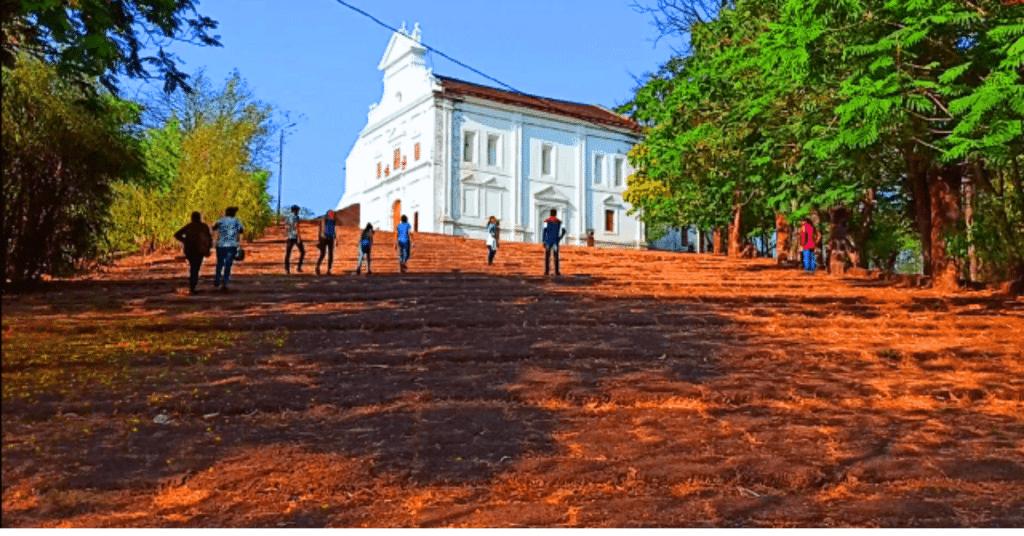
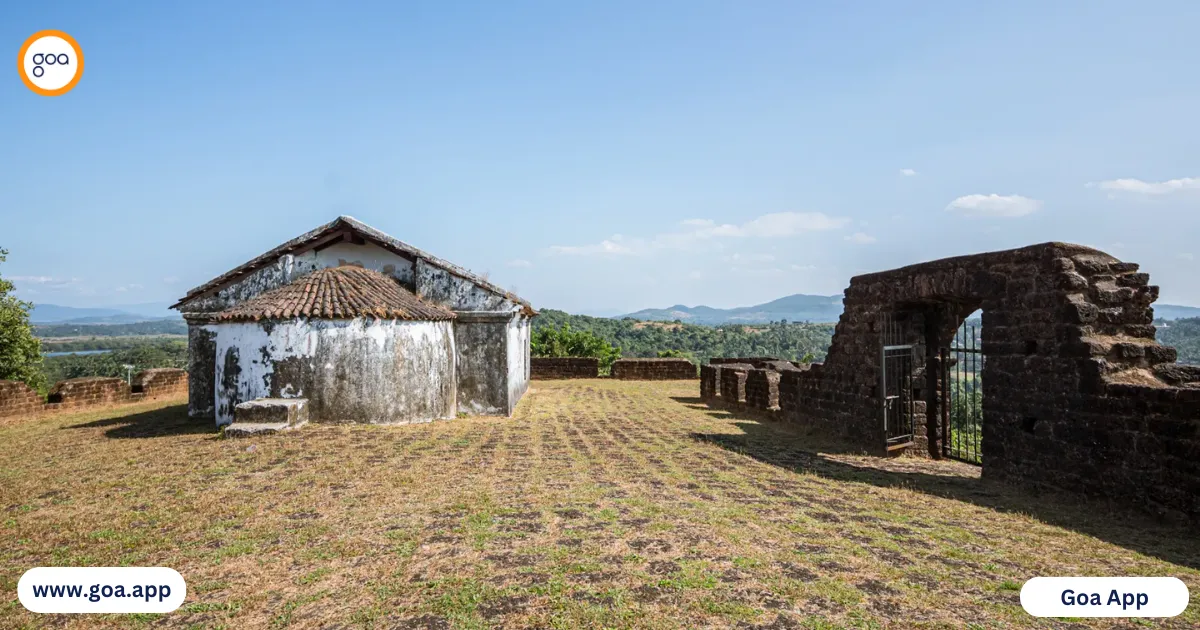
Perched majestically atop a lush, verdant hillock overlooking the historic city of Old Goa, the Capela da Nossa Senhora do Monte, popularly known as the Monte Church, stands as a silent sentinel to centuries of Goan history. While the more famous Basilica of Bom Jesus and the Se Cathedral draw thousands of pilgrims and tourists daily, the Monte Church offers a more contemplative, serene, and spiritually evocative experience. It is often described by locals and seasoned travelers as the "hidden crown" of the UNESCO World Heritage Site of Old Goa. The church is not merely a place of worship; it is a vantage point that offers arguably the most breathtaking panoramic view of the Mandovi River, the shimmering backwaters, the sprawling coconut groves, and the iconic white-washed towers of the surrounding churches that define the landscape of the "Rome of the East."
The journey to the Monte Church is as spiritual as the destination itself. A winding, narrow road leads visitors away from the bustling tourist hubs of the plains up toward the heavens. As you ascend, the air cools, the noise of the city fades into a gentle rustle of leaves, and the majestic white facade of the church slowly reveals itself against the azure Goan sky. For those who seek a deeper connection with Goa’s colonial past, away from the typical beach-centric itinerary, the Monte Church provides a profound sense of peace and historical weight. It is a site where the grandeur of 16th-century Portuguese ambition meets the tranquil beauty of the Konkan coast. Whether you are a history buff, an architecture enthusiast, or a spiritual seeker, the Monte Church promises a moment of stillness and a perspective on Goa that few other locations can match.
History & Religious Significance
The history of the Monte Church is inextricably linked to the very foundation of Portuguese rule in India. The origins of this sacred structure date back to the year 1510, making it one of the oldest Christian monuments in the region. According to historical records, the church was built by Afonso de Albuquerque, the legendary Portuguese general and the first Duke of Goa. After his initial attempt to capture Goa from the Adil Shahi dynasty failed, Albuquerque returned with a stronger fleet. During the fierce battle for the city, he made a solemn vow to the Virgin Mary that he would build a chapel in her honor on the highest point overlooking the city if he were granted victory.
Following the successful conquest of Goa on November 25, 1510, Albuquerque fulfilled his promise. The original structure was a simple, modest chapel, but over the subsequent decades, as the Portuguese empire flourished and Old Goa became a global hub of trade and Christianity, the chapel was expanded and rebuilt. The current structure largely dates back to the late 16th century, specifically around 1570, reflecting the architectural evolution of the period. Historically, the Monte Church served a strategic purpose as well; its elevated position allowed the Portuguese to monitor the Mandovi River and the surrounding plains for any approaching enemy forces, blending religious devotion with military vigilance.
From a religious standpoint, the Monte Church is dedicated to Our Lady of the Mount. In Catholic tradition, the "Mount" often refers to Mount Zion or the Mount of Olives, symbolizing a place of encounter between the divine and the human. In the context of Goa, this church represented the victory of Christianity in the East and served as a beacon of faith for sailors arriving from the arduous journey across the Arabian Sea. For centuries, it has been a site of pilgrimage for local Catholics, particularly during times of hardship or when seeking special intercession. The historical significance is further heightened by the fact that the church has survived the decline of Old Goa as a capital city, the abandonment of many surrounding structures due to plague and disease, and the eventual integration of Goa into the Indian Union in 1961.
Architecture of Monte church
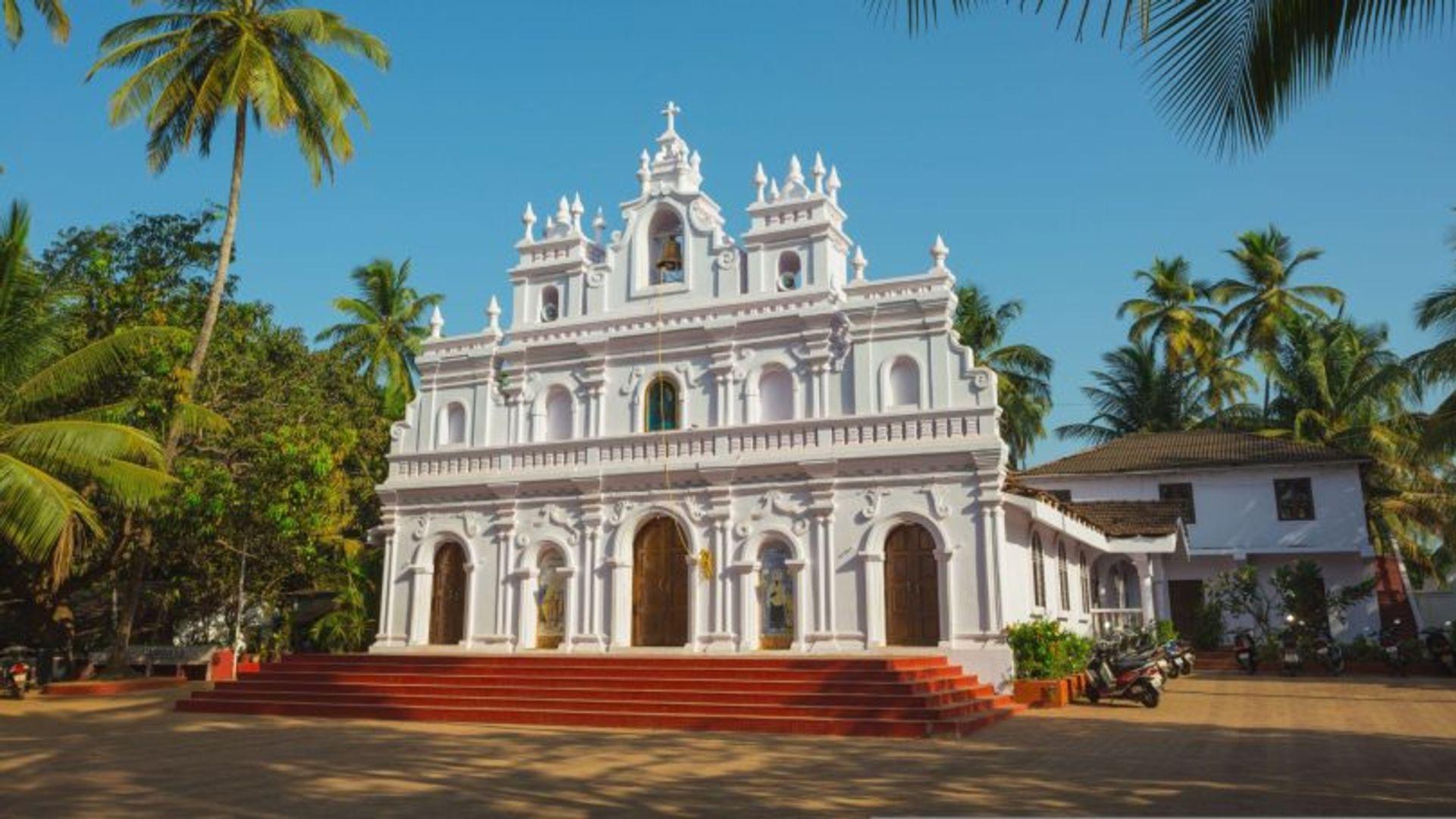
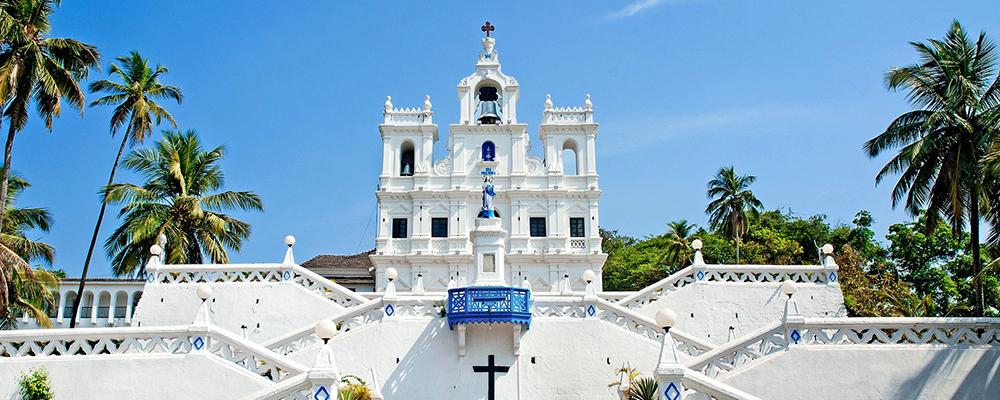
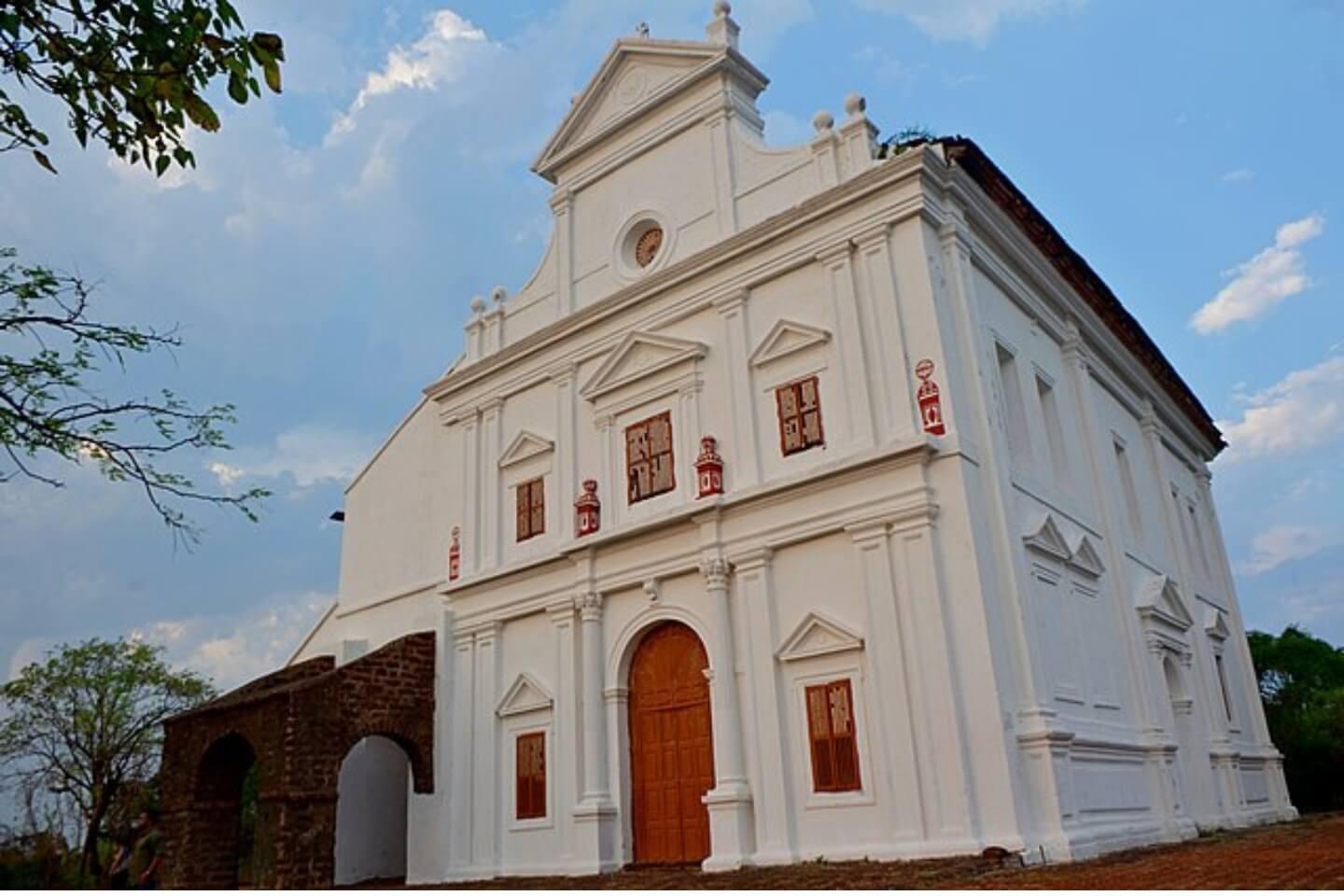
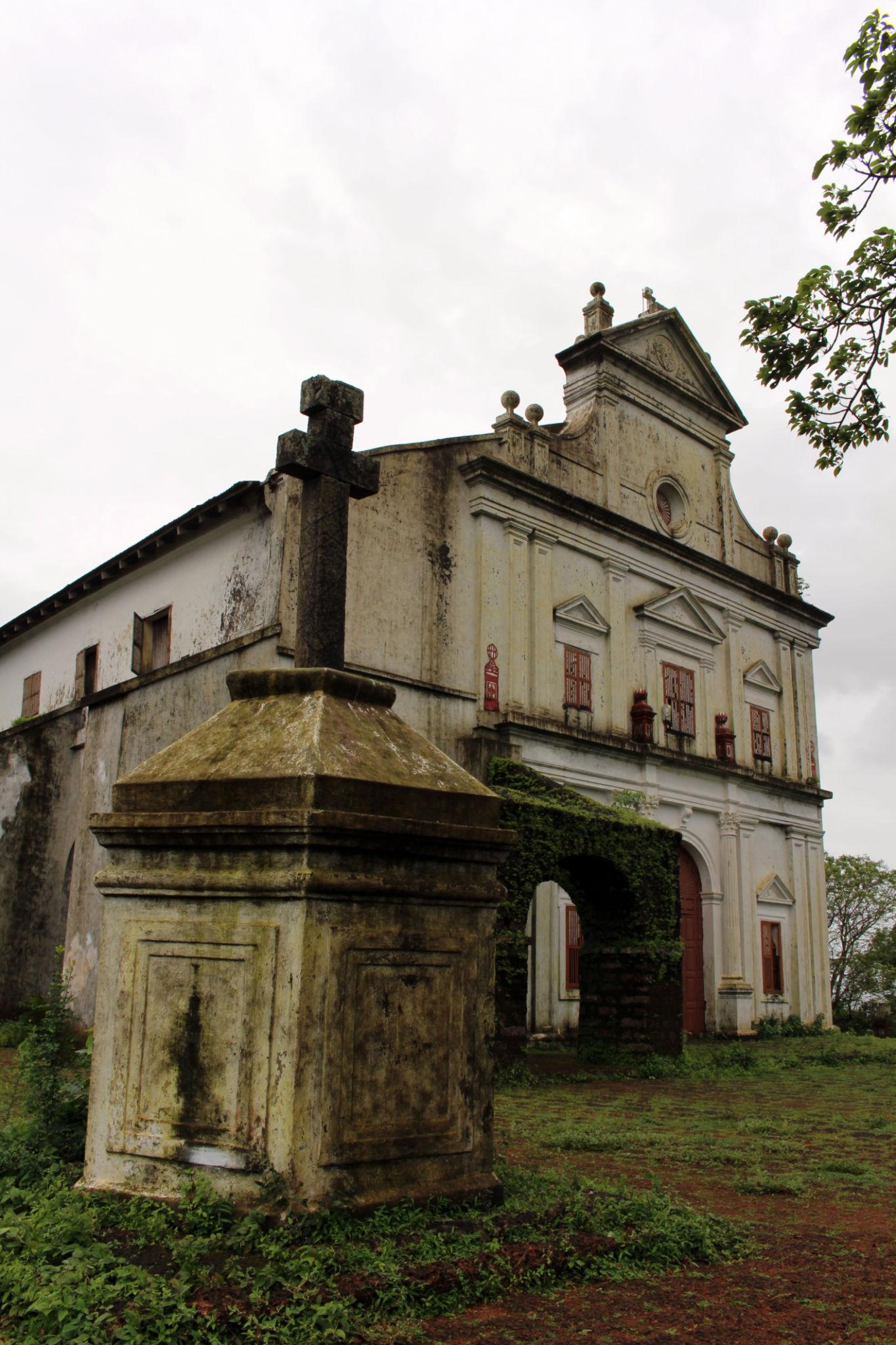
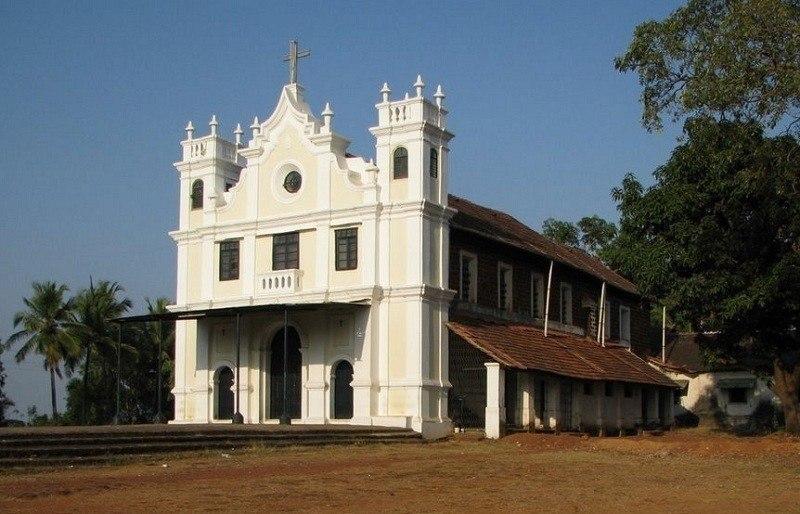
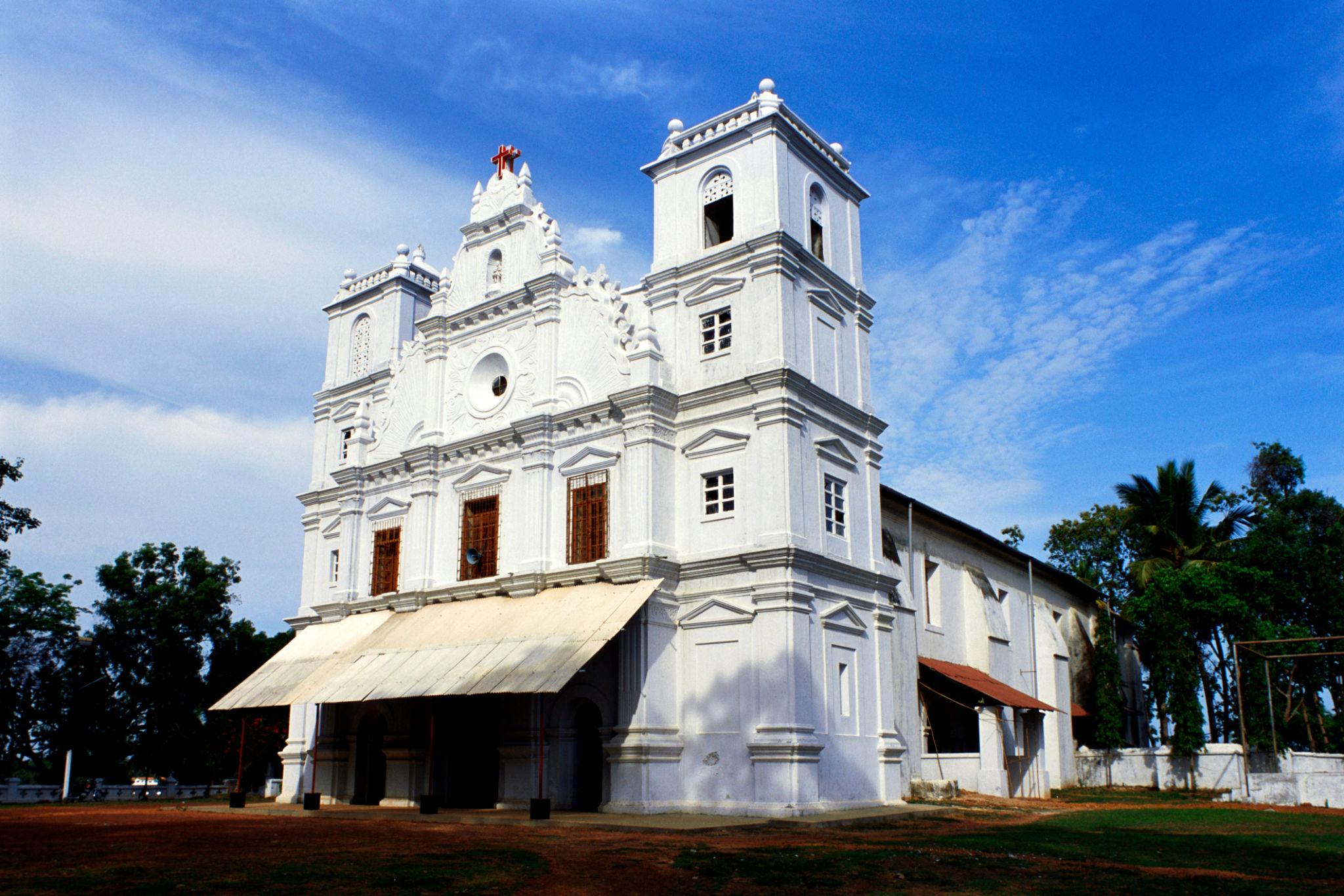
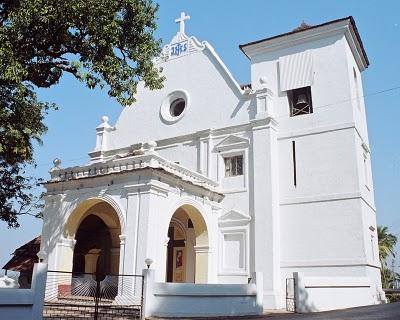
The architecture of the Monte Church is a masterful example of the Mannerist style, which was a transitional phase between the High Renaissance and the ornate Baroque period. Unlike the heavy ornamentation found in many other Goan churches, the Monte Church is characterized by its elegant simplicity, balanced proportions, and striking white exterior that reflects the tropical sun. The facade is divided into three distinct vertical bays, a hallmark of Portuguese colonial ecclesiastical design. The central bay is crowned with a triangular pediment, while the side bays are topped with simpler, clean lines that draw the eye upward toward the heavens.
The building material used is predominantly local laterite stone, a porous red volcanic rock found throughout the Konkan region. To protect the laterite from the heavy monsoon rains, the walls are covered in a thick layer of lime plaster, which is regularly whitewashed to maintain its pristine appearance. One of the most notable features of the exterior is the double-storeyed bell tower, which, though modest compared to the Se Cathedral’s "Golden Bell," possesses a rustic charm that fits the church's hilltop setting. The windows are narrow and strategically placed to allow for natural ventilation while keeping the interior cool during the sweltering Goan summers.
Stepping inside, the architecture shifts toward a more austere and contemplative atmosphere. The interior consists of a single, spacious nave with a vaulted ceiling. The main altar is a fine example of Goan woodcarving, featuring intricate motifs that blend European Christian iconography with subtle local artistic influences. The use of gold leaf on the reredos (the screen behind the altar) provides a stunning contrast to the simple, whitewashed interior walls. The floor is paved with granite and basalt slabs, some of which mark the final resting places of prominent Portuguese officials and clergy members from centuries past. The overall architectural effect is one of "grandeur through restraint," where the focus remains on the spiritual essence of the space rather than purely decorative excess.
Main Deity / Spiritual Importance
The primary deity honored at this site is Nossa Senhora do Monte (Our Lady of the Mount), a title for the Virgin Mary. In the spiritual landscape of Goa, Mary holds a central position as the "Mother of the East." The devotion to Our Lady of the Mount is deeply rooted in the idea of Mary as a protector and a guide. For the early Portuguese settlers, she was the "Star of the Sea" (Stella Maris) who had guided them to new lands, and for the local Goan converts, she became a figure of maternal compassion and intercession.
The spiritual importance of the Monte Church is amplified by its physical location. In many religious traditions, mountains and hills are considered "thin places" where the veil between the physical and spiritual worlds is at its thinnest. The ascent to the church is often viewed by pilgrims as a symbolic journey toward spiritual enlightenment, leaving behind the distractions of the material world below. The silence that envelops the church, broken only by the sound of the wind and the distant tolling of bells from the valley, creates an ideal environment for silent meditation and prayer.
Even for those who do not subscribe to the Catholic faith, the Monte Church holds significant spiritual weight as a place of universal peace. It is common to see people of various faiths sitting on the stone steps outside the church during sunset, absorbed in the beauty of the natural world. This intersection of natural beauty and historical sanctity makes the Monte Church a unique spiritual hub in Goa. It represents the enduring power of faith across centuries and the ability of a sacred space to offer solace to the weary traveler, regardless of their background.
Festivals & Celebrations
While the Monte Church is a place of quietude for most of the year, it comes alive during specific times with vibrant celebrations that reflect the unique Indo-Portuguese culture of Goa. The most significant religious event is the Feast of Our Lady of the Mount, celebrated annually on September 8th. This date coincides with the Nativity of the Blessed Virgin Mary. The feast is preceded by a nine-day novena, during which locals climb the hill to attend early morning masses. On the feast day itself, the church is decorated with fresh flowers, and a grand high mass is held, followed by a procession where the statue of Our Lady is carried around the church courtyard, accompanied by traditional brass bands and the singing of hymns in Konkani and Latin.
Perhaps the most famous cultural event associated with this location is the Monte Music Festival. Usually held in February, this four-day festival is a prestigious international event that brings together performers of Western classical and Indian classical music. The festival is organized by the Fundacao Oriente and the Archdiocese of Goa. The performances take place both inside the church and in the open-air courtyard. Imagine listening to a Bach cello suite or a Hindustani vocal recital as the sun sets over the Mandovi River, with the illuminated church as a backdrop. The acoustics of the ancient stone walls combined with the natural ambiance of the hilltop create a sensory experience that is truly world-class.
Additionally, the church is a focal point during the Lenten season. Traditional Goan "Motetos" (sacred songs) are sometimes performed here, echoing the penitential spirit of the season. During the Feast of St. Francis Xavier in December, while the main celebrations are at the Basilica below, many pilgrims make the trek up to the Monte Church to find a quiet space for reflection away from the massive crowds in the main square of Old Goa.
Best Time to Visit
To fully appreciate the beauty and spiritual aura of the Monte Church, timing is everything. The best time of year to visit is during the winter months, from November to February. During this period, the Goan weather is at its most pleasant, with clear blue skies, low humidity, and cool breezes, especially on the hilltop. This is also when the Monte Music Festival typically takes place, offering a unique cultural incentive for your visit.
If you prefer a more lush and dramatic atmosphere, the monsoon season (June to September) is a spectacular time to visit. The surrounding hills turn a brilliant shade of emerald green, and the mist rolling off the Mandovi River often envelopes the church, giving it an ethereal, otherworldly appearance. However, be prepared for heavy downpours and a slippery climb if you are walking. The feast day on September 8th is an excellent time for those who want to witness traditional Goan Catholic rituals.
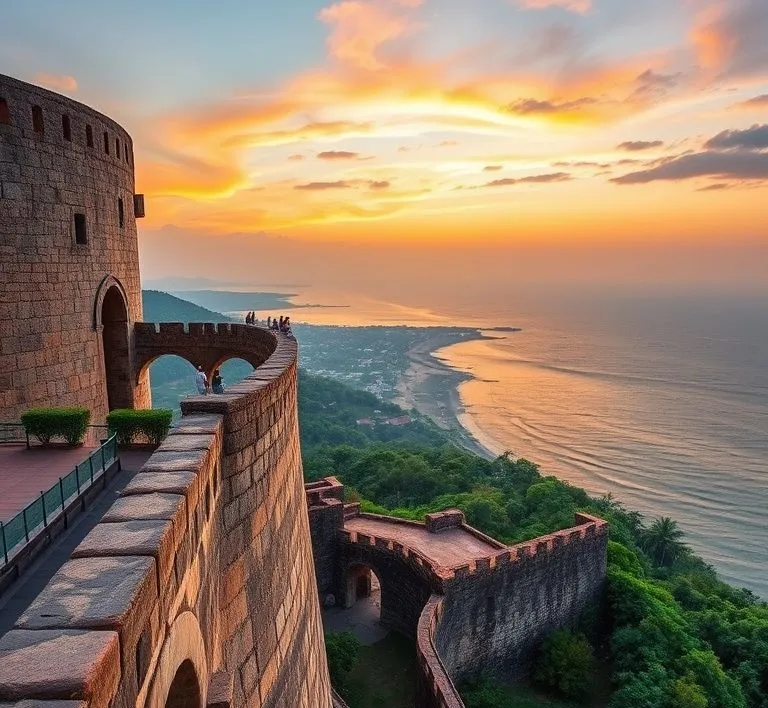
In terms of the best time of day, late afternoon is undoubtedly the winner. Arriving around 4:30 PM or 5:00 PM allows you to explore the church interior and then find a spot on the western wall or the steps to witness the sunset. The view from the Monte Church at sunset is legendary; as the sun dips below the horizon, the white facades of the Basilica of Bom Jesus and the Se Cathedral in the valley below catch the golden light, creating a scene that looks like a 17th-century oil painting. Morning visits (around 8:00 AM) are also recommended for those who want to experience the site in absolute solitude before the few tourists who know about this spot arrive.
Timings, Entry Fee & Dress Code
Visiting the Monte Church requires a bit of planning as it is not always open like the larger cathedrals in the valley. The general timings for the church are usually from 9:00 AM to 1:00 PM and from 3:00 PM to 6:00 PM. However, these times can be flexible depending on the presence of the caretaker or specific religious services. It is important to note that the gate leading to the church road is sometimes closed in the late evening for security reasons, so it is best to conclude your visit shortly after sunset.
There is no entry fee to visit the Monte Church. It remains a public place of worship and a historical monument open to all. However, donations for the upkeep and restoration of the church are always welcome and can be placed in the designated offering boxes inside the nave.
Regarding the dress code, visitors are expected to maintain the sanctity of the site. As with all religious places in Goa, modest attire is required. This means:
- Shoulders should be covered (no tank tops or sleeveless shirts).
- Dresses, skirts, or trousers should reach below the knee.
- Avoid wearing beachwear, transparent clothing, or outfits with offensive slogans.
- Hats and caps should be removed before entering the church building.
- While footwear is allowed inside the church, it is a sign of respect to walk quietly and avoid heavy, clacking shoes.
Maintaining silence inside the church is strictly enforced, especially if there are people praying. Photography is usually permitted, but the use of flash inside the church and tripod setups during prayer services may be restricted.
How to Reach Monte church
The Monte Church is located in Old Goa (Velha Goa), which is approximately 10 kilometers from the state capital, Panjim. Reaching the church can be an adventure in itself, as it is situated away from the main road that connects the various monuments of Old Goa.
- By Private Vehicle/Taxi: This is the most convenient way to reach the site. From the main square of Old Goa (near the Basilica of Bom Jesus), follow the signs pointing toward the "Church of Our Lady of the Mount." The road is a narrow, winding ascent. Most taxi and auto-rickshaw drivers know the location well. If you are driving yourself, be cautious as the road can be steep and has a few sharp turns.
- By Two-Wheeler: Renting a scooter or bike is a popular way to explore Goa. Riding up to the Monte Church is quite pleasant, offering great views along the way. There is a small parking area near the church gate.
- On Foot: For the physically fit and those who enjoy a bit of a hike, walking up from the base of the hill is a rewarding experience. The walk takes about 15 to 20 minutes from the St. Augustine Tower area. It is a great way to soak in the natural beauty of the hillside, but it is not recommended during the heat of the midday sun.
- By Public Transport: You can take a bus from Panjim to Old Goa. Once you get off at the main bus stop in Old Goa, you will either need to hire a local rickshaw to take you up the hill or proceed on foot, as public buses do not go up to the church.
For those coming from North Goa beach belts like Calangute or Baga, it is a roughly 45-minute to 1-hour drive. From South Goa (Margao), it takes about 45 minutes via the NH66.
Things to Do
While the Monte Church is a relatively small site compared to the sprawling complexes nearby, there are several enriching activities you can engage in during your visit:
- Panoramic Photography: The primary "activity" here is capturing the stunning views. From the church courtyard, you can see the Mandovi River snaking through the landscape, the islands of Divar and Chorao, and the entire architectural ensemble of Old Goa. It is a paradise for landscape photographers.
- Architectural Appreciation: Spend time observing the subtle details of the Mannerist facade. Look for the transition between the laterite base and the lime plaster. Inside, examine the intricate woodcarvings of the main altar and the side altars dedicated to various saints.
- Meditation and Reflection: The church is one of the quietest spots in Old Goa. Take a few minutes to sit inside the cool nave or on the stone benches outside to reflect. The atmosphere is incredibly conducive to mindfulness.
- Bird Watching: The hillside leading up to the church is home to various species of tropical birds. If you visit early in the morning, you might spot sunbirds, kingfishers, and even the occasional peacock in the surrounding forest.
- Picnicking: While loud parties are not allowed, many locals enjoy a quiet, respectful picnic on the grassy slopes near the church, especially during the cooler months. It is a great spot to enjoy the breeze and the view.
- Attend the Monte Music Festival: If your visit coincides with February, attending a concert here is a "bucket list" experience. The blend of world-class music and historical ambiance is unforgettable.
Nearby Attractions
The Monte Church is situated in the heart of the Old Goa Heritage Zone, meaning you are just minutes away from some of the most significant historical sites in India. You can easily combine a visit to the Monte Church with the following attractions:
- St. Augustine Tower: Located just at the base of the hill, this 46-meter high tower is all that remains of the once-grand Church of the Augustinians. It is a hauntingly beautiful ruin and a must-visit.
- Basilica of Bom Jesus: A short drive or walk away, this world-famous church houses the sacred relics of St. Francis Xavier and is a masterpiece of Baroque architecture.
- Se Cathedral: One of the largest churches in Asia, known for its massive "Golden Bell" and its stunning Tuscan-style exterior.
- Church of St. Cajetan: Built to resemble St. Peter's Basilica in Rome, this church is famous for its beautiful Corinthian columns and white facade.
- Archaeological Museum of Goa: Housed in the convent portion of the Church of St. Francis of Assisi, this museum contains a vast collection of artifacts from the Portuguese era, including portraits of viceroys and ancient Hindu sculptures found in the region.
- Viceroy’s Arch: The traditional gateway to the city of Old Goa for arriving Portuguese officials, located near the Mandovi River bank.
- Divar Island: You can take a short ferry ride from the Old Goa jetty to Divar Island for a glimpse into traditional Goan village life and stunning paddy fields.
Photography & Visitor Guidelines
To ensure a respectful and enjoyable visit for everyone, please adhere to the following guidelines:
- Respect the Sanctity: Remember that this is primarily a place of worship. Keep your voice low and avoid running or making loud noises.
- Photography Etiquette: While photography is encouraged for the views, be sensitive when taking photos inside the church. Avoid using flash if there are people praying. If a mass is in progress, refrain from taking photos of the altar or the congregation.
- Drone Usage: Using drones at the Monte Church and throughout the Old Goa heritage site usually requires prior permission from the Archaeological Survey of India (ASI) and local authorities. Do not fly drones without a permit.
- Littering: The Monte Church is a pristine site. Please carry all your trash back with you. There are limited dustbins on the hilltop, so being proactive about your waste is essential.
- Safety on the Hill: The stone walls and edges around the church do not always have railings. Be very careful when posing for photos near the edges, especially during the monsoon when the stones can be slippery.
- No Smoking or Alcohol: Consuming alcohol or smoking on the church grounds is strictly prohibited and is considered highly disrespectful.
Where to Eat Nearby
Old Goa has several dining options ranging from quick snacks to sit-down meals. While there are no restaurants directly on the hill of the Monte Church, you will find plenty at the base:
- The Rasoda: A popular spot near the main church complex serving authentic North Indian and Rajasthani cuisine. It is known for its cleanliness and quick service.
- Cafe Tinto: Located within the vicinity of the heritage sites, this cafe offers a range of Goan snacks, sandwiches, and refreshing beverages, perfect for a quick break.
- Local Eateries: There are numerous small "shacks" and local stalls near the bus stand that serve traditional Goan fish thali, ros omelette, and snacks like samosas and batata vadas.
- Riverfront Restaurants: If you drive a bit further toward the Mandovi riverfront, you can find restaurants offering a more scenic dining experience with views of the water.
- Panjim: Since Panjim is only 15-20 minutes away, many visitors choose to head back to the city for a wider variety of high-end dining options like Viva Panjim (for authentic Goan-Portuguese food) or The Black Sheep Bistro.
Accommodation Nearby
Most visitors stay in the North Goa beach belt or Panjim, but if you wish to stay close to the historical heart of Goa, there are several options:
- Old Goa Residency: Operated by the Goa Tourism Development Corporation (GTDC), this is located right in the heart of the heritage complex. It offers basic, clean, and affordable rooms.
- The Postcard Velha: For those seeking luxury, this boutique hotel is located on a private estate in Old Goa. It offers a high-end, serene experience that mirrors the tranquility of the Monte Church.
- Pousada Guest Houses: There are several heritage homes and small guest houses in the nearby villages of Ribandar and Corlim that offer a more local, authentic stay.
- Panjim Hotels: Staying in Panjim (e.g., Fortune Miramar or Vivanta Goa) provides the best balance of proximity to Old Goa and access to city amenities.
Travel Tips
- Hydration is Key: Even though the hilltop is breezy, the Goan sun can be intense. Carry a bottle of water with you, especially if you plan to walk up the hill.
- Footwear: Wear comfortable walking shoes. The terrain around the church is uneven, and the climb involves some physical effort.
- Timing for Sunsets: Check the local sunset time and aim to be at the church at least 30 minutes before. This gives you time to find the best viewing spot.
- Combine with St. Augustine: Make sure to visit the St. Augustine ruins on your way up or down; they are historically linked and equally fascinating.
- Local Knowledge: If you see the caretaker, a small tip and a friendly "hello" might get you some interesting local stories about the church's history.
- Transport Planning: If you take a taxi up, it is often better to ask the driver to wait for you, as finding a return taxi from the hilltop can be difficult.
Conclusion
The Monte Church is far more than just another historical building in the crowded itinerary of a Goan holiday. It is a place of profound atmospheric beauty, where the layers of Goa’s complex history—from the conquest by Albuquerque to the modern-day musical celebrations—are visible in every weathered stone and whitewashed arch. It offers a rare opportunity to step back in time and witness the grandeur of Old Goa from a perspective that the early settlers themselves once cherished. Whether you are moved by its religious significance, captivated by its Mannerist architecture, or simply enchanted by the sunset reflecting off the Mandovi River, a visit to the Monte Church is a soul-stirring experience. It remains a testament to the enduring spirit of Goa—a place where the past is never truly gone, but continues to breathe through the silence of its hills and the beauty of its sacred spaces. No trip to the heritage heart of Goa is complete without making the ascent to this magnificent mount.