Bhagwati Devi Temple

Bhagwati Devi Temple

4.8 1,595 Verified
Temple North Goa

Quick Navigation

Explore sections of this guide

Overview of Bhagwati Devi Temple

Nestled in the serene and verdant landscape of the Pernem Taluka in North Goa, the Bhagwati Devi Temple stands as a magnificent sentinel of faith, history, and Goan heritage. Unlike the bustling, sun-drenched beaches that most tourists associate with the state, Pernem offers a more contemplative, traditional, and spiritually enriched atmosphere. The Bhagwati Devi Temple is the crowning jewel of this region, dedicated to the formidable yet compassionate Goddess Bhagwati, an incarnation of Goddess Parvati. This ancient shrine is not merely a place of worship but a cultural cornerstone for the local community, representing centuries of resilience and devotion.

The temple complex is situated approximately 28 kilometers from the capital city of Panaji and is easily accessible from the northern beach belt of Arambol and Morjim. As you approach the temple, the first thing that strikes you is the overwhelming sense of peace. The air is thick with the scent of incense and the distant ringing of temple bells, creating an aura of divine tranquility. For the traveler seeking to understand the "real" Goa—the one that exists beyond the shacks and parties—a visit to the Bhagwati Devi Temple is an essential pilgrimage. It offers a deep dive into the Konkan spiritual landscape, where the traditions of the Maratha influence and indigenous Goan customs blend seamlessly.

The temple is particularly famous for its ancient origins, believed to be over 500 years old. It is one of the few temples in Goa that managed to survive the harsh period of the Portuguese Inquisition relatively unscathed, primarily because Pernem was part of the "Novas Conquistas" (New Conquests) and came under Portuguese rule much later than the central districts. This historical quirk has allowed the temple to preserve its original architectural nuances and traditional rituals that might have otherwise been lost to time. Today, it serves as a beacon for devotees from across the Konkan belt, who flock here to seek the blessings of the Mother Goddess.

History & Religious Significance

The history of the Bhagwati Devi Temple in Pernem is deeply intertwined with the socio-political shifts of the Konkan region. Historians and local elders suggest that the temple has stood its ground for at least five centuries. During the 16th and 17th centuries, when the Portuguese were systematically dismantling Hindu structures in the "Velhas Conquistas" (Old Conquests) areas like Tiswadi and Salcete, the Pernem region remained under the control of local chieftains and the Maratha Empire for a longer duration. This provided a safe haven for the preservation of Vedic traditions and temple architecture.

The religious significance of the temple is rooted in the Shakti tradition of Hinduism. Goddess Bhagwati is worshipped here as the supreme creative power, the protector of the universe, and the destroyer of evil. The local legends speak of the Goddess as the guardian of the Pernem village, often referred to as the Gramadevi. It is believed that the Goddess provides protection to the villagers from natural calamities and spiritual disturbances. The temple is also significant because it houses deities that were relocated from other parts of Goa during the colonial era to prevent their desecration, making it a repository of Goan religious history.

Furthermore, the temple has strong historical ties to the Deshprabhu family, the local feudal lords of Pernem who served as the Viscounts of Pernem during the later Portuguese era. Their patronage helped maintain the temple's grandeur and ensured that the rituals were performed with Vedic precision. The intersection of royal patronage and grassroots devotion has given the Bhagwati Devi Temple a unique status in the Goan hierarchy of shrines. To visit this temple is to walk through a timeline of Goan survival, where faith acted as the ultimate shield against cultural erasure.

Architecture of Bhagwati Devi Temple

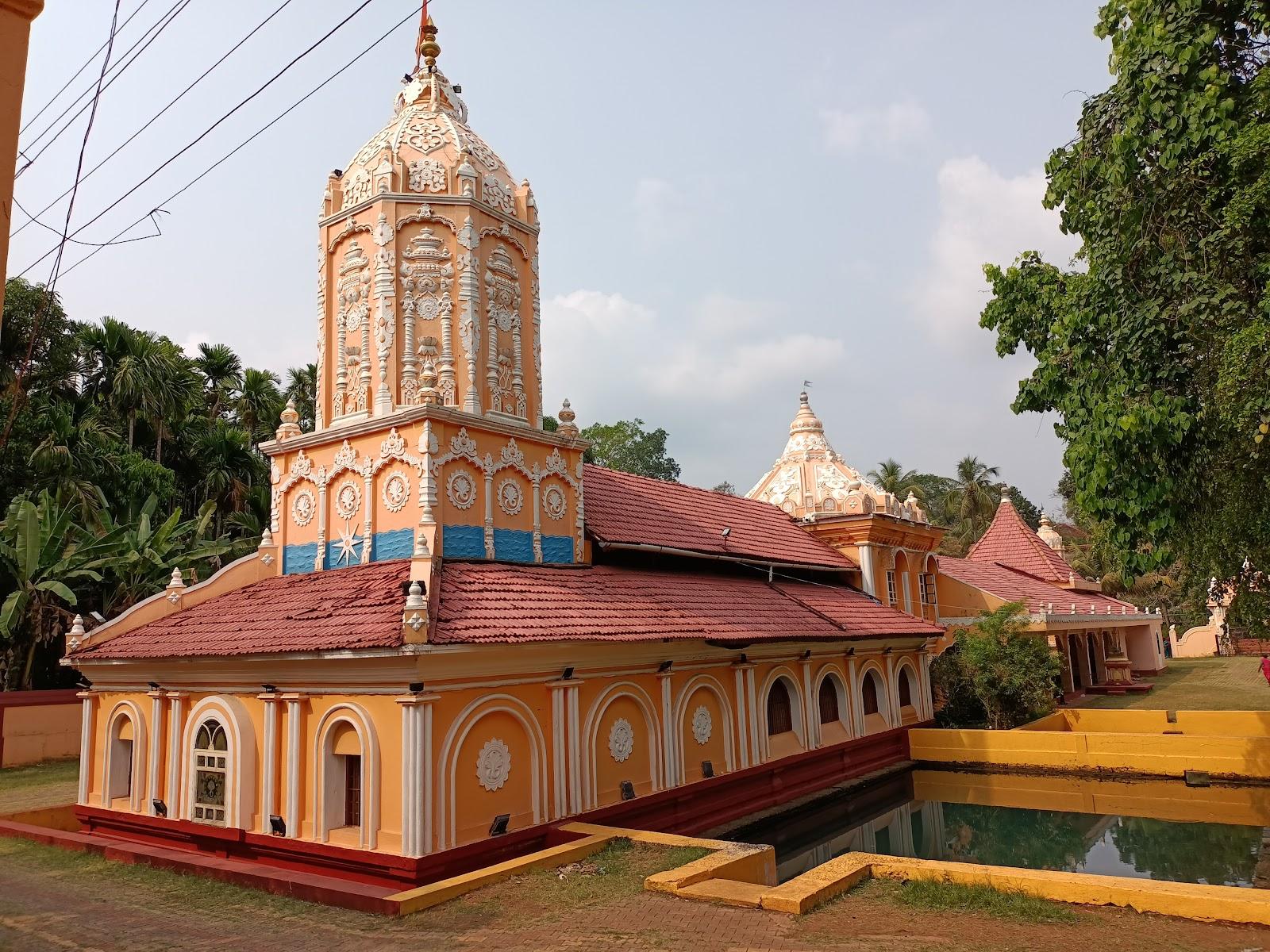
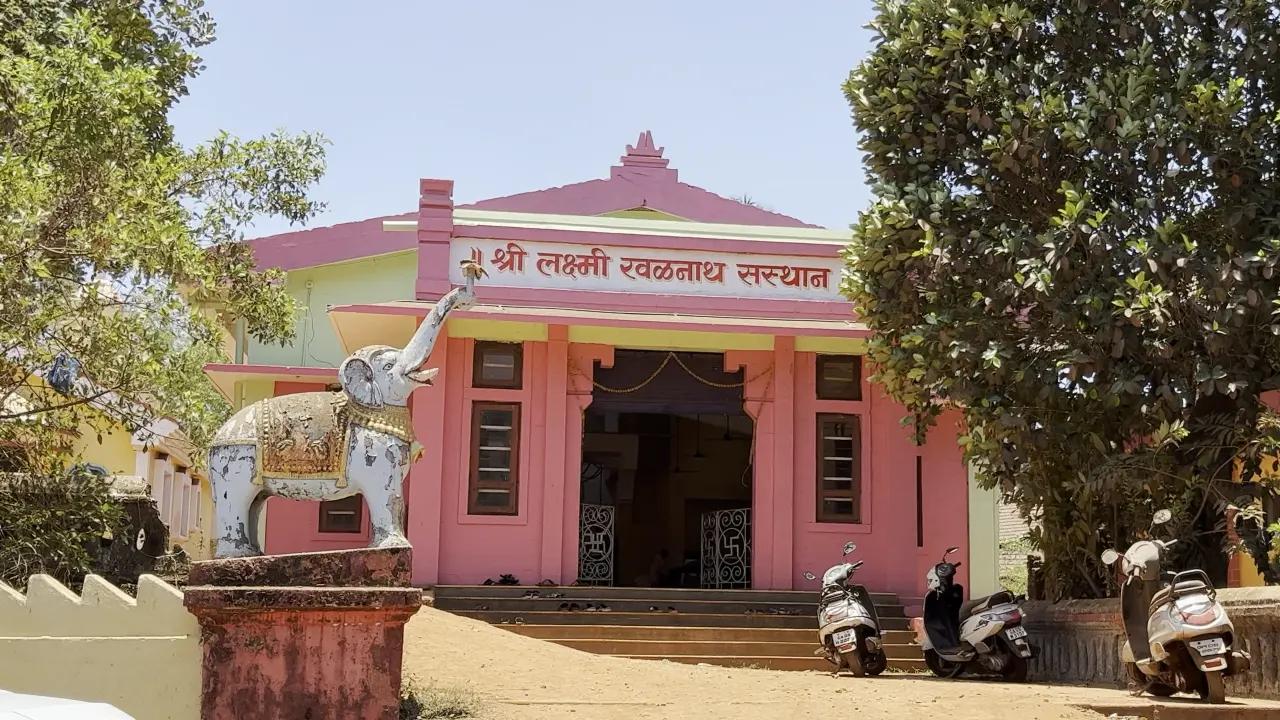
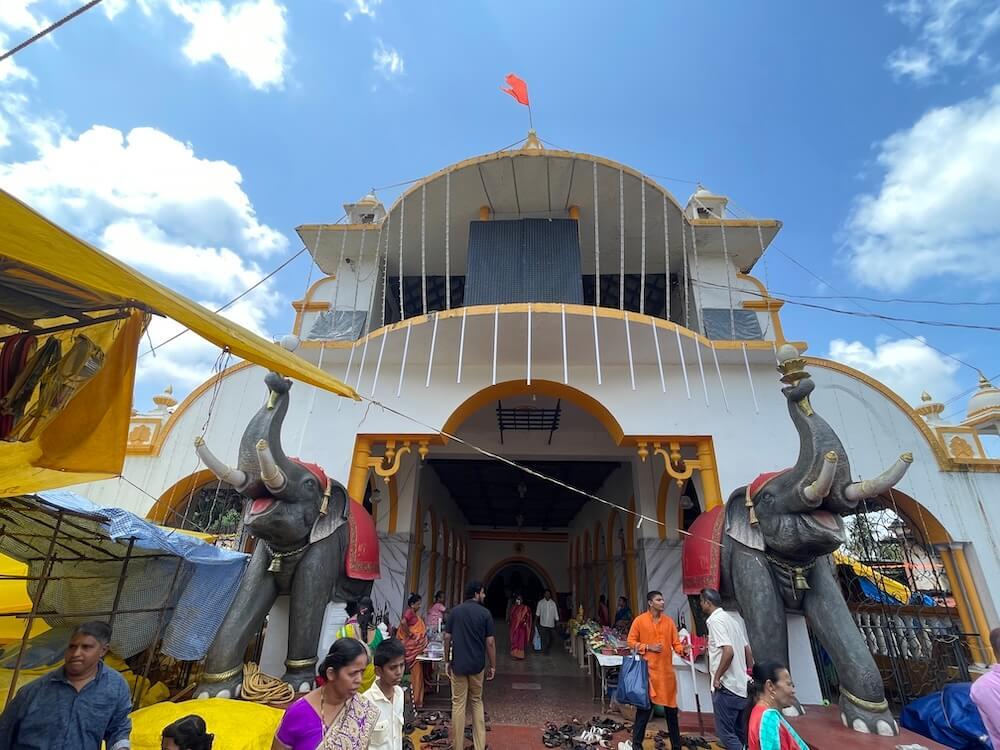
The architecture of the Bhagwati Devi Temple is a stunning example of the Goan-Maratha style, characterized by its simplicity, structural integrity, and unique aesthetic elements that distinguish it from the Dravidian or Nagara styles found elsewhere in India. Upon entering the premises, visitors are greeted by two massive, life-size statues of elephants carved from black stone. These elephants, standing guard at the main entrance, are a symbol of strength and royalty, and they set the tone for the architectural marvel that lies within.

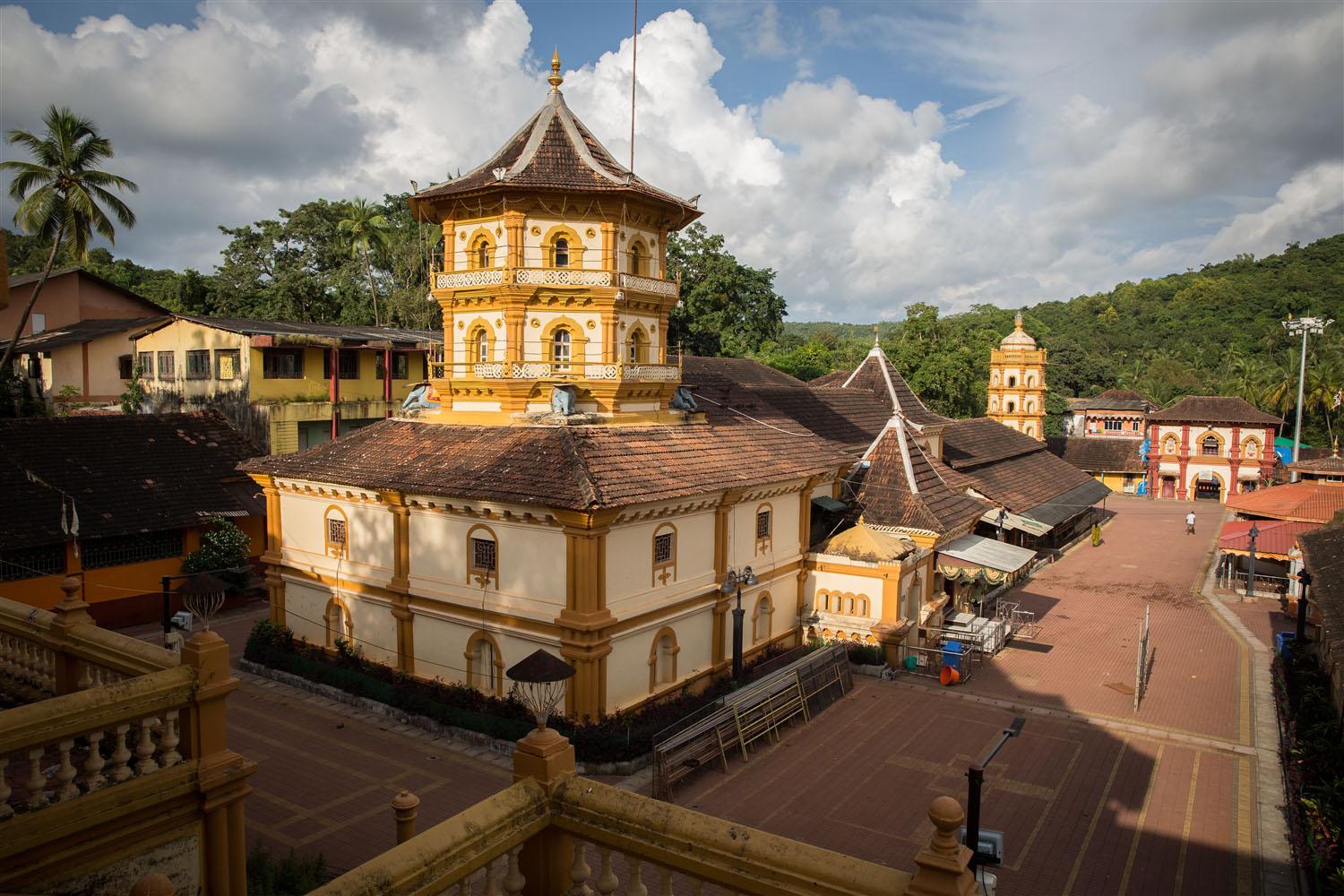
The most striking feature of the temple complex is the Deepastambha (the Tower of Light). This multi-storied octagonal tower is a classic element of Goan temple architecture. During festivals, hundreds of oil lamps are lit in the niches of this tower, creating a celestial glow that can be seen from a distance. The main temple structure features a sloping roof, designed to withstand the heavy monsoon rains of the Konkan coast. The roof is often covered with traditional red Mangalore tiles, which provide a rustic charm to the whitewashed walls of the temple.

Inside the temple, the Sabhamandapa (assembly hall) is supported by intricately carved wooden pillars. These carvings often depict scenes from the Puranas and various avatars of the Goddess. The ceiling of the Mandapa is a work of art in itself, featuring floral motifs and geometric patterns that reflect the local craftsmanship of the 16th century. The Garbhagriha (sanctum sanctorum) is where the deity resides. The entrance to the sanctum is often plated with silver or brass, featuring exquisite repoussé work. The overall layout follows the Panchayatana style, where the main deity is surrounded by four subsidiary shrines, creating a balanced and harmonious spiritual environment.

Main Deity / Spiritual Importance

The presiding deity of the temple is Goddess Bhagwati, an exceptionally beautiful and powerful form of the Divine Mother. The idol of the Goddess is carved from high-quality black basalt and is depicted in a standing posture. She is often adorned with rich silk sarees, gold ornaments, and fresh garlands of jasmine and marigolds, which are locally grown in the temple gardens. The Goddess is seen with multiple arms, each holding a symbolic weapon or a mudra (gesture), signifying her role as the protector of the righteous and the vanquisher of the ego.

The spiritual importance of Bhagwati Devi extends beyond the physical idol. For the local community, she is the Jagrut Devasthan, a "living" shrine where the deity is believed to actively respond to the prayers of her devotees. Many locals consult the Goddess before making significant life decisions, such as weddings, business ventures, or house construction. The practice of Kaul Prasad, where devotees seek a divine "yes" or "no" through the placement of flower petals on the idol, is still vibrantly practiced here, reflecting a deep-seated belief in the Goddess's direct intervention in human affairs.

Spiritually, the temple represents the feminine energy (Shakti) that balances the universe. Pilgrims believe that a visit to Bhagwati Devi helps in clearing obstacles and bringing mental peace. The vibration within the inner sanctum, enhanced by the chanting of Sanskrit shlokas and the rhythmic beating of the Ghumot (a traditional Goan percussion instrument), creates a meditative atmosphere. It is a place where the duality of the fierce warrior goddess and the nurturing mother goddess merges, providing a holistic spiritual experience for the seeker.

Festivals & Celebrations

The Bhagwati Devi Temple comes alive during its various festivals, which are celebrated with immense fervor and traditional Goan pomp. The most significant festival is Dussehra, which marks the victory of the Goddess over the demon Mahishasura. Unlike the celebrations in other parts of India, the Pernem Dussehra has a distinct local flavor. The entire village participates in a grand procession where the deity is carried in a beautifully decorated Palkhi (palanquin). The atmosphere is electric, with traditional music, folk dances, and the distribution of 'Apta' leaves, symbolizing gold.

Another major event is the Zatra (annual temple feast). This is a multi-day celebration that attracts thousands of devotees from all over Goa and neighboring Maharashtra. The temple complex is illuminated with thousands of lights, and the Deepastambha is fully lit, creating a breathtaking sight. During the Zatra, local artisans set up stalls selling everything from traditional sweets like Khaje (ginger-infused jaggery sticks) to handmade wooden toys and copper utensils. It is a time of communal bonding and spiritual renewal.

  • Shigmo: The Goan version of Holi, celebrated with colorful street processions and folk performances like Ghode Modni.
  • Navratri: Nine nights of intense devotion, where special pujas and 'Abhishekams' are performed for the Goddess.
  • Vasant Panchami: Marking the onset of spring, the temple is decorated with fresh green leaves and yellow flowers.

These festivals are not just religious events but are vital for the preservation of Goan folk culture. The performances of Dashavatara (folk theater depicting the ten incarnations of Vishnu) often take place in the temple courtyard during these times, keeping ancient storytelling traditions alive for the younger generation.

Best Time to Visit

The best time to visit the Bhagwati Devi Temple is undoubtedly during the winter months, from October to February. During this period, the weather in Goa is pleasant, with cool breezes and manageable humidity, making it ideal for exploring the temple's outdoor architecture and the surrounding Pernem countryside. This window also coincides with major festivals like Dussehra and the annual Zatra, allowing visitors to witness the temple in its full glory.

If you prefer a more quiet and contemplative experience, the monsoon season (June to September) offers a different kind of beauty. The Pernem taluka turns into a lush green paradise, and the sight of the white temple against the dark rain clouds and emerald fields is incredibly photogenic. However, be prepared for heavy downpours and high humidity. The summer months (March to May) can be quite hot, with temperatures soaring above 35°C, making it less comfortable for long visits, though the temple interiors remain surprisingly cool due to the thick stone walls.

For the daily visitor, the early morning hours (6:00 AM to 8:00 AM) are the most spiritual. Watching the sunrise over the Western Ghats in the distance while the morning 'Aarti' is performed is a soul-stirring experience. Alternatively, visiting during the evening 'Aarti' around sunset allows you to see the temple lamps being lit, providing a serene conclusion to your day.

Timings, Entry Fee & Dress Code

To ensure a respectful and smooth visit, it is important to be aware of the temple's operational hours and regulations. Like most traditional Hindu temples in Goa, the Bhagwati Devi Temple follows a specific schedule:

  • Opening Hours: The temple typically opens at 6:00 AM and remains open until 12:30 PM. It then closes for the afternoon deity rest period and reopens from 4:00 PM to 8:30 PM.
  • Entry Fee: There is no entry fee to visit the Bhagwati Devi Temple. It is open to people of all faiths, provided they respect the sanctity of the site. Contributions to the temple hundi (donation box) are voluntary and go towards the maintenance of the complex.
  • Dress Code: As this is a traditional place of worship, a modest dress code is strictly expected. Men should ideally wear trousers and shirts or traditional kurtas (avoid shorts and sleeveless shirts). Women are encouraged to wear sarees, salwar kameez, or long skirts. Shoulders and knees must be covered. It is customary to remove footwear before entering the temple precincts.

Visitors are also advised to maintain silence within the Garbhagriha and avoid touching the idols or the inner sanctum walls unless permitted by the priest during a specific ritual. Being mindful of these rules ensures that the spiritual vibration of the temple remains undisturbed.

How to Reach Bhagwati Devi Temple

Reaching the Bhagwati Devi Temple is relatively straightforward, whether you are coming from the airport, the railway station, or other parts of Goa. Located in the heart of Pernem town, it is a well-known landmark.

  • By Air: The nearest airport is the Manohar International Airport (Mopa), which is located just about 15-20 minutes away from Pernem. This has made the temple much more accessible to international and domestic tourists. From the airport, you can hire a pre-paid taxi directly to the temple.
  • By Rail: The Pernem Railway Station is on the Konkan Railway route and is just 2 kilometers away from the temple. Many express trains stop here. From the station, auto-rickshaws are readily available to take you to the temple gates.
  • By Road: If you are driving from Panaji, take the NH66 (Mumbai-Goa Highway) heading north. The drive takes about an hour and offers scenic views of the Goan hinterland. From the coastal areas like Calangute or Baga, it is a 45-60 minute ride by scooter or car.
  • By Bus: Regular state transport (Kadamba) buses and private buses ply from Mapusa and Panaji to Pernem. The Pernem bus stand is within walking distance of the temple.

For those staying in North Goa beach towns, renting a scooter is a popular way to reach the temple, as the roads leading to Pernem are well-paved and wind through beautiful cashew plantations and small villages.

Things to Do

A visit to the Bhagwati Devi Temple can be more than just a quick prayer stop. To truly appreciate the site, consider the following activities:

  • Observe the Morning/Evening Aarti: The rhythmic chanting and the lighting of the lamps provide a deep insight into Goan Hindu rituals. The evening Aarti is particularly atmospheric.
  • Study the Architecture: Spend time examining the Deepastambha and the black stone elephants. Look for the intricate wood carvings on the ceiling of the Sabhamandapa.
  • Photography (Outdoors): While photography is usually restricted inside the sanctum, the exterior of the temple, the lamp tower, and the surrounding gardens are incredibly photogenic.
  • Interact with the Temple Priests: If they are not busy with rituals, the priests can often share fascinating stories about the temple's history and the miracles associated with the Goddess.
  • Meditation: Find a quiet corner in the temple courtyard. The peaceful environment is perfect for a few minutes of silent reflection or meditation.
  • Shop for Local Artifacts: The small shops outside the temple sell traditional Goan items, including religious photos, local spices, and handicrafts that make for meaningful souvenirs.

Nearby Attractions

Pernem is a gateway to some of the most pristine and less-commercialized spots in North Goa. Combining your temple visit with these nearby attractions makes for a perfect day trip:

  • Deshprabhu Mansion: Located very close to the temple, this is the historic seat of the Viscounts of Pernem. While it is a private residence, the exterior architecture is worth a look for its historical significance.
  • Tiracol Fort: Situated at the northernmost tip of Goa, this fort offers stunning views of the Arabian Sea and the Tiracol River. It houses a beautiful 17th-century church.
  • Arambol Beach: Known for its bohemian vibe and freshwater lake, Arambol is about 15 kilometers away. It’s a great place to relax after a spiritual morning.
  • Querim (Keri) Beach: A quiet, pine-fringed beach that is perfect for those who want to avoid the crowds. It is the northernmost beach of Goa.
  • Mandrem and Morjim Beaches: Famous for being nesting grounds for Olive Ridley turtles, these beaches offer a serene environment and excellent seafood shacks.
  • Alorna Fort: A lesser-known inland fort that provides a glimpse into Goa's military history and offers views of the Chapora River.

Photography & Visitor Guidelines

To maintain the sanctity of the Bhagwati Devi Temple, visitors should adhere to the following guidelines regarding photography and general conduct:

Photography: Photography is generally strictly prohibited inside the inner sanctum (Garbhagriha) and of the main deity. This is to respect the religious sentiments of the devotees. However, you can usually take photos of the temple exterior, the Deepastambha, and the courtyard. It is always polite to ask the temple authorities or the priest before taking out your camera.

Mobile Phones: Please keep your mobile phones on silent or vibrate mode. Avoid taking calls inside the prayer halls. If you must take a call, step outside to the courtyard or the main gate.

Offerings: If you wish to make an offering, you can buy flowers, coconuts, and incense from the vendors outside. Ensure that you do not litter the temple premises with plastic bags or discarded items. Use the designated bins provided.

Respectful Conduct: Avoid loud conversations and laughter within the temple. If you see a ritual in progress, observe quietly from a distance without obstructing the path of the priests or the devotees. Remember that for many, this is a place of deep personal prayer, not just a tourist site.

Where to Eat Nearby

While Pernem is a traditional town, there are several options for those looking to grab a meal after their temple visit. You won't find many high-end fine dining restaurants here, but the local eateries offer authentic flavors.

  • Local Thali Places: Near the Pernem bus stand and the temple, there are several small "Khanavals" (eateries) that serve traditional Goan Hindu Thalis. These usually include rice, dal, a vegetable dish, a fried item, and the famous 'Sol Kadi' (a refreshing kokum and coconut milk drink).
  • Atmaram's: A local favorite for snacks like Samosas, Batata Vadas, and Misal Pav. It’s a great spot for a quick breakfast.
  • Garden Restaurants: As you drive towards the coast (Mandrem/Arambol), you will find more "tourist-friendly" garden restaurants serving a mix of Indian, Continental, and Goan cuisines.
  • Street Food: In the evenings, you might find vendors selling Ros Omelette (an omelette dipped in spicy chicken or chickpea gravy), a quintessential Goan street food experience.

For a more elaborate meal, heading towards Ashwem or Morjim (about 20-30 minutes away) will give you access to world-class restaurants overlooking the sea, offering everything from fresh sushi to traditional Goan fish curry.

Accommodation Nearby

Depending on your travel style, there are various accommodation options near the Bhagwati Devi Temple. While Pernem town itself has limited hotels, the surrounding areas offer plenty of choices.

  • Heritage Stays: Some old Goan mansions in the Pernem countryside have been converted into boutique heritage hotels. These offer a glimpse into the aristocratic Goan lifestyle and are perfect for a peaceful retreat.
  • Beach Resorts: If you prefer being near the water, look for resorts in Mandrem or Ashwem. These range from luxury eco-resorts to mid-range beachfront hotels.
  • Yoga Retreats: Arambol is famous for its yoga and wellness retreats. Staying here allows you to combine your spiritual visit to the temple with meditation and yoga sessions.
  • Guesthouses: There are numerous budget-friendly guesthouses in the villages surrounding Pernem. These are often run by local families and provide a warm, homely atmosphere.
  • Modern Hotels: With the opening of the Mopa Airport, several modern business and transit hotels are coming up in the vicinity of the airport, which is very close to Pernem town.

Staying in the Pernem area allows you to experience the "Slow Goa" movement—away from the chaos, surrounded by nature and local culture.

Travel Tips

To make the most of your visit to the Bhagwati Devi Temple, keep these practical travel tips in mind:

  • Carry Cash: While digital payments are becoming common, small shops and auto-rickshaws in Pernem often prefer cash. There are ATMs in Pernem town, but it's better to be prepared.
  • Hydration: Carry a bottle of water, especially if you are visiting during the day. However, avoid drinking water from the temple tanks unless it is specifically marked as filtered.
  • Footwear: Wear easy-to-remove footwear like flip-flops or sandals, as you will need to take them off frequently.
  • Local Language: While many locals understand English and Hindi, knowing a few words of Konkani (like "Dev bare koru" - May God do good to you/Thank you) will be greatly appreciated by the locals.
  • Respect Local Customs: If you happen to visit during a local festival, follow the lead of the locals. If they are sitting on the floor, do the same. If they are standing for a particular ritual, join them.
  • Sustainable Travel: Pernem is an ecologically sensitive area. Avoid using single-use plastics and ensure you don't leave any trash behind in the temple vicinity or the nearby villages.

Conclusion

The Bhagwati Devi Temple in Pernem is a testament to the enduring spirit of Goa’s cultural and religious identity. It stands as a bridge between the past and the present, offering a sanctuary of peace in an increasingly fast-paced world. Whether you are a devout pilgrim seeking the blessings of the Mother Goddess, a history buff interested in the nuances of Goan-Maratha architecture, or a traveler looking to explore the hidden gems of North Goa’s hinterland, this temple has something profound to offer.

The journey to Pernem itself is a reward—a drive through coconut groves, past ancient mansions, and into the heart of a community that prides itself on its traditions. The Bhagwati Devi Temple is not just a structure of stone and wood; it is a living, breathing entity that embodies the grace, strength, and resilience of the Goddess it houses. As you leave the temple gates, with the scent of jasmine lingering and the sound of the temple bell echoing in your mind, you carry away a piece of Goa’s true soul. It is an experience that stays with you long after the tan from the beaches has faded, reminding you of the timeless beauty of faith and the quiet power of devotion.

Photo Gallery

Bhagwati Devi Temple Gallery Image

User Reviews

4.8
1595 Reviews
5
85%
4
10%
3
3%
2
1%
1
1%

Login to post a review

Join the community to share your spiritual experiences.

Login / Sign Up

Location Details

Address
Bhagwati Devi Temple, Pernem, North Goa, Goa 403512, India
Visiting Hours
All year round

Share Peace

Share this spiritual guide with your friends and family on WhatsApp!

Share Now

Nearest Beaches from Bhagwati Devi Temple

Nearest Forts from Bhagwati Devi Temple

Nearest Waterfalls from Bhagwati Devi Temple

Nearby Nightlife from Bhagwati Devi Temple