Overview of Our lady of help church
The Our Lady of Help Church, known locally in Portuguese as
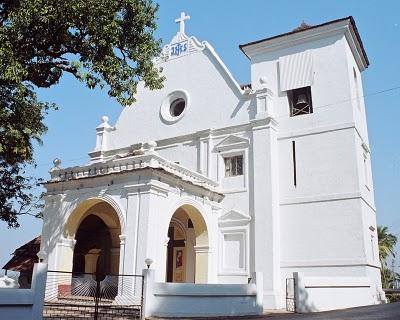
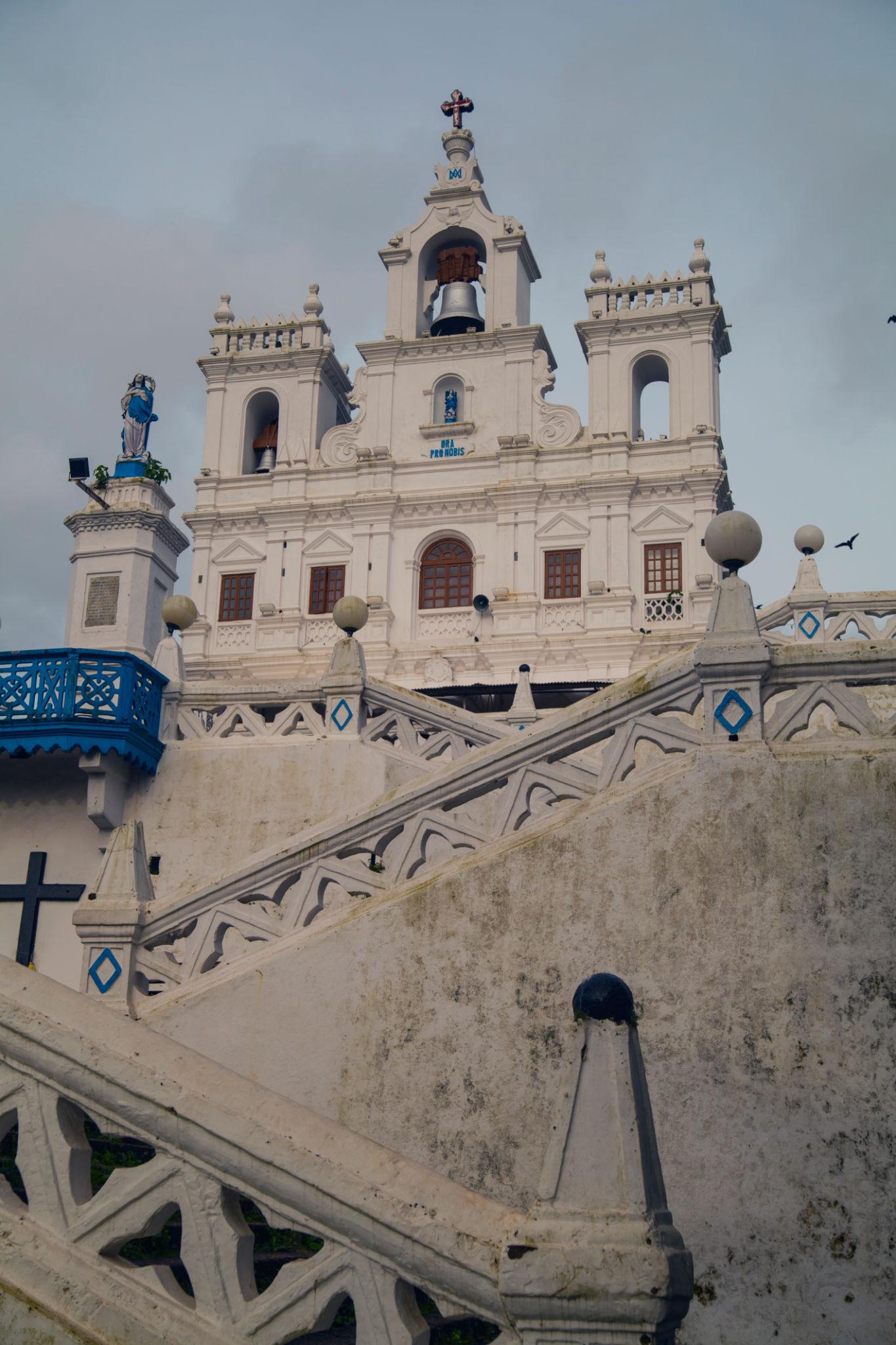
Nossa Senhora da Ajuda, is one of the most historically significant and visually arresting religious landmarks in Goa. Situated in the quaint, riverside village of Ribandar, this church stands as a sentinel along the banks of the Mandovi River, just a few kilometers away from the state capital, Panjim, and the historic hub of Old Goa. Unlike the massive cathedrals of Velha Goa, the Our Lady of Help Church offers a more intimate yet deeply profound spiritual atmosphere, characterized by its unique architectural silhouette and its long-standing connection to the maritime history of the region.
Ribandar itself is a village that feels frozen in time, with its narrow winding streets and traditional Indo-Portuguese homes. The church is the crown jewel of this locality. For travelers and pilgrims alike, the first glimpse of the church is often from across the river or while driving along the scenic
Ponte Conde de Linhares (the Ribandar Causeway). Its pristine white facade reflects beautifully in the waters of the Mandovi, creating a serene image that has inspired poets and artists for centuries.
This church is not merely a place of worship; it is a repository of Goan heritage. It serves as a bridge between the early colonial era and the modern day, maintaining traditions that have survived for over 450 years. Whether you are a history buff, an architecture enthusiast, or a spiritual seeker, the Our Lady of Help Church provides a quiet sanctuary away from the bustling tourist beaches, offering a glimpse into the "Real Goa" where faith and community are deeply intertwined with the rhythm of the river.
History & Religious Significance
The history of the Our Lady of Help Church is inextricably linked to the early days of Portuguese rule in India. Established around
1565, it is one of the oldest churches in the Archdiocese of Goa. The origins of the church are shrouded in a blend of historical fact and miraculous legend. According to local tradition, the church was built to commemorate a miraculous event involving a Portuguese ship caught in a violent storm at sea. The sailors, fearing for their lives, prayed to the Virgin Mary under the title of "Nossa Senhora da Ajuda" (Our Lady of Help). Legend has it that the Virgin appeared and guided the ship safely to the calm waters of the Mandovi River. In gratitude, the sailors and the colonial authorities commissioned the construction of this church on the very spot where they touched land.
Throughout the 16th and 17th centuries, the church played a vital role in the religious life of the "Estado da Índia." Because of its location on the main route between the administrative capital of Panjim and the ecclesiastical capital of Old Goa, it was a frequent stop for viceroys, governors, and high-ranking clergy. In fact, historical records suggest that the
body of St. Francis Xavier was brought to this church in 1554 when it arrived from Malacca, before being moved to its final resting place in Old Goa. This brief association with the "Apostle of the Indies" has bestowed an eternal spiritual prestige upon the Ribandar church.
The religious significance of the church also stems from its role as a beacon for sailors. For centuries, every ship entering or leaving the Mandovi River would fire a salute to Our Lady of Help, seeking her protection for the treacherous journey across the Arabian Sea. Even today, the local fishing community and those working on the river barges hold a deep devotion to the deity, believing that she continues to guard the waters and those who depend on them. The church has survived various geopolitical shifts, including the transition of Goa from Portuguese rule to Indian statehood, yet its spiritual core remains unchanged, serving as a testament to the enduring nature of Catholic faith in the Konkan region.
Architecture of Our lady of help church
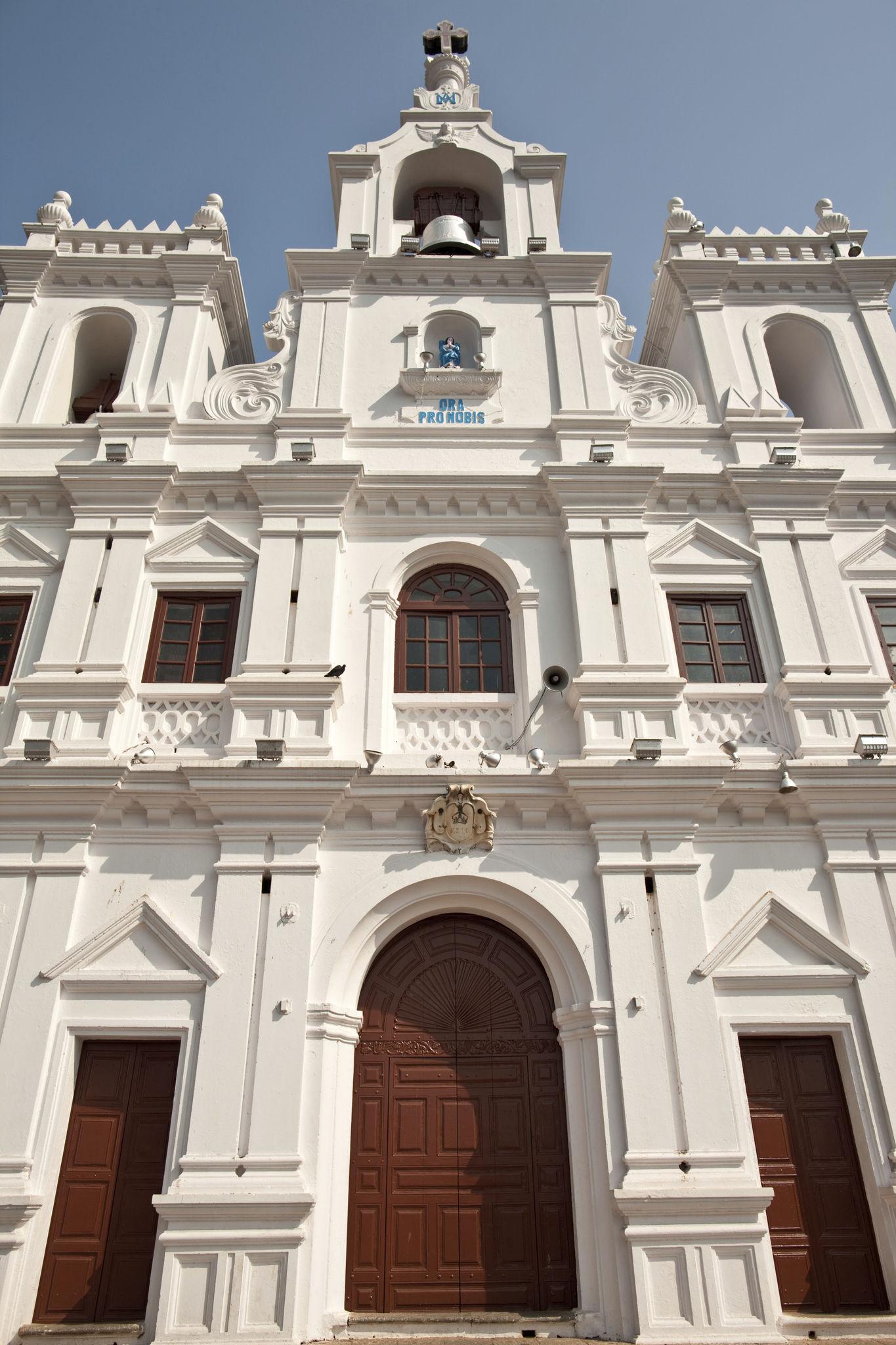
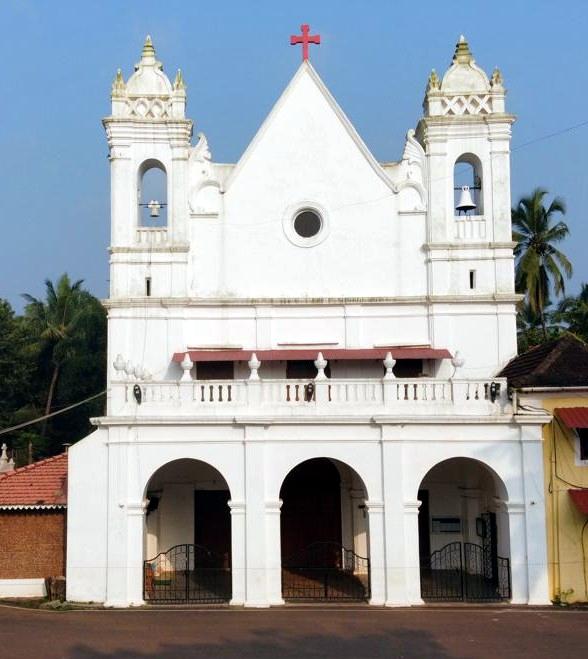
The architecture of Our Lady of Help Church is a fascinating study in the evolution of Goan ecclesiastical design. While many churches in Goa follow the grand Baroque or Tuscan styles, this church is celebrated for its
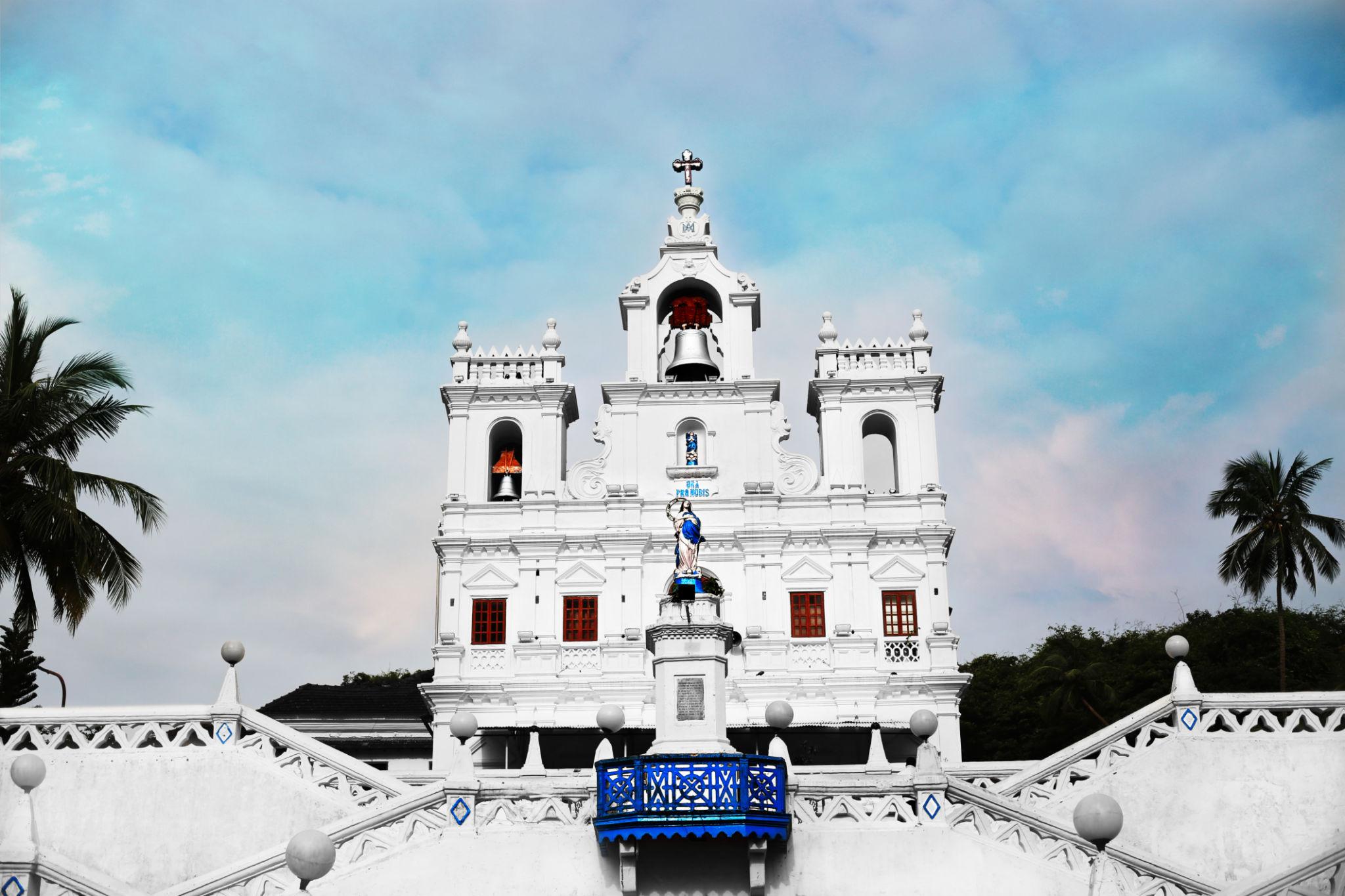
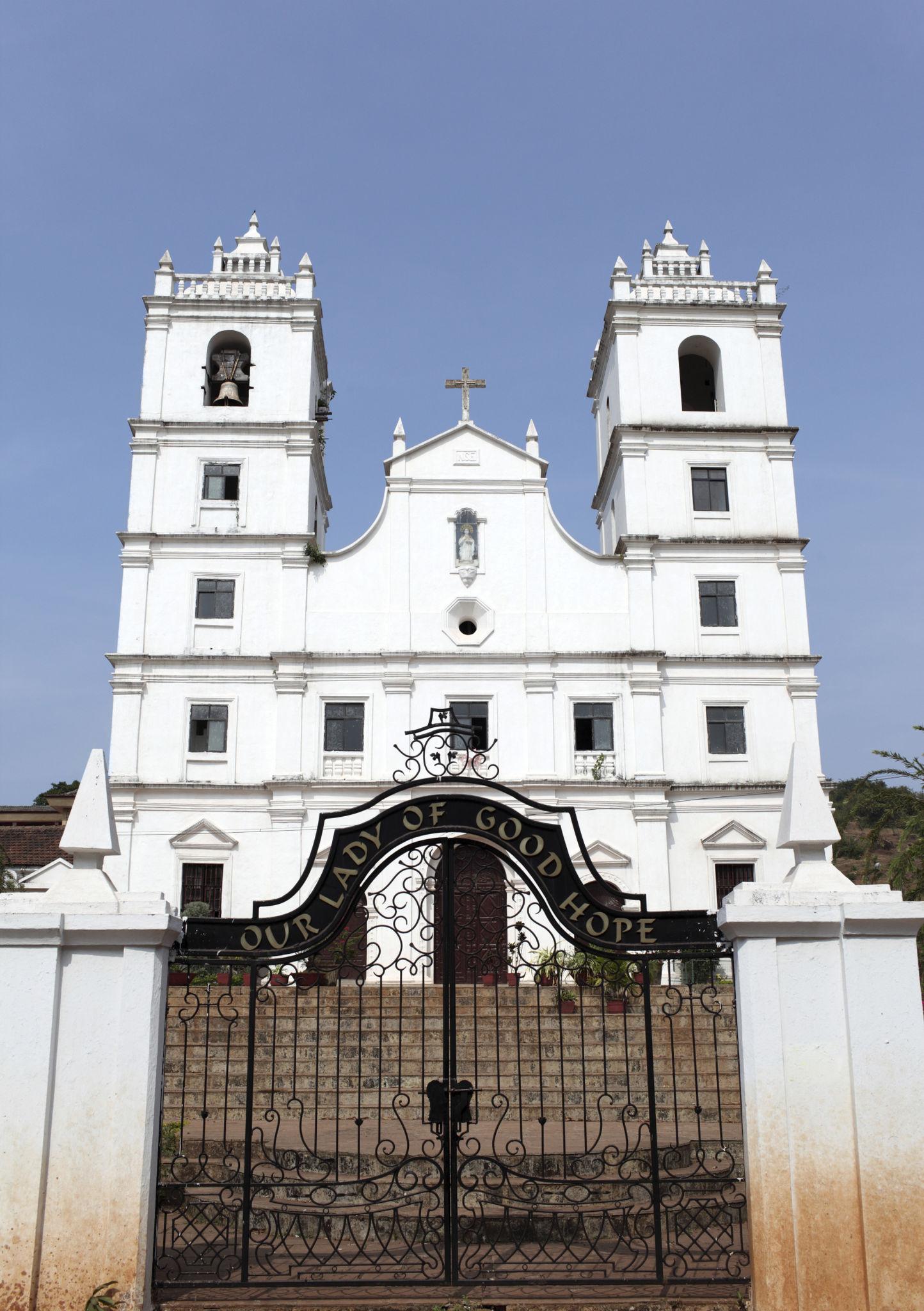
Manueline (Portuguese late Gothic) influences, which are relatively rare in the region. The structure is built using local laterite stone, plastered with a thick layer of lime to achieve its signature brilliant white finish.
One of the most striking features of its exterior is the unique configuration of its facade and towers. The church features a multi-storied elevation with a distinctively curved gable, flanked by two sturdy bell towers. Unlike the pointed spires seen in Northern European Gothic architecture, these towers are capped with tiled roofs, a practical adaptation to the heavy monsoon rains of the Western Ghats. The facade is adorned with simple yet elegant moldings and pilasters that give it a sense of verticality and grace.
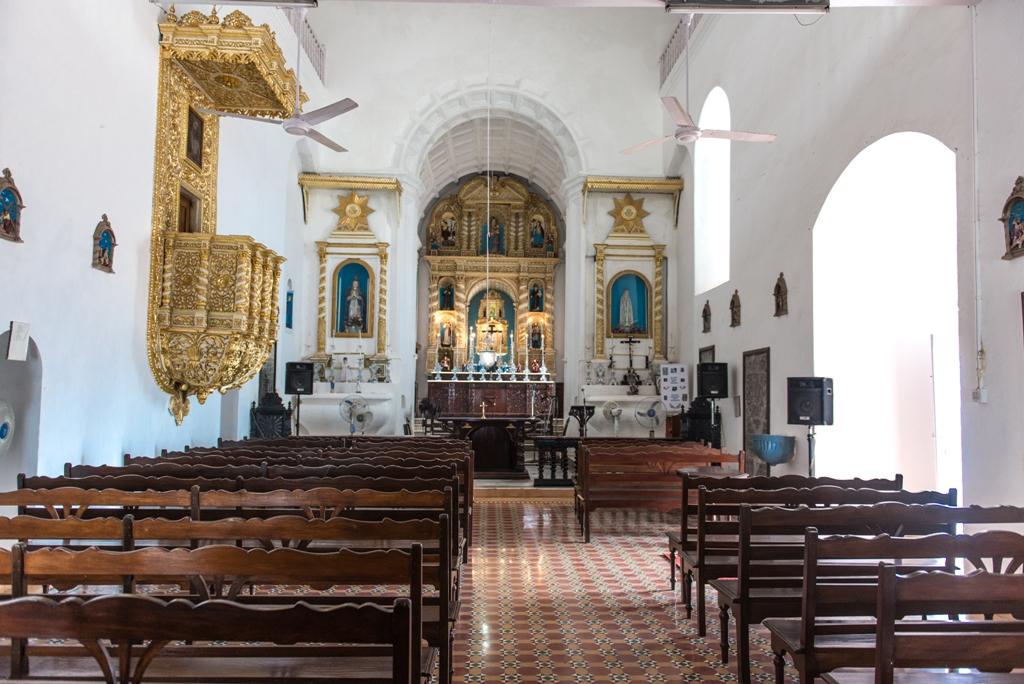
Upon entering the church, visitors are greeted by a single, high-vaulted nave. The interior is a masterclass in
Indo-Portuguese decorative art. The main altar is a magnificent piece of gilded woodcarving (talha dourada), featuring intricate motifs of vines, grapes, and cherubs. This altar is dedicated to Our Lady of Help, whose statue occupies the central niche. The side altars are equally impressive, showcasing the skill of local Goan artisans who blended European Christian iconography with indigenous aesthetic sensibilities.
A particularly noteworthy architectural element is the
pulpit, which is often cited as one of the finest in Goa. It features ornate carvings and is positioned to ensure that the priest’s voice would carry throughout the nave in the days before electronic amplification. The choir loft at the rear of the church provides a stunning perspective of the entire interior, highlighting the symmetry and the play of light through the high windows. The use of oyster shell windows (nacre), though largely replaced by glass in modern times, was a traditional Goan feature that once filtered soft, pearlescent light into the sanctuary, adding to its ethereal atmosphere.
Main Deity / Spiritual Importance
The primary deity of the church is
Our Lady of Help (Nossa Senhora da Ajuda), a title of the Blessed Virgin Mary that emphasizes her role as a compassionate intercessor and protector. In the context of Ribandar, this devotion takes on a specific maritime flavor. The statue of Our Lady of Help, housed in the main retable, depicts Mary holding the Infant Jesus, often with a ship or nautical symbols at her feet, symbolizing her guidance over the "sea of life."
The spiritual importance of this site transcends regular Sunday mass. For the people of Ribandar, the church is the heart of the community. It is a place where milestones—baptisms, weddings, and funerals—have been celebrated for generations. There is a profound sense of "belonging" associated with this church. Locals believe that Our Lady of Help is a particularly "powerful" advocate; many stories circulate about families being helped through financial crises, illnesses, or personal tragedies after offering prayers here.
The spiritual atmosphere is further enhanced by the presence of smaller shrines and icons within the church premises. Devotion to
Saint Anthony and
Saint Sebastian is also prominent, reflecting the broader Goan Catholic tradition of venerating saints who protect against specific calamities like plagues or lost items. The quietude of the church, combined with the gentle breeze from the Mandovi River, makes it an ideal spot for "Adoration" and silent reflection. It is common to see elderly residents of Ribandar sitting in the pews for hours, their lips moving in silent rosaries, maintaining a chain of prayer that has remained unbroken for centuries.
Festivals & Celebrations
The liturgical calendar at Our Lady of Help Church is vibrant, but the highlight is undoubtedly the
Feast of Our Lady of Help, celebrated annually on the second Sunday of November. This feast is preceded by a nine-day period of prayer known as the
Novena. During the Novenas, the village of Ribandar wakes up to the sound of brass bands and the peeling of church bells. Each day of the Novena is sponsored by a different ward (vaddo) of the village, fostering a sense of healthy competition and community spirit as each group tries to organize the most beautiful floral arrangements and choir performances.
The feast day itself is a grand spectacle. It begins with a solemn High Mass, often presided over by high-ranking clergy. Following the mass, a grand
procession takes place. The statue of Our Lady of Help is placed on an ornate palanquin and carried through the streets of Ribandar. The path is lined with devotees, and the air is thick with the scent of incense and the sound of hymns sung in Konkani and Latin. The procession is a beautiful display of faith, with children dressed as angels and the local community dressed in their finest attire.
Accompanying the religious ceremonies is the traditional
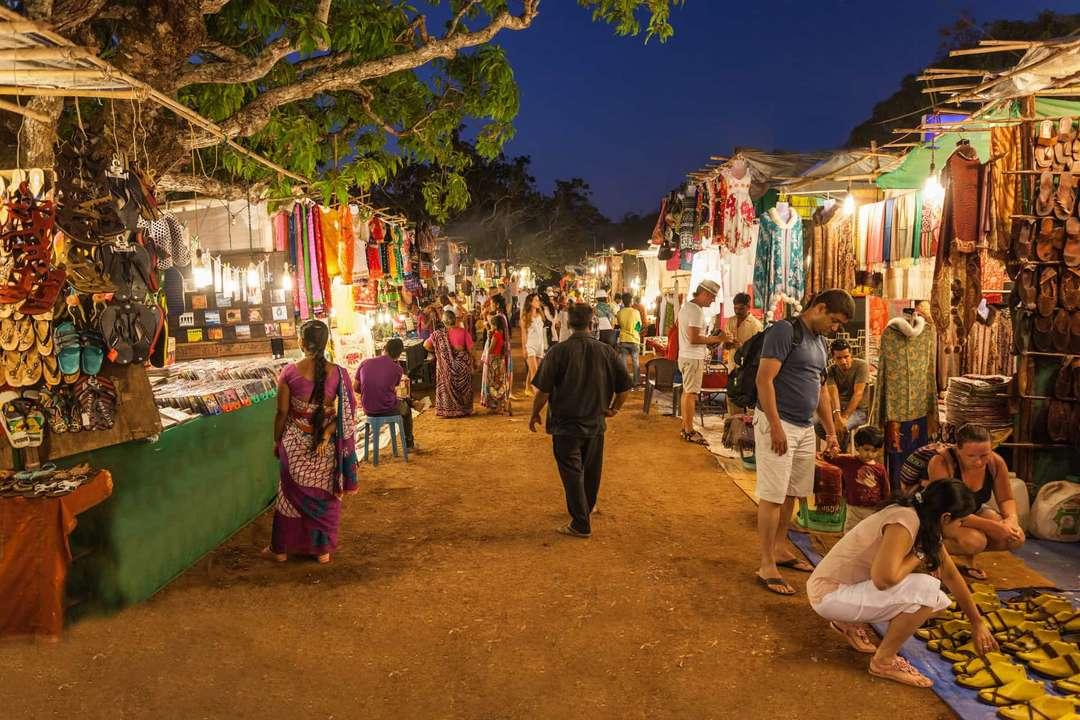
Goan Fair (Feira). The church square and the narrow lanes of Ribandar are transformed into a bustling marketplace. Stalls sell everything from traditional Goan sweets like
khaje (ginger-infused jaggery sticks) and
ladoos to copperware, clay pots, and religious artifacts. There are also games for children and often a "Mando" (traditional Goan song and dance) performance in the evening. This blend of the sacred and the profane is typical of Goan festivals, where the joy of the community is seen as an extension of their religious devotion.
Best Time to Visit
To experience Our Lady of Help Church in its full glory, the best time to visit is during the
winter months, from November to February. During this period, the weather in Goa is pleasant, with clear blue skies and a cool breeze blowing off the Mandovi River. This coincides with the church's annual feast in November, which is the most vibrant time to witness local traditions.
If you prefer a more quiet and contemplative experience, visiting in the
monsoon season (June to September) has its own charm. The surrounding landscape turns a lush, vibrant green, and the river swells, creating a dramatic backdrop for the white church. However, be prepared for heavy downpours which might limit your ability to explore the exterior grounds.
For those interested in the spiritual rhythm of the church,
Lent and Holy Week (usually in March or April) are significant. The ceremonies during this time are somber and deeply moving, particularly the "Passos" (processions depicting the passion of Christ). If you are a morning person, arriving for the
early morning mass (6:30 AM or 7:00 AM) allows you to see the church as the locals do, bathed in the soft light of dawn, before the heat of the day sets in and the traffic on the causeway increases.
Timings, Entry Fee & Dress Code
The Our Lady of Help Church is a functioning place of worship, and visitors are expected to respect its sanctity and schedule.
- Timings: The church is generally open from 7:00 AM to 12:30 PM and again from 4:00 PM to 7:00 PM. These timings can vary slightly depending on the day's liturgical requirements. It is best to avoid visiting during mass times if you wish to explore the architecture and take photos, unless you intend to participate in the service.
- Entry Fee: There is no entry fee to visit the church. It is open to people of all faiths. Donations for the upkeep of the historic structure are always welcome and can be placed in the designated offering boxes.
- Dress Code: As with all religious sites in Goa, a modest dress code is strictly enforced. Visitors should ensure that their shoulders and knees are covered. Sleeveless tops, short skirts, and beachwear are considered inappropriate. It is customary to remove hats or caps before entering the sanctuary.
- Mass Timings: On weekdays, mass is usually held at 7:00 AM. On Sundays, there are typically multiple masses, often at 7:00 AM, 8:15 AM, and 9:30 AM (primarily in Konkani, with occasional English services).
How to Reach Our lady of help church
The church is located in Ribandar, making it very accessible from major hubs in Goa.
- From Panjim: The church is approximately 5 kilometers from Panjim. The best way to reach is by taking the Ponte Conde de Linhares (Ribandar Causeway). This 3-km long causeway was built by the Portuguese in 1633 and offers a stunning drive with the river on one side and salt pans on the other. You can take a local bus heading towards Old Goa or Ponda, or hire an auto-rickshaw or taxi.
- From Old Goa: If you are already exploring the UNESCO World Heritage sites in Old Goa, Ribandar is just a 5-minute drive (about 3 km) away. It is a straight road heading west toward Panjim.
- By Ferry: For a more scenic route, you can take the ferry from Chorao Island or Divar Island to the Ribandar ferry ramp. The church is within walking distance from the Ribandar ferry wharf. This is highly recommended for photographers as it provides great views of the church from the water.
- By Air/Rail: The nearest airport is Manohar International Airport (Mopa) or Dabolim Airport. The nearest major railway stations are Karmali (Old Goa) and Madgaon. From Karmali station, the church is a quick 10-minute taxi ride.
Things to Do
While the church is the primary draw, there are several ways to enrich your visit to Ribandar:
- Attend a Konkani Mass: Even if you don't understand the language, the melodic nature of Konkani hymns and the devotion of the local congregation provide a deeply moving experience.
- Explore the Ribandar Causeway: Walk or cycle along the Ponte Conde de Linhares. It is one of the oldest and longest causeways in Asia. The views of the sunrise or sunset from here are unparalleled.
- Photography: Capture the stunning exterior of the church. The best shots are taken from the riverbank or from a ferry. (Note: Photography inside the church is usually discouraged during prayer times).
- Visit the Parish Cemetery: Located nearby, the cemetery often contains old gravestones with intricate carvings and Portuguese inscriptions, offering another layer of historical insight.
- Walk through Ribandar Village: Wander through the lanes behind the church to see traditional Goan houses with their distinctive "balcãos" (porches) and vibrant colors.
- Bird Watching: The salt pans and marshes along the causeway are home to various migratory birds, especially during the winter months. Keep an eye out for kingfishers, egrets, and herons.
Nearby Attractions
The location of Our Lady of Help Church makes it a perfect starting or ending point for a day of sightseeing.
- Old Goa (Velha Goa): Just 3 km away, this is a UNESCO World Heritage site featuring the Basilica of Bom Jesus, the Se Cathedral, and the Church of St. Cajetan. It is the spiritual heart of Goa.
- Panjim City: The capital city is 5 km away. Visit the Immaculate Conception Church, the Kala Academy, and the Goa State Museum.
- Fontainhas (Latin Quarter): Located in Panjim, this area is famous for its narrow streets and brightly colored Portuguese-style houses. It is a must-visit for anyone interested in Goan culture.
- Divar Island: Take a short ferry ride from Ribandar to Divar Island. It’s a peaceful getaway with beautiful landscapes, old villas, and the Piedade Church atop a hill.
- Dr. Salim Ali Bird Sanctuary: Located on Chorao Island, accessible by ferry from nearby, this is a paradise for nature lovers and bird watchers.
- Viceroy’s Arch: Located in Old Goa, this was the ceremonial gateway through which the Portuguese Viceroys entered the city.
Photography & Visitor Guidelines
To ensure a respectful and pleasant visit, please keep the following guidelines in mind:
- Silence is Golden: Maintain a low voice at all times. Many locals visit the church for private prayer throughout the day.
- Flash Photography: Avoid using flash inside the church as it can damage the ancient gilded altars and distract worshippers. Some churches in Goa have strict "no photography" rules inside; always check for signs or ask the sacristan.
- No Posing: Avoid taking "selfies" or posing for fashion-style photographs inside the sanctuary. It is a place of reverence, not a backdrop.
- Respect the Altar Rail: Do not enter the sanctuary area (the space around the main altar) unless invited or during specific ceremonies. This area is considered the "Holy of Holies."
- Switch off Mobiles: Ensure your phone is on silent mode before entering.
- Littering: Ribandar is a clean, traditional village. Please dispose of any waste in designated bins and help keep the church grounds pristine.
Where to Eat Nearby
Ribandar and the nearby areas offer some excellent dining options ranging from local snacks to fine dining.
- Local Tavernas: In Ribandar village, you can find small local eateries serving traditional Goan snacks like rissois (prawn turnovers), croquettes, and pao com chourico (Goan sausage bread).
- The Fisherman's Wharf (Panjim): A short drive away, this restaurant offers a great ambiance and excellent Goan seafood right on the riverfront.
- Viva Panjim: Located in the Latin Quarter, this is famous for authentic Goan-Portuguese cuisine like Fish Curry Rice, Pork Vindaloo, and Bebinca.
- Ritz Classic (Panjim): Known for its legendary Goan fish thali, it is a favorite among locals and tourists alike.
- Hospedaria Abrigo de Sesinando: A heritage bistro in Panjim that serves traditional recipes in a beautifully restored home.
- Street Food at the Causeway: In the evenings, you might find small carts near the Ribandar ferry terminal selling ros omelette and spicy snacks.
Accommodation Nearby
Since Ribandar is centrally located, you have several options for staying close to the church.
- Heritage Stays in Ribandar: There are a few beautifully restored Portuguese-era villas in Ribandar that operate as boutique guesthouses or Airbnb rentals. Staying here allows you to experience the village's quiet charm.
- Panjim Hotels: Panjim offers everything from luxury hotels like the Goa Marriott Resort & Spa and Vivanta Goa to budget-friendly guesthouses in the Fontainhas area.
- Old Goa Residency: Operated by the Goa Tourism Development Corporation (GTDC), this is a clean and affordable option located right in the heart of Old Goa, very close to Ribandar.
- Divar Island Retreats: For a truly secluded experience, stay at a resort on Divar Island, just a ferry ride away from the church.
Travel Tips
- Hydration: Goa can be humid. Always carry a bottle of water, especially if you plan to walk along the causeway or explore the village.
- Footwear: Wear comfortable walking shoes. The church floor and village lanes are best explored on foot. However, be prepared to slip them off easily if required.
- Transport: While buses are frequent, renting a scooter or a car gives you the flexibility to explore Ribandar and Old Goa at your own pace. Parking is generally available near the church.
- Local Interaction: The people of Ribandar are friendly but conservative. A polite "Bom Dia" (Good Morning) or "Dev Borem Korum" (God bless you/Thank you) goes a long way in establishing a friendly rapport.
- Safety: The Ribandar Causeway is narrow and can be busy. If you are walking, stay close to the edge and be mindful of passing traffic.
- Check Local News: Occasionally, the causeway or certain roads in Ribandar may be closed for traditional festivals or maintenance. It's always good to check local updates if you are visiting during the monsoon or feast season.
Conclusion
The Our Lady of Help Church in Ribandar is more than just a historical monument; it is a living testament to Goa's complex and beautiful cultural identity. It stands as a symbol of hope and protection, much like the "Help" it is named after. From its unique Manueline architecture and its legendary maritime history to its vibrant local festivals and serene riverside location, the church offers a multi-faceted experience for every visitor.
Visiting this church allows you to step away from the commercialized version of Goa and connect with the soul of the land. It is a place where the past and present coexist harmoniously, where the prayers of 16th-century sailors still seem to echo in the vaulted ceilings, and where the community continues to find strength in their shared faith. Whether you are coming to admire the gilded woodcarvings, to photograph the white towers against a sunset sky, or to find a moment of spiritual peace, the Our Lady of Help Church remains an essential and unforgettable stop on any Goan journey. As you leave the village of Ribandar, crossing back over the historic causeway, you carry with you not just photos, but a sense of the profound grace that has defined this riverside sanctuary for nearly half a millennium.