Overview of Our Lady of Snows Church
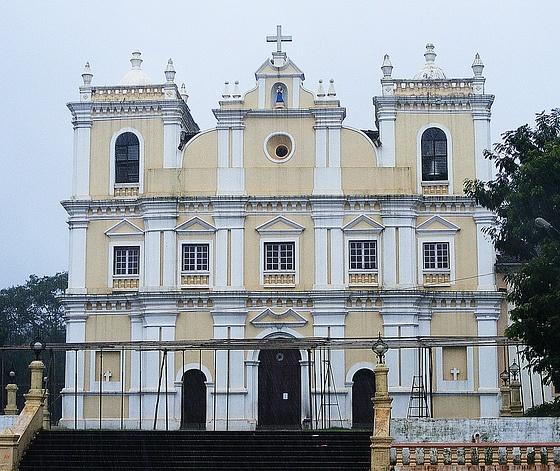
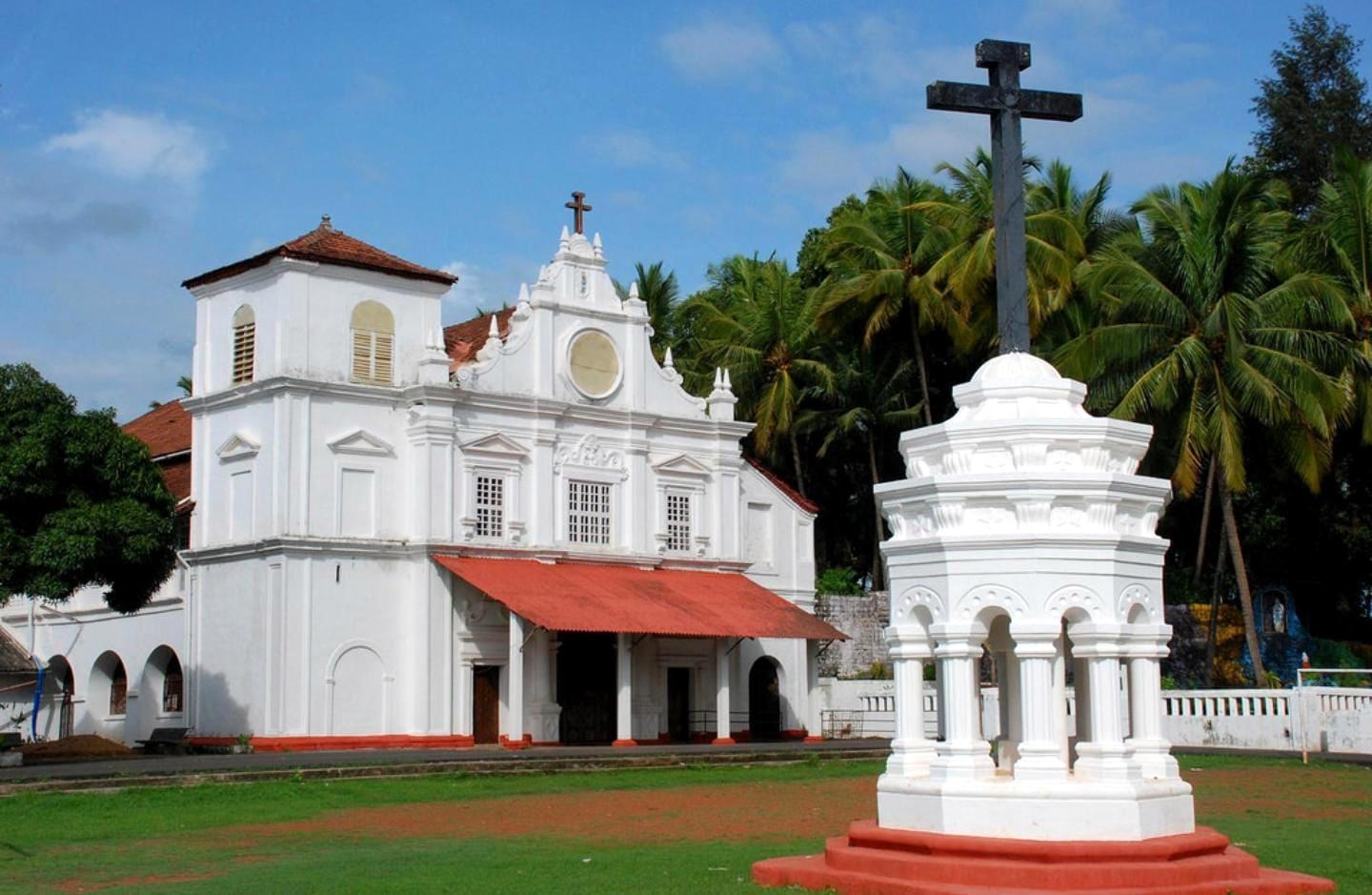
Nestled in the lush, emerald-green landscape of the village of Raia in South Goa, the Our Lady of Snows Church (Igreja de Nossa Senhora das Neves) stands as a monumental testament to Goa’s rich colonial past and its vibrant spiritual present. Known as the "Mother Church of Salcete," this majestic structure is not merely a place of worship but a cornerstone of Goan history. It was the first parish church to be established in the Salcete taluka, making it a site of immense historical and religious weight. As you drive through the winding roads of Raia, the church’s brilliant white facade emerges against the backdrop of swaying coconut palms and ancient banyan trees, offering a sight that is both serene and imposing.
The Our Lady of Snows Church is celebrated for its deep-rooted cultural traditions, most notably the Konsachem Fest (Harvest Festival), which draws thousands of devotees and tourists alike. The church serves as a spiritual anchor for the local community, preserving centuries-old customs that blend Portuguese Catholic traditions with indigenous Goan agrarian practices. For the discerning traveler, a visit to this church offers more than just a sightseeing opportunity; it provides a window into the soul of South Goa, where time seems to slow down, and the air is thick with the scent of incense and the sound of distant church bells. Whether you are a history buff, an architecture enthusiast, or a spiritual seeker, this church offers a profound sense of peace and a wealth of stories waiting to be discovered.
Top Goa Experience • Part 1
Highly Recommended Near Our Lady of Snows Church
Explore All
History & Religious Significance
The history of the Our Lady of Snows Church is inextricably linked to the arrival of the Jesuit missionaries in the 16th century. Established around 1565, it was the first church built in the Salcete region, which was then a strategic territory for the Portuguese administration. The site where the church stands today is believed to have been a significant location even before the Portuguese era, possibly housing a local temple, which was a common occurrence during the period of religious transition in Goa. The Jesuits chose Raia as their administrative and spiritual headquarters for the region, and from here, the Christian faith spread to the neighboring villages of Salcete.
The religious significance of the church is heightened by its designation as the "Matriz" or the Mother Church. In the early days of the Portuguese conquest, all other parishes in Salcete were bifurcated or derived from this central parish. The church was dedicated to Nossa Senhora das Neves (Our Lady of Snows), a title of the Virgin Mary that traces its origins back to a 4th-century miracle in Rome. According to legend, the Virgin Mary appeared in a dream to a Roman nobleman and the Pope, instructing them to build a church on the site where they would find snow in the height of the summer. On August 5th, the Esquiline Hill was covered in snow, leading to the construction of the Basilica of Santa Maria Maggiore. This devotion was brought to Goa by the Portuguese, symbolizing purity and divine intervention.
Recommended Guide
North Goa vs South Goa: Which is Better for Your Goa Trip?
Goa is India's most popular beach destination and attracts millions of domestic and international tourists every year. One of the most common questions tra...
Read Guide →
Over the centuries, the church has survived various geopolitical shifts, including Maratha invasions and the eventual suppression of the Jesuits. Each era has left a layer of history on its walls. The current structure, though renovated and expanded over time (notably in 1699), retains the gravitas of its 16th-century origins. It remains a symbol of the Goan Catholic identity, representing the synthesis of European religious fervor and the local culture of the Konkan coast.
Architecture of Our Lady of Snows Church
The architecture of the Our Lady of Snows Church is a stunning example of the Mannerist style, which was popular during the late Renaissance and early Baroque periods. Built primarily with local laterite stone and coated with thick layers of white lime plaster, the church displays a robust and fortified appearance, a characteristic of early Portuguese churches in India designed to withstand both the elements and potential sieges.
Recommended Guide
Tourist Season in Goa – Complete Travel Guide for Every Season
The winter season in Goa, stretching from November to February, is widely considered the best and most popular tourist season in Goa. This period attracts...
Read Guide →
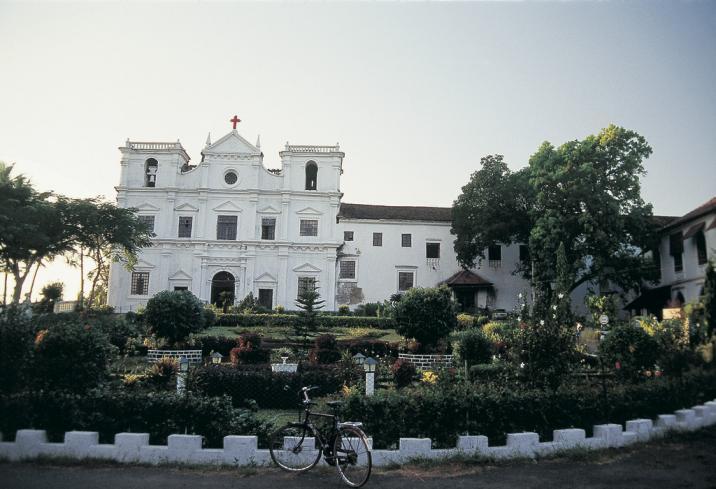
- The Facade: The church features a grand, three-storied facade that is divided into vertical sections by pilasters. The central gable is topped with a cross and flanked by large, ornate bell towers. The symmetry of the facade is a hallmark of Portuguese colonial architecture, creating a sense of balance and divine order.
- The Bell Towers: The twin towers house large bronze bells that have echoed through the valley of Raia for generations. These towers are not just functional but serve as vertical landmarks visible from several kilometers away.
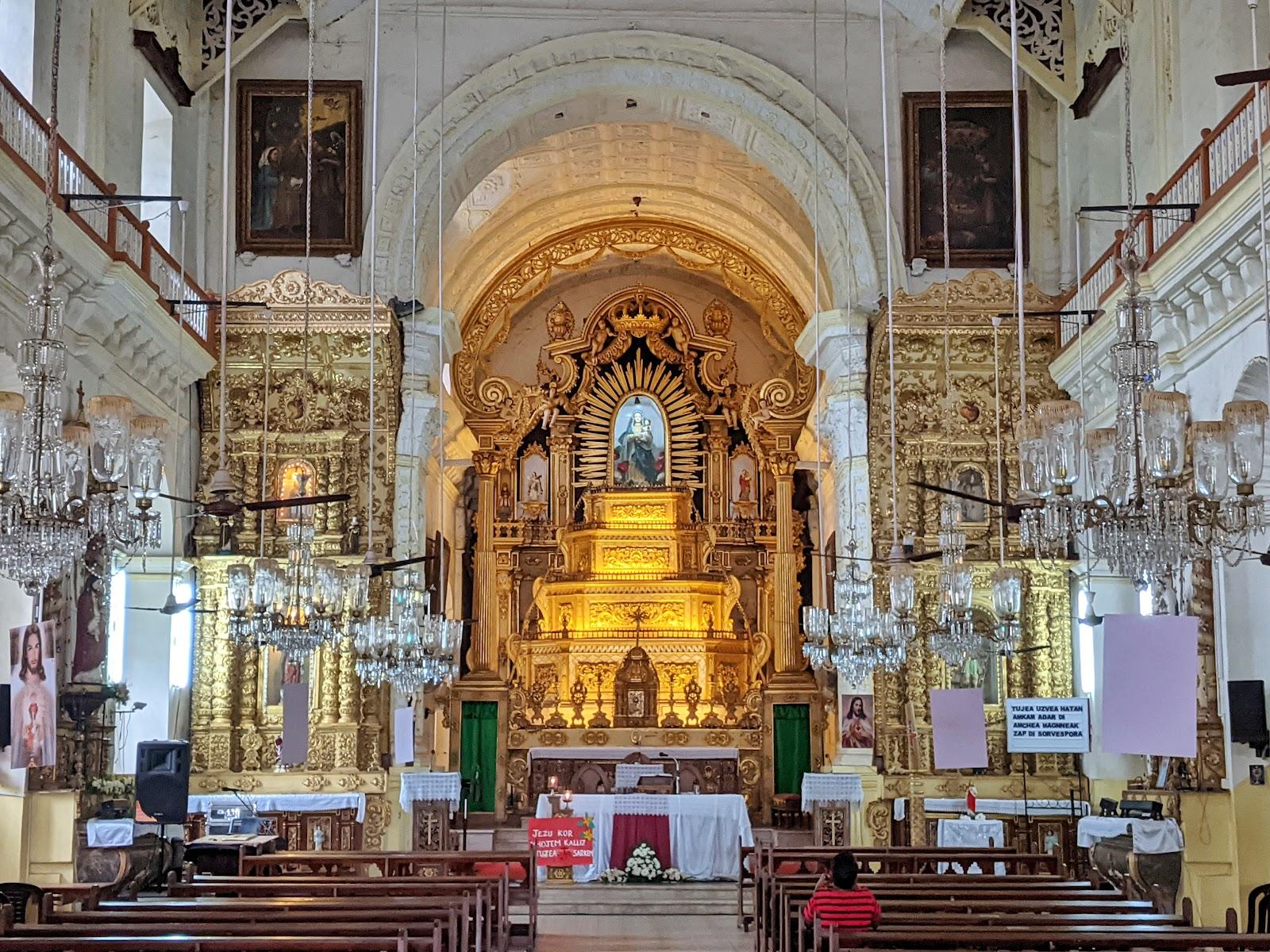
- The Interiors: Upon entering, visitors are greeted by a massive nave with a high vaulted ceiling. The interior is spacious and airy, designed to accommodate large congregations. The flooring features traditional basalt and granite stones, some of which bear inscriptions of ancient Goan families.
- The Altars: The church houses several altars, but the High Altar is the piece de resistance. It is dedicated to Our Lady of Snows and is intricately carved with floral motifs, angels, and saints. The reredos (the decorative screen behind the altar) is gilded in gold leaf, reflecting the Baroque influence that sought to create a "heaven on earth" through opulence and light.
- The Pulpit: On the left side of the nave, you will find an exquisitely carved wooden pulpit. These pulpits were essential in the pre-microphone era, designed to project the priest's voice throughout the hall. The carvings often depict biblical scenes or Jesuit symbols.
The blend of European structural designs with local craftsmanship is evident in the subtle decorative details, such as the use of seashell windows (though many have been replaced by glass) and the specific way the lime plaster is molded. The church’s courtyard is vast, providing a transitional space between the secular world and the sacred sanctuary.
Main Deity / Spiritual Importance
The primary focus of devotion at this church is Our Lady of Snows. In the Goan context, Mary is often viewed not just as a religious figure but as a maternal protector of the village and its agricultural prosperity. The statue of Our Lady of Snows, prominently displayed on the main altar, depicts the Virgin Mary holding the infant Jesus. The spiritual importance of this deity in Raia is profound; she is believed to be the one who intercedes for the rains and ensures a bountiful harvest.
Recommended Guide
Common Scams in Goa Tourists Still Fall For
Goa is one of India’s most loved travel destinations, attracting millions of tourists every year with its beaches, nightlife, and relaxed vibe. But like...
Read Guide →
Devotees believe that the "coolness" associated with the "Snows" brings relief to the tropical heat of Goa, both physically and spiritually. The spiritual importance also extends to the Blessed Joseph Vaz, the "Apostle of Ceylon," who has deep connections to this region. The church serves as a center for communal prayer, where the local Konkani litany is sung with great fervor. For many locals, a visit to the church is a daily ritual, a moment to seek guidance before heading to the fields or starting the day's work. The spiritual aura is most palpable during the morning Mass, when the soft light filters through the high windows, illuminating the clouds of incense and the hushed whispers of the faithful.
Top Goa Experience • Part 2
Highly Recommended Near Our Lady of Snows Church
Explore All
Festivals & Celebrations
The Our Lady of Snows Church is the epicenter of one of Goa’s most significant traditional festivals: the Konsachem Fest. This is the harvest festival of Raia, celebrated with immense pomp and religious devotion.
- Konsachem Fest (August 5th): This festival marks the beginning of the harvest season in Salcete. The highlight of the day is a grand procession where the parish priest leads the congregation to a specially designated field. Using a blessed silver sickle, the priest symbolically cuts the first sheaves of grain (konsa). These sheaves are then carried back to the church, blessed, and distributed among the devotees. It is a beautiful synchronization of faith and agriculture.
- The Feast of Our Lady of Snows: Celebrated on the same day as the harvest festival, this is the titular feast of the church. The entire village of Raia wears a festive look, with traditional brass bands playing "Mando" and "Dulpod" tunes.
- Lenten Traditions: During the season of Lent, the church hosts the Passos (re-enactments of the Passion of Christ). These are somber yet deeply moving processions where statues of Jesus and Mary are carried through the village streets, accompanied by mournful hymns.
- Christmas and Easter: Like all Goan churches, Christmas and Easter are celebrated with midnight Masses, elaborate cribs (presépio), and community feasts. The church is beautifully illuminated during these times, creating a magical atmosphere.
The festivals here are unique because they involve the Gaunkars (the original settlers/founders of the village). The hierarchy and traditions of the Comunidade (the ancient Goan land-holding system) are still respected during these celebrations, making them a fascinating study for those interested in Goan sociology.
Best Time to Visit
To experience the Our Lady of Snows Church in its full glory, the best time to visit is during the month of August. Specifically, being there on August 5th allows you to witness the Konsachem Fest, a cultural spectacle that is unique to this parish. The monsoon season (June to September) adds a layer of mystical beauty to the village of Raia, as the surrounding fields are a vibrant shade of green, though you should be prepared for heavy showers.
If you prefer a quieter, more contemplative visit, the winter months (November to February) are ideal. The weather in Goa is pleasant during this time, with cool breezes and clear blue skies, making it perfect for exploring the church grounds and the nearby village architecture. Visiting in the early morning (around 7:00 AM) or late afternoon (around 4:30 PM) is recommended to avoid the midday heat and to capture the best natural light for photography.
Timings, Entry Fee & Dress Code
The Our Lady of Snows Church is an active place of worship, and visitors are expected to respect its sanctity and the privacy of the parishioners.
- Timings: The church is generally open from 6:30 AM to 12:30 PM and from 3:30 PM to 7:00 PM daily. Mass timings are usually at 6:30 AM and 7:15 AM on weekdays, and there are multiple Masses on Sunday mornings starting from 6:00 AM.
- Entry Fee: There is no entry fee to visit the church. It is open to people of all faiths. Donations for the maintenance of the church are welcomed but not mandatory.
- Dress Code: As with all religious sites in Goa, a modest dress code is strictly enforced. Visitors should ensure their shoulders and knees are covered. Sleeveless tops, short skirts, and hot pants are discouraged. If you are not appropriately dressed, you may be asked to cover up with a shawl or may be denied entry into the main prayer hall.
How to Reach Our Lady of Snows Church
The church is located in Raia, South Goa, and is well-connected by road. It is approximately 5 to 7 kilometers from Margao, the commercial capital of South Goa.
- By Air: The nearest airport is Dabolim Airport (GOI), which is about 25-30 kilometers away. You can hire a pre-paid taxi from the airport to Raia, which takes about 45 minutes.
- By Rail: The Madgaon Junction (MAO) is the closest railway station. From the station, you can take an auto-rickshaw, a local bus, or a taxi to the church.
- By Road: If you are staying in North Goa (Calangute or Panaji), it is a roughly 1 to 1.5-hour drive. You can take the NH66 highway towards Margao and then follow the signs for Raia/Rachol.
- Local Transport: Renting a scooter or a car is the most convenient way to explore this part of Goa. Local buses also ply frequently between Margao and Raia, providing an authentic and budget-friendly travel experience.
Things to Do
A visit to the Our Lady of Snows Church can be expanded into a half-day exploration of the area. Here are some activities you should consider:
- Attend a Mass: Even if you are not Catholic, attending a Mass in Konkani is a beautiful cultural experience. The harmony of the choir and the devotion of the locals are truly moving.
- Architectural Photography: Capture the intricate details of the facade, the bell towers, and the gilded altars. The contrast between the white church and the blue sky is a photographer's delight.
- Explore the Cemetery: The church cemetery, located nearby, contains ancient tombstones with inscriptions that tell the stories of the families who have lived in Raia for centuries.
- Village Walk: Take a leisurely walk through the lanes of Raia. You will see traditional Goan houses with large balcãos (porches), oyster-shell windows, and vibrant gardens.
- Witness the Harvest: If you visit in August, participate in the Konsachem Fest. Seeing the community come together to celebrate the land is a rare and beautiful sight.
Nearby Attractions
The village of Raia is surrounded by other historical and cultural landmarks that are worth visiting:
- Rachol Seminary: Just a few kilometers away is the Patriarchal Seminary of Rachol. It is one of the oldest and most prestigious seminaries in Asia, featuring a magnificent library and a stunning church.
- Museum of Christian Art: Located within the Rachol Seminary complex (though check for current location as it sometimes moves for renovation), this museum houses a rare collection of Indo-Portuguese Christian art.
- Shanta Durga Temple, Kavlem: A short drive away, this temple is one of the most important Hindu shrines in Goa, showcasing a unique blend of Indo-Portuguese temple architecture.
- Loutolim Village: Visit the Ancestral Goa (Big Foot) museum and the Casa Araujo Alvares, a 250-year-old heritage mansion that offers tours.
- Margao City: Explore the bustling Margao Market for local spices, sausages (chorizo), and traditional Goan sweets like Bebinca and Dodol.
Photography & Visitor Guidelines
To ensure a respectful and pleasant visit, please keep the following guidelines in mind:
- Photography: Photography is generally allowed outside the church. However, photography inside the church during Mass is strictly prohibited. At other times, it is polite to ask the sacristan or the priest for permission before taking photos of the altars. Avoid using flash, as it can damage ancient paintings and gilding.
- Silence: Maintain strict silence inside the church. It is a place of prayer for many, and loud conversations can be disruptive.
- Mobile Phones: Switch off your mobile phone or put it on silent mode before entering the church premises.
- Respect the Rituals: If a service is in progress, do not walk around the altar area or interrupt the proceedings. Observe from the back of the nave.
- Environmental Care: Raia is a pristine village. Do not litter the church grounds or the surrounding areas. Carry your trash back with you.
Where to Eat Nearby
South Goa is a paradise for food lovers, and the area around Raia offers some of the most authentic Goan culinary experiences.
- Fernando's Nostalgia: Located in Raia itself, this legendary restaurant is a must-visit. It serves traditional Goan-Portuguese dishes like Pork Vindaloo, Fish Recheado, and Sannas. The ambiance is that of an old Goan home, filled with memorabilia.
- The Rabbit Hole: A cozy spot in Margao offering a mix of local and continental cuisine, perfect for a relaxed lunch.
- Martins Corner: Located in nearby Betalbatim (about 20 mins away), this is one of Goa's most famous seafood restaurants, known for its vibrant atmosphere and fresh catch.
- Local Bakeries: Don't forget to stop at a local village bakery (poderia) in the morning for fresh Pao or Poie (Goan bread).
Accommodation Nearby
While most visitors stay in the beach belts of Colva or Benaulim, staying near Raia offers a more tranquil "hinterland" experience.
- Heritage Homestays: There are several restored Portuguese villas in the Raia and Loutolim area that function as boutique stays. These offer an immersive experience of Goan aristocratic life.
- Margao Hotels: For those who prefer modern amenities, Margao has several mid-range and luxury hotels like The Fern Residency or Hotel South Gate.
- Boutique Resorts: Nearby areas like Curtorim and Maina have small, eco-friendly resorts that overlook paddy fields and lakes, providing a peaceful retreat.
Travel Tips
- Hydration: Goa can be humid. Always carry a bottle of water, especially if you are exploring the village on foot.
- Language: While English and Hindi are widely understood, learning a few words of Konkani like "Dev Borem Korum" (Thank you / God bless you) will endear you to the locals.
- Transport: Use apps like GoaMiles for taxi bookings, as local taxi rates can be high and require negotiation.
- Local Etiquette: When visiting a Goan home or a traditional space, it is customary to greet people with a smile. Goans are known for their hospitality (ospitalidade), and being polite goes a long way.
- Sun Protection: Wear sunscreen and a hat, as the afternoon sun can be quite harsh even in the winter.
Conclusion
The Our Lady of Snows Church in Raia is more than just a historical monument; it is a living, breathing entity that encapsulates the spirit of South Goa. From its foundation by Jesuit pioneers to its role as the guardian of the annual harvest, the church has remained a steadfast symbol of faith, community, and resilience. Its stunning Mannerist architecture, the golden glow of its altars, and the rhythmic traditions of the Konsachem Fest offer a deep and meaningful experience that goes far beyond the typical tourist trail. A visit here is an invitation to step back in time, to appreciate the slow-paced beauty of village life, and to witness the harmonious blend of cultures that makes Goa so unique. Whether you come for the history, the prayer, or the peaceful ambiance, the Our Lady of Snows Church will leave an indelible mark on your heart, reminding you of the timeless grace that defines the "Rome of the East."