Explore sections of this guide
Deep within the azure waters of the Arabian Sea, just off the coast of the southern tip of Goa and the northern shores of Karnataka, lies a hidden gem of Portuguese maritime history: Anjdiv Fort. Also known as Anjadip or Angediva, this fort is situated on the Anjadip Island, a landmass that has served as a silent witness to the rise and fall of colonial empires, the birth of naval strategies, and the spiritual devotion of centuries. For the seasoned traveler and the history enthusiast, Anjdiv Fort represents one of the most enigmatic chapters of the Goan historical narrative. Unlike the bustling ramparts of Aguada or the popular vistas of Chapora, Anjdiv offers a sense of profound isolation and rugged grandeur, steeped in a legacy that predates even the formal establishment of the Portuguese capital at Old Goa.
The name 'Anjadip' is believed to be derived from the local language, meaning 'Fifth Island,' signifying its place among a cluster of five islands in the region. Spanning an area of approximately 1.5 square kilometers, the island and its fort are geographically closer to Karwar in Karnataka, yet they remain an integral part of the South Goa district, specifically under the jurisdiction of the Canacona taluka. This unique geographical placement makes it a fascinating point of study for those interested in the overlapping cultural and political boundaries of the Konkan coast. The fort itself is a testament to the military engineering of the 16th century, designed to withstand both the relentless monsoon waves and the naval assaults of competing powers like the Bijapur Sultanate and later, the Marathas.
Today, Anjdiv Fort is not just a collection of crumbling walls and overgrown pathways; it is a sensitive military zone under the control of the Indian Navy (as part of the INS Kadamba naval base). This restricted access has preserved the site in a way few other monuments in India can claim, keeping it shielded from the commercialization that often dilutes historical authenticity. However, for those who manage to visit during specific religious festivals or with special permissions, the island reveals a world of pristine beauty, where the scent of salt air mingles with the echoes of ancient hymns and the whispers of soldiers who once guarded the gateway to the Indies. This guide delves into every facet of this remarkable island fortress, offering a comprehensive look at why Anjdiv Fort remains a cornerstone of Goan heritage.
The history of Anjdiv Fort is inextricably linked with the very first footsteps of Europeans on the Indian subcontinent. It was in 1498 that the legendary explorer Vasco da Gama first dropped anchor at Anjadip Island during his return journey to Portugal. The island provided a safe haven for his fleet to repair their ships and gather fresh water from the natural springs that gave the island its fame. This initial contact highlighted the island's strategic value as a replenishment point for long-haul maritime voyages across the Indian Ocean.
Recognizing this potential, the first Portuguese Viceroy of India, Dom Francisco de Almeida, received orders from King Manuel I to fortify the island. In 1505, the construction of the first fort began. Almeida understood that to control the spice trade, the Portuguese needed a series of naval bases that could monitor the movements of the Zamorin of Calicut and the Egyptian Mamluk fleets. However, the initial occupation was short-lived. Due to constant pressure from local rulers and the logistical difficulties of maintaining a garrison so far from their primary bases, the Portuguese dismantled the fort in 1506, shifting their focus to the conquest of Goa in 1510.
The island remained relatively quiet for over a century until the late 17th century, when the threat from the Marathas under Chhatrapati Sambhaji Maharaj and the rising power of the English East India Company forced the Portuguese to rethink their coastal defenses. In 1682, the Viceroy Francisco de Távora, the Count of Alvor, ordered the reconstruction of Anjdiv Fort. This new fortification was much more robust, designed to serve as a refuge for Christians fleeing the mainland during the Maratha invasions. It was during this period that the island became a thriving community, complete with residential quarters, administrative buildings, and significant religious structures.
Anjdiv Fort also played a pivotal role during the final days of colonial rule in India. Even after India gained independence in 1947, Anjadip remained under Portuguese control as part of the Estado da Índia. During Operation Vijay in 1961, the island was a site of intense military action. The Indian Navy launched a multi-pronged assault to liberate the island. The battle was fierce, and several Indian sailors lost their lives in the line of duty, making Anjdiv a site of modern military martyrdom. Today, a memorial stands on the island to honor these brave souls, bridging the gap between the fort's colonial past and its current status as a symbol of Indian sovereignty.
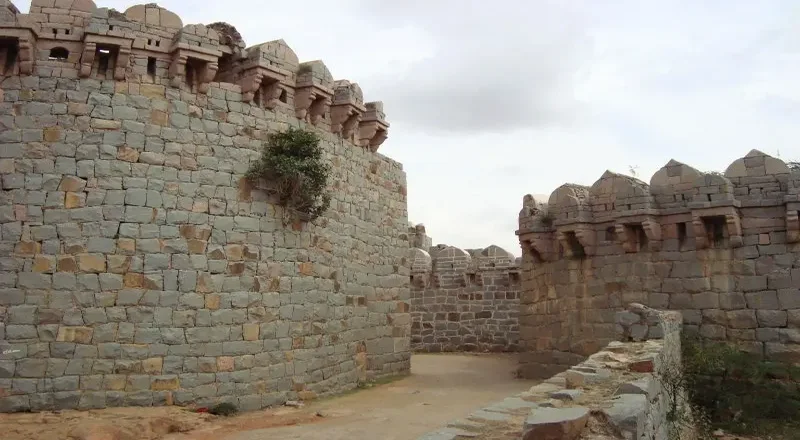
The architecture of Anjdiv Fort is a masterclass in 17th-century colonial military engineering, adapted specifically for a rugged island terrain. The fort was constructed primarily using laterite stone, which is abundant in the Konkan region, along with basalt for structural reinforcements. The use of laterite is a classic Goan architectural trait; the stone is soft when quarried but hardens significantly upon exposure to the elements, making it ideal for sea-facing fortifications that must endure high humidity and saline corrosion.
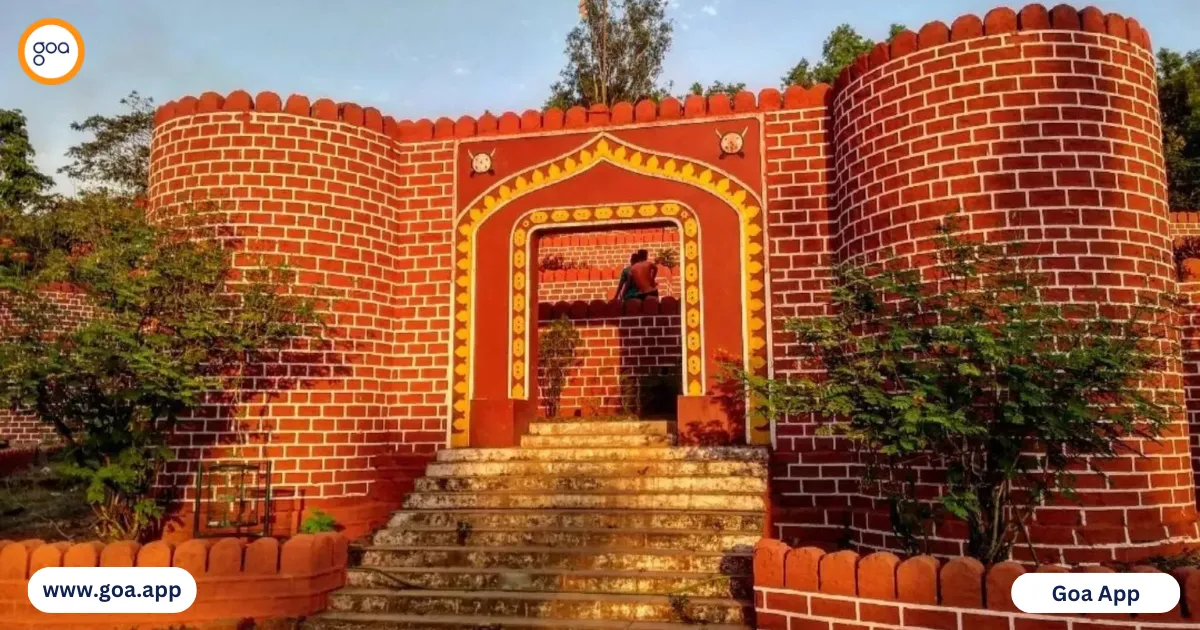
The layout of the fort follows the natural contours of the island's topography. The walls are thick and sloped, designed to deflect cannon fire. Along the perimeter, several bastions were strategically placed to provide a wide field of fire over the surrounding waters, ensuring that no vessel could approach the island undetected. These bastions were often named after saints, reflecting the deep integration of the Catholic faith into the military life of the Portuguese. The entrance to the fort was heavily guarded, featuring a series of gateways that led into the main parade ground and the administrative heart of the settlement.
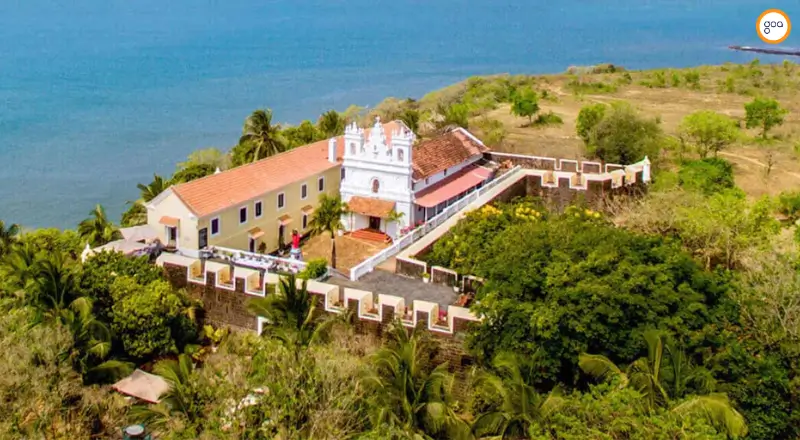
Inside the fort's walls, the architecture transitions from the purely utilitarian to the ecclesiastical. The most prominent structure is the Church of Our Lady of Springs (Nossa Senhora das Brotas). Built in the 16th century and later renovated, the church features a simple yet elegant facade characteristic of the Mannerist style prevalent in Portuguese India. Its thick walls and vaulted ceilings were designed not just for aesthetics but to provide a cool sanctuary from the tropical heat. Nearby, the ruins of the Chapel of St. Anne further showcase the intricate masonry and the use of lime mortar that has helped these structures survive for centuries.
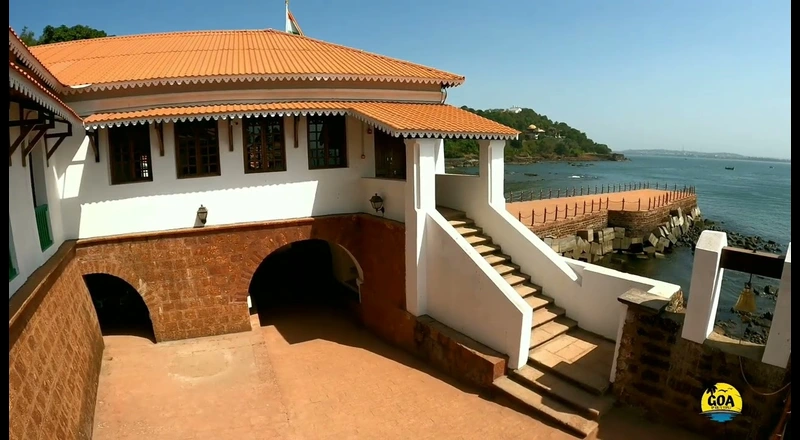
Other architectural highlights include the remains of the governor’s palace, the barracks for soldiers, and the sophisticated water management system. Because the island had no permanent river, the Portuguese engineered deep cisterns and wells to collect rainwater and tap into the natural springs. These wells are still visible today and are a testament to the ingenuity required to sustain a permanent population on a small offshore island. The integration of residential, religious, and military spaces within a confined area makes Anjdiv Fort a fascinating study in colonial urban planning in a maritime context.
Anjdiv Fort holds a unique place in the annals of history for several reasons, making it a "famous" destination despite its current restricted status. Primarily, it is famous for being the first territory in India where the Portuguese officially built a fortification. This makes it the literal starting point of the 450-year-old Portuguese presence in India, a period that fundamentally reshaped the culture, language, and religion of Goa.
The fort is also famous for its religious significance. It is home to the Church of Our Lady of Springs, which is considered one of the oldest churches in the region. According to local tradition, the church was named after the freshwater springs discovered by Vasco da Gama’s crew. The island became a site of pilgrimage, and to this day, the annual feast of Our Lady of Springs attracts devotees from both Goa and Karnataka, who are granted special permission by the Navy to visit the island. This cross-state devotion highlights the fort's role as a cultural bridge.
Another reason for its fame is its role in Operation Vijay. For many Indians, Anjdiv is a sacred site of national pride, representing the final push to remove colonial powers from Indian soil. The bravery of the Indian naval personnel who fought to capture the island is a well-documented chapter of Indian military history. The island's transition from a Portuguese stronghold to a critical component of India’s Project Seabird (the INS Kadamba naval base) has only added to its modern-day fame and strategic mystique.
Furthermore, the island is famous for its natural beauty. The stark contrast between the grey laterite walls of the fort and the lush greenery of the island, set against the backdrop of the deep blue Arabian Sea, creates a visual spectacle that has been captured by many historians and photographers. Its status as a restricted zone has inadvertently turned it into a sanctuary for local flora and fauna, making it a "forbidden fruit" for travelers who crave off-the-beaten-path experiences.
The strategic importance of Anjdiv Fort cannot be overstated, both in the historical context of the Age of Discovery and in the modern geopolitical landscape of India. In the 15th and 16th centuries, the island was perfectly situated to act as a watchtower for the Arabian Sea. Any ship traveling from the Red Sea or the Persian Gulf toward the Malabar Coast had to pass within sight of Anjadip. By fortifying this island, the Portuguese were able to enforce their Cartaz system—a naval license or pass that they required all merchant ships to carry, effectively monopolizing the spice trade.
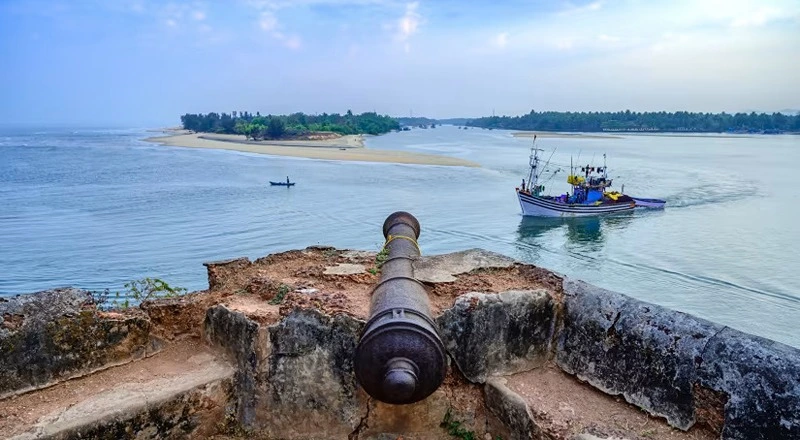
Strategically, the island offered a "deep-water" harbor that was protected from the worst of the southwest monsoon winds. This made it an ideal location for ship repairs and for staging naval raids against the mainland. During the 17th century, when the Portuguese were under threat from the Maratha Navy led by Kanhoji Angre, Anjdiv served as a critical defensive outpost that prevented the Marathas from launching a direct sea-borne invasion of South Goa. It was a "stationary aircraft carrier" of its time, providing a platform for artillery that could sink any hostile vessel attempting to bypass the island.
In the modern era, the strategic value of Anjdiv Fort has shifted from colonial defense to national security. The island is now an integral part of INS Kadamba, which is one of India's largest and most technologically advanced naval bases. The base, located at Karwar, utilizes the natural deep-sea harbor and the protection provided by the island chain, including Anjadip. The fort's location allows the Indian Navy to monitor the vital shipping lanes of the West Coast, ensuring the security of India's maritime borders and the safety of commercial traffic heading toward major ports like Mumbai and Mangalore.
The island also serves as a critical link in the coastal surveillance network. With the rise of asymmetric maritime threats, the elevated positions provided by the fort's old bastions are now used for modern radar and communication equipment. The very reasons the Portuguese chose this island—its visibility, its defensibility, and its proximity to the mainland—remain the reasons why it is a high-security zone today. The strategic legacy of Anjdiv Fort has evolved from controlling the spice trade to safeguarding the sovereignty of the Indian Ocean.
Visiting Anjdiv Fort is not as straightforward as visiting other Goan landmarks due to its location within a naval base. However, if you are planning to seek permission or attend the annual festivals, timing is crucial. The best time to visit Anjdiv Fort is during the winter months, specifically from November to February. During this period, the weather in South Goa and Karwar is pleasant, with temperatures ranging from 20°C to 30°C. The humidity is significantly lower than in the summer, making the hike up the island’s rocky terrain much more manageable.
The most significant time to visit is in February, specifically for the Feast of Our Lady of Springs (Nossa Senhora das Brotas). This is one of the few times in the year when the Indian Navy often grants special permission to civilians and pilgrims to board boats and visit the island for religious services. Another important date is the Feast of St. Anne, usually celebrated in late July, though the monsoon weather can make the boat journey quite treacherous during this time.
For those interested in photography, the post-monsoon months of October and November offer the best light and the most dramatic contrast between the weathered stones of the fort and the refreshed vegetation. Always check with the local authorities in Karwar or the naval public relations office before planning a trip, as access is strictly regulated and can be closed without prior notice due to naval exercises.
Because Anjdiv Fort is located within the INS Kadamba Naval Base, it does not follow the standard "9 to 5" timings of other Archaeological Survey of India (ASI) monuments. Access is highly restricted and is generally only open to the public on specific occasions. For the general traveler, there are no fixed daily timings, and "entry" is usually a matter of special clearance rather than a ticketed process.
It is important to note that foreign nationals face even stricter regulations and are often denied entry to the island due to its proximity to sensitive naval assets. Always carry original government-issued photo ID. Photography of certain naval installations around the island is strictly prohibited, and security personnel will brief you on the rules upon arrival at the island's jetty.
While the island is small, the density of history and natural beauty provides several engaging activities for those who are fortunate enough to step onto its shores. The experience of Anjdiv is one of quiet contemplation and historical discovery.
Anjdiv Fort is a photographer's paradise, offering a blend of military grit and coastal beauty. While you must be mindful of naval restrictions, the following spots provide the most stunning captures:
Pro Tip: Use a wide-angle lens to capture the scale of the fort walls and a polarising filter to cut through the sea glare and bring out the deep blues and greens of the water.
Since a visit to Anjdiv Fort is often a short excursion, you can combine it with several other stunning locations in South Goa and Northern Karnataka. The area is rich in beaches, forts, and natural wonders.
Reaching Anjdiv Fort requires a bit of logistical planning, as it is an island located about 4 to 7 kilometers from the mainland, depending on your starting point.
Note: Private boats are generally not allowed to land on the island without prior naval clearance. Always coordinate with the local parish in Karwar or the naval authorities if you are visiting for the feast.
To ensure a smooth and respectful visit to Anjdiv Fort, keep the following tips in mind:
Anjdiv Fort is more than just a historical ruin; it is a symbol of the enduring spirit of the Konkan coast. From its role as the first foothold of the Portuguese Empire in India to its current status as a sentinel for the Indian Navy, the fort has adapted to the changing tides of history while maintaining its aura of mystery. Its isolation has preserved a unique blend of 16th-century military architecture and deep-seated religious traditions that continue to thrive today.
For the traveler, a visit to Anjdiv is a journey back in time. It offers a rare opportunity to stand where Vasco da Gama once stood, to walk through the same stone gateways that sheltered soldiers and settlers for centuries, and to witness the silent beauty of an island that has seen empires rise and fall. While the restrictions on access may make it a difficult destination to reach, they also ensure that Anjdiv remains an unspoiled sanctuary of history and nature. Whether you are drawn by the call of the past, the sanctity of the old churches, or the strategic allure of a naval stronghold, Anjdiv Fort remains one of the most compelling and rewarding sites to explore in the greater Goan region. As you look out from its ancient bastions toward the endless horizon, you realize that Anjdiv is not just an island; it is a bridge between worlds, ages, and cultures, standing firm against the relentless passage of time.